



Variable δ11B signatures reflect dynamic evolution of the Mariana serpentinite forearc
Affiliations | Corresponding Author | Cite as | Funding information
Published by the European Association of Geochemistry
under Creative Commons License CC BY-NC-ND 4.0
Keywords: Mariana forearc, boron isotopes, subduction zones, element recycle


- Share this article


Article views:2,671Cumulative count of HTML views and PDF downloads.
- Download Citation
- Rights & Permissions

top
Abstract
Figures
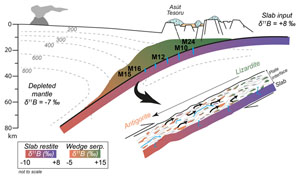
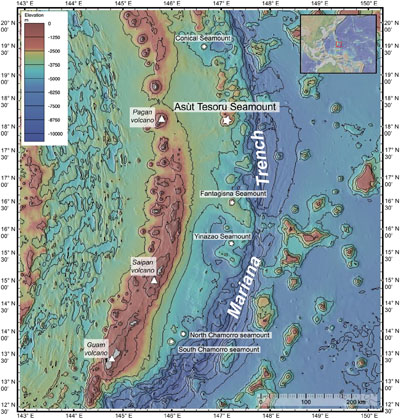 Figure 1 Location of the Asùt Tesoru seamount imposed over the bathymetry map of the Mariana subduction system (generated with the GeoMapApp). | 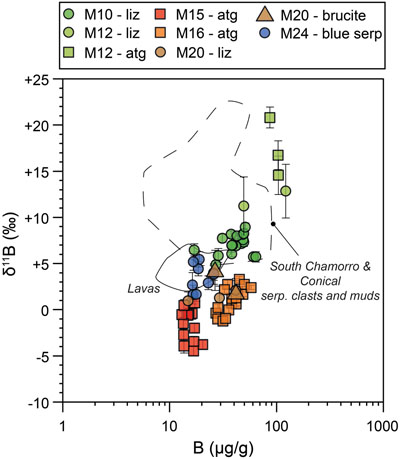 Figure 2 Relationship between δ11B (‰) vs. B (μg/g). Data from South Chamorro (Wei et al., 2005) and Conical (Benton et al., 2001) seamounts, and the Mariana lavas (Ishikawa and Tera, 1999) are shown for comparison. | 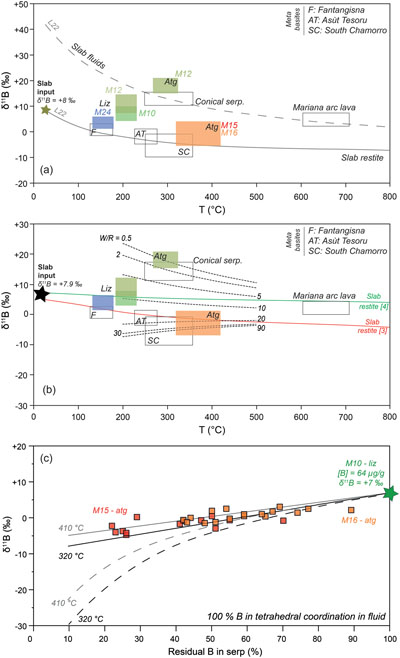 Figure 3 (a) Working Rayleigh dehydration modelling proposed by Liu et al. (2022; L22) to explain the B isotope variability in metabasites from the Fantangisña (F), Asùt Tesoru (AT) and South Chamorro (SC) seamounts (Pabst et al., 2012; Liu et al., 2022). Serpentinite clasts and muds from Conical (Conical serp.) are from Benton et al. (2001), Mariana lavas are from Ishikawa and Tera (1999); δ11B data for the Asùt Tesoru serpentines presented herein are coloured boxes. (b) Modification of the working model proposed by Liu et al. (2022) considering B isotope fractionation between slab-derived fluids and serpentines (Li et al., 2022). Green and red lines represent the δ11B composition of slab restite at alkaline ([4]) and acid ([3]) conditions, respectively. Black dashed lines represent serpentine-fluid B isotope fractionation at different water/rock ratios (W/R; Table S-6 and Supplementary Information for details). (c) Variation of δ11B and B content ([B]) according to batch (solid lines) and Rayleigh (dashed lines) devolatilisations at 320 and 410 °C (black and grey, respectively) and alkaline conditions during serpentine phase transition (see Supplementary Information for details). |  Figure 4 Cartoon illustrating the Mariana subduction setting showing the potential location of studied samples along the slab-mantle interface and the B isotope variation within the slab restite and in the wedge serpentinites. (a) Boron isotope composition of antigorite and lizardite flushed by deep and shallow slab fluids, respectively, according to model presented in Figure 3b. (b) Modification of the δ11B imprint during lizardite to antigorite transition according to model presented in Figure 3c. (c) Schematic plate interface showing complex fluid and tectonic mixing where liz- and atg-bearing serpentinite clasts can be mixed together with portion of metamorphosed slab materials (see text for details). Modified after Debret et al. (2020) and references therein. |
| Figure 1 | Figure 2 | Figure 3 | Figure 4 |
top
Introduction
The serpentinisation of forearc mantle regions is a major outcome of slab devolatilisation during early subduction stages (e.g., Hyndman and Peacock, 2003
Hyndman, R.D., Peacock, S.M. (2003) Serpentinization of the forearc mantle. Earth and Planetary Science Letters 212, 417–432. https://doi.org/10.1016/S0012-821X(03)00263-2
), modulating global chemical recycling in convergent margins. A progressive and selective release of the trace element inventory from the slab with depth is documented (e.g., Bebout et al., 1999Bebout, G.E., Ryan, J.G., Leeman, W.P., Bebout, A.E. (1999) Fractionation of trace elements by subduction-zone metamorphism — effect of convergent-margin thermal evolution. Earth and Planetary Science Letters 171, 63–81. https://doi.org/10.1016/S0012-821X(99)00135-1
), reflecting the mobility of elements based on their retention and redistribution in newly formed, rock forming and accessory minerals during mineral breakdown reactions to depths of up to 150–200 km (Spandler et al., 2003Spandler, C., Hermann, J., Arculus, R., Mavrogenes, J. (2003) Redistribution of trace elements during prograde metamorphism from lawsonite blueschist to eclogite facies; implications for deep subduction-zone processes. Contributions to Mineralogy and Petrology 146, 205–222. https://doi.org/10.1007/s00410-003-0495-5
). The study of forearc serpentinites may provide key insights into the mobility of elements at shallow depths. In this context, the Mariana forearc is an exceptional setting where partially to completely serpentinised clasts originating from the supra-subduction mantle can buoyantly rise toward the surface through forearc faults, generating mud volcanoes (Benton et al., 2001Benton, L.D., Ryan, J.G., Tera, F. (2001) Boron isotope systematics of slab fluids as inferred from a serpentine seamount, Mariana forearc. Earth and Planetary Science Letters 187, 273–282. https://doi.org/10.1016/S0012-821X(01)00286-2
; Savov et al., 2007Savov, I.P., Ryan, J.G., D’Antonio, M., Fryer, P. (2007) Shallow slab fluid release across and along the Mariana arc-basin system: Insights from geochemistry of serpentinized peridotites from the Mariana fore arc. Journal of Geophysical Research: Solid Earth 112, B09205. https://doi.org/10.1029/2006JB004749
; Debret et al., 2019Debret, B., Albers, E., Walter, B., Price, R., Barnes, J.D., Beunon, H., Facq, S., Gillikin, D.P., Mattielli, N., Williams, H. (2019) Shallow forearc mantle dynamics and geochemistry: New insights from IODP Expedition 366. Lithos 326–327, 230–245. https://doi.org/10.1016/j.lithos.2018.10.038
). Serpentinite clasts preserve evidence of multiple serpentinisation stages reflecting various episodes of fluid infiltrations (Debret et al., 2019Debret, B., Albers, E., Walter, B., Price, R., Barnes, J.D., Beunon, H., Facq, S., Gillikin, D.P., Mattielli, N., Williams, H. (2019) Shallow forearc mantle dynamics and geochemistry: New insights from IODP Expedition 366. Lithos 326–327, 230–245. https://doi.org/10.1016/j.lithos.2018.10.038
); therefore, in situ analyses of fluid-mobile elements (FMEs) and redox-sensitive elements associated with the isotopic signature of stable isotope systematics can be used as tracers to disentangle the progressive changes in element mobility in the forearc region (e.g., Albers et al., 2020Albers, E., Kahl, W.-A., Beyer, L., Bach, W. (2020) Variant across-forearc compositions of slab-fluids recorded by serpentinites: Implications on the mobilization of FMEs from an active subduction zone (Mariana forearc). Lithos 364–365, 105525. https://doi.org/10.1016/j.lithos.2020.105525
; Geilert et al., 2021Geilert, S., Albers, E., Frick, D.A., Hansen, C.T., von Blanckenburg, F. (2021) Systematic changes in serpentine Si isotope signatures across the Mariana forearc – a new proxy for slab dehydration processes. Earth and Planetary Science Letters 575, 117193. https://doi.org/10.1016/j.epsl.2021.117193
). Among key FMEs, boron (B) is the best tracer of fluid sources and processes in subduction zones, and the large fractionation of its isotopes (δ11B) may provide pivotal information to unravel the active geochemical exchanges between upper mantle and slab-derived fluids at depths (e.g., De Hoog and Savov, 2018De Hoog, J.C.M., Savov, I.P. (2018) Boron Isotopes as a Tracer of Subduction Zone Processes. In: Marschall, H., Foster, G. (Eds.) Boron Isotopes. Springer, Cham, 217–247. https://doi.org/10.1007/978-3-319-64666-4_9
). It has been proposed that the B isotope signatures of serpentinites can be used to investigate fluid-mantle interactions discerning between seawater- and subduction-derived fluids (Martin et al., 2016Martin, C., Flores, K.E., Harlow, G.E. (2016) Boron isotopic discrimination for subduction-related serpentinites. Geology 44, 899–902. https://doi.org/10.1130/G38102.1
). In the latter case, slab devolatilisation produces 11B-rich fluids at shallow depths that progressively evolve to more 11B-depleted compositions in response to Rayleigh fractionation associated with prograde metamorphic reactions (e.g., Marschall et al., 2007Marschall, H.R., Altherr, R., Rüpke, L. (2007) Squeezing out the slab — modelling the release of Li, Be and B during progressive high-pressure metamorphism. Chemical Geology 239, 323–335. https://doi.org/10.1016/j.chemgeo.2006.08.008
). So far, the B geochemistry of Mariana’s hydrated ultramafic clasts and mud matrix have been achieved by bulk analyses with the consequence that all geochemical information related to different generations of serpentine and subsequent metasomatic event(s) were homogenised and lost, together with potential intra- and inter-mineral variations. The benefits of the in situ approach also allow for maximising the information gathered from small aliquots of rock samples, such as those from IODP expeditions. Here, we focus on the serpentinised ultramafic clasts contained in the Asùt Tesoru mud volcano in the Mariana forearc (IODP Exp 366) performing new in situ trace element and the first in situ boron isotope (δ11B) investigations to unravel transient fluid-mediated mass transfer in the shallow forearc mantle region.top
Geological Background and Sample Description
The Mariana forearc is a non-accretionary subduction system where the Mesozoic Pacific plate is subducted west-northwestward beneath the Philippine Sea plate (Fig. 1). It hosts dozens of active mud volcanoes generated in response to the interaction of aqueous slab-derived fluids with forearc mantle wedge peridotites. These mud volcanoes consist of unconsolidated serpentinite mud and contain variably serpentinised ultramafic clasts, together with minor amounts of recycled metamorphosed slab materials (Tamblyn et al., 2019
Tamblyn, R., Zack, T., Schmitt, A.K., Hand, M., Kelsey, D., Morrissey, L., Pabst, S., Savov, I.P. (2019) Blueschist from the Mariana forearc records long-lived residence of material in the subduction channel. Earth and Planetary Science Letters 519, 171–181. https://doi.org/10.1016/j.epsl.2019.05.013
; Fryer et al., 2000Fryer, P., Lockwood, J.P., Becker, N., Phipps, S., Todd, C.S. (2000) Significance of serpentine mud volcanism in convergent margins. In: Dilek, Y., Moores, E.M., Elthon, D., Nicolas, A. (Eds.) Ophiolites and oceanic crust: new insights from field studies and the Ocean Drilling Program. Geological Society of America, Boulder, 35–52. https://doi.org/10.1130/0-8137-2349-3.35
). The Asùt Tesoru serpentinite mud volcano (18° 06’ N and 147° 06’ E) is located at ca. 72 km from the trench and at about 18 km above the slab, where the temperature (T) at the slab-mantle interface is estimated at ca. 250 °C (Hulme et al., 2010Hulme, S.M., Wheat, C.G., Fryer, P., Mottl, M.J. (2010) Pore water chemistry of the Mariana serpentinite mud volcanoes: A window to the seismogenic zone. Geochemistry, Geophysics, Geosystems 11, Q01X09. https://doi.org/10.1029/2009GC002674
). The investigated samples (Table S-1) were drilled during the International Oceanic Discovery Program (IODP) Expedition 366 (Fryer et al., 2018Fryer, P., Wheat, C.G., Williams, T., Expedition 366 Scientists (2018) Mariana Convergent Margin and South Chamorro Seamount. Proceedings of the International Ocean Discovery Program, Volume 366, College Station, TX. https://doi.org/10.14379/iodp.proc.366.2018
). Complete petrographic and whole rock geochemical characterisation of the samples can be found in Fryer et al. (2018)Fryer, P., Wheat, C.G., Williams, T., Expedition 366 Scientists (2018) Mariana Convergent Margin and South Chamorro Seamount. Proceedings of the International Ocean Discovery Program, Volume 366, College Station, TX. https://doi.org/10.14379/iodp.proc.366.2018
and Debret et al. (2019)Debret, B., Albers, E., Walter, B., Price, R., Barnes, J.D., Beunon, H., Facq, S., Gillikin, D.P., Mattielli, N., Williams, H. (2019) Shallow forearc mantle dynamics and geochemistry: New insights from IODP Expedition 366. Lithos 326–327, 230–245. https://doi.org/10.1016/j.lithos.2018.10.038
. Briefly, serpentinite clasts are subdivided in four main groups based on the type of serpentine variety (Fig. S-2): (i) lizardite (liz; sample M10), (ii) transitional (lizardite/antigorite-bearing; sample M12), (iii) antigorite-bearing (atg; samples M15 and M16), and (iv) shallow brucitite and blue lizardite-bearing serpentinites (samples M20 and M24). The degree of serpentinisation increases from liz- to atg-bearing samples, together with the estimated T of serpentinisation that, based on O isotope data, range from 210 to 410 °C (Debret et al., 2019Debret, B., Albers, E., Walter, B., Price, R., Barnes, J.D., Beunon, H., Facq, S., Gillikin, D.P., Mattielli, N., Williams, H. (2019) Shallow forearc mantle dynamics and geochemistry: New insights from IODP Expedition 366. Lithos 326–327, 230–245. https://doi.org/10.1016/j.lithos.2018.10.038
). The progressive replacement of lizardite by antigorite at increasing T, as evidenced in sample M12, indicates that these samples record progressive burial and hydration of the forearc mantle region at depth. Samples of brucitite (sample M20, mainly brucite ± lizardite) and the blue lizardite-bearing serpentinite (sample M24; mainly brucite-lizardite) represent the late low T (<180 °C) serpentinisation stage affecting ultramafic clasts during exhumation (Debret et al., 2019Debret, B., Albers, E., Walter, B., Price, R., Barnes, J.D., Beunon, H., Facq, S., Gillikin, D.P., Mattielli, N., Williams, H. (2019) Shallow forearc mantle dynamics and geochemistry: New insights from IODP Expedition 366. Lithos 326–327, 230–245. https://doi.org/10.1016/j.lithos.2018.10.038
).Figure 1 Location of the Asùt Tesoru seamount imposed over the bathymetry map of the Mariana subduction system (generated with the GeoMapApp).
top
Results
The in situ trace element data together with the B isotope compositions of serpentine clasts (Table S-4) and the analytical methodology are provided in the Supplementary Information. Boron concentrations are higher for lizardite and antigorite in samples M10-M12-M16 (from 17 to 115 μg/g), respectively, whereas slightly lower contents are reported for the atg-bearing sample M15 (from 11 to 22 μg/g). Blue serpentine and serpentines in brucitite samples show moderate B enrichment (22 ± 8 and 29 ± 16 μg/g, respectively). Brucite from sample M20 shows B content averaging at 11.5 ± 5.3 μg/g. Boron isotope compositions of serpentines are strongly variable, ranging from −5 to +21 ‰. Higher δ11B values pertain to lizardite and antigorite from sample M12 with mean values of +12.0 ± 2.3 ‰ (2 s.d., n = 2) and +17.4 ± 6.4 ‰ (2 s.d., n = 3), respectively. Lizardite from sample M10 has homogeneous δ11B mean value of +7.1 ± 0.6 ‰ (2 s.d., n = 18). Lizardite from brucitite and blue serpentine display overlapping δ11B values, ranging between +1 and +6 ‰. Two δ11B data from a serpentine-brucite mixture (sample M20) average +2.5 ± 1.6 ‰ (2 s.d.), comparable with those of serpentine from the same sample (Fig. 2). Pure atg-bearing serpentines (M15 and M16) are characterised by δ11B values ranging from −5 to +4 ‰, with the most negative values belonging to sample M15, which also has the lowest B contents. Overall, positive correlation between δ11B vs. B contents is shown between samples (Fig. 2), with the atg-serpentinites from M15 falling at the lower end of these trends.
Figure 2 Relationship between δ11B (‰) vs. B (μg/g). Data from South Chamorro (Wei et al., 2005
Wei, W., Kastner, M., Deyhle, A., Spivack, A.J. (2005) Geochemical Cycling of Fluorine, Chlorine, Bromine, and Boron and Implications for Fluid-Rock Reactions in Mariana Forearc, South Chamorro Seamount, ODP Leg 195. In: Shinohara, M., Salisbury, M.H., Richter, C. (Eds.) Proceedings of the Ocean Drilling Program, Scientific Results 195, College Station, TX, 1–23. https://doi.org/10.2973/odp.proc.sr.195.106.2005
) and Conical (Benton et al., 2001Benton, L.D., Ryan, J.G., Tera, F. (2001) Boron isotope systematics of slab fluids as inferred from a serpentine seamount, Mariana forearc. Earth and Planetary Science Letters 187, 273–282. https://doi.org/10.1016/S0012-821X(01)00286-2
) seamounts, and the Mariana lavas (Ishikawa and Tera, 1999Ishikawa, T., Tera, F. (1999) Two isotopically distinct fluids component involved in the Mariana Arc: Evidence from Nb/B ratios and B, Sr, Nd, and Pb isotope systematics. Geology 27, 83–86. https://doi.org/10.1130/0091-7613(1999)027<0083:TIDFCI>2.3.CO;2
) are shown for comparison.top
Discussion
The trace element variability and the δ11B signatures of the serpentines from the Asùt Tesoru mud volcano point to a complex interaction with evolving fluid(s) released from the downgoing slab (e.g., Albers et al., 2020
Albers, E., Kahl, W.-A., Beyer, L., Bach, W. (2020) Variant across-forearc compositions of slab-fluids recorded by serpentinites: Implications on the mobilization of FMEs from an active subduction zone (Mariana forearc). Lithos 364–365, 105525. https://doi.org/10.1016/j.lithos.2020.105525
). The B isotope compositions of lizardite from all samples and antigorite from sample M12 mostly fall within the compositional whole rock δ11B data available so far for both serpentine matrix (from +6 to +21 ‰) and serpentinised peridotite clasts (from +5 to +25 ‰) from the Conical (Benton et al., 2001Benton, L.D., Ryan, J.G., Tera, F. (2001) Boron isotope systematics of slab fluids as inferred from a serpentine seamount, Mariana forearc. Earth and Planetary Science Letters 187, 273–282. https://doi.org/10.1016/S0012-821X(01)00286-2
) and the South Chamorro (Wei et al., 2005Wei, W., Kastner, M., Deyhle, A., Spivack, A.J. (2005) Geochemical Cycling of Fluorine, Chlorine, Bromine, and Boron and Implications for Fluid-Rock Reactions in Mariana Forearc, South Chamorro Seamount, ODP Leg 195. In: Shinohara, M., Salisbury, M.H., Richter, C. (Eds.) Proceedings of the Ocean Drilling Program, Scientific Results 195, College Station, TX, 1–23. https://doi.org/10.2973/odp.proc.sr.195.106.2005
) Seamounts (Fig. 2). Such positive δ11B values reflect the result of interaction between forearc mantle and 11B-enriched aqueous fluids released from the subducting slab during its early devolatilisation (Benton et al., 2001Benton, L.D., Ryan, J.G., Tera, F. (2001) Boron isotope systematics of slab fluids as inferred from a serpentine seamount, Mariana forearc. Earth and Planetary Science Letters 187, 273–282. https://doi.org/10.1016/S0012-821X(01)00286-2
; Pabst et al., 2012Pabst, S., Zack, T., Savov, I.P., Ludwig, T., Rost, D., Tonarini, S., Vicenzi, E.P. (2012) The fate of subducted oceanic slabs in the shallow mantle: Insights from boron isotopes and light element composition of metasomatized blueschists from the Mariana forearc. Lithos 132–133, 162–179. https://doi.org/10.1016/j.lithos.2011.11.010
; Liu et al., 2022Liu, H., Xue, Y.-Y., Yang, T., Jin, X., You, C.-F., Lin, C.-T., Sun, W.-D., Deng, J. (2022) Fluid-rock interactions at shallow depths in subduction zone: Insights from trace elements and B isotopic composition of metabasites from the Mariana forearc. Lithos 422–423, 106730. https://doi.org/10.1016/j.lithos.2022.106730
). Pure antigorite-bearing samples M15 and M16 exhibit low B abundances and predominantly negative δ11B values compared to liz-bearing samples (Fig. 2), indicating a significant difference in the chemistry of the interacting slab-derived fluids during subduction burial. This marks the first report of serpentines from the Mariana forearc with such light B isotope compositions (Benton et al., 2001Benton, L.D., Ryan, J.G., Tera, F. (2001) Boron isotope systematics of slab fluids as inferred from a serpentine seamount, Mariana forearc. Earth and Planetary Science Letters 187, 273–282. https://doi.org/10.1016/S0012-821X(01)00286-2
; Wei et al., 2005Wei, W., Kastner, M., Deyhle, A., Spivack, A.J. (2005) Geochemical Cycling of Fluorine, Chlorine, Bromine, and Boron and Implications for Fluid-Rock Reactions in Mariana Forearc, South Chamorro Seamount, ODP Leg 195. In: Shinohara, M., Salisbury, M.H., Richter, C. (Eds.) Proceedings of the Ocean Drilling Program, Scientific Results 195, College Station, TX, 1–23. https://doi.org/10.2973/odp.proc.sr.195.106.2005
), thus providing new insights into the chemical evolution of forearc serpentinites. Negative B isotope compositions (from +0.7 to −5.0 ‰) have been reported for several OIB-type metabasites collected from the summit of the Asùt Tesoru mud volcano during the same IODP expedition (Liu et al., 2022Liu, H., Xue, Y.-Y., Yang, T., Jin, X., You, C.-F., Lin, C.-T., Sun, W.-D., Deng, J. (2022) Fluid-rock interactions at shallow depths in subduction zone: Insights from trace elements and B isotopic composition of metabasites from the Mariana forearc. Lithos 422–423, 106730. https://doi.org/10.1016/j.lithos.2022.106730
). These negative B isotope imprints reflect the partial dehydration of the altered oceanic crust during shallow slab devolatilisation (e.g., Pabst et al., 2012Pabst, S., Zack, T., Savov, I.P., Ludwig, T., Rost, D., Tonarini, S., Vicenzi, E.P. (2012) The fate of subducted oceanic slabs in the shallow mantle: Insights from boron isotopes and light element composition of metasomatized blueschists from the Mariana forearc. Lithos 132–133, 162–179. https://doi.org/10.1016/j.lithos.2011.11.010
), where 11B-enriched aqueous fluids are extracted from the slab during prograde metamorphic reactions (e.g., Marschall et al., 2007Marschall, H.R., Altherr, R., Rüpke, L. (2007) Squeezing out the slab — modelling the release of Li, Be and B during progressive high-pressure metamorphism. Chemical Geology 239, 323–335. https://doi.org/10.1016/j.chemgeo.2006.08.008
). The recent working model for the Mariana subduction system proposed by Liu et al. (2022)Liu, H., Xue, Y.-Y., Yang, T., Jin, X., You, C.-F., Lin, C.-T., Sun, W.-D., Deng, J. (2022) Fluid-rock interactions at shallow depths in subduction zone: Insights from trace elements and B isotopic composition of metabasites from the Mariana forearc. Lithos 422–423, 106730. https://doi.org/10.1016/j.lithos.2022.106730
suggests that progressive Rayleigh devolatilisation of altered oceanic crust with an initial δ11B of +8 ‰ can reproduce the δ11B characteristics of the metabasites from the Mariana forearc mud volcanoes, the serpentinite clasts and muds from the Conical Seamount and the Mariana arc lavas. However, this model fails to reproduce the δ11B signatures of serpentines reported in this study (Fig. 3a). A recent computational study of Li et al. (2022)Li, Y.-C., Wei, H.-Z., Palmer, M.R., Ma, J., Jiang, S.-Y., Chen, Y.-X., Lu, J.-J., Liu, X. (2022) Equilibrium boron isotope fractionation during serpentinization and applications in understanding subduction zone processes. Chemical Geology 609, 121047. https://doi.org/10.1016/j.chemgeo.2022.121047
, indicates that B isotope fractionation should occur between serpentine and fluids, even when B is fourfold coordinated in both phases (not implemented in the proposed model). This set the basis for a newly invoked scenario to explain the measured δ11B signatures. Considering an initial δ11B signature of the slab of ca. +8 ‰, and the B isotope fractionation between serpentine and fluids, lizardite (samples M10-M12) and antigorite (samples M15-M16) with variable δ11B signatures (from +12 to −5 ‰) can be achieved by flushing the supra-subduction mantle region with slab-derived fluids at variable and increasing water/rock ratios from 5 to 90 (Fig. 3b; see Supplementary Information for details). The modelled increase in water/rock ratios from liz- to atg-bearing serpentinites is also consistent with the increase in the degree of serpentinisation (Fig. S-2) (Debret et al., 2022Debret, B., Ménez, B., Walter, B., Bouquerel, H., Bouilhol, P., Mattielli, N., Pisapia, C., Rigaudier, T., Williams, H.M. (2022) High-pressure synthesis and storage of solid organic compounds in active subduction zones. Science Advances 8, eabo2397. https://doi.org/10.1126/sciadv.abo2397
). This scenario involves the direct hydration of shallow (for liz) and deeper (for atg) regions of the wedge mantle with fluids characterised by evolved δ11B signatures (Fig. 4a). Higher δ11B signatures approaching the values of the antigorite from sample M12 (ca. +20 ‰) can be attained assuming lower water/rock ratios during prograde phase transition (Fig. 3b). Such low water/rock ratios can also be invoked to explain the δ11B signatures of the Conical and South Chamorro seamounts (up to +25 ‰). This model assumes a single δ11B imprint as representative of the protolith slab input to explain the results for the entire dataset, which could be a limitation considering a certain degree of lateral variability in the composition of the input materials along the Mariana trench (1400 km in length). Furthermore, our approach does not consider the residence time of the serpentine clasts within the Mariana subduction system. Geochronological data indicate that the “plumbing system” of the Mariana mud volcanoes may sample clasts with a long history (ca. 46 Myr) of chemical and thermal evolution along the subduction interface (Tamblyn et al., 2019Tamblyn, R., Zack, T., Schmitt, A.K., Hand, M., Kelsey, D., Morrissey, L., Pabst, S., Savov, I.P. (2019) Blueschist from the Mariana forearc records long-lived residence of material in the subduction channel. Earth and Planetary Science Letters 519, 171–181. https://doi.org/10.1016/j.epsl.2019.05.013
). In this framework, the high δ11B signatures and FME budget shown by antigorite from sample M12, as compared to lizardite from the same sample (Fig. S-4), suggest the involvement of 11B- and FME-enriched slab fluids at depth that cannot be accounted for with a single stage model. A multi-stage model could also be considered to elucidate the relative enrichment in FMEs observed in antigorite from sample M16 (Fig. S-4), indicating that different fluids at different depths played roles in modifying the geochemistry of Mariana forearc serpentinites.Figure 3 (a) Working Rayleigh dehydration modelling proposed by Liu et al. (2022
Liu, H., Xue, Y.-Y., Yang, T., Jin, X., You, C.-F., Lin, C.-T., Sun, W.-D., Deng, J. (2022) Fluid-rock interactions at shallow depths in subduction zone: Insights from trace elements and B isotopic composition of metabasites from the Mariana forearc. Lithos 422–423, 106730. https://doi.org/10.1016/j.lithos.2022.106730
; L22) to explain the B isotope variability in metabasites from the Fantangisña (F), Asùt Tesoru (AT) and South Chamorro (SC) seamounts (Pabst et al., 2012Pabst, S., Zack, T., Savov, I.P., Ludwig, T., Rost, D., Tonarini, S., Vicenzi, E.P. (2012) The fate of subducted oceanic slabs in the shallow mantle: Insights from boron isotopes and light element composition of metasomatized blueschists from the Mariana forearc. Lithos 132–133, 162–179. https://doi.org/10.1016/j.lithos.2011.11.010
; Liu et al., 2022Liu, H., Xue, Y.-Y., Yang, T., Jin, X., You, C.-F., Lin, C.-T., Sun, W.-D., Deng, J. (2022) Fluid-rock interactions at shallow depths in subduction zone: Insights from trace elements and B isotopic composition of metabasites from the Mariana forearc. Lithos 422–423, 106730. https://doi.org/10.1016/j.lithos.2022.106730
). Serpentinite clasts and muds from Conical (Conical serp.) are from Benton et al. (2001)Benton, L.D., Ryan, J.G., Tera, F. (2001) Boron isotope systematics of slab fluids as inferred from a serpentine seamount, Mariana forearc. Earth and Planetary Science Letters 187, 273–282. https://doi.org/10.1016/S0012-821X(01)00286-2
, Mariana lavas are from Ishikawa and Tera (1999)Ishikawa, T., Tera, F. (1999) Two isotopically distinct fluids component involved in the Mariana Arc: Evidence from Nb/B ratios and B, Sr, Nd, and Pb isotope systematics. Geology 27, 83–86. https://doi.org/10.1130/0091-7613(1999)027<0083:TIDFCI>2.3.CO;2
; δ11B data for the Asùt Tesoru serpentines presented herein are coloured boxes. (b) Modification of the working model proposed by Liu et al. (2022)Liu, H., Xue, Y.-Y., Yang, T., Jin, X., You, C.-F., Lin, C.-T., Sun, W.-D., Deng, J. (2022) Fluid-rock interactions at shallow depths in subduction zone: Insights from trace elements and B isotopic composition of metabasites from the Mariana forearc. Lithos 422–423, 106730. https://doi.org/10.1016/j.lithos.2022.106730
considering B isotope fractionation between slab-derived fluids and serpentines (Li et al., 2022Li, Y.-C., Wei, H.-Z., Palmer, M.R., Ma, J., Jiang, S.-Y., Chen, Y.-X., Lu, J.-J., Liu, X. (2022) Equilibrium boron isotope fractionation during serpentinization and applications in understanding subduction zone processes. Chemical Geology 609, 121047. https://doi.org/10.1016/j.chemgeo.2022.121047
). Green and red lines represent the δ11B composition of slab restite at alkaline ([4]) and acid ([3]) conditions, respectively. Black dashed lines represent serpentine-fluid B isotope fractionation at different water/rock ratios (W/R; Table S-6 and Supplementary Information for details). (c) Variation of δ11B and B content ([B]) according to batch (solid lines) and Rayleigh (dashed lines) devolatilisations at 320 and 410 °C (black and grey, respectively) and alkaline conditions during serpentine phase transition (see Supplementary Information for details).Figure 4 Cartoon illustrating the Mariana subduction setting showing the potential location of studied samples along the slab-mantle interface and the B isotope variation within the slab restite and in the wedge serpentinites. (a) Boron isotope composition of antigorite and lizardite flushed by deep and shallow slab fluids, respectively, according to model presented in Figure 3b. (b) Modification of the δ11B imprint during lizardite to antigorite transition according to model presented in Figure 3c. (c) Schematic plate interface showing complex fluid and tectonic mixing where liz- and atg-bearing serpentinite clasts can be mixed together with portion of metamorphosed slab materials (see text for details). Modified after Debret et al. (2020)
Debret, B., Reekie, C.D.J., Mattielli, N., Beunon, H., Ménez, B., Savov, I.P., Williams, H.M. (2020) Redox transfer at subduction zones: insights from Fe isotopes in the Mariana forearc. Geochemical Perspectives Letters 12, 46–51. https://doi.org/10.7185/geochemlet.2003
and references therein.The low and negative δ11B signatures observed in antigorite from samples M15 and M16 may also be interpreted as being related to B isotope fractionation during prograde phase transition. This idea follows the modelling attempt proposed by Cannaò (2020)
Cannaò, E. (2020) Boron isotope fractionation in subducted serpentinites: A modelling attempt. Lithos 376–377, 105768. https://doi.org/10.1016/j.lithos.2020.105768
, which suggests that the loss of B during the prograde serpentine phase transition could be associated with B isotope fractionation. Previous petrographic investigations and micro-chemical data indicate that antigorite in the Asùt Tesoru seamount primarily formed at the expense of lizardite with limited influx of external SiO2 or other chemical components (Debret et al., 2019Debret, B., Albers, E., Walter, B., Price, R., Barnes, J.D., Beunon, H., Facq, S., Gillikin, D.P., Mattielli, N., Williams, H. (2019) Shallow forearc mantle dynamics and geochemistry: New insights from IODP Expedition 366. Lithos 326–327, 230–245. https://doi.org/10.1016/j.lithos.2018.10.038
). This scenario aligns with a progressive burial of the forearc mantle wedge during subduction. Considering an initial δ11B signature for lizardite of +7 ‰ and 64 μg/g of B (similar to sample M10), the antigorite from samples M15 and M16 loses 20 to 90 % of their initial B budget. According to calculation (see Supplementary Information), either batch or Rayleigh devolatilisations under alkaline conditions can properly simulate most of the δ11B signatures shown by antigorite (Figs. 3c, 4b). Given the high variability of the δ11B signatures in serpentine from the Conical Seamount (Benton et al., 2001Benton, L.D., Ryan, J.G., Tera, F. (2001) Boron isotope systematics of slab fluids as inferred from a serpentine seamount, Mariana forearc. Earth and Planetary Science Letters 187, 273–282. https://doi.org/10.1016/S0012-821X(01)00286-2
), if higher δ11B for the precursor lizardite is assumed (e.g., δ11B = +20 ‰, B = 81 μg/g), most of the antigorite data from sample M16 cannot be reproduced, even considering 50 % of B speciation in fluids in trigonal coordination (Fig. S-8). If this is the case, the geochemistry of the antigorite may be overprinted by the interaction with deep slab fluids released from a different source and, potentially, at different time (Tamblyn et al., 2019Tamblyn, R., Zack, T., Schmitt, A.K., Hand, M., Kelsey, D., Morrissey, L., Pabst, S., Savov, I.P. (2019) Blueschist from the Mariana forearc records long-lived residence of material in the subduction channel. Earth and Planetary Science Letters 519, 171–181. https://doi.org/10.1016/j.epsl.2019.05.013
). The relative enrichment in As and Sb for sample M16 trend towards this hypothesis thus require a multi-stage evolution.Both scenarios can appropriately explain the δ11B variability from liz- to atg-bearing serpentinites, and reasonably operate simultaneously in subduction zones. Overall, our new trace element and B isotope results corroborate the scenario of complex transport mechanisms feeding the mud volcanoes in the Mariana forearc (Fig. 4c): shallow hydration of the forearc region progressively dragged down to depth before exhumation along the subduction channel(s), where pieces of metamorphosed slab materials can also be sampled (e.g., Pabst et al., 2012
Pabst, S., Zack, T., Savov, I.P., Ludwig, T., Rost, D., Tonarini, S., Vicenzi, E.P. (2012) The fate of subducted oceanic slabs in the shallow mantle: Insights from boron isotopes and light element composition of metasomatized blueschists from the Mariana forearc. Lithos 132–133, 162–179. https://doi.org/10.1016/j.lithos.2011.11.010
; Tamblyn et al., 2019Tamblyn, R., Zack, T., Schmitt, A.K., Hand, M., Kelsey, D., Morrissey, L., Pabst, S., Savov, I.P. (2019) Blueschist from the Mariana forearc records long-lived residence of material in the subduction channel. Earth and Planetary Science Letters 519, 171–181. https://doi.org/10.1016/j.epsl.2019.05.013
; Liu et al., 2022Liu, H., Xue, Y.-Y., Yang, T., Jin, X., You, C.-F., Lin, C.-T., Sun, W.-D., Deng, J. (2022) Fluid-rock interactions at shallow depths in subduction zone: Insights from trace elements and B isotopic composition of metabasites from the Mariana forearc. Lithos 422–423, 106730. https://doi.org/10.1016/j.lithos.2022.106730
).top
Implications for Subduction Dynamics and Deep Boron Recycling
The B isotope variability documented here provides new constraints to disentangle the dynamic evolution of forearc regions. Our data provide the first insights into the possibility of mixing within the subduction channel (Fig. 4), suggesting a scenario where the forearc serpentinites are truly dragged downward into the deeper wedge. The serpentine-dominated mélange domains atop the subducting slab may trigger mechanical instabilities and the formation of buoyant diapirs (Marschall and Schumacher, 2012
Marschall, H.R., Schumacher, J.C. (2012) Arc magmas sourced from mélange diapirs in subduction zones. Nature Geoscience 5, 862–867. https://doi.org/10.1038/ngeo1634
). Such mélange materials can penetrate within the hot corner of the mantle wedge feeding island arcs contributing to the heavy δ11B imprints characterising the Mariana arc lavas (Ishikawa and Tera, 1999Ishikawa, T., Tera, F. (1999) Two isotopically distinct fluids component involved in the Mariana Arc: Evidence from Nb/B ratios and B, Sr, Nd, and Pb isotope systematics. Geology 27, 83–86. https://doi.org/10.1130/0091-7613(1999)027<0083:TIDFCI>2.3.CO;2
). Alternatively, the forearc serpentinites are prone to dehydration to form secondary peridotites (or metaperidotites) plus aqueous fluids coherent with the slab-top P-T conditions of the Mariana subduction system (Syracuse et al., 2010Syracuse, E.M., van Keken, P.E., Abers, G.A. (2010) The global range of subduction zone thermal models. Physics of the Earth and Planetary Interiors 183, 73–90. https://doi.org/10.1016/j.pepi.2010.02.004
). This transformation impacts the geochemistry of the arc magmatism and the metaperidotite that will be buried to depths (e.g., Cannaò et al., 2020Cannaò, E., Tiepolo, M., Bebout, G.E., Scambelluri, M. (2020) Into the deep and beyond: Carbon and nitrogen subduction recycling in secondary peridotites. Earth and Planetary Science Letters 543, 116328. https://doi.org/10.1016/j.epsl.2020.116328
). Depending on the δ11B of antigorite (e.g., −5 ‰ in M15 vs. +21 ‰ in M12), the progressive dehydration at deeper conditions of forearc serpentinites with δ11B signatures comparable to the antigorite of the Asùt Tesoru will provide fluids with δ11B from −1 to +25 ‰ (Table S-7). To match the B isotope signatures of Mariana lavas, a deep 11B-rich reservoir is required, and the role of serpentinites is gaining ground based on δ11B (Benton et al., 2001Benton, L.D., Ryan, J.G., Tera, F. (2001) Boron isotope systematics of slab fluids as inferred from a serpentine seamount, Mariana forearc. Earth and Planetary Science Letters 187, 273–282. https://doi.org/10.1016/S0012-821X(01)00286-2
) and also Fe and Mo isotope systematics (Freymuth et al., 2015Freymuth, H., Vils, F., Willbold, M., Taylor, R.N., Elliott, T. (2015) Molybdenum mobility and isotopic fractionation during subduction at the Mariana arc. Earth and Planetary Science Letters 432, 176–186. https://doi.org/10.1016/j.epsl.2015.10.006
; Debret et al., 2020Debret, B., Reekie, C.D.J., Mattielli, N., Beunon, H., Ménez, B., Savov, I.P., Williams, H.M. (2020) Redox transfer at subduction zones: insights from Fe isotopes in the Mariana forearc. Geochemical Perspectives Letters 12, 46–51. https://doi.org/10.7185/geochemlet.2003
; Li et al., 2021Li, H.-Y., Zhao, R.-P., Li, J., Tamura, Y., Spencer, C., Stern, R.J., Ryan, J.G., Xu, Y.-G. (2021) Molybdenum isotopes unmask slab dehydration and melting beneath the Mariana arc. Nature Communications 12, 6015. https://doi.org/10.1038/s41467-021-26322-8
; Chen et al., 2023Chen, Z., Chen, J., Tamehe, L.S., Zhang, Y., Zeng, Z., Zhang, T., Shuai, W., Yin, X. (2023) Light Fe isotopes in arc magmas from cold subduction zones: Implications for serpentinite-derived fluids oxidized the sub-arc mantle. Geochimica et Cosmochimica Acta 342, 1–14. https://doi.org/10.1016/j.gca.2022.12.005
). The estimated B isotope signatures for serpentinite-derived fluids agree with those proposed to explain the B isotope signatures of the Mariana lavas (Ishikawa and Tera, 1999Ishikawa, T., Tera, F. (1999) Two isotopically distinct fluids component involved in the Mariana Arc: Evidence from Nb/B ratios and B, Sr, Nd, and Pb isotope systematics. Geology 27, 83–86. https://doi.org/10.1130/0091-7613(1999)027<0083:TIDFCI>2.3.CO;2
). Despite the B coordination in olivine still being debated (see Supplementary Information), the newly formed secondary peridotites should have a δ11B imprints ranging from −2 to +24 ‰ (Table S-7). The existence of isotopically heavy B deep reservoir(s) is not required to match B mass balance calculations (Marschall et al., 2017Marschall, H.R., Wanless, V.D., Shimizu, N., Pogge von Strandmann, P.A.E., Elliott, T., Monteleone, B.D. (2017) The boron and lithium isotopic composition of mid-ocean ridge basalts and the mantle. Geochimica et Cosmochimica Acta 207, 102–138. https://doi.org/10.1016/j.gca.2017.03.028
), however, our work points out that a significant amount of 11B-rich secondary peridotites might be injected beyond the arc into the deep Earth’s mantle, contributing to its geochemical heterogeneity.top
Acknowledgements
This research used samples and data provided by the IODP and ODP. This work benefit funding from the Italian Ministry of University and Research (MUR) – Excellent Departments Projects. EC acknowledges the Società Italiana di Mineralogia e Petrologia (SIMP) for support through the Research Grant “Fiorenzo Mazzi” for the year 2022. Cees-Jan De Hoog is warmly thanked for providing the reference Koh-OL olivine, and Gianluca Sessa is thanked for support during the micro-analytical sessions. Constructive comments and criticisms provided by I. Savov and C.J. De Hoog significantly improved the manuscript and are greatly appreciated. Raul O.C. Fonseca is thanked for editorial handling of the manuscript.
Editor: Raúl O.C. Fonseca
top
References
Albers, E., Kahl, W.-A., Beyer, L., Bach, W. (2020) Variant across-forearc compositions of slab-fluids recorded by serpentinites: Implications on the mobilization of FMEs from an active subduction zone (Mariana forearc). Lithos 364–365, 105525. https://doi.org/10.1016/j.lithos.2020.105525
 Show in context
Serpentinite clasts preserve evidence of multiple serpentinisation stages reflecting various episodes of fluid infiltrations (Debret et al., 2019); therefore, in situ analyses of fluid-mobile elements (FMEs) and redox-sensitive elements associated with the isotopic signature of stable isotope systematics can be used as tracers to disentangle the progressive changes in element mobility in the forearc region (e.g., Albers et al., 2020; Geilert et al., 2021).
View in article
The trace element variability and the δ11B signatures of the serpentines from the Asùt Tesoru mud volcano point to a complex interaction with evolving fluid(s) released from the downgoing slab (e.g., Albers et al., 2020).
View in article
Bebout, G.E., Ryan, J.G., Leeman, W.P., Bebout, A.E. (1999) Fractionation of trace elements by subduction-zone metamorphism — effect of convergent-margin thermal evolution. Earth and Planetary Science Letters 171, 63–81. https://doi.org/10.1016/S0012-821X(99)00135-1
Show in contextA progressive and selective release of the trace element inventory from the slab with depth is documented (e.g., Bebout et al., 1999), reflecting the mobility of elements based on their retention and redistribution in newly formed, rock forming and accessory minerals during mineral breakdown reactions to depths of up to 150–200 km (Spandler et al., 2003).
View in article
Benton, L.D., Ryan, J.G., Tera, F. (2001) Boron isotope systematics of slab fluids as inferred from a serpentine seamount, Mariana forearc. Earth and Planetary Science Letters 187, 273–282. https://doi.org/10.1016/S0012-821X(01)00286-2
Show in contextIn this context, the Mariana forearc is an exceptional setting where partially to completely serpentinised clasts originating from the supra-subduction mantle can buoyantly rise toward the surface through forearc faults, generating mud volcanoes (Benton et al., 2001; Savov et al., 2007; Debret et al., 2019).
View in article
Relationship between δ11B (‰) vs. B (μg/g). Data from South Chamorro (Wei et al., 2005) and Conical (Benton et al., 2001) seamounts, and the Mariana lavas (Ishikawa and Tera, 1999) are shown for comparison.
View in article
The B isotope compositions of lizardite from all samples and antigorite from sample M12 mostly fall within the compositional whole rock δ11B data available so far for both serpentine matrix (from +6 to +21 ‰) and serpentinised peridotite clasts (from +5 to +25 ‰) from the Conical (Benton et al., 2001) and the South Chamorro (Wei et al., 2005) Seamounts (Fig. 2).
View in article
Such positive δ11B values reflect the result of interaction between forearc mantle and 11B-enriched aqueous fluids released from the subducting slab during its early devolatilisation (Benton et al., 2001; Pabst et al., 2012; Liu et al., 2022).
View in article
This marks the first report of serpentines from the Mariana forearc with such light B isotope compositions (Benton et al., 2001; Wei et al., 2005), thus providing new insights into the chemical evolution of forearc serpentinites.
View in article
Serpentinite clasts and muds from Conical (Conical serp.) are from Benton et al. (2001), Mariana lavas are from Ishikawa and Tera (1999); δ11B data for the Asùt Tesoru serpentines presented herein are coloured boxes.
View in article
Given the high variability of the δ11B signatures in serpentine from the Conical Seamount (Benton et al., 2001), if higher δ11B for the precursor lizardite is assumed (e.g., δ11B = +20 ‰, B = 81 μg/g), most of the antigorite data from sample M16 cannot be reproduced, even considering 50 % of B speciation in fluids in trigonal coordination (Fig. S-8).
View in article
To match the B isotope signatures of Mariana lavas, a deep 11B-rich reservoir is required, and the role of serpentinites is gaining ground based on δ11B (Benton et al., 2001) and also Fe and Mo isotope systematics (Freymuth et al., 2015; Debret et al., 2020; Li et al., 2021; Chen et al., 2023).
View in article
Cannaò, E. (2020) Boron isotope fractionation in subducted serpentinites: A modelling attempt. Lithos 376–377, 105768. https://doi.org/10.1016/j.lithos.2020.105768
Show in contextThis idea follows the modelling attempt proposed by Cannaò (2020), which suggests that the loss of B during the prograde serpentine phase transition could be associated with B isotope fractionation.
View in article
Cannaò, E., Tiepolo, M., Bebout, G.E., Scambelluri, M. (2020) Into the deep and beyond: Carbon and nitrogen subduction recycling in secondary peridotites. Earth and Planetary Science Letters 543, 116328. https://doi.org/10.1016/j.epsl.2020.116328
Show in contextThis transformation impacts the geochemistry of the arc magmatism and the metaperidotite that will be buried to depths (e.g., Cannaò et al., 2020).
View in article
Chen, Z., Chen, J., Tamehe, L.S., Zhang, Y., Zeng, Z., Zhang, T., Shuai, W., Yin, X. (2023) Light Fe isotopes in arc magmas from cold subduction zones: Implications for serpentinite-derived fluids oxidized the sub-arc mantle. Geochimica et Cosmochimica Acta 342, 1–14. https://doi.org/10.1016/j.gca.2022.12.005
Show in contextTo match the B isotope signatures of Mariana lavas, a deep 11B-rich reservoir is required, and the role of serpentinites is gaining ground based on δ11B (Benton et al., 2001) and also Fe and Mo isotope systematics (Freymuth et al., 2015; Debret et al., 2020; Li et al., 2021; Chen et al., 2023).
View in article
De Hoog, J.C.M., Savov, I.P. (2018) Boron Isotopes as a Tracer of Subduction Zone Processes. In: Marschall, H., Foster, G. (Eds.) Boron Isotopes. Springer, Cham, 217–247. https://doi.org/10.1007/978-3-319-64666-4_9
Show in contextAmong key FMEs, boron (B) is the best tracer of fluid sources and processes in subduction zones, and the large fractionation of its isotopes (δ11B) may provide pivotal information to unravel the active geochemical exchanges between upper mantle and slab-derived fluids at depths (e.g., De Hoog and Savov, 2018).
View in article
Debret, B., Albers, E., Walter, B., Price, R., Barnes, J.D., Beunon, H., Facq, S., Gillikin, D.P., Mattielli, N., Williams, H. (2019) Shallow forearc mantle dynamics and geochemistry: New insights from IODP Expedition 366. Lithos 326–327, 230–245. https://doi.org/10.1016/j.lithos.2018.10.038
Show in contextIn this context, the Mariana forearc is an exceptional setting where partially to completely serpentinised clasts originating from the supra-subduction mantle can buoyantly rise toward the surface through forearc faults, generating mud volcanoes (Benton et al., 2001; Savov et al., 2007; Debret et al., 2019).
View in article
Serpentinite clasts preserve evidence of multiple serpentinisation stages reflecting various episodes of fluid infiltrations (Debret et al., 2019); therefore, in situ analyses of fluid-mobile elements (FMEs) and redox-sensitive elements associated with the isotopic signature of stable isotope systematics can be used as tracers to disentangle the progressive changes in element mobility in the forearc region (e.g., Albers et al., 2020; Geilert et al., 2021).
View in article
Complete petrographic and whole rock geochemical characterisation of the samples can be found in Fryer et al. (2018) and Debret et al. (2019).
View in article
The degree of serpentinisation increases from liz- to atg-bearing samples, together with the estimated T of serpentinisation that, based on O isotope data, range from 210 to 410 °C (Debret et al., 2019).
View in article
Samples of brucitite (sample M20, mainly brucite ± lizardite) and the blue lizardite-bearing serpentinite (sample M24; mainly brucite-lizardite) represent the late low T (<180 °C) serpentinisation stage affecting ultramafic clasts during exhumation (Debret et al., 2019).
View in article
Previous petrographic investigations and micro-chemical data indicate that antigorite in the Asùt Tesoru seamount primarily formed at the expense of lizardite with limited influx of external SiO2 or other chemical components (Debret et al., 2019).
View in article
Debret, B., Reekie, C.D.J., Mattielli, N., Beunon, H., Ménez, B., Savov, I.P., Williams, H.M. (2020) Redox transfer at subduction zones: insights from Fe isotopes in the Mariana forearc. Geochemical Perspectives Letters 12, 46–51. https://doi.org/10.7185/geochemlet.2003
Show in contextModified after Debret et al. (2020) and references therein.
View in article
To match the B isotope signatures of Mariana lavas, a deep 11B-rich reservoir is required, and the role of serpentinites is gaining ground based on δ11B (Benton et al., 2001) and also Fe and Mo isotope systematics (Freymuth et al., 2015; Debret et al., 2020; Li et al., 2021; Chen et al., 2023).
View in article
Debret, B., Ménez, B., Walter, B., Bouquerel, H., Bouilhol, P., Mattielli, N., Pisapia, C., Rigaudier, T., Williams, H.M. (2022) High-pressure synthesis and storage of solid organic compounds in active subduction zones. Science Advances 8, eabo2397. https://doi.org/10.1126/sciadv.abo2397
Show in contextThe modelled increase in water/rock ratios from liz- to atg-bearing serpentinites is also consistent with the increase in the degree of serpentinisation (Fig. S-2) (Debret et al., 2022).
View in article
Freymuth, H., Vils, F., Willbold, M., Taylor, R.N., Elliott, T. (2015) Molybdenum mobility and isotopic fractionation during subduction at the Mariana arc. Earth and Planetary Science Letters 432, 176–186. https://doi.org/10.1016/j.epsl.2015.10.006
Show in contextTo match the B isotope signatures of Mariana lavas, a deep 11B-rich reservoir is required, and the role of serpentinites is gaining ground based on δ11B (Benton et al., 2001) and also Fe and Mo isotope systematics (Freymuth et al., 2015; Debret et al., 2020; Li et al., 2021; Chen et al., 2023).
View in article
Fryer, P., Lockwood, J.P., Becker, N., Phipps, S., Todd, C.S. (2000) Significance of serpentine mud volcanism in convergent margins. In: Dilek, Y., Moores, E.M., Elthon, D., Nicolas, A. (Eds.) Ophiolites and oceanic crust: new insights from field studies and the Ocean Drilling Program. Geological Society of America, Boulder, 35–52. https://doi.org/10.1130/0-8137-2349-3.35
Show in contextThese mud volcanoes consist of unconsolidated serpentinite mud and contain variably serpentinised ultramafic clasts, together with minor amounts of recycled metamorphosed slab materials (Tamblyn et al., 2019; Fryer et al., 2000).
View in article
Fryer, P., Wheat, C.G., Williams, T., Expedition 366 Scientists (2018) Mariana Convergent Margin and South Chamorro Seamount. Proceedings of the International Ocean Discovery Program, Volume 366, College Station, TX. https://doi.org/10.14379/iodp.proc.366.2018
Show in contextThe investigated samples (Table S-1) were drilled during the International Oceanic Discovery Program (IODP) Expedition 366 (Fryer et al., 2018).
View in article
Complete petrographic and whole rock geochemical characterisation of the samples can be found in Fryer et al. (2018) and Debret et al. (2019).
View in article
Geilert, S., Albers, E., Frick, D.A., Hansen, C.T., von Blanckenburg, F. (2021) Systematic changes in serpentine Si isotope signatures across the Mariana forearc – a new proxy for slab dehydration processes. Earth and Planetary Science Letters 575, 117193. https://doi.org/10.1016/j.epsl.2021.117193
Show in contextSerpentinite clasts preserve evidence of multiple serpentinisation stages reflecting various episodes of fluid infiltrations (Debret et al., 2019); therefore, in situ analyses of fluid-mobile elements (FMEs) and redox-sensitive elements associated with the isotopic signature of stable isotope systematics can be used as tracers to disentangle the progressive changes in element mobility in the forearc region (e.g., Albers et al., 2020; Geilert et al., 2021).
View in article
Hulme, S.M., Wheat, C.G., Fryer, P., Mottl, M.J. (2010) Pore water chemistry of the Mariana serpentinite mud volcanoes: A window to the seismogenic zone. Geochemistry, Geophysics, Geosystems 11, Q01X09. https://doi.org/10.1029/2009GC002674
Show in context72 km from the trench and at about 18 km above the slab, where the temperature (T) at the slab-mantle interface is estimated at ca. 250 °C (Hulme et al., 2010).
View in article
Hyndman, R.D., Peacock, S.M. (2003) Serpentinization of the forearc mantle. Earth and Planetary Science Letters 212, 417–432. https://doi.org/10.1016/S0012-821X(03)00263-2
Show in contextThe serpentinisation of forearc mantle regions is a major outcome of slab devolatilisation during early subduction stages (e.g., Hyndman and Peacock, 2003), modulating global chemical recycling in convergent margins.
View in article
Ishikawa, T., Tera, F. (1999) Two isotopically distinct fluids component involved in the Mariana Arc: Evidence from Nb/B ratios and B, Sr, Nd, and Pb isotope systematics. Geology 27, 83–86. https://doi.org/10.1130/0091-7613(1999)027<0083:TIDFCI>2.3.CO;2
Show in contextRelationship between δ11B (‰) vs. B (μg/g). Data from South Chamorro (Wei et al., 2005) and Conical (Benton et al., 2001) seamounts, and the Mariana lavas (Ishikawa and Tera, 1999) are shown for comparison.
View in article
Serpentinite clasts and muds from Conical (Conical serp.) are from Benton et al. (2001), Mariana lavas are from Ishikawa and Tera (1999); δ11B data for the Asùt Tesoru serpentines presented herein are coloured boxes.
View in article
Such mélange materials can penetrate within the hot corner of the mantle wedge feeding island arcs contributing to the heavy δ11B imprints characterising the Mariana arc lavas (Ishikawa and Tera, 1999).
View in article
The estimated B isotope signatures for serpentinite-derived fluids agree with those proposed to explain the B isotope signatures of the Mariana lavas (Ishikawa and Tera, 1999).
View in article
Li, H.-Y., Zhao, R.-P., Li, J., Tamura, Y., Spencer, C., Stern, R.J., Ryan, J.G., Xu, Y.-G. (2021) Molybdenum isotopes unmask slab dehydration and melting beneath the Mariana arc. Nature Communications 12, 6015. https://doi.org/10.1038/s41467-021-26322-8
Show in contextTo match the B isotope signatures of Mariana lavas, a deep 11B-rich reservoir is required, and the role of serpentinites is gaining ground based on δ11B (Benton et al., 2001) and also Fe and Mo isotope systematics (Freymuth et al., 2015; Debret et al., 2020; Li et al., 2021; Chen et al., 2023).
View in article
Li, Y.-C., Wei, H.-Z., Palmer, M.R., Ma, J., Jiang, S.-Y., Chen, Y.-X., Lu, J.-J., Liu, X. (2022) Equilibrium boron isotope fractionation during serpentinization and applications in understanding subduction zone processes. Chemical Geology 609, 121047. https://doi.org/10.1016/j.chemgeo.2022.121047
Show in contextA recent computational study of Li et al. (2022), indicates that B isotope fractionation should occur between serpentine and fluids, even when B is fourfold coordinated in both phases (not implemented in the proposed model).
View in article
(b) Modification of the working model proposed by Liu et al. (2022) considering B isotope fractionation between slab-derived fluids and serpentines (Li et al., 2022).
View in article
Liu, H., Xue, Y.-Y., Yang, T., Jin, X., You, C.-F., Lin, C.-T., Sun, W.-D., Deng, J. (2022) Fluid-rock interactions at shallow depths in subduction zone: Insights from trace elements and B isotopic composition of metabasites from the Mariana forearc. Lithos 422–423, 106730. https://doi.org/10.1016/j.lithos.2022.106730
Show in contextSuch positive δ11B values reflect the result of interaction between forearc mantle and 11B-enriched aqueous fluids released from the subducting slab during its early devolatilisation (Benton et al., 2001; Pabst et al., 2012; Liu et al., 2022).
View in article
Negative B isotope compositions (from +0.7 to −5.0 ‰) have been reported for several OIB-type metabasites collected from the summit of the Asùt Tesoru mud volcano during the same IODP expedition (Liu et al., 2022).
View in article
The recent working model for the Mariana subduction system proposed by Liu et al. (2022) suggests that progressive Rayleigh devolatilisation of altered oceanic crust with an initial δ11B of +8 ‰ can reproduce the δ11B characteristics of the metabasites from the Mariana forearc mud volcanoes, the serpentinite clasts and muds from the Conical Seamount and the Mariana arc lavas.
View in article
(a) Working Rayleigh dehydration modelling proposed by Liu et al. (2022; L22) to explain the B isotope variability in metabasites from the Fantangisña (F), Asùt Tesoru (AT) and South Chamorro (SC) seamounts (Pabst et al., 2012; Liu et al., 2022).
View in article
(b) Modification of the working model proposed by Liu et al. (2022) considering B isotope fractionation between slab-derived fluids and serpentines (Li et al., 2022).
View in article
Overall, our new trace element and B isotope results corroborate the scenario of complex transport mechanisms feeding the mud volcanoes in the Mariana forearc (Fig. 4c): shallow hydration of the forearc region progressively dragged down to depth before exhumation along the subduction channel(s), where pieces of metamorphosed slab materials can also be sampled (e.g., Pabst et al., 2012; Tamblyn et al., 2019; Liu et al., 2022).
View in article
Marschall, H.R., Schumacher, J.C. (2012) Arc magmas sourced from mélange diapirs in subduction zones. Nature Geoscience 5, 862–867. https://doi.org/10.1038/ngeo1634
Show in contextThe serpentine-dominated mélange domains atop the subducting slab may trigger mechanical instabilities and the formation of buoyant diapirs (Marschall and Schumacher, 2012).
View in article
Marschall, H.R., Altherr, R., Rüpke, L. (2007) Squeezing out the slab — modelling the release of Li, Be and B during progressive high-pressure metamorphism. Chemical Geology 239, 323–335. https://doi.org/10.1016/j.chemgeo.2006.08.008
Show in contextIn the latter case, slab devolatilisation produces 11B-rich fluids at shallow depths that progressively evolve to more 11B-depleted compositions in response to Rayleigh fractionation associated with prograde metamorphic reactions (e.g., Marschall et al., 2007).
View in article
These negative B isotope imprints reflect the partial dehydration of the altered oceanic crust during shallow slab devolatilisation (e.g., Pabst et al., 2012), where 11B-enriched aqueous fluids are extracted from the slab during prograde metamorphic reactions (e.g., Marschall et al., 2007).
View in article
Marschall, H.R., Wanless, V.D., Shimizu, N., Pogge von Strandmann, P.A.E., Elliott, T., Monteleone, B.D. (2017) The boron and lithium isotopic composition of mid-ocean ridge basalts and the mantle. Geochimica et Cosmochimica Acta 207, 102–138. https://doi.org/10.1016/j.gca.2017.03.028
Show in contextThe existence of isotopically heavy B deep reservoir(s) is not required to match B mass balance calculations (Marschall et al., 2017), however, our work points out that a significant amount of 11B-rich secondary peridotites might be injected beyond the arc into the deep Earth’s mantle, contributing to its geochemical heterogeneity.
View in article
Martin, C., Flores, K.E., Harlow, G.E. (2016) Boron isotopic discrimination for subduction-related serpentinites. Geology 44, 899–902. https://doi.org/10.1130/G38102.1
Show in contextIt has been proposed that the B isotope signatures of serpentinites can be used to investigate fluid-mantle interactions discerning between seawater- and subduction-derived fluids (Martin et al., 2016).
View in article
Pabst, S., Zack, T., Savov, I.P., Ludwig, T., Rost, D., Tonarini, S., Vicenzi, E.P. (2012) The fate of subducted oceanic slabs in the shallow mantle: Insights from boron isotopes and light element composition of metasomatized blueschists from the Mariana forearc. Lithos 132–133, 162–179. https://doi.org/10.1016/j.lithos.2011.11.010
Show in contextSuch positive δ11B values reflect the result of interaction between forearc mantle and 11B-enriched aqueous fluids released from the subducting slab during its early devolatilisation (Benton et al., 2001; Pabst et al., 2012; Liu et al., 2022).
View in article
These negative B isotope imprints reflect the partial dehydration of the altered oceanic crust during shallow slab devolatilisation (e.g., Pabst et al., 2012), where 11B-enriched aqueous fluids are extracted from the slab during prograde metamorphic reactions (e.g., Marschall et al., 2007).
View in article
(a) Working Rayleigh dehydration modelling proposed by Liu et al. (2022; L22) to explain the B isotope variability in metabasites from the Fantangisña (F), Asùt Tesoru (AT) and South Chamorro (SC) seamounts (Pabst et al., 2012; Liu et al., 2022).
View in article
Overall, our new trace element and B isotope results corroborate the scenario of complex transport mechanisms feeding the mud volcanoes in the Mariana forearc (Fig. 4c): shallow hydration of the forearc region progressively dragged down to depth before exhumation along the subduction channel(s), where pieces of metamorphosed slab materials can also be sampled (e.g., Pabst et al., 2012; Tamblyn et al., 2019; Liu et al., 2022).
View in article
Savov, I.P., Ryan, J.G., D’Antonio, M., Fryer, P. (2007) Shallow slab fluid release across and along the Mariana arc-basin system: Insights from geochemistry of serpentinized peridotites from the Mariana fore arc. Journal of Geophysical Research: Solid Earth 112, B09205. https://doi.org/10.1029/2006JB004749
Show in contextIn this context, the Mariana forearc is an exceptional setting where partially to completely serpentinised clasts originating from the supra-subduction mantle can buoyantly rise toward the surface through forearc faults, generating mud volcanoes (Benton et al., 2001; Savov et al., 2007; Debret et al., 2019).
View in article
Spandler, C., Hermann, J., Arculus, R., Mavrogenes, J. (2003) Redistribution of trace elements during prograde metamorphism from lawsonite blueschist to eclogite facies; implications for deep subduction-zone processes. Contributions to Mineralogy and Petrology 146, 205–222. https://doi.org/10.1007/s00410-003-0495-5
Show in contextA progressive and selective release of the trace element inventory from the slab with depth is documented (e.g., Bebout et al., 1999), reflecting the mobility of elements based on their retention and redistribution in newly formed, rock forming and accessory minerals during mineral breakdown reactions to depths of up to 150–200 km (Spandler et al., 2003).
View in article
Syracuse, E.M., van Keken, P.E., Abers, G.A. (2010) The global range of subduction zone thermal models. Physics of the Earth and Planetary Interiors 183, 73–90. https://doi.org/10.1016/j.pepi.2010.02.004
Show in contextAlternatively, the forearc serpentinites are prone to dehydration to form secondary peridotites (or metaperidotites) plus aqueous fluids coherent with the slab-top P-T conditions of the Mariana subduction system (Syracuse et al., 2010).
View in article
Tamblyn, R., Zack, T., Schmitt, A.K., Hand, M., Kelsey, D., Morrissey, L., Pabst, S., Savov, I.P. (2019) Blueschist from the Mariana forearc records long-lived residence of material in the subduction channel. Earth and Planetary Science Letters 519, 171–181. https://doi.org/10.1016/j.epsl.2019.05.013
Show in contextThese mud volcanoes consist of unconsolidated serpentinite mud and contain variably serpentinised ultramafic clasts, together with minor amounts of recycled metamorphosed slab materials (Tamblyn et al., 2019; Fryer et al., 2000).
View in article
Geochronological data indicate that the “plumbing system” of the Mariana mud volcanoes may sample clasts with a long history (ca. 46 Myr) of chemical and thermal evolution along the subduction interface (Tamblyn et al., 2019).
View in article
If this is the case, the geochemistry of the antigorite may be overprinted by the interaction with deep slab fluids released from a different source and, potentially, at different time (Tamblyn et al., 2019).
View in article
Overall, our new trace element and B isotope results corroborate the scenario of complex transport mechanisms feeding the mud volcanoes in the Mariana forearc (Fig. 4c): shallow hydration of the forearc region progressively dragged down to depth before exhumation along the subduction channel(s), where pieces of metamorphosed slab materials can also be sampled (e.g., Pabst et al., 2012; Tamblyn et al., 2019; Liu et al., 2022).
View in article
Wei, W., Kastner, M., Deyhle, A., Spivack, A.J. (2005) Geochemical Cycling of Fluorine, Chlorine, Bromine, and Boron and Implications for Fluid-Rock Reactions in Mariana Forearc, South Chamorro Seamount, ODP Leg 195. In: Shinohara, M., Salisbury, M.H., Richter, C. (Eds.) Proceedings of the Ocean Drilling Program, Scientific Results 195, College Station, TX, 1–23. https://doi.org/10.2973/odp.proc.sr.195.106.2005
Show in contextRelationship between δ11B (‰) vs. B (μg/g). Data from South Chamorro (Wei et al., 2005) and Conical (Benton et al., 2001) seamounts, and the Mariana lavas (Ishikawa and Tera, 1999) are shown for comparison.
View in article
The B isotope compositions of lizardite from all samples and antigorite from sample M12 mostly fall within the compositional whole rock δ11B data available so far for both serpentine matrix (from +6 to +21 ‰) and serpentinised peridotite clasts (from +5 to +25 ‰) from the Conical (Benton et al., 2001) and the South Chamorro (Wei et al., 2005) Seamounts (Fig. 2).
View in article
This marks the first report of serpentines from the Mariana forearc with such light B isotope compositions (Benton et al., 2001; Wei et al., 2005), thus providing new insights into the chemical evolution of forearc serpentinites.
View in article
top
Supplementary Information
The Supplementary Information includes:
- Analytical Methods
- Background Geochemical Data
- Geochemical Modelling
- Tables S-1 to S-7
- Figures S-1 to S-9
- Supplementary Information References
Download the Supplementary Information (PDF)
Download Tables S-4 to S-7 (.xlsx)
Figures

Figure 1 Location of the Asùt Tesoru seamount imposed over the bathymetry map of the Mariana subduction system (generated with the GeoMapApp).
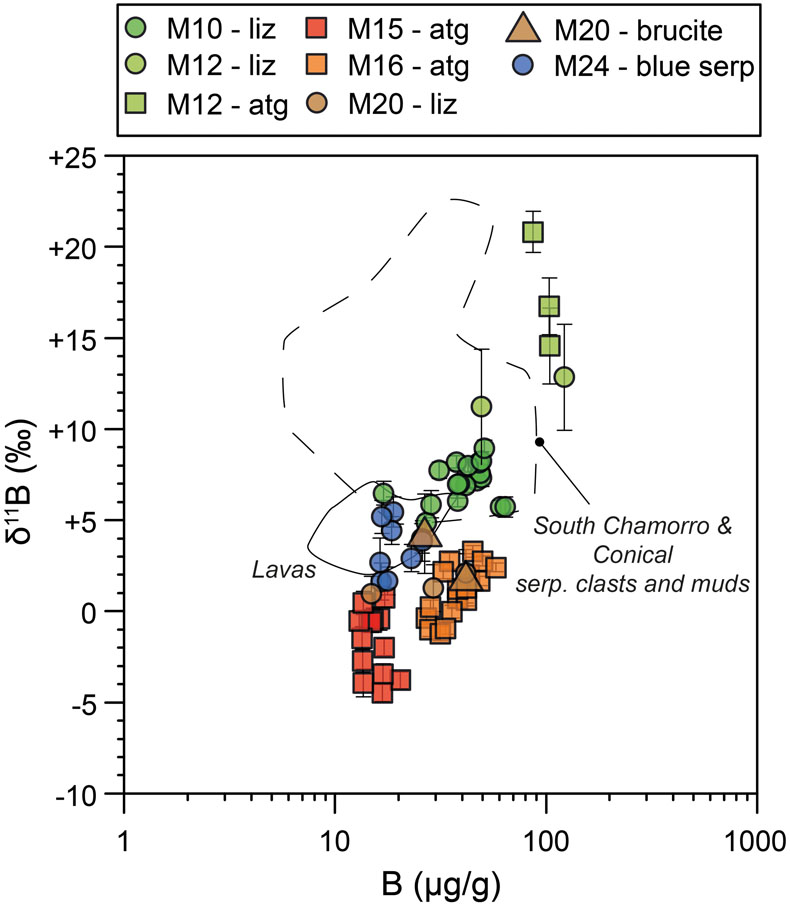
Figure 2 Relationship between δ11B (‰) vs. B (μg/g). Data from South Chamorro (Wei et al., 2005
Wei, W., Kastner, M., Deyhle, A., Spivack, A.J. (2005) Geochemical Cycling of Fluorine, Chlorine, Bromine, and Boron and Implications for Fluid-Rock Reactions in Mariana Forearc, South Chamorro Seamount, ODP Leg 195. In: Shinohara, M., Salisbury, M.H., Richter, C. (Eds.) Proceedings of the Ocean Drilling Program, Scientific Results 195, College Station, TX, 1–23. https://doi.org/10.2973/odp.proc.sr.195.106.2005
) and Conical (Benton et al., 2001Benton, L.D., Ryan, J.G., Tera, F. (2001) Boron isotope systematics of slab fluids as inferred from a serpentine seamount, Mariana forearc. Earth and Planetary Science Letters 187, 273–282. https://doi.org/10.1016/S0012-821X(01)00286-2
) seamounts, and the Mariana lavas (Ishikawa and Tera, 1999Ishikawa, T., Tera, F. (1999) Two isotopically distinct fluids component involved in the Mariana Arc: Evidence from Nb/B ratios and B, Sr, Nd, and Pb isotope systematics. Geology 27, 83–86. https://doi.org/10.1130/0091-7613(1999)027<0083:TIDFCI>2.3.CO;2
) are shown for comparison.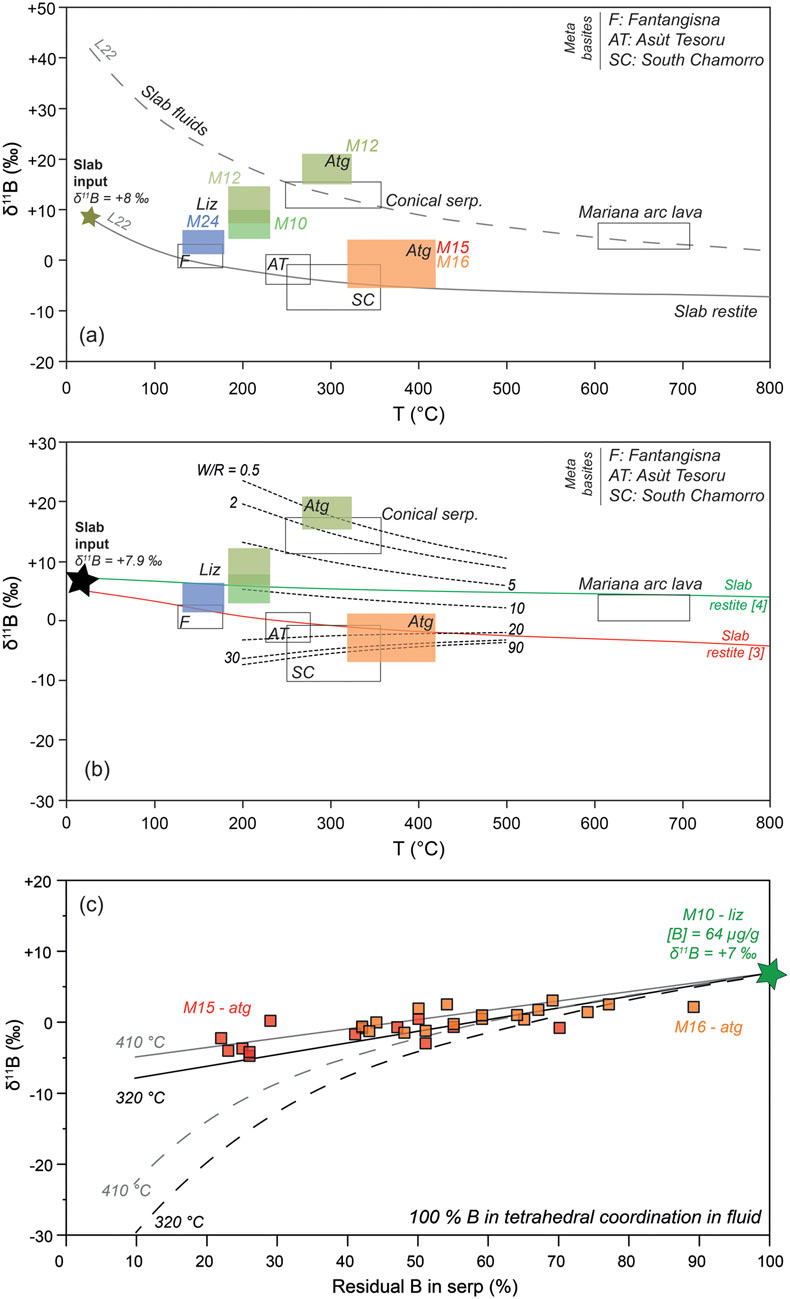
Figure 3 (a) Working Rayleigh dehydration modelling proposed by Liu et al. (2022
Liu, H., Xue, Y.-Y., Yang, T., Jin, X., You, C.-F., Lin, C.-T., Sun, W.-D., Deng, J. (2022) Fluid-rock interactions at shallow depths in subduction zone: Insights from trace elements and B isotopic composition of metabasites from the Mariana forearc. Lithos 422–423, 106730. https://doi.org/10.1016/j.lithos.2022.106730
; L22) to explain the B isotope variability in metabasites from the Fantangisña (F), Asùt Tesoru (AT) and South Chamorro (SC) seamounts (Pabst et al., 2012Pabst, S., Zack, T., Savov, I.P., Ludwig, T., Rost, D., Tonarini, S., Vicenzi, E.P. (2012) The fate of subducted oceanic slabs in the shallow mantle: Insights from boron isotopes and light element composition of metasomatized blueschists from the Mariana forearc. Lithos 132–133, 162–179. https://doi.org/10.1016/j.lithos.2011.11.010
; Liu et al., 2022Liu, H., Xue, Y.-Y., Yang, T., Jin, X., You, C.-F., Lin, C.-T., Sun, W.-D., Deng, J. (2022) Fluid-rock interactions at shallow depths in subduction zone: Insights from trace elements and B isotopic composition of metabasites from the Mariana forearc. Lithos 422–423, 106730. https://doi.org/10.1016/j.lithos.2022.106730
). Serpentinite clasts and muds from Conical (Conical serp.) are from Benton et al. (2001)Benton, L.D., Ryan, J.G., Tera, F. (2001) Boron isotope systematics of slab fluids as inferred from a serpentine seamount, Mariana forearc. Earth and Planetary Science Letters 187, 273–282. https://doi.org/10.1016/S0012-821X(01)00286-2
, Mariana lavas are from Ishikawa and Tera (1999)Ishikawa, T., Tera, F. (1999) Two isotopically distinct fluids component involved in the Mariana Arc: Evidence from Nb/B ratios and B, Sr, Nd, and Pb isotope systematics. Geology 27, 83–86. https://doi.org/10.1130/0091-7613(1999)027<0083:TIDFCI>2.3.CO;2
; δ11B data for the Asùt Tesoru serpentines presented herein are coloured boxes. (b) Modification of the working model proposed by Liu et al. (2022)Liu, H., Xue, Y.-Y., Yang, T., Jin, X., You, C.-F., Lin, C.-T., Sun, W.-D., Deng, J. (2022) Fluid-rock interactions at shallow depths in subduction zone: Insights from trace elements and B isotopic composition of metabasites from the Mariana forearc. Lithos 422–423, 106730. https://doi.org/10.1016/j.lithos.2022.106730
considering B isotope fractionation between slab-derived fluids and serpentines (Li et al., 2022Li, Y.-C., Wei, H.-Z., Palmer, M.R., Ma, J., Jiang, S.-Y., Chen, Y.-X., Lu, J.-J., Liu, X. (2022) Equilibrium boron isotope fractionation during serpentinization and applications in understanding subduction zone processes. Chemical Geology 609, 121047. https://doi.org/10.1016/j.chemgeo.2022.121047
). Green and red lines represent the δ11B composition of slab restite at alkaline ([4]) and acid ([3]) conditions, respectively. Black dashed lines represent serpentine-fluid B isotope fractionation at different water/rock ratios (W/R; Table S-6 and Supplementary Information for details). (c) Variation of δ11B and B content ([B]) according to batch (solid lines) and Rayleigh (dashed lines) devolatilisations at 320 and 410 °C (black and grey, respectively) and alkaline conditions during serpentine phase transition (see Supplementary Information for details).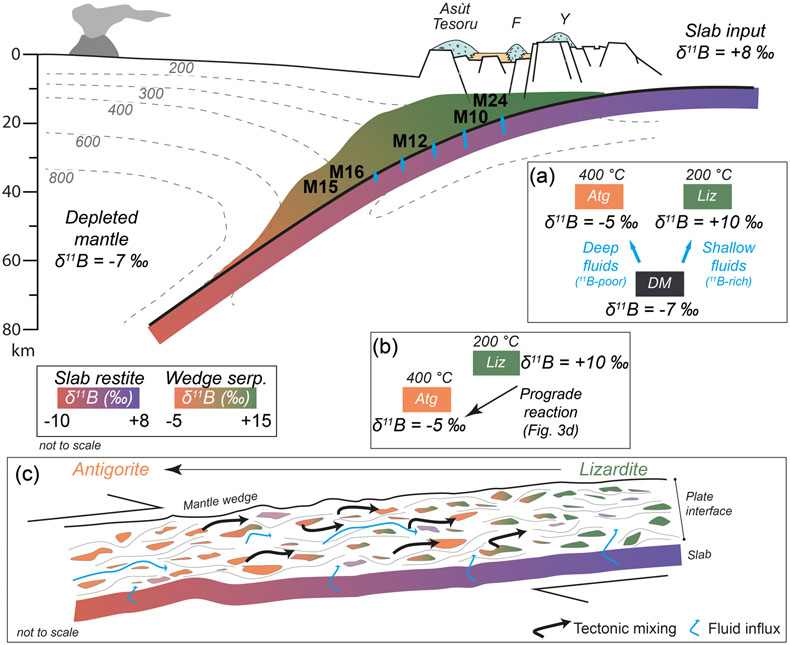
Figure 4 Cartoon illustrating the Mariana subduction setting showing the potential location of studied samples along the slab-mantle interface and the B isotope variation within the slab restite and in the wedge serpentinites. (a) Boron isotope composition of antigorite and lizardite flushed by deep and shallow slab fluids, respectively, according to model presented in Figure 3b. (b) Modification of the δ11B imprint during lizardite to antigorite transition according to model presented in Figure 3c. (c) Schematic plate interface showing complex fluid and tectonic mixing where liz- and atg-bearing serpentinite clasts can be mixed together with portion of metamorphosed slab materials (see text for details). Modified after Debret et al. (2020)
Debret, B., Reekie, C.D.J., Mattielli, N., Beunon, H., Ménez, B., Savov, I.P., Williams, H.M. (2020) Redox transfer at subduction zones: insights from Fe isotopes in the Mariana forearc. Geochemical Perspectives Letters 12, 46–51. https://doi.org/10.7185/geochemlet.2003
and references therein.