



Igneous rocks as a viable source of fixed nitrogen to the prebiotic world
Affiliations | Corresponding Author | Cite as | Funding information
Published by the European Association of Geochemistry
under Creative Commons License CC BY 4.0
Keywords: origin of life, rock weathering, ammonium


- Share this article


-
Article views:1,770Cumulative count of HTML views and PDF downloads.
- Download Citation
- Rights & Permissions

top
Abstract
Figures and Tables
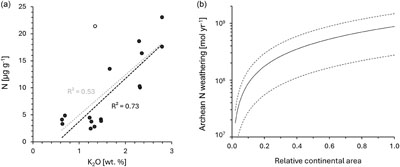 Figure 1 (a) Whole-rock data showing the N versus K concentrations in aphyric lavas from Hekla volcano (Boocock et al., 2023a). The correlation coefficient of all data (R2 = 0.53, grey trendline) increases (R2 = 0.73, black trendline) if one outlier is excluded (unfilled point). (b) Calculated N weathering flux for the early Archean (see text for derivation). | 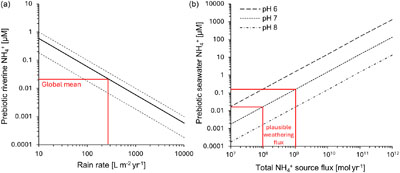 Figure 2 Fluid concentrations on the prebiotic Earth for (a) average river waters and (b) average seawater. The latter includes sinks due to clay adsorption and ammonia degassing (Stüeken, 2016). The pH range from 6 to 8 includes estimates of early Archean seawater pH of ca. 6.5 (Halevy and Bachan, 2017). |  Table 1 Calculated prebiotic fluxes of fixed N in mol yr−1. |
| Figure 1 | Figure 2 | Table 1 |
top
Introduction
All life as we know it requires reduced nitrogen (N) in ammonic form to build amino acids, DNA, RNA and other fundamental biomolecules that fuel biochemical processes in living cells. Therefore, the requirement for ammonic N most likely extends back to the prebiotic world. Today, the major source of ammonium to the biosphere is biological N2 fixation with a flux of ca. 1.1 × 10¹³ mol yr−1 (Wang et al., 2019
Wang, W.-L., Moore, J.K., Martiny, A.C., Primeau, F.W. (2019) Convergent estimates of marine nitrogen fixation. Nature 566, 205–211. https://doi.org/10.1038/s41586-019-0911-2
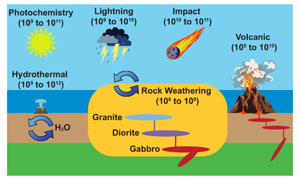
); however, this metabolism would initially not have existed. Hence prebiotic reaction networks and perhaps the earliest life forms in the Eo- to Palaeoarchean (4.0–3.2 Ga) would have relied on abiotic mechanisms to supply ammonic N.A number of high energy planetary-scale processes have been identified that can convert atmospheric N2 gas — the largest reservoir of N at Earth’s surface — into bioavailable forms. These include lightning (109–1010 mol yr−1 in the Archean) (Kasting and Walker, 1981
Kasting, J.F., Walker, J.C.G. (1981) Limits on oxygen concentration in the prebiological atmosphere and the rate of abiotic fixation of nitrogen. Journal of Geophysical Research: Oceans 86, 1147–1158. https://doi.org/10.1029/JC086iC02p01147
; Navarro-González et al., 1998Navarro-González, R., Molina, M.J., Molina, L.T. (1998) Nitrogen fixation by volcanic lightning in the early Earth. Geophysical Research Letters 25, 3123–3126. https://doi.org/10.1029/98GL02423
), volcanic eruptions (109–1011 mol yr−1) (Mather et al., 2004Mather, T.A., Pyle, D.M., Allen, A.G. (2004) Volcanic source for fixed nitrogen in the early Earth’s atmosphere. Geology 32, 905–908. https://doi.org/10.1130/G20679.1
), impact shock waves (1010–1011 mol yr−1) (Kasting, 1990Kasting, J.F. (1990) Bolide impacts and the oxidation state of carbon in the Earth’s early atmosphere. Origins of Life and Evolution of the Biosphere 20, 199–231. https://doi.org/10.1007/BF01808105
; Nakazawa et al., 2005Nakazawa, H., Sekine, T., Kakegawa, T., Nakazawa, S. (2005) High yield shock synthesis of ammonia from iron, water and nitrogen available on the early Earth. Earth and Planetary Science Letters 235, 356–360. https://doi.org/10.1016/j.epsl.2005.03.024
), photochemical reactions (109–1011 mol yr−1) (Tian et al., 2011Tian, F., Kasting, J.F., Zahnle, K. (2011) Revisiting HCN formation in Earth’s early atmosphere. Earth and Planetary Science Letters 308, 417–423. https://doi.org/10.1016/j.epsl.2011.06.011
; Wogan et al., 2023Wogan, N.F., Catling, D.C., Zahnle, K.J., Lupu, R. (2023) Origin-of-life Molecules in the Atmosphere after Big Impacts on the Early Earth. The Planetary Science Journal 4, 169. https://doi.org/10.3847/PSJ/aced83
) and hydrothermal vents (109–1012 mol yr−1) (Brandes et al., 1998Brandes, J.A., Boctor, N.Z., Cody, G.D., Cooper, B.A., Hazen, R.M., Yoder Jr., H.S. (1998) Abiotic nitrogen reduction on the early Earth. Nature 395, 365–367. https://doi.org/10.1038/26450
; Smirnov et al., 2008Smirnov, A., Hausner, D., Laffers, R., Strongin, D.R., Schoonen, M.A.A. (2008) Abiotic ammonium formation in the presence of Ni-Fe metals and alloys and its implications for the Hadean nitrogen cycle. Geochemical Transactions 9, 5. https://doi.org/10.1186/1467-4866-9-5
). Of these, lightning, volcanism, and impact shocks generate N oxides, which require conversion into ammonium by redox reactions involving ferrous iron (Wang et al., 2023Wang, X., Wells, N.S., Xiao, W., Hamilton, J.L., Jones, A.M., Collins, R.N. (2023) Abiotic reduction of nitrate to ammonium by iron (oxy)(hydr) oxides and its stable isotope (δ15N, δ18O) dynamics. Geochimica et Cosmochimica Acta 347, 28–41. https://doi.org/10.1016/j.gca.2023.02.013
). While all of these are plausible N sources that almost certainly contributed to the early N cycle, they have in common that they are spatially and/or temporally restricted, making them unreliable for a nascent biosphere that attempts to expand into new ecological niches. To overcome this limitation, we quantitatively explored the hypothesis that rock weathering contributed a continuous supply of bioavailable ammonium on the early Archean Earth.On the modern Earth, rock weathering has been found to generate a N flux of ca. 0.8–1.3 × 10¹² mol yr−1 from land to sea (Houlton et al., 2018
Houlton, B.Z., Morford, S.L., Dahlgren, R.A. (2018) Convergent evidence for widespread rock nitrogen sources in Earth’s surface environment. Science 360, 58–62. https://doi.org/10.1126/science.aan4399
), equivalent to up to 10 % of the biological N2 fixation flux. However, this value is not directly transferrable to the early Earth for several reasons: (1) the N content of modern bulk continental crust is elevated due to storage of biomass in (meta-)sedimentary rocks and granitoids (Mikhail et al., 2024Mikhail, S., Stüeken, E.E., Boocock, T.J., Athey, M., Mappin, N., Boyce, A.J., Liebmann, J., Spencer, C.J., Bucholz, C.E. (2024) Strongly peraluminous granites provide independent evidence for an increase in biomass burial across the Precambrian–Phanerozoic boundary. Geology 52, 87–91. https://doi.org/10.1130/G51800.1
), (2) the mass of exposed continental crust may have been smaller in the past (Dhuime et al., 2015Dhuime, B., Wuestefeld, A., Hawkesworth, C.J. (2015) Emergence of modern continental crust about 3 billion years ago. Nature Geoscience 8, 552–555. https://doi.org/10.1038/ngeo2466
), and (3) continental crust probably had a different chemical composition with a higher degree of maficity than it does today (Greber et al., 2017Greber, N.D., Dauphas, N., Bekker, A., Ptáček, M.P., Bindeman, I.N., Hofmann, A. (2017) Titanium isotopic evidence for felsic crust and plate tectonics 3.5 billion years ago. Science 357, 1271–1274. https://doi.org/10.1126/science.aan8086
). Here, we account for these three parameters to derive plausible upper and lower bounds for a N weathering flux and resulting fluid ammonium concentrations in the early Archean, enabling us to determine if this flux could have contributed to the origin and sustenance of first life.top
The Early Archean Crustal N Reservoir
Similar to other cations, N as ammonium (NH4+) contained in crustal rocks can be liberated by weathering as demonstrated from modern soils (Dahlgren, 1994
Dahlgren, R.A. (1994) Soil acidification and nitrogen saturation from weathering of ammonium-bearing rock. Nature 368, 838–841. https://doi.org/10.1038/368838a0
). Quantifying the global prebiotic N weathering flux requires knowledge of the amount of lattice-bound N in Earth’s first land masses. Today’s continental crust contains ca. 1.7 ± 0.1 × 10¹⁸ kg of N (nearly half as much as the atmosphere) with an average concentration of 150 ± 12 μg g−1 in the upper crust (Johnson and Goldblatt, 2015Johnson, B., Goldblatt, C. (2015) The nitrogen budget of Earth. Earth-Science Reviews 148, 150–173. https://doi.org/10.1016/j.earscirev.2015.05.006
). Much of this rock-bound N is hosted in (meta-)sedimentary rocks and sediment derived granitoids. In contrast, on the early Earth, prior to the origin of life, N in crustal rocks would have been derived from purely magmatic sources, i.e. not involving biomass. The earliest felsic rocks in the continental crust were formed by (1) re-melting of mafic igneous rocks. or (2) magmatic differentiation of mafic melts. Both processes result in incompatible element-enriched melts (e.g., elevated concentrations of large ion lithophile elements). During magmatic differentiation, N in the form of ammonium (NH4+) behaves similar to LILEs, such as potassium (K+), due to their similarity in charge and ionic radius. It has been shown that magmatic differentiation can lead to a significant enrichment of igneous sourced (primary) N in continental crust-building felsic igneous rocks (Boocock et al., 2023aBoocock, T.J., Mikhail, S., Boyce, A.J., Prytulak, J., Savage, P.S., Stüeken, E.E. (2023a) A primary magmatic source of nitrogen to Earth’s crust. Nature Geoscience 16, 521–526. https://doi.org/10.1038/s41561-023-01194-3
). For example, Hekla volcano on Iceland shows an increase of N from 3.3 μg g−1 in basalt to up to 23 μg g−1 N in rhyolites (Fig. 1a). The concentration in the felsic end member of Hekla implies that between 8.06 × 10¹⁶ kg and 1.36 × 10¹⁷ kg of N in the continental crust today could be derived from magmatic differentiation of mantle melts. By comparison with the total mass of N in the granitic (filtered to >60 % SiO2) upper continental crust (2.62 × 10¹⁷ kg N) (Johnson and Goldblatt, 2015Johnson, B., Goldblatt, C. (2015) The nitrogen budget of Earth. Earth-Science Reviews 148, 150–173. https://doi.org/10.1016/j.earscirev.2015.05.006
), igneous N can account for between 31 to 52 % of felsic stored N. In igneous rocks, N is most likely hosted in the form of lattice bound ammonium in feldspars and micas (Boocock et al., 2023bBoocock, T.J., Stüeken, E.E., Bybee, G.M., König, R., Boyce, A.J., Prytulak, J., Buisman, I., Mikhail, S. (2023b) Equilibrium partitioning and isotopic fractionation of nitrogen between biotite, plagioclase, and K-feldspar during magmatic differentiation. Geochimica et Cosmochimica Acta 356, 116–128. https://doi.org/10.1016/j.gca.2023.07.010
; Honma and Itihara, 1981Honma, H., Itihara, Y. (1981) Distribution of ammonium in minerals of metamorphic and granitic rocks. Geochimica et Cosmochimica Acta 45, 983–988. https://doi.org/10.1016/0016-7037(81)90122-8
), and both phases break down during weathering and release cations into solution (Wilson, 2004Wilson, M.J. (2004) Weathering of the primary rock-forming minerals: processes, products and rates. Clay Minerals 39, 233–266. https://doi.org/10.1180/0009855043930133
).Figure 1 (a) Whole-rock data showing the N versus K concentrations in aphyric lavas from Hekla volcano (Boocock et al., 2023a
Boocock, T.J., Mikhail, S., Boyce, A.J., Prytulak, J., Savage, P.S., Stüeken, E.E. (2023a) A primary magmatic source of nitrogen to Earth’s crust. Nature Geoscience 16, 521–526. https://doi.org/10.1038/s41561-023-01194-3
). The correlation coefficient of all data (R2 = 0.53, grey trendline) increases (R2 = 0.73, black trendline) if one outlier is excluded (unfilled point). (b) Calculated N weathering flux for the early Archean (see text for derivation).Collectively, these observations show that the igneous crustal N reservoir is important to consider as a nutrient source to prebiotic processes and early biotic communities. Direct constraints on the N concentration in early Archean crustal rocks are so far lacking, but we can derive plausible lower and upper bounds. First, Earth’s mantle is estimated to contain ca. 0.84 ± 0.43 μg g−1 N (Marty, 2012
Marty, B. (2012) The origins and concentrations of water, carbon, nitrogen and noble gases on Earth. Earth and Planetary Science Letters 313–314, 56–66. https://doi.org/10.1016/j.epsl.2011.10.040
) and modern oceanic crust contains 1.4 ± 1.3 μg g−1 (Johnson and Goldblatt, 2015Johnson, B., Goldblatt, C. (2015) The nitrogen budget of Earth. Earth-Science Reviews 148, 150–173. https://doi.org/10.1016/j.earscirev.2015.05.006
). Given the magmatic differentiation trends documented from the modern Hekla suite (Fig. 1a), the N concentration of early Archean felsic rocks was likely higher than in these two reservoirs. We will therefore proceed with 2 μg g−1 as a lower bound for the N concentration of the first continental crust. Second, Neoarchean peraluminous granites have been found to contain 8 ± 5 μg g−1 N (Mikhail et al., 2024Mikhail, S., Stüeken, E.E., Boocock, T.J., Athey, M., Mappin, N., Boyce, A.J., Liebmann, J., Spencer, C.J., Bucholz, C.E. (2024) Strongly peraluminous granites provide independent evidence for an increase in biomass burial across the Precambrian–Phanerozoic boundary. Geology 52, 87–91. https://doi.org/10.1130/G51800.1
). These granites must have involved some degree of sediment melting during their formation to develop the peraluminous character. As sediments are likely to contain biomass and hence biogenic N, the mean concentration of 8 μg g−1 in these peraluminous granites is thus a plausible upper limit for N in the prebiotic continental crust. Importantly, average crust is not purely felsic but intermediate in composition, i.e. involving a combination of mafic and felsic rocks. Taken together, we therefore proceed with a mean of 5 ± 3 μg g−1, but we also consider enrichments up to 23 μg g−1 later in the discussion to account for magmatic processes seen at Hekla today (Boocock et al., 2023aBoocock, T.J., Mikhail, S., Boyce, A.J., Prytulak, J., Savage, P.S., Stüeken, E.E. (2023a) A primary magmatic source of nitrogen to Earth’s crust. Nature Geoscience 16, 521–526. https://doi.org/10.1038/s41561-023-01194-3
). We could alternatively use the estimated K content of early Archean crust (ca. 1.5 wt. % K2O) (Greber et al., 2017Greber, N.D., Dauphas, N., Bekker, A., Ptáček, M.P., Bindeman, I.N., Hofmann, A. (2017) Titanium isotopic evidence for felsic crust and plate tectonics 3.5 billion years ago. Science 357, 1271–1274. https://doi.org/10.1126/science.aan8086
) and scale it by the N/K ratio of a purely igneous system such as Hekla volcano (ca. 8 μg g−1 per 1 wt. % K2O; Fig. 1a) to derive an Archean crustal N concentration of about 12 μg g−1, but this value would be slightly higher than the average of Neoarchean peraluminous granites. Hence, the approach described above is more conservative.top
Prebiotic N Weathering
As noted earlier, N in igneous rocks is largely hosted in feldspars and micas, due to the similarity in charge and size between ammonium and K. Feldspars and micas are also the major hosts of K in the crust, which leads to a strong covariance between the two elements in both igneous and metamorphic suites (Boocock et al., 2023a
Boocock, T.J., Mikhail, S., Boyce, A.J., Prytulak, J., Savage, P.S., Stüeken, E.E. (2023a) A primary magmatic source of nitrogen to Earth’s crust. Nature Geoscience 16, 521–526. https://doi.org/10.1038/s41561-023-01194-3
; Busigny and Bebout, 2013Busigny, V., Bebout, G.E. (2013) Nitrogen in the Silicate Earth: Speciation and Isotopic Behavior during Mineral–Fluid Interactions. Elements 9, 353–358. https://doi.org/10.2113/gselements.9.5.353
). Hence, the well established rate at which K is released into the environment during weathering can be used to derive the rock weathering flux of ammonium (i.e. independent from biomass weathering). The modern upper crust contains on average 2.41 ± 0.22 wt. % K (Greber et al., 2017Greber, N.D., Dauphas, N., Bekker, A., Ptáček, M.P., Bindeman, I.N., Hofmann, A. (2017) Titanium isotopic evidence for felsic crust and plate tectonics 3.5 billion years ago. Science 357, 1271–1274. https://doi.org/10.1126/science.aan8086
), and modern rivers carry 1.58 ± 0.34 μg g−1 K in solution (Wang et al., 2021Wang, K., Peucker-Ehrenbrink, B., Chen, H., Lee, H., Hasenmueller, E.A. (2021) Dissolved potassium isotopic composition of major world rivers. Geochimica et Cosmochimica Acta 294, 145–159. https://doi.org/10.1016/j.gca.2020.11.012
). With a global river water flux of 3.74 ± 0.78 × 10¹⁶ L yr−1 (Collins et al., 2024Collins, E.L., David, C.H., Riggs, R., Allen, G.H., Pavelsky, T.M., Lin, P., Pan, M., Yamazaki, D., Meentemeyer, R.K., Sanchez, G.M. (2024) Global patterns in river water storage dependent on residence time. Nature Geoscience 17, 433–439. https://doi.org/10.1038/s41561-024-01421-5
), this leads to a modern global riverine K flux of 5.91 ± 1.77 × 10¹³ g yr−1. For a modern continental N concentration of 150 ± 12 μg g−1 (Johnson and Goldblatt, 2015Johnson, B., Goldblatt, C. (2015) The nitrogen budget of Earth. Earth-Science Reviews 148, 150–173. https://doi.org/10.1016/j.earscirev.2015.05.006
), this would imply a N rock weathering flux of 3.7 ± 1.2 × 10¹¹ g yr−1, or 2.6 ± 0.8 × 10¹⁰ mol yr−1. However, it is important to note that in the modern crust, some fraction of N is bound to organic matter in shales (Johnson and Goldblatt, 2015Johnson, B., Goldblatt, C. (2015) The nitrogen budget of Earth. Earth-Science Reviews 148, 150–173. https://doi.org/10.1016/j.earscirev.2015.05.006
), meaning that it is not hosted in potassic silicate minerals and may weather at a different rate than K. Therefore, scaling N rock weathering by K weathering is inaccurate for the modern crust. In contrast, on a prebiotic world, a biogenically derived organic reservoir would have been absent, such that K weathering, which tracks only silicate bound N, can provide a useful benchmark. We therefore proceed with our K-based approach, scaled by the average size of the early Archean continental N reservoir of 5 ± 3 μg g−1 derived above.Implicit to our approach is the assumption that N-bearing silicates weather at the same rate as K-bearing silicates over geological time scales, including formation and dissolution of secondary minerals, such that we can calculate the N weathering flux as FN-weathering = [N]crust/[K]modern-crust × FK-modern, where [N]crust is the assumed concentration of N in the ancient crust, [K]modern-crust is the concentration of K in the modern crust, and FK-modern is the modern weathering flux of K. We are also assuming that weathering rates overall have been the same on the early Earth as today, but we acknowledge that this is uncertain as global climate may have differed in ways that are poorly constrained.
top
Results and Discussion
The approach outlined above yields a global average N weathering flux of 8.8 ± 6.0 × 10⁸ mol yr−1 (1.2 ± 0.8 × 10¹⁰ g yr−1). We emphasise that potential sinks of ammonium are not considered and may reduce this value. These include volatilisation of ammonia (NH3), potential photochemical destruction and other reactions, all of which are difficult to quantify. However, at least 21 % of precipitation recharges groundwaters today (Xie et al., 2024
Xie, J., Liu, X., Jasechko, S., Berghuijs, W.R., Wang, K., Liu, C., Reichstein, M., Jung, M., Koirala, S. (2024) Majority of global river flow sustained by groundwater. Nature Geoscience 17, 770–777. https://doi.org/10.1038/s41561-024-01483-5
), and ammonium contained in this groundwater reservoir would have experienced only limited ammonium loss by volatilisation and photooxidation. Also, in surface waters, UV radiation would have been at least partly attenuated. We therefore proceed with the flux calculated above, while highlighting that additional work is needed to quantify ammonium loss processes from weathering environments on an abiotic world.Using these constraints, the concentration of dissolved ammonium in river waters would be 0.023 ± 0.017 μM, compared to 0.7 ± 0.3 μM with our modern weathering flux of 2.6 ± 0.8 × 10¹⁰ mol yr−1 (see above). We can further scale the calculated early Archean flux by a smaller continental landmass, assuming that the river water flux scales linearly with land area. For example, for 10–20 % of modern land exposure results in a global average ammonium flux estimate of 0.9–1.8 × 10⁸ mol yr−1 (Fig. 1b). Also, the riverine water concentration may vary if rainfall is not uniformly distributed, or if the rain rate and hence river water flux were significantly different in the past, depending on global temperature. With the modern river water flux of 3.74 ± 0.78 × 10¹⁶ L yr−1 and a global land surface area of 1.48 × 10¹⁴ m2, the global average rain rate is 253 L m−2 yr−1. The lower the rainfall, the higher the resulting dissolved ammonium concentration, as ions are less diluted (Fig. 2a), consistent with observations in modern rivers (Hung et al., 2020
Hung, J.-J., Yang, C.-Y., Lai, I.-J., Li, Y.-H. (2020) Rainfall and Human Impacts on Weathering Rates and Carbon-Nutrient Yields in the Watershed of a Small Mountainous River (Kaoping) in Southwestern Taiwan. Sustainability 12, 7689. https://doi.org/10.3390/su12187689
). At very high rain rates weathering may become erosion limited. This threshold is dependent on climate and tectonics and unknown for the early Earth. However, at low rain rates where N concentrations would be highest this concern would not be relevant.Figure 2 Fluid concentrations on the prebiotic Earth for (a) average river waters and (b) average seawater. The latter includes sinks due to clay adsorption and ammonia degassing (Stüeken, 2016
Stüeken, E.E. (2016) Nitrogen in Ancient Mud: A Biosignature? Astrobiology 16, 730–735. https://doi.org/10.1089/ast.2016.1478
). The pH range from 6 to 8 includes estimates of early Archean seawater pH of ca. 6.5 (Halevy and Bachan, 2017Halevy, I., Bachan, A. (2017) The geologic history of seawater pH. Science 355, 1069–1071. https://doi.org/10.1126/science.aal4151
).Lastly, we can use the global weathering flux to calculate the resulting marine ammonium reservoir, using a simple box model of an abiotic N cycle from a previous study (Stüeken, 2016
Stüeken, E.E. (2016) Nitrogen in Ancient Mud: A Biosignature? Astrobiology 16, 730–735. https://doi.org/10.1089/ast.2016.1478
). Here, the source is the total abiotic ammonium input while sinks include ammonium adsorption to clays and pH dependent ammonia volatilisation with an assumed ocean turnover rate of 1000 yr. The results show that for a total source flux of 108–109 mol yr−1 derived from rock weathering the steady state concentration of ammonium in the ocean would have been 0.01–0.1 μM (Fig. 2b). Additional ammonium may have been contributed by weathering of oceanic crust not explicitly considered in this study; this flux was likely smaller than the continental flux, given the low N content of mafic rocks (see above). By contrast, using the proposed source fluxes from lighting, volcanism, impact shocks, photochemistry and hydrothermal vents (109–1012 mol yr−1) and assuming complete conversion to ammonium in all cases would yield dissolved marine ammonium concentrations of ca. 1–1000 μM in the global ocean.Our calculated rock weathering flux of ammonium is smaller than proposed fluxes based on high energy processes in the atmosphere or in the deep ocean (Table 1). Nevertheless, this flux may have played a role in the origin and early evolution of the biosphere because rock weathering provides (a) a constant supply of fixed N, unlike sporadic high energy events, (b) N in the form of ammonium, circumventing the need of reacting atmospheric N oxides with ferrous iron, and (c) fixed N available on land, in lacustrine settings that were cut off from deep marine hydrothermal ammonium sources. Furthermore, the riverine ammonium flux could have become concentrated in local evaporitic ponds. It may also have been further elevated in the vicinity of N-enriched felsic rocks, such as at Hekla volcano or felsic plutons, where evolved silicic rocks can show N concentrations that are ca. 5 times higher than the global crustal average assumed in our model for the early Archean (Boocock et al., 2023a
Boocock, T.J., Mikhail, S., Boyce, A.J., Prytulak, J., Savage, P.S., Stüeken, E.E. (2023a) A primary magmatic source of nitrogen to Earth’s crust. Nature Geoscience 16, 521–526. https://doi.org/10.1038/s41561-023-01194-3
). For example, evaporation by a factor of 10, paired with locally enriched rocks by a factor of 5, could yield dissolved ammonium concentrations approaching 1 μM in lakes. In comparison, the modern deep ocean contains 30 μM of dissolved nitrate, with much lower concentrations down to a few μM or less in surface waters (Gruber, 2008Gruber, N. (2008) The Marine Nitrogen Cycle: Overview and Challenges. In: Capone, D.G., Bronk, D.A., Mulholland, M.R., Carpenter, E.J. (Eds.) Nitrogen in the Marine Environment. Second Edition, Elsevier, Burlington, 1–50. https://doi.org/10.1016/B978-0-12-372522-6.00001-3
). Fixed N concentrations around 1 μM are thus significant for biological processes. Lastly, we emphasise that rock weathering would operate on any Earth-like planet with a differentiated crust and a hydrosphere. The ability of this process to generate significant levels of dissolved ammonium thus speaks to the origin of habitable biochemical conditions on other worlds.Table 1 Calculated prebiotic fluxes of fixed N in mol yr−1.
| Flux type | Magnitude (mol yr−1) | Dominant product | Supply rate | Ref. |
| Lightning | 109–1010 | Nitrogen oxide(s) | Sporadic | 1 |
| Volcanic eruptions | 109–1011 | Nitrogen oxide(s) | Sporadic | 2 |
| Impact shock waves | 1010–1011 | Nitrogen oxide(s) | Sporadic | 3 |
| Photochemistry | 109–1011 | Hydrogen cyanide | Constant | 4 |
| Hydrothermal vents | 109–1012 | Ammonium | Constant | 5 |
| Crustal weathering | 108–109 | Ammonium | Constant | 6 |
1 = Navarro-González et al. (1998)Navarro-González, R., Molina, M.J., Molina, L.T. (1998) Nitrogen fixation by volcanic lightning in the early Earth. Geophysical Research Letters 25, 3123–3126. https://doi.org/10.1029/98GL02423, Kasting and Walker (1981)Kasting, J.F., Walker, J.C.G. (1981) Limits on oxygen concentration in the prebiological atmosphere and the rate of abiotic fixation of nitrogen. Journal of Geophysical Research: Oceans 86, 1147–1158. https://doi.org/10.1029/JC086iC02p01147; 2 = Mather et al. (2004)Mather, T.A., Pyle, D.M., Allen, A.G. (2004) Volcanic source for fixed nitrogen in the early Earth’s atmosphere. Geology 32, 905–908. https://doi.org/10.1130/G20679.1; 3 = Kasting (1990)Kasting, J.F. (1990) Bolide impacts and the oxidation state of carbon in the Earth’s early atmosphere. Origins of Life and Evolution of the Biosphere 20, 199–231. https://doi.org/10.1007/BF01808105, Nakazawa et al. (2005)Nakazawa, H., Sekine, T., Kakegawa, T., Nakazawa, S. (2005) High yield shock synthesis of ammonia from iron, water and nitrogen available on the early Earth. Earth and Planetary Science Letters 235, 356–360. https://doi.org/10.1016/j.epsl.2005.03.024; 4 = Tian et al. (2011)Tian, F., Kasting, J.F., Zahnle, K. (2011) Revisiting HCN formation in Earth’s early atmosphere. Earth and Planetary Science Letters 308, 417–423. https://doi.org/10.1016/j.epsl.2011.06.011, Wogan et al. (2023)Wogan, N.F., Catling, D.C., Zahnle, K.J., Lupu, R. (2023) Origin-of-life Molecules in the Atmosphere after Big Impacts on the Early Earth. The Planetary Science Journal 4, 169. https://doi.org/10.3847/PSJ/aced83; 5 = Brandes et al. (1998)Brandes, J.A., Boctor, N.Z., Cody, G.D., Cooper, B.A., Hazen, R.M., Yoder Jr., H.S. (1998) Abiotic nitrogen reduction on the early Earth. Nature 395, 365–367. https://doi.org/10.1038/26450, Smirnov et al. (2008)Smirnov, A., Hausner, D., Laffers, R., Strongin, D.R., Schoonen, M.A.A. (2008) Abiotic ammonium formation in the presence of Ni-Fe metals and alloys and its implications for the Hadean nitrogen cycle. Geochemical Transactions 9, 5. https://doi.org/10.1186/1467-4866-9-5; 6 = this study.
top
Acknowledgements
This work was financially supported by a NERC Frontiers grant to EES (NE/V010824/1), a NERC IAPETUS DTP studentship to FH (NE/S007431/1), and a NERC Standard Grant to SM (NE/V011383/1). In order to meet institutional and research funder open access requirements, any accepted manuscript arising shall be open access under a Creative Commons Attribution (CC BY) reuse licence with zero embargo. We thank the editor and two reviewers for constructive feedback that improved the manuscript.
Editor: Tanja Bosak
top
References
Boocock, T.J., Mikhail, S., Boyce, A.J., Prytulak, J., Savage, P.S., Stüeken, E.E. (2023a) A primary magmatic source of nitrogen to Earth’s crust. Nature Geoscience 16, 521–526. https://doi.org/10.1038/s41561-023-01194-3
 Show in context
 It has been shown that magmatic differentiation can lead to a significant enrichment of igneous sourced (primary) N in continental crust-building felsic igneous rocks (Boocock et al., 2023a).
View in article
(a) Whole-rock data showing the N versus K concentrations in aphyric lavas from Hekla volcano (Boocock et al., 2023a).
View in article
Taken together, we therefore proceed with a mean of 5 ± 3 μg g−1, but we also consider enrichments up to 23 μg g−1 later in the discussion to account for magmatic processes seen at Hekla today (Boocock et al., 2023a).
View in article
Feldspars and micas are also the major hosts of K in the crust, which leads to a strong covariance between the two elements in both igneous and metamorphic suites (Boocock et al., 2023a; Busigny and Bebout, 2013).
View in article
It may also have been further elevated in the vicinity of N-enriched felsic rocks, such as at Hekla volcano or felsic plutons, where evolved silicic rocks can show N concentrations that are ca. 5 times higher than the global crustal average assumed in our model for the early Archean (Boocock et al., 2023a).
View in article
Boocock, T.J., Stüeken, E.E., Bybee, G.M., König, R., Boyce, A.J., Prytulak, J., Buisman, I., Mikhail, S. (2023b) Equilibrium partitioning and isotopic fractionation of nitrogen between biotite, plagioclase, and K-feldspar during magmatic differentiation. Geochimica et Cosmochimica Acta 356, 116–128. https://doi.org/10.1016/j.gca.2023.07.010
Show in context In igneous rocks, N is most likely hosted in the form of lattice bound ammonium in feldspars and micas (Boocock et al., 2023b; Honma and Itihara, 1981), and both phases break down during weathering and release cations into solution (Wilson, 2004).
View in article
Brandes, J.A., Boctor, N.Z., Cody, G.D., Cooper, B.A., Hazen, R.M., Yoder Jr., H.S. (1998) Abiotic nitrogen reduction on the early Earth. Nature 395, 365–367. https://doi.org/10.1038/26450
Show in context These include lightning (109–1010 mol yr−1 in the Archean) (Kasting and Walker, 1981; Navarro-González et al., 1998), volcanic eruptions (109–1011 mol yr−1) (Mather et al., 2004), impact shock waves (1010–1011 mol yr−1) (Kasting, 1990; Nakazawa et al., 2005), photochemical reactions (109–1011 mol yr−1) (Tian et al., 2011; Wogan et al., 2023) and hydrothermal vents (109–1012 mol yr−1) (Brandes et al., 1998; Smirnov et al., 2008).
View in article
1 = Navarro-González et al. (1998), Kasting and Walker (1981); 2 = Mather et al. (2004); 3 = Kasting (1990), Nakazawa et al. (2005); 4 = Tian et al. (2011), Wogan et al. (2023); 5 = Brandes et al. (1998), Smirnov et al. (2008); 6 = this study.
View in article
Busigny, V., Bebout, G.E. (2013) Nitrogen in the Silicate Earth: Speciation and Isotopic Behavior during Mineral–Fluid Interactions. Elements 9, 353–358. https://doi.org/10.2113/gselements.9.5.353
Show in context Feldspars and micas are also the major hosts of K in the crust, which leads to a strong covariance between the two elements in both igneous and metamorphic suites (Boocock et al., 2023a; Busigny and Bebout, 2013).
View in article
Collins, E.L., David, C.H., Riggs, R., Allen, G.H., Pavelsky, T.M., Lin, P., Pan, M., Yamazaki, D., Meentemeyer, R.K., Sanchez, G.M. (2024) Global patterns in river water storage dependent on residence time. Nature Geoscience 17, 433–439. https://doi.org/10.1038/s41561-024-01421-5
Show in context With a global river water flux of 3.74 ± 0.78 × 10¹⁶ L yr−1 (Collins et al., 2024), this leads to a modern global riverine K flux of 5.91 ± 1.77 × 10¹³ g yr−1
View in article
Dahlgren, R.A. (1994) Soil acidification and nitrogen saturation from weathering of ammonium-bearing rock. Nature 368, 838–841. https://doi.org/10.1038/368838a0
Show in context Similar to other cations, N as ammonium (NH4 +) contained in crustal rocks can be liberated by weathering as demonstrated from modern soils (Dahlgren, 1994).
View in article
Dhuime, B., Wuestefeld, A., Hawkesworth, C.J. (2015) Emergence of modern continental crust about 3 billion years ago. Nature Geoscience 8, 552–555. https://doi.org/10.1038/ngeo2466
Show in context However, this value is not directly transferrable to the early Earth for several reasons: (1) the N content of modern bulk continental crust is elevated due to storage of biomass in (meta-)sedimentary rocks and granitoids (Mikhail et al., 2024), (2) the mass of exposed continental crust may have been smaller in the past (Dhuime et al., 2015), and (3) continental crust probably had a different chemical composition with a higher degree of maficity than it does today (Greber et al., 2017).
View in article
Greber, N.D., Dauphas, N., Bekker, A., Ptáček, M.P., Bindeman, I.N., Hofmann, A. (2017) Titanium isotopic evidence for felsic crust and plate tectonics 3.5 billion years ago. Science 357, 1271–1274. https://doi.org/10.1126/science.aan8086
Show in context However, this value is not directly transferrable to the early Earth for several reasons: (1) the N content of modern bulk continental crust is elevated due to storage of biomass in (meta-)sedimentary rocks and granitoids (Mikhail et al., 2024), (2) the mass of exposed continental crust may have been smaller in the past (Dhuime et al., 2015), and (3) continental crust probably had a different chemical composition with a higher degree of maficity than it does today (Greber et al., 2017).
View in article
We could alternatively use the estimated K content of early Archean crust (ca. 1.5 wt. % K2O) (Greber et al., 2017) and scale it by the N/K ratio of a purely igneous system such as Hekla volcano (ca. 8 μg g−1 per 1 wt. % K2O; Fig. 1a) to derive an Archean crustal N concentration of about 12 μg g−1, but this value would be slightly higher than the average of Neoarchean peraluminous granites.
View in article
Hence, the well established rate at which K is released into the environment during weathering can be used to derive the rock weathering flux of ammonium (i.e. independent from biomass weathering). The modern upper crust contains on average 2.41 ± 0.22 wt. % K (Greber et al., 2017), and modern rivers carry 1.58 ± 0.34 μg g−1 K in solution (Wang et al., 2021).
View in article
Gruber, N. (2008) The Marine Nitrogen Cycle: Overview and Challenges. In: Capone, D.G., Bronk, D.A., Mulholland, M.R., Carpenter, E.J. (Eds.) Nitrogen in the Marine Environment. Second Edition, Elsevier, Burlington, 1–50. https://doi.org/10.1016/B978-0-12-372522-6.00001-3
Show in context In comparison, the modern deep ocean contains 30 μM of dissolved nitrate, with much lower concentrations down to a few μM or less in surface waters (Gruber, 2008).
View in article
Halevy, I., Bachan, A. (2017) The geologic history of seawater pH. Science 355, 1069–1071. https://doi.org/10.1126/science.aal4151
Show in context The pH range from 6 to 8 includes estimates of early Archean seawater pH of ca. 6.5 (Halevy and Bachan, 2017).
View in article
Honma, H., Itihara, Y. (1981) Distribution of ammonium in minerals of metamorphic and granitic rocks. Geochimica et Cosmochimica Acta 45, 983–988. https://doi.org/10.1016/0016-7037(81)90122-8
Show in context In igneous rocks, N is most likely hosted in the form of lattice bound ammonium in feldspars and micas (Boocock et al., 2023b; Honma and Itihara, 1981), and both phases break down during weathering and release cations into solution (Wilson, 2004).
View in article
Houlton, B.Z., Morford, S.L., Dahlgren, R.A. (2018) Convergent evidence for widespread rock nitrogen sources in Earth’s surface environment. Science 360, 58–62. https://doi.org/10.1126/science.aan4399
Show in context On the modern Earth, rock weathering has been found to generate a N flux of ca. 0.8–1.3 × 10¹² mol yr−1 from land to sea (Houlton et al., 2018), equivalent to up to 10 % of the biological N2 fixation flux.
View in article
Hung, J.-J., Yang, C.-Y., Lai, I.-J., Li, Y.-H. (2020) Rainfall and Human Impacts on Weathering Rates and Carbon-Nutrient Yields in the Watershed of a Small Mountainous River (Kaoping) in Southwestern Taiwan. Sustainability 12, 7689. https://doi.org/10.3390/su12187689
Show in context The lower the rainfall, the higher the resulting dissolved ammonium concentration, as ions are less diluted (Fig. 2a), consistent with observations in modern rivers (Hung et al., 2020).
View in article
Johnson, B., Goldblatt, C. (2015) The nitrogen budget of Earth. Earth-Science Reviews 148, 150–173. https://doi.org/10.1016/j.earscirev.2015.05.006
Show in context Quantifying the global prebiotic N weathering flux requires knowledge of the amount of lattice-bound N in Earth’s first land masses. Today’s continental crust contains ca. 1.7 ± 0.1 × 10¹⁸ kg of N (nearly half as much as the atmosphere) with an average concentration of 150 ± 12 μg g−1 in the upper crust (Johnson and Goldblatt, 2015).
View in article
By comparison with the total mass of N in the granitic (filtered to >60 % SiO2) upper continental crust (2.62 × 10¹⁷ kg N) (Johnson and Goldblatt, 2015), igneous N can account for between 31 to 52 % of felsic stored N.
View in article
First, Earth’s mantle is estimated to contain ca. 0.84 ± 0.43 μg g−1 N (Marty, 2012) and modern oceanic crust contains 1.4 ± 1.3 μg g−1 (Johnson and Goldblatt, 2015).
View in article
For a modern continental N concentration of 150 ± 12 μg g−1 (Johnson and Goldblatt, 2015), this would imply a N rock weathering flux of 3.7 ± 1.2 × 10¹¹ g yr−1, or 2.6 ± 0.8 × 10¹⁰ mol yr−1
View in article
However, it is important to note that in the modern crust, some fraction of N is bound to organic matter in shales (Johnson and Goldblatt, 2015), meaning that it is not hosted in potassic silicate minerals and may weather at a different rate than K.
View in article
Kasting, J.F. (1990) Bolide impacts and the oxidation state of carbon in the Earth’s early atmosphere. Origins of Life and Evolution of the Biosphere 20, 199–231. https://doi.org/10.1007/BF01808105
Show in context These include lightning (109–1010 mol yr−1 in the Archean) (Kasting and Walker, 1981; Navarro-González et al., 1998), volcanic eruptions (109–1011 mol yr−1) (Mather et al., 2004), impact shock waves (1010–1011 mol yr−1) (Kasting, 1990; Nakazawa et al., 2005), photochemical reactions (109–1011 mol yr−1) (Tian et al., 2011; Wogan et al., 2023) and hydrothermal vents (109–1012 mol yr−1) (Brandes et al., 1998; Smirnov et al., 2008).
View in article
1 = Navarro-González et al. (1998), Kasting and Walker (1981); 2 = Mather et al. (2004); 3 = Kasting (1990), Nakazawa et al. (2005); 4 = Tian et al. (2011), Wogan et al. (2023); 5 = Brandes et al. (1998), Smirnov et al. (2008); 6 = this study.
View in article
Kasting, J.F., Walker, J.C.G. (1981) Limits on oxygen concentration in the prebiological atmosphere and the rate of abiotic fixation of nitrogen. Journal of Geophysical Research: Oceans 86, 1147–1158. https://doi.org/10.1029/JC086iC02p01147
Show in context These include lightning (109–1010 mol yr−1 in the Archean) (Kasting and Walker, 1981; Navarro-González et al., 1998), volcanic eruptions (109–1011 mol yr−1) (Mather et al., 2004), impact shock waves (1010–1011 mol yr−1) (Kasting, 1990; Nakazawa et al., 2005), photochemical reactions (109–1011 mol yr−1) (Tian et al., 2011; Wogan et al., 2023) and hydrothermal vents (109–1012 mol yr−1) (Brandes et al., 1998; Smirnov et al., 2008).
View in article
1 = Navarro-González et al. (1998), Kasting and Walker (1981); 2 = Mather et al. (2004); 3 = Kasting (1990), Nakazawa et al. (2005); 4 = Tian et al. (2011), Wogan et al. (2023); 5 = Brandes et al. (1998), Smirnov et al. (2008); 6 = this study.
View in article
Marty, B. (2012) The origins and concentrations of water, carbon, nitrogen and noble gases on Earth. Earth and Planetary Science Letters 313–314, 56–66. https://doi.org/10.1016/j.epsl.2011.10.040
Show in context First, Earth’s mantle is estimated to contain ca. 0.84 ± 0.43 μg g−1 N (Marty, 2012) and modern oceanic crust contains 1.4 ± 1.3 μg g−1 (Johnson and Goldblatt, 2015).
View in article
Mather, T.A., Pyle, D.M., Allen, A.G. (2004) Volcanic source for fixed nitrogen in the early Earth’s atmosphere. Geology 32, 905–908. https://doi.org/10.1130/G20679.1
Show in context These include lightning (109–1010 mol yr−1 in the Archean) (Kasting and Walker, 1981; Navarro-González et al., 1998), volcanic eruptions (109–1011 mol yr−1) (Mather et al., 2004), impact shock waves (1010–1011 mol yr−1) (Kasting, 1990; Nakazawa et al., 2005), photochemical reactions (109–1011 mol yr−1) (Tian et al., 2011; Wogan et al., 2023) and hydrothermal vents (109–1012 mol yr−1) (Brandes et al., 1998; Smirnov et al., 2008).
View in article
1 = Navarro-González et al. (1998), Kasting and Walker (1981); 2 = Mather et al. (2004); 3 = Kasting (1990), Nakazawa et al. (2005); 4 = Tian et al. (2011), Wogan et al. (2023); 5 = Brandes et al. (1998), Smirnov et al. (2008); 6 = this study.
View in article
Mikhail, S., Stüeken, E.E., Boocock, T.J., Athey, M., Mappin, N., Boyce, A.J., Liebmann, J., Spencer, C.J., Bucholz, C.E. (2024) Strongly peraluminous granites provide independent evidence for an increase in biomass burial across the Precambrian–Phanerozoic boundary. Geology 52, 87–91. https://doi.org/10.1130/G51800.1
Show in context However, this value is not directly transferrable to the early Earth for several reasons: (1) the N content of modern bulk continental crust is elevated due to storage of biomass in (meta-)sedimentary rocks and granitoids (Mikhail et al., 2024), (2) the mass of exposed continental crust may have been smaller in the past (Dhuime et al., 2015), and (3) continental crust probably had a different chemical composition with a higher degree of maficity than it does today (Greber et al., 2017).
View in article
Second, Neoarchean peraluminous granites have been found to contain 8 ± 5 μg g−1 N (Mikhail et al., 2024).
View in article
Nakazawa, H., Sekine, T., Kakegawa, T., Nakazawa, S. (2005) High yield shock synthesis of ammonia from iron, water and nitrogen available on the early Earth. Earth and Planetary Science Letters 235, 356–360. https://doi.org/10.1016/j.epsl.2005.03.024
Show in context These include lightning (109–1010 mol yr−1 in the Archean) (Kasting and Walker, 1981; Navarro-González et al., 1998), volcanic eruptions (109–1011 mol yr−1) (Mather et al., 2004), impact shock waves (1010–1011 mol yr−1) (Kasting, 1990; Nakazawa et al., 2005), photochemical reactions (109–1011 mol yr−1) (Tian et al., 2011; Wogan et al., 2023) and hydrothermal vents (109–1012 mol yr−1) (Brandes et al., 1998; Smirnov et al., 2008).
View in article
1 = Navarro-González et al. (1998), Kasting and Walker (1981); 2 = Mather et al. (2004); 3 = Kasting (1990), Nakazawa et al. (2005); 4 = Tian et al. (2011), Wogan et al. (2023); 5 = Brandes et al. (1998), Smirnov et al. (2008); 6 = this study.
View in article
Navarro-González, R., Molina, M.J., Molina, L.T. (1998) Nitrogen fixation by volcanic lightning in the early Earth. Geophysical Research Letters 25, 3123–3126. https://doi.org/10.1029/98GL02423
Show in context These include lightning (109–1010 mol yr−1 in the Archean) (Kasting and Walker, 1981; Navarro-González et al., 1998), volcanic eruptions (109–1011 mol yr−1) (Mather et al., 2004), impact shock waves (1010–1011 mol yr−1) (Kasting, 1990; Nakazawa et al., 2005), photochemical reactions (109–1011 mol yr−1) (Tian et al., 2011; Wogan et al., 2023) and hydrothermal vents (109–1012 mol yr−1) (Brandes et al., 1998; Smirnov et al., 2008).
View in article
1 = Navarro-González et al. (1998), Kasting and Walker (1981); 2 = Mather et al. (2004); 3 = Kasting (1990), Nakazawa et al. (2005); 4 = Tian et al. (2011), Wogan et al. (2023); 5 = Brandes et al. (1998), Smirnov et al. (2008); 6 = this study.
View in article
Smirnov, A., Hausner, D., Laffers, R., Strongin, D.R., Schoonen, M.A.A. (2008) Abiotic ammonium formation in the presence of Ni-Fe metals and alloys and its implications for the Hadean nitrogen cycle. Geochemical Transactions 9, 5. https://doi.org/10.1186/1467-4866-9-5
Show in context These include lightning (109–1010 mol yr−1 in the Archean) (Kasting and Walker, 1981; Navarro-González et al., 1998), volcanic eruptions (109–1011 mol yr−1) (Mather et al., 2004), impact shock waves (1010–1011 mol yr−1) (Kasting, 1990; Nakazawa et al., 2005), photochemical reactions (109–1011 mol yr−1) (Tian et al., 2011; Wogan et al., 2023) and hydrothermal vents (109–1012 mol yr−1) (Brandes et al., 1998; Smirnov et al., 2008).
View in article
1 = Navarro-González et al. (1998), Kasting and Walker (1981); 2 = Mather et al. (2004); 3 = Kasting (1990), Nakazawa et al. (2005); 4 = Tian et al. (2011), Wogan et al. (2023); 5 = Brandes et al. (1998), Smirnov et al. (2008); 6 = this study.
View in article
Stüeken, E.E. (2016) Nitrogen in Ancient Mud: A Biosignature? Astrobiology 16, 730–735. https://doi.org/10.1089/ast.2016.1478
Show in context The latter includes sinks due to clay adsorption and ammonia degassing (Stüeken, 2016).
View in article
Lastly, we can use the global weathering flux to calculate the resulting marine ammonium reservoir, using a simple box model of an abiotic N cycle from a previous study (Stüeken, 2016).
View in article
Tian, F., Kasting, J.F., Zahnle, K. (2011) Revisiting HCN formation in Earth’s early atmosphere. Earth and Planetary Science Letters 308, 417–423. https://doi.org/10.1016/j.epsl.2011.06.011
Show in context These include lightning (109–1010 mol yr−1 in the Archean) (Kasting and Walker, 1981; Navarro-González et al., 1998), volcanic eruptions (109–1011 mol yr−1) (Mather et al., 2004), impact shock waves (1010–1011 mol yr−1) (Kasting, 1990; Nakazawa et al., 2005), photochemical reactions (109–1011 mol yr−1) (Tian et al., 2011; Wogan et al., 2023) and hydrothermal vents (109–1012 mol yr−1) (Brandes et al., 1998; Smirnov et al., 2008).
View in article
1 = Navarro-González et al. (1998), Kasting and Walker (1981); 2 = Mather et al. (2004); 3 = Kasting (1990), Nakazawa et al. (2005); 4 = Tian et al. (2011), Wogan et al. (2023); 5 = Brandes et al. (1998), Smirnov et al. (2008); 6 = this study.
View in article
Wang, K., Peucker-Ehrenbrink, B., Chen, H., Lee, H., Hasenmueller, E.A. (2021) Dissolved potassium isotopic composition of major world rivers. Geochimica et Cosmochimica Acta 294, 145–159. https://doi.org/10.1016/j.gca.2020.11.012
Show in context Hence, the well established rate at which K is released into the environment during weathering can be used to derive the rock weathering flux of ammonium (i.e. independent from biomass weathering). The modern upper crust contains on average 2.41 ± 0.22 wt. % K (Greber et al., 2017), and modern rivers carry 1.58 ± 0.34 μg g−1 K in solution (Wang et al., 2021).
View in article
Wang, W.-L., Moore, J.K., Martiny, A.C., Primeau, F.W. (2019) Convergent estimates of marine nitrogen fixation. Nature 566, 205–211. https://doi.org/10.1038/s41586-019-0911-2
Show in context Today, the major source of ammonium to the biosphere is biological N2 fixation with a flux of ca. 1.1 × 10¹³ mol yr−1 (Wang et al., 2019); however, this metabolism would initially not have existed.
View in article
Wang, X., Wells, N.S., Xiao, W., Hamilton, J.L., Jones, A.M., Collins, R.N. (2023) Abiotic reduction of nitrate to ammonium by iron (oxy)(hydr) oxides and its stable isotope (δ15N, δ18O) dynamics. Geochimica et Cosmochimica Acta 347, 28–41. https://doi.org/10.1016/j.gca.2023.02.013
Show in context Of these, lightning, volcanism, and impact shocks generate N oxides, which require conversion into ammonium by redox reactions involving ferrous iron (Wang et al., 2023).
View in article
Wilson, M.J. (2004) Weathering of the primary rock-forming minerals: processes, products and rates. Clay Minerals 39, 233–266. https://doi.org/10.1180/0009855043930133
Show in context In igneous rocks, N is most likely hosted in the form of lattice bound ammonium in feldspars and micas (Boocock et al., 2023b; Honma and Itihara, 1981), and both phases break down during weathering and release cations into solution (Wilson, 2004).
View in article
Wogan, N.F., Catling, D.C., Zahnle, K.J., Lupu, R. (2023) Origin-of-life Molecules in the Atmosphere after Big Impacts on the Early Earth. The Planetary Science Journal 4, 169. https://doi.org/10.3847/PSJ/aced83
Show in context These include lightning (109–1010 mol yr−1 in the Archean) (Kasting and Walker, 1981; Navarro-González et al., 1998), volcanic eruptions (109–1011 mol yr−1) (Mather et al., 2004), impact shock waves (1010–1011 mol yr−1) (Kasting, 1990; Nakazawa et al., 2005), photochemical reactions (109–1011 mol yr−1) (Tian et al., 2011; Wogan et al., 2023) and hydrothermal vents (109–1012 mol yr−1) (Brandes et al., 1998; Smirnov et al., 2008).
View in article
1 = Navarro-González et al. (1998), Kasting and Walker (1981); 2 = Mather et al. (2004); 3 = Kasting (1990), Nakazawa et al. (2005); 4 = Tian et al. (2011), Wogan et al. (2023); 5 = Brandes et al. (1998), Smirnov et al. (2008); 6 = this study.
View in article
Xie, J., Liu, X., Jasechko, S., Berghuijs, W.R., Wang, K., Liu, C., Reichstein, M., Jung, M., Koirala, S. (2024) Majority of global river flow sustained by groundwater. Nature Geoscience 17, 770–777. https://doi.org/10.1038/s41561-024-01483-5
Show in context However, at least 21 % of precipitation recharges groundwaters today (Xie et al., 2024), and ammonium contained in this groundwater reservoir would have experienced only limited ammonium loss by volatilisation and photooxidation.
View in article
Figures
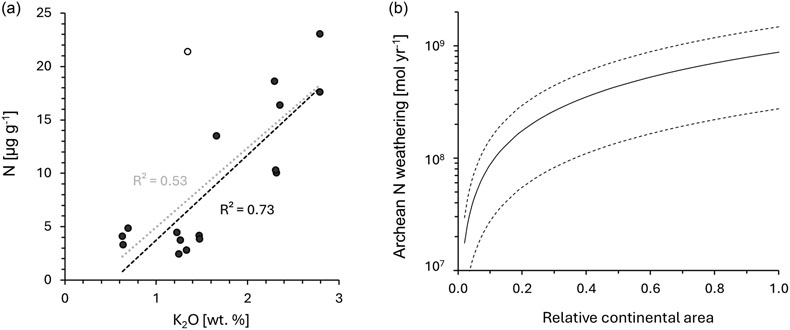
Figure 1 (a) Whole-rock data showing the N versus K concentrations in aphyric lavas from Hekla volcano (Boocock et al., 2023a
Boocock, T.J., Mikhail, S., Boyce, A.J., Prytulak, J., Savage, P.S., Stüeken, E.E. (2023a) A primary magmatic source of nitrogen to Earth’s crust. Nature Geoscience 16, 521–526. https://doi.org/10.1038/s41561-023-01194-3
). The correlation coefficient of all data (R2 = 0.53, grey trendline) increases (R2 = 0.73, black trendline) if one outlier is excluded (unfilled point). (b) Calculated N weathering flux for the early Archean (see text for derivation).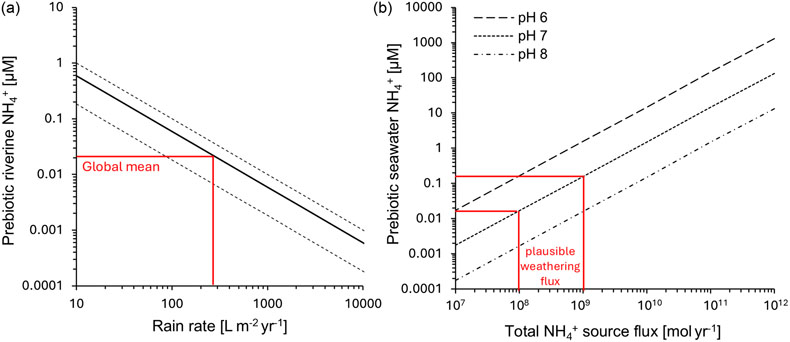
Figure 2 Fluid concentrations on the prebiotic Earth for (a) average river waters and (b) average seawater. The latter includes sinks due to clay adsorption and ammonia degassing (Stüeken, 2016
Stüeken, E.E. (2016) Nitrogen in Ancient Mud: A Biosignature? Astrobiology 16, 730–735. https://doi.org/10.1089/ast.2016.1478
). The pH range from 6 to 8 includes estimates of early Archean seawater pH of ca. 6.5 (Halevy and Bachan, 2017Halevy, I., Bachan, A. (2017) The geologic history of seawater pH. Science 355, 1069–1071. https://doi.org/10.1126/science.aal4151
).