



Copper isotope fractionation during lower crustal sulfide accumulation
Affiliations | Corresponding Author | Cite as | Funding information
Published by the European Association of Geochemistry
under Creative Commons License CC BY-NC-ND 4.0
Keywords: copper isotopes, sulfide, amphibole fractionation, porphyry Cu deposit


- Share this article


-
Article views:1,385Cumulative count of HTML views and PDF downloads.
- Download Citation
- Rights & Permissions

top
Abstract
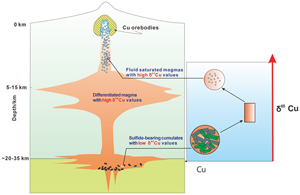
Figures
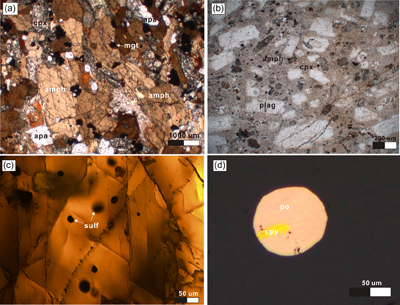 Figure 1 Typical images of cumulates and porphyries from Tongling mining district, southeastern China. (a) Amphibole-clinopyroxene cumulate xenolith. (b) Thin section of pyroxene diorite porphyry. (c) Sulfide inclusions (black) within amphiboles of cumulates. (d) Exposed sulfide inclusions comprising of 95 vol. % po and 5 vol. % cpy (po-pyrrhotite, cpy-chalcopyrite, amph-amphibole, cpx-clinopyroxene, apa-apatite, sulf-sulfide). a, b, and c were taken in transmitted light; d in reflected light. | 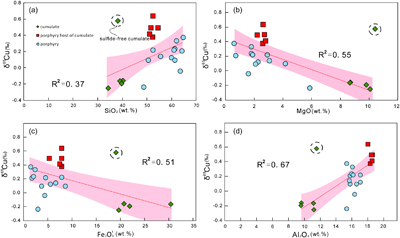 Figure 2 The correlation between δ65Cu and whole rock (a) SiO2, (b) MgO, (c) Fe2O3t, and (d) Al2O3 contents. Overall, the δ65Cu of the cumulates and ore-forming porphyries shows an increasing tendency with magmatic differentiation, though the porphyry hosts of cumulates do not match well with the quantitative relationship. The δ65Cu of cumulates samples shows a stable range with magmatic fractionation. | 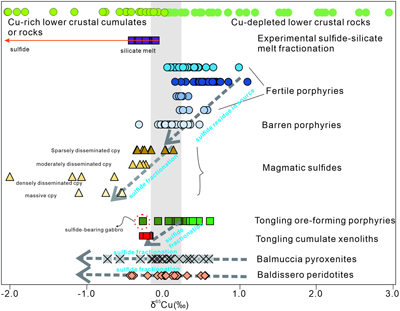 Figure 3 Copper isotopes of ore-forming porphyries and sulfide-bearing cumulate xenoliths in Tongling ore district compared with other sulfide saturated magmatic systems worldwide. Data sources as follows: fertile and barren porphyries in the porphyry Cu system (Zheng et al., 2019); sparsely/moderately/densely/massive chalcopyrite (cpy) in a magmatic sulfide ore system (Zhao et al., 2017); sulfide saturated mantle peridotites or pyroxenites (Huang et al., 2017; Zou et al., 2019). The equilibrium Cu isotope fractionation between sulfide and silicate melts is from the experimental work of Xia et al. (2019); Cu-rich lower crustal cumulate or rocks and Cu-depleted lower crustal rocks (Liu et al., 2023 and references therein). Noting that sulfide segregation (or the residue in the source) will consistently enrich the differentiated melt in δ65Cu. Gray band represents the range for Bulk Silicate Earth from Liu et al. (2015). | 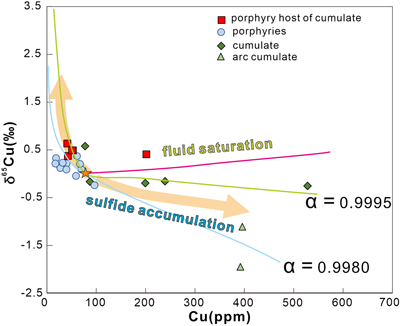 Figure 4 The correlation between δ65Cu and Cu content for cumulates and ore-forming porphyries at Tongling mining district. After sulfide segregation in the cumulates, the ore-forming porphyries obviously move towards more Cu depletion and a heavy copper isotopic trend. In the modelling, the initial melt (star) has ∼60 ppm Cu and Cu isotopic composition (δ65Cu) of 0.06 ‰ equal to that of the BSE (Liu et al., 2015); the D value is 8, assuming sulfide fraction is 0.01 and Dsulfide/melt = 800 (Lee et al., 2012). The δ65Cu and Cu content of arc cumulates are collected from Liu et al. (2023). The pink line represents the modelling of fluid saturation process as described in Guo et al. (2020). |
| Figure 1 | Figure 2 | Figure 3 | Figure 4 |
top
Introduction
Isotopic systems, including light stable isotopes (e.g., H, O, and S) and radiogenic isotopes (e.g., Pb, Os), have long been used to trace metal sources and understand metal transport processes in ore deposits (e.g., Mathur et al., 2000
Mathur, R., Ruiz, J., Titley, S., Gibbins, S., Margotomo, W. (2000) Different crustal sources for Au-rich and Au-poor ores of the Grasberg Cu-Au porphyry deposit. Earth and Planetary Science Letters 183, 7–14. https://doi.org/10.1016/S0012-821X(00)00256-9
). However, these systems often offer indirect constraints when compared to the direct application of the metal’s own isotopes. Copper, a strongly chalcophile element with two stable isotopes, 63Cu (69.2 %) and 65Cu (30.8 %) (Shields et al., 1965Shields, W.R., Goldich, S.S., Garner, E.L., Murphy, T.J. (1965) Natural variations in the abundance ratios and the atomic weight of copper. Journal of Geophysical Research 70, 479–491. https://doi.org/10.1029/JZ070i002p00479
), exists in nature in three oxidation states — Cu0, Cu+, and Cu2+ (Shields et al., 1965Shields, W.R., Goldich, S.S., Garner, E.L., Murphy, T.J. (1965) Natural variations in the abundance ratios and the atomic weight of copper. Journal of Geophysical Research 70, 479–491. https://doi.org/10.1029/JZ070i002p00479
). Following the advent of high precision Cu isotope measurements using MC-ICP-MS (Maréchal et al., 1999Maréchal, C.N., Télouk, P., Albarède, F. (1999) Precise analysis of copper and zinc isotopic compositions by plasma-source mass spectrometry. Chemical Geology 156, 251–273. https://doi.org/10.1016/S0009-2541(98)00191-0
), Cu isotopic analysis has become a valuable tool for studying various mineral deposits (e.g., magmatic Ni-Cu sulfide deposits, Ripley et al., 2015Ripley, E.M., Dong, S.F., Li, C.S., Wasylenki, L.E. (2015) Cu isotope variations between conduit and sheet-style Ni-Cu-PGE sulfide mineralization in the Midcontinent Rift System, North America. Chemical Geology 414, 59–68. https://doi.org/10.1016/j.chemgeo.2015.09.007
; skarn deposits, Maher and Larson, 2007Maher, K.C., Larson, P.B. (2007) Variation in copper isotope ratios and controls on fractionation in hypogene skarn mineralization at Coroccohuayco and Tintaya, Peru. Economic Geology 102, 225–237. https://doi.org/10.2113/gsecongeo.102.2.225
; porphyry Cu deposits, Li et al., 2010Li, W.Q., Jackson, S.E., Pearson, N.J., Graham, S. (2010) Copper isotopic zonation in the Northparkes porphyry Cu–Au deposit, SE Australia. Geochimica et Cosmochimica Acta 74, 4078–4096. https://doi.org/10.1016/j.gca.2010.04.003
). Because porphyry Cu deposits contribute ∼75 % of copper resources worldwide they have received the greatest attention from researchers using copper isotopes (Mathur et al., 2009Mathur, R., Titley, S., Barra, F., Brantley, S., Wilson, M., Phillips, A., Munizaga, F., Maksaev, V., Vervoort, J., Hart, G. (2009) Exploration potential of Cu isotope fractionation in porphyry copper deposits. Journal of Geochemical Exploration 102, 1–6. https://doi.org/10.1016/j.gexplo.2008.09.004
; Li et al., 2010Li, W.Q., Jackson, S.E., Pearson, N.J., Graham, S. (2010) Copper isotopic zonation in the Northparkes porphyry Cu–Au deposit, SE Australia. Geochimica et Cosmochimica Acta 74, 4078–4096. https://doi.org/10.1016/j.gca.2010.04.003
). Significant Cu isotope fractionation has been documented within individual chalcopyrite samples (e.g., Zhu et al., 2000Zhu, X.K., O’Nions, R.K., Guo, Y., Belshaw, N.S., Rickard, D. (2000) Determination of natural Cu-isotope variation by plasma-source mass spectrometry: Implications for use as geochemical tracers. Chemical Geology 163, 139–149. https://doi.org/10.1016/S0009-2541(99)00076-5
) and between samples from different porphyry Cu deposits (e.g., Li et al., 2010Li, W.Q., Jackson, S.E., Pearson, N.J., Graham, S. (2010) Copper isotopic zonation in the Northparkes porphyry Cu–Au deposit, SE Australia. Geochimica et Cosmochimica Acta 74, 4078–4096. https://doi.org/10.1016/j.gca.2010.04.003
). Factors influencing Cu isotope fractionation include fluid exsolution (Guo et al., 2020Guo, H.H., Xia, Y., Bai, R.X., Zhang, X.C., Huang, F. (2020) Experiments on Cu-isotope fractionation between chlorine-bearing fluid and silicate magma: implications for fluid exsolution and porphyry Cu deposits. National Science Review 7, 1319–1330. https://doi.org/10.1093/nsr/nwz221
), late stage fluid boiling (Rempel et al., 2012Rempel, K.U., Liebscher, A., Meixner, A., Romer, R.L., Heinrich, W. (2012) An experimental study of the elemental and isotopic fractionation of copper between aqueous vapour and liquid to 450°C and 400 bar in the CuCl–NaCl–H2O and CuCl–NaHS–NaCl–H2O systems. Geochimica et Cosmochimica Acta 94, 199–216. https://doi.org/10.1016/j.gca.2012.06.028
), sulfide precipitation (Li et al., 2010Li, W.Q., Jackson, S.E., Pearson, N.J., Graham, S. (2010) Copper isotopic zonation in the Northparkes porphyry Cu–Au deposit, SE Australia. Geochimica et Cosmochimica Acta 74, 4078–4096. https://doi.org/10.1016/j.gca.2010.04.003
), and redox processes (Zhu et al., 2002Zhu, X.K., Guo, Y., Williams, R.J.P., O’Nions, R.K., Matthews, A., Belshaw, N.S., Canters, G.W., de Waal, E.C., Weser, U., Burgess, B.K., Salvato, B. (2002) Mass fractionation processes of transition metal isotopes. Earth and Planetary Science Letters 200, 47–62. https://doi.org/10.1016/S0012-821X(02)00615-5
). However, the majority of these studies have focused on the shallow magmatic-hydrothermal processes that occur within the upper crust or the water-rock interactions that occur during weathering of Cu sulfide-rich rocks in the supergene environment, leaving the deeper processes of magma differentiation largely unexplored.In the sulfide saturated magmatic systems, the sulfide segregation during magmatic differentiation at mantle conditions has been observed as a key step in producing significant copper isotope fractionation (e.g., Savage et al., 2015
Savage, P.S., Moynier, F., Chen, H., Shofner, G., Siebert, J., Badro, J., Puchtel, I.S. (2015) Copper isotope evidence for large-scale sulphide fractionation during Earth’s differentiation. Geochemical Perspectives Letters 1, 53–64. https://doi.org/10.7185/geochemlet.1506
; Zhao et al., 2017Zhao, Y., Xue, C.J., Liu, S.A., Symons, D.T.A., Zhao, X.B., Yang, Y.Q., Ke, J.J. (2017) Copper isotope fractionation during sulfide-magma differentiation in the Tulaergen magmatic Ni–Cu deposit, NW China. Lithos 286-287, 206–215. http://dx.doi.org/10.1016/j.lithos.2017.06.007
; Kempton et al., 2022Kempton, P.D., Mathur, R., Harmon, R.S., Bell, A., Hoefs, J., Shaulis, B. (2022) Cu-Isotope Evidence for Subduction Modification of Lithospheric Mantle. Geochemistry, Geophysics, Geosystems 23, e2022GC010436. https://doi.org/10.1029/2022GC010436
; Liu et al., 2023Liu, S.A., Rudnick, R.L., Liu, W.R., Teng, F.Z., Wu, T.H., Wang, Z.Z. (2023) Copper isotope evidence for sulfide fractionation and lower crustal foundering in making continental crust. Science Advances 9, eadg6995. https://doi.org/10.1126/sciadv.adg6995
). The parent magmas of a porphyry Cu deposit system generally contain several hundred to a few thousand ppm S (Richards, 2011Richards, J.P. (2011) High Sr/Y arc magmas and porphyry Cu ± Mo ± Au deposits: just add water. Economic Geology 106, 1075–1081. https://doi.org/10.1016/j.oregeorev.2011.05.006
). The high sulfur content promotes persistent sulfide saturation during magmatic evolution, distinguishing these systems from barren ones (e.g., Lee and Tang, 2020Lee, C.-T.A., Tang, M. (2020) How to make porphyry copper deposits. Earth and Planetary Science Letters 529, 115868. https://doi.org/10.1016/j.epsl.2019.115868
); consequently early sulfide saturation may serve as an indicator for potential mineralised porphyry. To date, despite its critical role, deep sulfide saturation during lower crustal magma differentiation remains poorly understood because of the rare preservation of representative samples linked to a porphyry Cu ore deposit.In this study, we investigate Cu isotope variation during deep sulfide accumulation through a valuable collection of amphibole-rich cumulate xenoliths and intermediate-felsic porphyries from the Tongling mining district, China. These samples are unequivocally linked in both time and space to the magmas that formed porphyry Cu deposits, and the mineralised porphyries represent the derivatives of basaltic magmas that underwent sulfide fractionation at mid- to lower-crustal levels (Du and Audétat, 2020
Du, J.G., Audétat, A. (2020) Early sulfide saturation is not detrimental to porphyry Cu-Au formation. Geology 48, 519–524. https://doi.org/10.1130/G47169.1
). By examining these samples, we aim to shed light on the role of deep sulfide saturation in Cu isotope fractionation and its implications for porphyry Cu deposit formation.top
Samples
The Tongling mining district hosts 28 porphyry-skarn Cu (Au, Mo) deposits with a combined resource of ∼3.3 Mt Cu and 160 t Au (Fig. S-1; Du and Audétat, 2020
Du, J.G., Audétat, A. (2020) Early sulfide saturation is not detrimental to porphyry Cu-Au formation. Geology 48, 519–524. https://doi.org/10.1130/G47169.1
). All the ore deposits are hosted by the Early Cretaceous porphyry intrusions composed of pyroxene diorite, granodiorite, and quartz diorite (Fig. S-1; Du and Audétat, 2020Du, J.G., Audétat, A. (2020) Early sulfide saturation is not detrimental to porphyry Cu-Au formation. Geology 48, 519–524. https://doi.org/10.1130/G47169.1
). These ore-forming porphyries host abundant amphibole-rich cumulate or megacryst xenoliths. Zircon U-Pb age data indicate that both amphibole-rich xenoliths and the ore-forming porphyries formed at ∼140 Ma (Fig. S-2). The investigated samples consist of five amphibole-rich, cumulate xenoliths-porphyry pairs and thirteen mineralised porphyries sampled from three different Early Cretaceous intrusive centres within the Tongling mining district. The amphibole-rich cumulate xenoliths are composed of 70–85 % amphibole, 5–20 % clinopyroxene, and lesser amounts of phlogopite, magnetite, and apatite (Fig. 1); they lack exsolution in the primary mineral phases and typically show little evidence for zoning or secondary melting along the grain boundaries. The cumulate samples show typical accumulate textures and no signs of modal metasomatism, such as veins or presence of interstitial amphibole or mica (Fig. 1). The amphibole-rich cumulate xenoliths contain about 0.1 to ∼0.6 vol. % sulfide inclusions but in sample JY-6 no sulfide inclusions are detected. Sulfides are all solitary inclusions with spherical habitats that are enclosed within the primary silicate phases. Early studies show that these sulfide inclusions are dominantly trapped in the form of monosulfide solid solutions (MSS) with Cu contents of 1 to 5.8 wt. % (Du and Audétat, 2020Du, J.G., Audétat, A. (2020) Early sulfide saturation is not detrimental to porphyry Cu-Au formation. Geology 48, 519–524. https://doi.org/10.1130/G47169.1
). The studied porphyry assemblage includes two gabbro porphyry, seven pyroxene diorite porphyry, two granodiorite/granodiorite porphyry, six diorite porphyry/quartz diorite, and one granite porphyry samples. Petrographic observations reveal that these samples are generally devoid of late stage sulfide veins and contain neither fluid nor sulfide inclusions within their phenocrysts. However, minor sulfide inclusions are present in sample K6-68, and fluid inclusions are found in JY-6h (Du and Audétat, 2020Du, J.G., Audétat, A. (2020) Early sulfide saturation is not detrimental to porphyry Cu-Au formation. Geology 48, 519–524. https://doi.org/10.1130/G47169.1
).Figure 1 Typical images of cumulates and porphyries from Tongling mining district, southeastern China. (a) Amphibole-clinopyroxene cumulate xenolith. (b) Thin section of pyroxene diorite porphyry. (c) Sulfide inclusions (black) within amphiboles of cumulates. (d) Exposed sulfide inclusions comprising of 95 vol. % po and 5 vol. % cpy (po-pyrrhotite, cpy-chalcopyrite, amph-amphibole, cpx-clinopyroxene, apa-apatite, sulf-sulfide). a, b, and c were taken in transmitted light; d in reflected light.
top
Results
The whole rock and Cu isotope data of amphibole-rich cumulate xenoliths and ore-forming porphyries in this study and other published whole rock data of Tongling ore-forming porphyries are provided in Table S-1. The ore-forming porphyries and cumulates exhibit a calc-alkaline differentiation trend (Fig. S-3). Both the cumulate xenoliths and ore-forming porphyries display geochemical features similar to the arc basalt (Du and Audétat, 2020
Du, J.G., Audétat, A. (2020) Early sulfide saturation is not detrimental to porphyry Cu-Au formation. Geology 48, 519–524. https://doi.org/10.1130/G47169.1
). The data of silicate melt inclusions revealed that these cumulates crystallised from a basic magma (48–52 wt. % SiO2; Du and Audétat, 2020Du, J.G., Audétat, A. (2020) Early sulfide saturation is not detrimental to porphyry Cu-Au formation. Geology 48, 519–524. https://doi.org/10.1130/G47169.1
). In the Sr/Y versus Y and Dy/Yb versus SiO2 diagrams (Fig. S-4a), the magmatic evolution starts in the field of ordinary arc magmas and proceeds into the adakite field, a trend that is indicative of hornblende-dominated fractionation at high pressure (e.g., Loucks, 2014Loucks, R.R. (2014) Distinctive composition of copper-ore-forming arc magmas. Australian Journal of Earth Sciences 61, 5–16 https://doi.org/10.1080/08120099.2013.865676
). Hornblende dominated fractionation is also indicated by a negative correlation between Dy/Yb and SiO2 (Davidson et al., 2007Davidson, J., Turner, S., Handley, H., Macpherson, C., Dosseto, A. (2007) Amphibole “sponge” in arc crust? Geology 35, 787–790. https://doi.org/10.1130/G23637A.1
; see Fig. S-4b). Pressure-temperature conditions reconstructed by compositions of amphibole and clinopyroxene within cumulates (Table S-2) show that these cumulates crystallised at 969–1083 °C and 3.8–7.0 kbar (converted to 13–27 km using an average crustal density of 2.7 g cm−3). The mass balance calculation of amphibole dominated fractionation yielded a good fit between estimated and actual residual melt (Table S-3). These lines of evidence, combined with the consistent crystallisation age of cumulates to ore-forming porphyries (Fig. S-2), strongly suggests that the ore-forming magmas in the Tongling mining district experienced significant clinopyroxene and amphibole fractionation at mid- to lower-crustal levels.Copper isotopic analyses were performed by a sample standard bracketing method with purification using ion chromatography (BioRad AG-MP-1M strong anion resin) on a Thermo Scientific Neptune Plus MC-ICP-MS at University of Science and Technology of China (USTC). The long term external precision of δ65Cu data is better than 0.05 ‰ (2 s.d.) (details in Supplementary Information). The Cu isotopic ratios of these rocks display correlations with their Cu contents and indicators of magmatic differentiation such as SiO2, MgO, FeOt, and Al2O3 abundances (respectively r2 = 0.37, 0.55, 0.51 and 0.67; Fig. 2). The sulfide-bearing amphibole-rich cumulate xenoliths generally have high Cu contents of 87 to 528 ppm (average value = 26 ppm, n = 4) and light Cu isotopic compositions with δ65 Cu values ranging from –0.25 ‰ to –0.17 ‰ except one sulfide-free sample JY-6 (Cu content of 77 ppm, δ65Cu = 0.58 ‰). The ore-forming porphyries have lower Cu contents of 17 to 201 ppm (average value = 55 ppm, n = 17) and higher δ65Cu values of –0.04 ‰ to 0.37 ‰ (average value = 0.27 ‰, n = 16) except the outlier of sulfide-bearing sample K6-68, with an apparently lower δ65 Cu value of –0.24 ‰. The porphyry sample JY-6h hosts higher Cu contents than other porphyries, possibly caused by the fluid inclusions within its phenocryst.
Figure 2 The correlation between δ65Cu and whole rock (a) SiO2, (b) MgO, (c) Fe2O3t, and (d) Al2O3 contents. Overall, the δ65Cu of the cumulates and ore-forming porphyries shows an increasing tendency with magmatic differentiation, though the porphyry hosts of cumulates do not match well with the quantitative relationship. The δ65Cu of cumulates samples shows a stable range with magmatic fractionation.
top
Discussion
The copper isotope compositions of our data are systematically divided into two groups: the sulfide saturated cumulates with negative δ65Cu values; the porphyries with positive δ65Cu values. Below we explore the possible causes for the copper isotope variations including (1) fluid saturation and exsolution, (2) redox effects, (3) mantle metasomatism, and (4) fractional crystallisation and sulfide segregation.
Partitioning of Cu isotopes between hydrothermal fluids and precipitating Cu sulfides could generate significant Cu isotope fractionation (up to 1.2 ‰) (e.g., Li et al., 2010
Li, W.Q., Jackson, S.E., Pearson, N.J., Graham, S. (2010) Copper isotopic zonation in the Northparkes porphyry Cu–Au deposit, SE Australia. Geochimica et Cosmochimica Acta 74, 4078–4096. https://doi.org/10.1016/j.gca.2010.04.003
). The fresh nature of the analysed samples and the absence of fluid inclusions within the phenocrysts exclude this interference. Redox related Cu isotope fractionation processes have played an important role in generating the high δ65Cu signatures (e.g., Zhu et al., 2002Zhu, X.K., Guo, Y., Williams, R.J.P., O’Nions, R.K., Matthews, A., Belshaw, N.S., Canters, G.W., de Waal, E.C., Weser, U., Burgess, B.K., Salvato, B. (2002) Mass fractionation processes of transition metal isotopes. Earth and Planetary Science Letters 200, 47–62. https://doi.org/10.1016/S0012-821X(02)00615-5
) because Cu2+ species preferentially incorporate heavier isotopes which have shorter, stronger bonds compared to Cu+ species (e.g., Markl et al., 2006Markl, G., Lahaye, Y., Schwinn, G. (2006) Copper isotopes as monitors of redox processes in hydrothermal mineralization. Geochimica et Cosmochimica Acta 70, 4215–4228. https://doi.org/10.1016/j.gca.2006.06.1369
). Liu et al. (2015)Liu, S.A., Huang, J., Liu, J., Wörner, G., Yang, W., Tang, Y.J., Chen, Y., Tang, L., Zheng, J., Li, S. (2015) Copper isotopic composition of the silicate Earth. Earth and Planetary Science Letters 427, 95–103. https://doi.org/10.1016/j.epsl.2015.06.061
have observed significant Cu isotope variation (from −0.64 to 1.82 ‰) during oxidative dissolution of sulfides. The encapsulation of sulfide inclusions within silicate minerals and the absence of magnetite in these inclusions indicate minimal oxidation occurs (Fig. 1). Mantle metasomatism is treated as another predominant control on the isotopic variation. This process involves fluids derived from the recycled ocean-crustal material interaction with the mantle xenoliths that formed by fractional crystallisation of basalts (Liu et al., 2015Liu, S.A., Huang, J., Liu, J., Wörner, G., Yang, W., Tang, Y.J., Chen, Y., Tang, L., Zheng, J., Li, S. (2015) Copper isotopic composition of the silicate Earth. Earth and Planetary Science Letters 427, 95–103. https://doi.org/10.1016/j.epsl.2015.06.061
; Kempton et al., 2022Kempton, P.D., Mathur, R., Harmon, R.S., Bell, A., Hoefs, J., Shaulis, B. (2022) Cu-Isotope Evidence for Subduction Modification of Lithospheric Mantle. Geochemistry, Geophysics, Geosystems 23, e2022GC010436. https://doi.org/10.1029/2022GC010436
). The hornblendites in our study have a typical mechanical cumulate origin, that is greatly different from those metasomatic mantle xenoliths which often display a poikilitic texture and host interstitial sulfide grains or veins (e.g., Kempton et al., 2022Kempton, P.D., Mathur, R., Harmon, R.S., Bell, A., Hoefs, J., Shaulis, B. (2022) Cu-Isotope Evidence for Subduction Modification of Lithospheric Mantle. Geochemistry, Geophysics, Geosystems 23, e2022GC010436. https://doi.org/10.1029/2022GC010436
).The correlation between δ65Cu and magmatic differentiation indicators such as SiO2, MgO, FeOt, and Al2O3 abundances (respectively r2 = 0.37, 0.55, 0.51 and 0.67; Fig. 2) highlights the major role of magmatic processes. Our data show that mineral phases like clinopyroxene and amphibole in the studied cumulates have low Cu budgets (e.g., 1.4–3.3 ppm; Table S-4). Consequently, their crystallisation is unlikely to cause substantial Cu isotope fractionation and cannot account for the high Cu budgets (87–528 ppm) of the bulk cumulates. Fe-Ti oxides, also analysed from these cumulates, contain negligible Cu (∼0.54 ppm; Table S-4). In contrast, sulfide inclusions contain 1.1–5.8 wt. % Cu, contributing ∼100–500 ppm to whole rock budgets and dominating the Cu inventory. Experimental studies indicate sulfide melts preferentially incorporate light Cu compared to coexisting silicate melts (Δ65Cusulfide–silicate ≤ 0; Fig. 3; Savage et al., 2015
Savage, P.S., Moynier, F., Chen, H., Shofner, G., Siebert, J., Badro, J., Puchtel, I.S. (2015) Copper isotope evidence for large-scale sulphide fractionation during Earth’s differentiation. Geochemical Perspectives Letters 1, 53–64. https://doi.org/10.7185/geochemlet.1506
). It is also noted that the variation of Ni content in sulfides from ∼25–27 wt. % to 1 wt. % could generate Cu isotopic fractionation (Xia et al., 2019Xia, Y., Kiseeva, E.S., Wade, J., Huang, F. (2019) The effect of core segregation on the Cu and Zn isotope composition of the silicate Moon. Geochemical Perspectives Letters 12, 12–17. https://doi.org/10.7185/geochemlet.1928
; Ni et al., 2024Ni, P., Zhan, Y., Chabot, N.L., Ryan, C.J., Zhu, K., Nie, N.X., Shirey, S.B., Shahar, A. (2024) Copper isotope fractionation during asteroid core solidification. Geochemical Perspectives Letters 31, 49–53. https://doi.org/10.7185/geochemlet.2432
). The narrow range of Cu isotopic compositions, along with low Ni content (<0.1 wt. %) in sulfide inclusions of cumulates (Du and Audétat, 2020Du, J.G., Audétat, A. (2020) Early sulfide saturation is not detrimental to porphyry Cu-Au formation. Geology 48, 519–524. https://doi.org/10.1130/G47169.1
), indicates rapid sulfide formation, justifying the modelling of the entire cumulate as a single unit. Therefore, the measured bulk rock δ65Cu variations of these cumulates should reflect the integrated composition of the sulfide inclusions and the shift in Cu isotope composition likely results from sulfide segregation from the melt. In the sulfide saturated (Ripley et al., 2015Ripley, E.M., Dong, S.F., Li, C.S., Wasylenki, L.E. (2015) Cu isotope variations between conduit and sheet-style Ni-Cu-PGE sulfide mineralization in the Midcontinent Rift System, North America. Chemical Geology 414, 59–68. https://doi.org/10.1016/j.chemgeo.2015.09.007
; Zhao et al., 2017Zhao, Y., Xue, C.J., Liu, S.A., Symons, D.T.A., Zhao, X.B., Yang, Y.Q., Ke, J.J. (2017) Copper isotope fractionation during sulfide-magma differentiation in the Tulaergen magmatic Ni–Cu deposit, NW China. Lithos 286-287, 206–215. http://dx.doi.org/10.1016/j.lithos.2017.06.007
; Liu et al., 2023Liu, S.A., Rudnick, R.L., Liu, W.R., Teng, F.Z., Wu, T.H., Wang, Z.Z. (2023) Copper isotope evidence for sulfide fractionation and lower crustal foundering in making continental crust. Science Advances 9, eadg6995. https://doi.org/10.1126/sciadv.adg6995
) magmatic system, sulfide segregation from basaltic magmas could result in the residual melt being more enriched in δ65Cu (Fig. 3). Therefore, the isotopically light Cu cumulate segregation will generate an isotopically heavy upper continental crust (Liu et al., 2023Liu, S.A., Rudnick, R.L., Liu, W.R., Teng, F.Z., Wu, T.H., Wang, Z.Z. (2023) Copper isotope evidence for sulfide fractionation and lower crustal foundering in making continental crust. Science Advances 9, eadg6995. https://doi.org/10.1126/sciadv.adg6995
).Figure 3 Copper isotopes of ore-forming porphyries and sulfide-bearing cumulate xenoliths in Tongling ore district compared with other sulfide saturated magmatic systems worldwide. Data sources as follows: fertile and barren porphyries in the porphyry Cu system (Zheng et al., 2019
Zheng, Y.C., Liu, S.A., Wu, C.D., Griffin, W.L., Li, Z.Q., Xu, B., Yang, Z.M., Hou, Z.Q., O’Reilly, S.Y. (2019) Cu isotopes reveal initial Cu enrichment in sources of giant porphyry deposits in a collisional setting. Geology 47, 135–138. https://doi.org/10.1130/G45362.1
); sparsely/moderately/densely/massive chalcopyrite (cpy) in a magmatic sulfide ore system (Zhao et al., 2017Zhao, Y., Xue, C.J., Liu, S.A., Symons, D.T.A., Zhao, X.B., Yang, Y.Q., Ke, J.J. (2017) Copper isotope fractionation during sulfide-magma differentiation in the Tulaergen magmatic Ni–Cu deposit, NW China. Lithos 286-287, 206–215. http://dx.doi.org/10.1016/j.lithos.2017.06.007
); sulfide saturated mantle peridotites or pyroxenites (Huang et al., 2017Huang, J., Huang, F., Wang, Z.C., Zhang, X.C., Yu, H.M. (2017) Copper isotope fractionation during partial melting and melt percolation in the upper mantle: Evidence from massif peridotites in Ivrea-Verbano Zone, Italian Alps. Geochimica et Cosmochimica Acta 211, 48–63. https://doi.org/10.1016/j.gca.2017.05.007.
; Zou et al., 2019Zou, Z., Wang, Z, Li, M., Becker, H., Geng, X., Hu, Z., Lazarov, M. (2019) Copper isotope variations during magmatic migration in the mantle: Insights from mantle pyroxenites in Balmuccia peridotite massif. Journal of Geophysical Research: Solid Earth 124, 11130–11149. https://doi.org/10.1029/2019JB017990
). The equilibrium Cu isotope fractionation between sulfide and silicate melts is from the experimental work of Xia et al. (2019)Xia, Y., Kiseeva, E.S., Wade, J., Huang, F. (2019) The effect of core segregation on the Cu and Zn isotope composition of the silicate Moon. Geochemical Perspectives Letters 12, 12–17. https://doi.org/10.7185/geochemlet.1928
; Cu-rich lower crustal cumulate or rocks and Cu-depleted lower crustal rocks (Liu et al., 2023Liu, S.A., Rudnick, R.L., Liu, W.R., Teng, F.Z., Wu, T.H., Wang, Z.Z. (2023) Copper isotope evidence for sulfide fractionation and lower crustal foundering in making continental crust. Science Advances 9, eadg6995. https://doi.org/10.1126/sciadv.adg6995
and references therein). Noting that sulfide segregation (or the residue in the source) will consistently enrich the differentiated melt in δ65Cu. Gray band represents the range for Bulk Silicate Earth from Liu et al. (2015)Liu, S.A., Huang, J., Liu, J., Wörner, G., Yang, W., Tang, Y.J., Chen, Y., Tang, L., Zheng, J., Li, S. (2015) Copper isotopic composition of the silicate Earth. Earth and Planetary Science Letters 427, 95–103. https://doi.org/10.1016/j.epsl.2015.06.061
.To better understand the effect of sulfide segregation during fractional crystallisation on the variation of Cu isotopic compositions, we conducted simulations using the Rayleigh fractionation equations as follows in Equations (1) to (3):
Eq. 1

Eq. 2

Eq. 3

where α represents the equilibrium Cu isotope fractionation factor between sulfide and the residual silicate melt; C0 and Csilicate melt are element concentrations of the initial and the evolving silicate melts; D is the partitioning coefficient of Cu between cumulate and silicate melt; F denotes the mass fraction of the evolving silicate melt. The fraction of Cu remaining in the residual melt (ƒ) is calculated by ƒ = (1 – F)* (Csilicate melt/C0), assuming an initial Cu content of ∼60 ppm, typical of primary continental arc basalts, and a δ65Cu of 0.06 ‰, consistent with the Bulk Silicate Earth (see Fig. 3; Liu et al., 2015
Liu, S.A., Huang, J., Liu, J., Wörner, G., Yang, W., Tang, Y.J., Chen, Y., Tang, L., Zheng, J., Li, S. (2015) Copper isotopic composition of the silicate Earth. Earth and Planetary Science Letters 427, 95–103. https://doi.org/10.1016/j.epsl.2015.06.061
). Choosing different initial Cu or δ65Cu values in the model may lead to different δ65Cu values for the predicted melts but would not change the relative δ65Cu variation between the parental melts and evolving melts. The αsulfide melt‐silicate melt is assumed to remain constant during magmatic differentiation. Because of the insignificant Cu content in silicates and oxides, αsulfide melt‐silicate melt is approximately equal to αcumulates‐silicate melt. These cumulates have crystallisation temperatures (969–1083 °C), pressures (3.8–7.0 kbar) and oxygen fugacities of ΔFMQ +0.7 to +1.3 (Table S-2). Under these conditions and Ni-poor sulfides, the Cu+ dominates in the silicate melt and sulfide melt and the corresponded equilibrium Cu isotope fractionation factors (αsulfide–silicate melt) are ∼0.9995 to 0.9980 (Xia et al., 2019Xia, Y., Kiseeva, E.S., Wade, J., Huang, F. (2019) The effect of core segregation on the Cu and Zn isotope composition of the silicate Moon. Geochemical Perspectives Letters 12, 12–17. https://doi.org/10.7185/geochemlet.1928
). It is obvious that the sulfide-bearing cumulates tend to show lower δ65Cu relative to the initial basaltic melt and the differentiated magmas show higher δ65Cu (Fig. 4). Though the model makes little difference to the overall δ65Cu enrichment trend caused by sulfide segregation during magmatic differentiation, with one fluid inclusion-bearing sample deviating (sample JY-6h).Figure 4 The correlation between δ65Cu and Cu content for cumulates and ore-forming porphyries at Tongling mining district. After sulfide segregation in the cumulates, the ore-forming porphyries obviously move towards more Cu depletion and a heavy copper isotopic trend. In the modelling, the initial melt (star) has ∼60 ppm Cu and Cu isotopic composition (δ65Cu) of 0.06 ‰ equal to that of the BSE (Liu et al., 2015
Liu, S.A., Huang, J., Liu, J., Wörner, G., Yang, W., Tang, Y.J., Chen, Y., Tang, L., Zheng, J., Li, S. (2015) Copper isotopic composition of the silicate Earth. Earth and Planetary Science Letters 427, 95–103. https://doi.org/10.1016/j.epsl.2015.06.061
); the D value is 8, assuming sulfide fraction is 0.01 and Dsulfide/melt = 800 (Lee et al., 2012Lee, C.-T.A., Luffi, P., Chin, E.J., Bouchet, R., Dasgupta, R., Morton, D.M., Le Roux, V., Xin, Q.Z., Jin, D. (2012) Copper systematics in arc magmas and implications for crust-mantle differentiation. Science 336, 64–68. https://doi.org/10.1126/science.1217313
). The δ65Cu and Cu content of arc cumulates are collected from Liu et al. (2023)Liu, S.A., Rudnick, R.L., Liu, W.R., Teng, F.Z., Wu, T.H., Wang, Z.Z. (2023) Copper isotope evidence for sulfide fractionation and lower crustal foundering in making continental crust. Science Advances 9, eadg6995. https://doi.org/10.1126/sciadv.adg6995
. The pink line represents the modelling of fluid saturation process as described in Guo et al. (2020)Guo, H.H., Xia, Y., Bai, R.X., Zhang, X.C., Huang, F. (2020) Experiments on Cu-isotope fractionation between chlorine-bearing fluid and silicate magma: implications for fluid exsolution and porphyry Cu deposits. National Science Review 7, 1319–1330. https://doi.org/10.1093/nsr/nwz221
.top
Geological Implications
Porphyry Cu (Au, Mo) deposits are typically hosted in rocks ranging from intermediate to felsic compositions, which have undergone a range of geological processes from the mantle source to the surface (Sillitoe, 2010
Sillitoe, R.H. (2010) Porphyry copper systems. Economic Geology 105, 3–41. https://doi.org/10.2113/gsecongeo.105.1.3
). During partial melting of the mantle, copper isotopes are essentially unfractionated, with the copper isotopic compositions of basaltic magma or mantle rocks closely aligning with values representative of the Bulk Silicate Earth (−0.14 to ∼+ 0.20 ‰; Savage et al., 2015Savage, P.S., Moynier, F., Chen, H., Shofner, G., Siebert, J., Badro, J., Puchtel, I.S. (2015) Copper isotope evidence for large-scale sulphide fractionation during Earth’s differentiation. Geochemical Perspectives Letters 1, 53–64. https://doi.org/10.7185/geochemlet.1506
; Liu et al., 2015Liu, S.A., Huang, J., Liu, J., Wörner, G., Yang, W., Tang, Y.J., Chen, Y., Tang, L., Zheng, J., Li, S. (2015) Copper isotopic composition of the silicate Earth. Earth and Planetary Science Letters 427, 95–103. https://doi.org/10.1016/j.epsl.2015.06.061
). As the basaltic magmas stagnate at or near the crust-mantle boundary, deep crustal differentiation processes facilitate a substantial loss of metals from the magma to crystallising cumulate sulfides (Du and Audétat, 2020Du, J.G., Audétat, A. (2020) Early sulfide saturation is not detrimental to porphyry Cu-Au formation. Geology 48, 519–524. https://doi.org/10.1130/G47169.1
). This process is pivotal in imprinting heavy copper isotopic signatures onto evolved, intermediate composition porphyries (Fig. S-5). As derivative intermediate magmas ascend to shallow depths (5–15 km), fluid saturation and exsolution occur (Fig. S-5). The exsolved fluid phases are enriched in heavy Cu isotopes (65Cu) relative to the coexisting silicates (Fig. 4; Guo et al., 2020Guo, H.H., Xia, Y., Bai, R.X., Zhang, X.C., Huang, F. (2020) Experiments on Cu-isotope fractionation between chlorine-bearing fluid and silicate magma: implications for fluid exsolution and porphyry Cu deposits. National Science Review 7, 1319–1330. https://doi.org/10.1093/nsr/nwz221
), continuous migration of low density hydrothermal fluids from the mineralisation centre leads to a systematic increase in Cu isotope ratios from centre outward (Li et al., 2010Li, W.Q., Jackson, S.E., Pearson, N.J., Graham, S. (2010) Copper isotopic zonation in the Northparkes porphyry Cu–Au deposit, SE Australia. Geochimica et Cosmochimica Acta 74, 4078–4096. https://doi.org/10.1016/j.gca.2010.04.003
; Mathur et al., 2009Mathur, R., Titley, S., Barra, F., Brantley, S., Wilson, M., Phillips, A., Munizaga, F., Maksaev, V., Vervoort, J., Hart, G. (2009) Exploration potential of Cu isotope fractionation in porphyry copper deposits. Journal of Geochemical Exploration 102, 1–6. https://doi.org/10.1016/j.gexplo.2008.09.004
). This overall Cu isotopic evolution of porphyry Cu ore deposit leads to a continuous increase in Cu isotopic signatures from the source to the final deposition site. The porphyry rocks with elevated concentrations of heavier copper isotopes should identify potential porphyry Cu orebodies. This assertion is supported by the findings of Zheng et al. (2019)Zheng, Y.C., Liu, S.A., Wu, C.D., Griffin, W.L., Li, Z.Q., Xu, B., Yang, Z.M., Hou, Z.Q., O’Reilly, S.Y. (2019) Cu isotopes reveal initial Cu enrichment in sources of giant porphyry deposits in a collisional setting. Geology 47, 135–138. https://doi.org/10.1130/G45362.1
, who have shown that many fertile porphyries show heavier copper isotopes than barren ones. On the premise that Cu isotope behaviour is well estimated in the weathering processes, the heavy Cu signature may be an exploration vector in detrital materials or downstream of a porphyry.top
Acknowledgements
This study was supported financially by the National Key R & D Program of China [2023YFF0804200 and 2023YFF0806400], the National Natural Science Foundation of China [grants 42002072 and 42373038], Natural Science Basic Research Program of Shaanxi [Program No. 2023-JC-QN-0336], and Hubei Provincial Natural Science Foundation of China [No. 2025AFA005]. We thank Jian Huang for his comments on the study. We are grateful to Paul Savage and three anonymous reviewers for constructive remarks, and the editor Ambre Luguet for handing this manuscript.
Editor: Ambre Luguet
top
References
Davidson, J., Turner, S., Handley, H., Macpherson, C., Dosseto, A. (2007) Amphibole “sponge” in arc crust? Geology 35, 787–790. https://doi.org/10.1130/G23637A.1
 Show in context
 Hornblende dominated fractionation is also indicated by a negative correlation between Dy/Yb and SiO2 (Davidson et al., 2007; see Fig. S-4b).
View in article
Du, J.G., Audétat, A. (2020) Early sulfide saturation is not detrimental to porphyry Cu-Au formation. Geology 48, 519–524. https://doi.org/10.1130/G47169.1
Show in context These samples are unequivocally linked in both time and space to the magmas that formed porphyry Cu deposits, and the mineralised porphyries represent the derivatives of basaltic magmas that underwent sulfide fractionation at mid- to lower-crustal levels (Du and Audétat, 2020).
View in article
The Tongling mining district hosts 28 porphyry-skarn Cu (Au, Mo) deposits with a combined resource of ∼3.3 Mt Cu and 160 t Au (Fig. S-1; Du and Audétat, 2020).
View in article
All the ore deposits are hosted by the Early Cretaceous porphyry intrusions composed of pyroxene diorite, granodiorite, and quartz diorite (Fig. S-1; Du and Audétat, 2020).
View in article
Early studies show that these sulfide inclusions are dominantly trapped in the form of monosulfide solid solutions (MSS) with Cu contents of 1 to 5.8 wt. % (Du and Audétat, 2020).
View in article
However, minor sulfide inclusions are present in sample K6-68, and fluid inclusions are found in JY-6h (Du and Audétat, 2020).
View in article
Both the cumulate xenoliths and ore-forming porphyries display geochemical features similar to the arc basalt (Du and Audétat, 2020).
View in article
The data of silicate melt inclusions revealed that these cumulates crystallised from a basic magma (48–52 wt. % SiO2; Du and Audétat, 2020).
View in article
The narrow range of Cu isotopic compositions, along with low Ni content (<0.1 wt. %) in sulfide inclusions of cumulates (Du and Audétat, 2020), indicates rapid sulfide formation, justifying the modelling of the entire cumulate as a single unit.
View in article
As the basaltic magmas stagnate at or near the crust-mantle boundary, deep crustal differentiation processes facilitate a substantial loss of metals from the magma to crystallising cumulate sulfides (Du and Audétat, 2020).
View in article
Guo, H.H., Xia, Y., Bai, R.X., Zhang, X.C., Huang, F. (2020) Experiments on Cu-isotope fractionation between chlorine-bearing fluid and silicate magma: implications for fluid exsolution and porphyry Cu deposits. National Science Review 7, 1319–1330. https://doi.org/10.1093/nsr/nwz221
Show in context Factors influencing Cu isotope fractionation include fluid exsolution (Guo et al., 2020), late stage fluid boiling (Rempel et al., 2012), sulfide precipitation (Li et al., 2010), and redox processes (Zhu et al., 2002).
View in article
The pink line represents the modelling of fluid saturation process as described in Guo et al. (2020).
View in article
The exsolved fluid phases are enriched in heavy Cu isotopes (65Cu) relative to the coexisting silicates (Fig. 4; Guo et al., 2020), continuous migration of low density hydrothermal fluids from the mineralisation centre leads to a systematic increase in Cu isotope ratios from centre outward (Li et al., 2010; Mathur et al., 2009).
View in article
Huang, J., Huang, F., Wang, Z.C., Zhang, X.C., Yu, H.M. (2017) Copper isotope fractionation during partial melting and melt percolation in the upper mantle: Evidence from massif peridotites in Ivrea-Verbano Zone, Italian Alps. Geochimica et Cosmochimica Acta 211, 48–63. https://doi.org/10.1016/j.gca.2017.05.007
Show in context Data sources as follows: fertile and barren porphyries in the porphyry Cu system (Zheng et al., 2019); sparsely/moderately/densely/massive chalcopyrite (cpy) in a magmatic sulfide ore system (Zhao et al., 2017); sulfide saturated mantle peridotites or pyroxenites (Huang et al., 2017; Zou et al., 2019).
View in article
Kempton, P.D., Mathur, R., Harmon, R.S., Bell, A., Hoefs, J., Shaulis, B. (2022) Cu-Isotope Evidence for Subduction Modification of Lithospheric Mantle. Geochemistry, Geophysics, Geosystems 23, e2022GC010436. https://doi.org/10.1029/2022GC010436
Show in context In the sulfide saturated magmatic systems, the sulfide segregation during magmatic differentiation at mantle conditions has been observed as a key step in producing significant copper isotope fractionation (e.g., Savage et al., 2015; Zhao et al., 2017; Kempton et al., 2022; Liu et al., 2023).
View in article
This process involves fluids derived from the recycled ocean-crustal material interaction with the mantle xenoliths that formed by fractional crystallisation of basalts (Liu et al., 2015; Kempton et al., 2022).
View in article
The hornblendites in our study have a typical mechanical cumulate origin, that is greatly different from those metasomatic mantle xenoliths which often display a poikilitic texture and host interstitial sulfide grains or veins (e.g., Kempton et al., 2022).
View in article
Lee, C.-T.A., Tang, M. (2020) How to make porphyry copper deposits. Earth and Planetary Science Letters 529, 115868. https://doi.org/10.1016/j.epsl.2019.115868
Show in context The high sulfur content promotes persistent sulfide saturation during magmatic evolution, distinguishing these systems from barren ones (e.g., Lee and Tang, 2020); consequently early sulfide saturation may serve as an indicator for potential mineralised porphyry.
View in article
Lee, C.-T.A., Luffi, P., Chin, E.J., Bouchet, R., Dasgupta, R., Morton, D.M., Le Roux, V., Xin, Q.Z., Jin, D. (2012) Copper systematics in arc magmas and implications for crust-mantle differentiation. Science 336, 64–68. https://doi.org/10.1126/science.1217313
Show in context In the modelling, the initial melt (star) has ∼60 ppm Cu and Cu isotopic composition (δ65Cu) of 0.06 ‰ equal to that of the BSE (Liu et al., 2015); the D value is 8, assuming sulfide fraction is 0.01 and Dsulfide/melt = 800 (Lee et al., 2012).
View in article
Li, W.Q., Jackson, S.E., Pearson, N.J., Graham, S. (2010) Copper isotopic zonation in the Northparkes porphyry Cu–Au deposit, SE Australia. Geochimica et Cosmochimica Acta 74, 4078–4096. https://doi.org/10.1016/j.gca.2010.04.003
Show in context Following the advent of high precision Cu isotope measurements using MC-ICP-MS (Maréchal et al., 1999), Cu isotopic analysis has become a valuable tool for studying various mineral deposits (e.g., magmatic Ni-Cu sulfide deposits, Ripley et al., 2015; skarn deposits, Maher and Larson, 2007; porphyry Cu deposits, Li et al., 2010).
View in article
Because porphyry Cu deposits contribute ∼75 % of copper resources worldwide they have received the greatest attention from researchers using copper isotopes (Mathur et al., 2009; Li et al., 2010).
View in article
Significant Cu isotope fractionation has been documented within individual chalcopyrite samples (e.g., Zhu et al., 2000) and between samples from different porphyry Cu deposits (e.g., Li et al., 2010).
View in article
Factors influencing Cu isotope fractionation include fluid exsolution (Guo et al., 2020), late stage fluid boiling (Rempel et al., 2012), sulfide precipitation (Li et al., 2010), and redox processes (Zhu et al., 2002).
View in article
Partitioning of Cu isotopes between hydrothermal fluids and precipitating Cu sulfides could generate significant Cu isotope fractionation (up to 1.2 ‰) (e.g., Li et al., 2010).
View in article
The exsolved fluid phases are enriched in heavy Cu isotopes (65Cu) relative to the coexisting silicates (Fig. 4; Guo et al., 2020), continuous migration of low density hydrothermal fluids from the mineralisation centre leads to a systematic increase in Cu isotope ratios from centre outward (Li et al., 2010; Mathur et al., 2009).
View in article
Liu, S.A., Huang, J., Liu, J., Wörner, G., Yang, W., Tang, Y.J., Chen, Y., Tang, L., Zheng, J., Li, S. (2015) Copper isotopic composition of the silicate Earth. Earth and Planetary Science Letters 427, 95–103. https://doi.org/10.1016/j.epsl.2015.06.061
Show in context Liu et al. (2015) have observed significant Cu isotope variation (from −0.64 to 1.82 ‰) during oxidative dissolution of sulfides.
View in article
This process involves fluids derived from the recycled ocean-crustal material interaction with the mantle xenoliths that formed by fractional crystallisation of basalts (Liu et al., 2015; Kempton et al., 2022).
View in article
Gray band represents the range for Bulk Silicate Earth from Liu et al. (2015).
View in article
The fraction of Cu remaining in the residual melt (ƒ) is calculated by ƒ = (1 – F)* (C silicate melt /C0), assuming an initial Cu content of ∼60 ppm, typical of primary continental arc basalts, and a δ65Cu of 0.06 ‰, consistent with the Bulk Silicate Earth (see Fig. 3; Liu et al., 2015).
View in article
In the modelling, the initial melt (star) has ∼60 ppm Cu and Cu isotopic composition (δ65Cu) of 0.06 ‰ equal to that of the BSE (Liu et al., 2015); the D value is 8, assuming sulfide fraction is 0.01 and Dsulfide/melt = 800 (Lee et al., 2012).
View in article
During partial melting of the mantle, copper isotopes are essentially unfractionated, with the copper isotopic compositions of basaltic magma or mantle rocks closely aligning with values representative of the Bulk Silicate Earth (−0.14 to ∼+ 0.20 ‰; Savage et al., 2015; Liu et al., 2015).
View in article
Liu, S.A., Rudnick, R.L., Liu, W.R., Teng, F.Z., Wu, T.H., Wang, Z.Z. (2023) Copper isotope evidence for sulfide fractionation and lower crustal foundering in making continental crust. Science Advances 9, eadg6995. https://doi.org/10.1126/sciadv.adg6995
Show in context In the sulfide saturated magmatic systems, the sulfide segregation during magmatic differentiation at mantle conditions has been observed as a key step in producing significant copper isotope fractionation (e.g., Savage et al., 2015; Zhao et al., 2017; Kempton et al., 2022; Liu et al., 2023).
View in article
In the sulfide saturated (Ripley et al., 2015; Zhao et al., 2017; Liu et al., 2023) magmatic system, sulfide segregation from basaltic magmas could result in the residual melt being more enriched in δ65Cu (Fig. 3).
View in article
Therefore, the isotopically light Cu cumulate segregation will generate an isotopically heavy upper continental crust (Liu et al., 2023).
View in article
The equilibrium Cu isotope fractionation between sulfide and silicate melts is from the experimental work of Xia et al. (2019); Cu-rich lower crustal cumulate or rocks and Cu-depleted lower crustal rocks (Liu et al., 2023 and references therein).
View in article
The δ65Cu and Cu content of arc cumulates are collected from Liu et al. (2023).
View in article
Loucks, R.R. (2014) Distinctive composition of copper-ore-forming arc magmas. Australian Journal of Earth Sciences 61, 5–16 https://doi.org/10.1080/08120099.2013.865676
Show in context In the Sr/Y versus Y and Dy/Yb versus SiO2 diagrams (Fig. S-4a), the magmatic evolution starts in the field of ordinary arc magmas and proceeds into the adakite field, a trend that is indicative of hornblende-dominated fractionation at high pressure (e.g., Loucks, 2014).
View in article
Maher, K.C., Larson, P.B. (2007) Variation in copper isotope ratios and controls on fractionation in hypogene skarn mineralization at Coroccohuayco and Tintaya, Peru. Economic Geology 102, 225–237. https://doi.org/10.2113/gsecongeo.102.2.225
Show in context Following the advent of high precision Cu isotope measurements using MC-ICP-MS (Maréchal et al., 1999), Cu isotopic analysis has become a valuable tool for studying various mineral deposits (e.g., magmatic Ni-Cu sulfide deposits, Ripley et al., 2015; skarn deposits, Maher and Larson, 2007; porphyry Cu deposits, Li et al., 2010).
View in article
Maréchal, C.N., Télouk, P., Albarède, F. (1999) Precise analysis of copper and zinc isotopic compositions by plasma-source mass spectrometry. Chemical Geology 156, 251–273. https://doi.org/10.1016/S0009-2541(98)00191-0
Show in context Following the advent of high precision Cu isotope measurements using MC-ICP-MS (Maréchal et al., 1999), Cu isotopic analysis has become a valuable tool for studying various mineral deposits (e.g., magmatic Ni-Cu sulfide deposits, Ripley et al., 2015; skarn deposits, Maher and Larson, 2007; porphyry Cu deposits, Li et al., 2010).
View in article
Markl, G., Lahaye, Y., Schwinn, G. (2006) Copper isotopes as monitors of redox processes in hydrothermal mineralization. Geochimica et Cosmochimica Acta 70, 4215–4228. https://doi.org/10.1016/j.gca.2006.06.1369
Show in context The fresh nature of the analysed samples and the absence of fluid inclusions within the phenocrysts exclude this interference. Redox related Cu isotope fractionation processes have played an important role in generating the high δ65Cu signatures (e.g., Zhu et al., 2002) because Cu2+ species preferentially incorporate heavier isotopes which have shorter, stronger bonds compared to Cu+ species (e.g., Markl et al., 2006).
View in article
Mathur, R., Ruiz, J., Titley, S., Gibbins, S., Margotomo, W. (2000) Different crustal sources for Au-rich and Au-poor ores of the Grasberg Cu-Au porphyry deposit. Earth and Planetary Science Letters 183, 7–14. https://doi.org/10.1016/S0012-821X(00)00256-9
Show in context Isotopic systems, including light stable isotopes (e.g., H, O, and S) and radiogenic isotopes (e.g., Pb, Os), have long been used to trace metal sources and understand metal transport processes in ore deposits (e.g., Mathur et al., 2000).
View in article
Mathur, R., Titley, S., Barra, F., Brantley, S., Wilson, M., Phillips, A., Munizaga, F., Maksaev, V., Vervoort, J., Hart, G. (2009) Exploration potential of Cu isotope fractionation in porphyry copper deposits. Journal of Geochemical Exploration 102, 1–6. https://doi.org/10.1016/j.gexplo.2008.09.004
Show in context Because porphyry Cu deposits contribute ∼75 % of copper resources worldwide they have received the greatest attention from researchers using copper isotopes (Mathur et al., 2009; Li et al., 2010).
View in article
The exsolved fluid phases are enriched in heavy Cu isotopes (65Cu) relative to the coexisting silicates (Fig. 4; Guo et al., 2020), continuous migration of low density hydrothermal fluids from the mineralisation centre leads to a systematic increase in Cu isotope ratios from centre outward (Li et al., 2010; Mathur et al., 2009).
View in article
Ni, P., Zhan, Y., Chabot, N.L., Ryan, C.J., Zhu, K., Nie, N.X., Shirey, S.B., Shahar, A. (2024) Copper isotope fractionation during asteroid core solidification. Geochemical Perspectives Letters 31, 49–53. https://doi.org/10.7185/geochemlet.2432
Show in context It is also noted that the variation of Ni content in sulfides from ∼25–27 wt. % to 1 wt. % could generate Cu isotopic fractionation (Xia et al., 2019; Ni et al., 2024).
View in article
Rempel, K.U., Liebscher, A., Meixner, A., Romer, R.L., Heinrich, W. (2012) An experimental study of the elemental and isotopic fractionation of copper between aqueous vapour and liquid to 450°C and 400 bar in the CuCl–NaCl–H2O and CuCl–NaHS–NaCl–H2O systems. Geochimica et Cosmochimica Acta 94, 199–216. https://doi.org/10.1016/j.gca.2012.06.028
Show in context Factors influencing Cu isotope fractionation include fluid exsolution (Guo et al., 2020), late stage fluid boiling (Rempel et al., 2012), sulfide precipitation (Li et al., 2010), and redox processes (Zhu et al., 2002).
View in article
Richards, J.P. (2011) High Sr/Y arc magmas and porphyry Cu ± Mo ± Au deposits: just add water. Economic Geology 106, 1075–1081. https://doi.org/10.1016/j.oregeorev.2011.05.006
Show in context The parent magmas of a porphyry Cu deposit system generally contain several hundred to a few thousand ppm S (Richards, 2011).
View in article
Ripley, E.M., Dong, S.F., Li, C.S., Wasylenki, L.E. (2015) Cu isotope variations between conduit and sheet-style Ni-Cu-PGE sulfide mineralization in the Midcontinent Rift System, North America. Chemical Geology 414, 59–68. https://doi.org/10.1016/j.chemgeo.2015.09.007
Show in context Following the advent of high precision Cu isotope measurements using MC-ICP-MS (Maréchal et al., 1999), Cu isotopic analysis has become a valuable tool for studying various mineral deposits (e.g., magmatic Ni-Cu sulfide deposits, Ripley et al., 2015; skarn deposits, Maher and Larson, 2007; porphyry Cu deposits, Li et al., 2010).
View in article
In the sulfide saturated (Ripley et al., 2015; Zhao et al., 2017; Liu et al., 2023) magmatic system, sulfide segregation from basaltic magmas could result in the residual melt being more enriched in δ65Cu (Fig. 3).
View in article
Savage, P.S., Moynier, F., Chen, H., Shofner, G., Siebert, J., Badro, J., Puchtel, I.S. (2015) Copper isotope evidence for large-scale sulphide fractionation during Earth’s differentiation. Geochemical Perspectives Letters 1, 53–64. https://doi.org/10.7185/geochemlet.1506
Show in context In the sulfide saturated magmatic systems, the sulfide segregation during magmatic differentiation at mantle conditions has been observed as a key step in producing significant copper isotope fractionation (e.g., Savage et al., 2015; Zhao et al., 2017; Kempton et al., 2022; Liu et al., 2023).
View in article
Experimental studies indicate sulfide melts preferentially incorporate light Cu compared to coexisting silicate melts (Δ65Cusulfide–silicate ≤ 0; Fig. 3; Savage et al., 2015).
View in article
During partial melting of the mantle, copper isotopes are essentially unfractionated, with the copper isotopic compositions of basaltic magma or mantle rocks closely aligning with values representative of the Bulk Silicate Earth (−0.14 to ∼+ 0.20 ‰; Savage et al., 2015; Liu et al., 2015).
View in article
Shields, W.R., Goldich, S.S., Garner, E.L., Murphy, T.J. (1965) Natural variations in the abundance ratios and the atomic weight of copper. Journal of Geophysical Research 70, 479–491. https://doi.org/10.1029/JZ070i002p00479
Show in context Copper, a strongly chalcophile element with two stable isotopes, 63Cu (69.2 %) and 65Cu (30.8 %) (Shields et al., 1965), exists in nature in three oxidation states — Cu0, Cu+, and Cu2+ (Shields et al., 1965).
View in article
Sillitoe, R.H. (2010) Porphyry copper systems. Economic Geology 105, 3–41. https://doi.org/10.2113/gsecongeo.105.1.3
Show in context Porphyry Cu (Au, Mo) deposits are typically hosted in rocks ranging from intermediate to felsic compositions, which have undergone a range of geological processes from the mantle source to the surface (Sillitoe, 2010).
View in article
Xia, Y., Kiseeva, E.S., Wade, J., Huang, F. (2019) The effect of core segregation on the Cu and Zn isotope composition of the silicate Moon. Geochemical Perspectives Letters 12, 12–17. https://doi.org/10.7185/geochemlet.1928
Show in context It is also noted that the variation of Ni content in sulfides from ∼25–27 wt. % to 1 wt. % could generate Cu isotopic fractionation (Xia et al., 2019; Ni et al., 2024).
View in article
The equilibrium Cu isotope fractionation between sulfide and silicate melts is from the experimental work of Xia et al. (2019); Cu-rich lower crustal cumulate or rocks and Cu-depleted lower crustal rocks (Liu et al., 2023 and references therein).
View in article
Under these conditions and Ni-poor sulfides, the Cu+ dominates in the silicate melt and sulfide melt and the corresponded equilibrium Cu isotope fractionation factors (αsulfide–silicate melt) are ∼0.9995 to 0.9980 (Xia et al., 2019).
View in article
Zhao, Y., Xue, C.J., Liu, S.A., Symons, D.T.A., Zhao, X.B., Yang, Y.Q., Ke, J.J. (2017) Copper isotope fractionation during sulfide-magma differentiation in the Tulaergen magmatic Ni–Cu deposit, NW China. Lithos 286–287, 206–215. https://dx.doi.org/10.1016/j.lithos.2017.06.007
Show in context In the sulfide saturated magmatic systems, the sulfide segregation during magmatic differentiation at mantle conditions has been observed as a key step in producing significant copper isotope fractionation (e.g., Savage et al., 2015; Zhao et al., 2017; Kempton et al., 2022; Liu et al., 2023).
View in article
In the sulfide saturated (Ripley et al., 2015; Zhao et al., 2017; Liu et al., 2023) magmatic system, sulfide segregation from basaltic magmas could result in the residual melt being more enriched in δ65Cu (Fig. 3).
View in article
Data sources as follows: fertile and barren porphyries in the porphyry Cu system (Zheng et al., 2019); sparsely/moderately/densely/massive chalcopyrite (cpy) in a magmatic sulfide ore system (Zhao et al., 2017); sulfide saturated mantle peridotites or pyroxenites (Huang et al., 2017; Zou et al., 2019).
View in article
Zheng, Y.C., Liu, S.A., Wu, C.D., Griffin, W.L., Li, Z.Q., Xu, B., Yang, Z.M., Hou, Z.Q., O’Reilly, S.Y. (2019) Cu isotopes reveal initial Cu enrichment in sources of giant porphyry deposits in a collisional setting. Geology 47, 135–138. https://doi.org/10.1130/G45362.1
Show in context Data sources as follows: fertile and barren porphyries in the porphyry Cu system (Zheng et al., 2019); sparsely/moderately/densely/massive chalcopyrite (cpy) in a magmatic sulfide ore system (Zhao et al., 2017); sulfide saturated mantle peridotites or pyroxenites (Huang et al., 2017; Zou et al., 2019).
View in article
This assertion is supported by the findings of Zheng et al. (2019), who have shown that many fertile porphyries show heavier copper isotopes than barren ones.
View in article
Zhu, X.K., O’Nions, R.K., Guo, Y., Belshaw, N.S., Rickard, D. (2000) Determination of natural Cu-isotope variation by plasma-source mass spectrometry: Implications for use as geochemical tracers. Chemical Geology 163, 139–149. https://doi.org/10.1016/S0009-2541(99)00076-5
Show in context Significant Cu isotope fractionation has been documented within individual chalcopyrite samples (e.g., Zhu et al., 2000) and between samples from different porphyry Cu deposits (e.g., Li et al., 2010).
View in article
Zhu, X.K., Guo, Y., Williams, R.J.P., O’Nions, R.K., Matthews, A., Belshaw, N.S., Canters, G.W., de Waal, E.C., Weser, U., Burgess, B.K., Salvato, B. (2002) Mass fractionation processes of transition metal isotopes. Earth and Planetary Science Letters 200, 47–62. https://doi.org/10.1016/S0012-821X(02)00615-5
Show in context Factors influencing Cu isotope fractionation include fluid exsolution (Guo et al., 2020), late stage fluid boiling (Rempel et al., 2012), sulfide precipitation (Li et al., 2010), and redox processes (Zhu et al., 2002).
View in article
The fresh nature of the analysed samples and the absence of fluid inclusions within the phenocrysts exclude this interference. Redox related Cu isotope fractionation processes have played an important role in generating the high δ65Cu signatures (e.g., Zhu et al., 2002) because Cu2+ species preferentially incorporate heavier isotopes which have shorter, stronger bonds compared to Cu+ species (e.g., Markl et al., 2006).
View in article
Zou, Z., Wang, Z., Li, M., Becker, H., Geng, X., Hu, Z., Lazarov, M. (2019) Copper isotope variations during magmatic migration in the mantle: Insights from mantle pyroxenites in Balmuccia peridotite massif. Journal of Geophysical Research: Solid Earth 124, 11130–11149. https://doi.org/10.1029/2019JB017990
Show in context Data sources as follows: fertile and barren porphyries in the porphyry Cu system (Zheng et al., 2019); sparsely/moderately/densely/massive chalcopyrite (cpy) in a magmatic sulfide ore system (Zhao et al., 2017); sulfide saturated mantle peridotites or pyroxenites (Huang et al., 2017; Zou et al., 2019).
View in article
top
Supplementary Information
The Supplementary Information includes:
- Methods
- Tables S-1 to S-4
- Figures S-1 to S-5
- Supplementary Information References
Download the Supplementary Information (PDF)
Figures
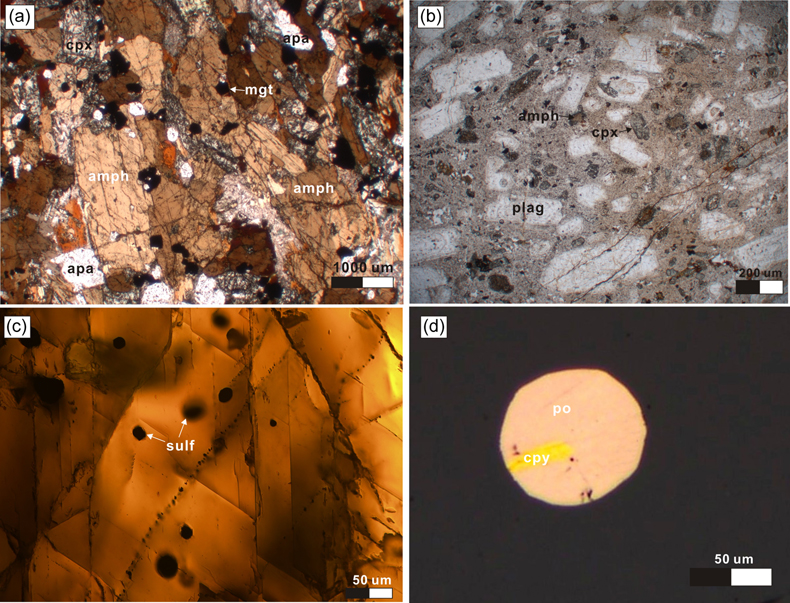
Figure 1 Typical images of cumulates and porphyries from Tongling mining district, southeastern China. (a) Amphibole-clinopyroxene cumulate xenolith. (b) Thin section of pyroxene diorite porphyry. (c) Sulfide inclusions (black) within amphiboles of cumulates. (d) Exposed sulfide inclusions comprising of 95 vol. % po and 5 vol. % cpy (po-pyrrhotite, cpy-chalcopyrite, amph-amphibole, cpx-clinopyroxene, apa-apatite, sulf-sulfide). a, b, and c were taken in transmitted light; d in reflected light.
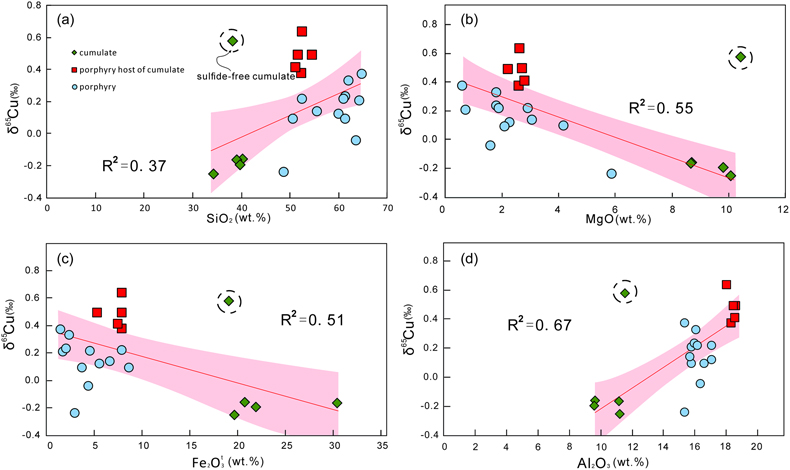
Figure 2 The correlation between δ65Cu and whole rock (a) SiO2, (b) MgO, (c) Fe2O3t, and (d) Al2O3 contents. Overall, the δ65Cu of the cumulates and ore-forming porphyries shows an increasing tendency with magmatic differentiation, though the porphyry hosts of cumulates do not match well with the quantitative relationship. The δ65Cu of cumulates samples shows a stable range with magmatic fractionation.
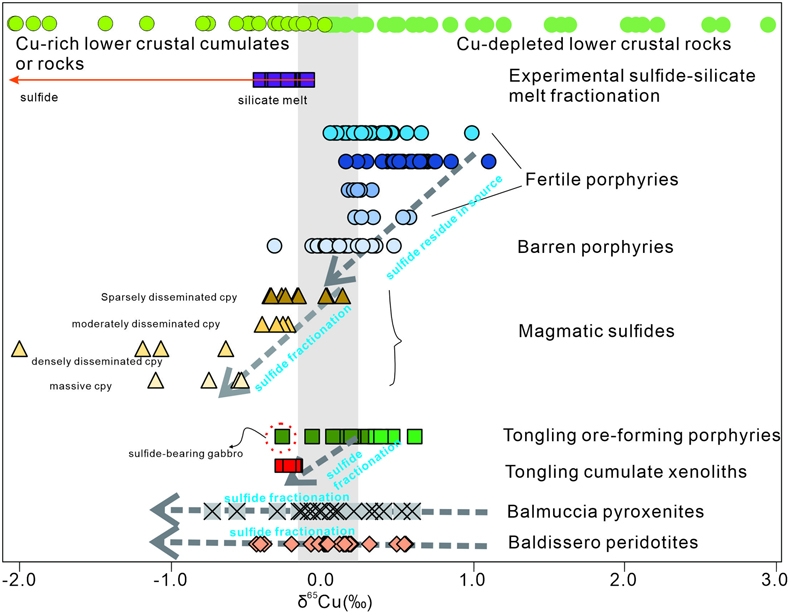
Figure 3 Copper isotopes of ore-forming porphyries and sulfide-bearing cumulate xenoliths in Tongling ore district compared with other sulfide saturated magmatic systems worldwide. Data sources as follows: fertile and barren porphyries in the porphyry Cu system (Zheng et al., 2019
Zheng, Y.C., Liu, S.A., Wu, C.D., Griffin, W.L., Li, Z.Q., Xu, B., Yang, Z.M., Hou, Z.Q., O’Reilly, S.Y. (2019) Cu isotopes reveal initial Cu enrichment in sources of giant porphyry deposits in a collisional setting. Geology 47, 135–138. https://doi.org/10.1130/G45362.1
); sparsely/moderately/densely/massive chalcopyrite (cpy) in a magmatic sulfide ore system (Zhao et al., 2017Zhao, Y., Xue, C.J., Liu, S.A., Symons, D.T.A., Zhao, X.B., Yang, Y.Q., Ke, J.J. (2017) Copper isotope fractionation during sulfide-magma differentiation in the Tulaergen magmatic Ni–Cu deposit, NW China. Lithos 286-287, 206–215. http://dx.doi.org/10.1016/j.lithos.2017.06.007
); sulfide saturated mantle peridotites or pyroxenites (Huang et al., 2017Huang, J., Huang, F., Wang, Z.C., Zhang, X.C., Yu, H.M. (2017) Copper isotope fractionation during partial melting and melt percolation in the upper mantle: Evidence from massif peridotites in Ivrea-Verbano Zone, Italian Alps. Geochimica et Cosmochimica Acta 211, 48–63. https://doi.org/10.1016/j.gca.2017.05.007.
; Zou et al., 2019Zou, Z., Wang, Z, Li, M., Becker, H., Geng, X., Hu, Z., Lazarov, M. (2019) Copper isotope variations during magmatic migration in the mantle: Insights from mantle pyroxenites in Balmuccia peridotite massif. Journal of Geophysical Research: Solid Earth 124, 11130–11149. https://doi.org/10.1029/2019JB017990
). The equilibrium Cu isotope fractionation between sulfide and silicate melts is from the experimental work of Xia et al. (2019)Xia, Y., Kiseeva, E.S., Wade, J., Huang, F. (2019) The effect of core segregation on the Cu and Zn isotope composition of the silicate Moon. Geochemical Perspectives Letters 12, 12–17. https://doi.org/10.7185/geochemlet.1928
; Cu-rich lower crustal cumulate or rocks and Cu-depleted lower crustal rocks (Liu et al., 2023Liu, S.A., Rudnick, R.L., Liu, W.R., Teng, F.Z., Wu, T.H., Wang, Z.Z. (2023) Copper isotope evidence for sulfide fractionation and lower crustal foundering in making continental crust. Science Advances 9, eadg6995. https://doi.org/10.1126/sciadv.adg6995
and references therein). Noting that sulfide segregation (or the residue in the source) will consistently enrich the differentiated melt in δ65Cu. Gray band represents the range for Bulk Silicate Earth from Liu et al. (2015)Liu, S.A., Huang, J., Liu, J., Wörner, G., Yang, W., Tang, Y.J., Chen, Y., Tang, L., Zheng, J., Li, S. (2015) Copper isotopic composition of the silicate Earth. Earth and Planetary Science Letters 427, 95–103. https://doi.org/10.1016/j.epsl.2015.06.061
.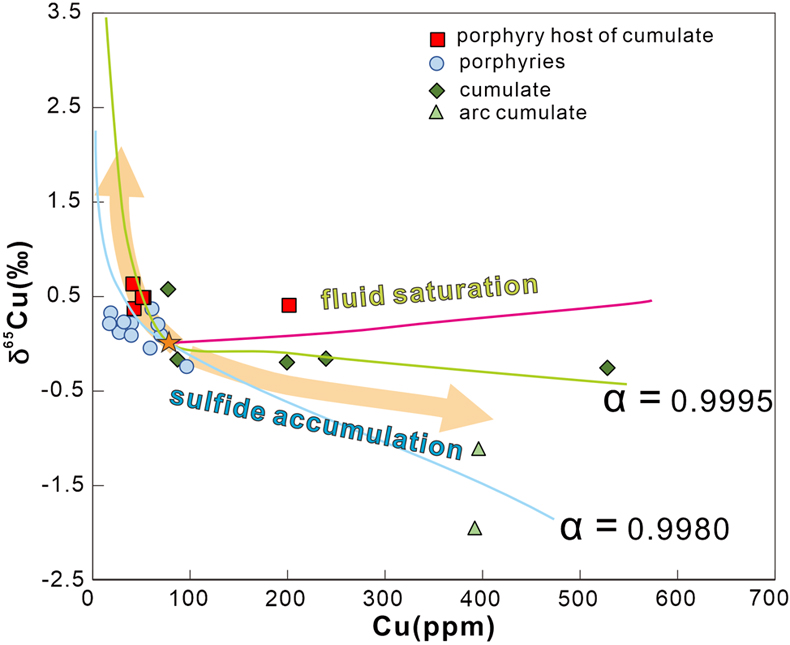
Figure 4 The correlation between δ65Cu and Cu content for cumulates and ore-forming porphyries at Tongling mining district. After sulfide segregation in the cumulates, the ore-forming porphyries obviously move towards more Cu depletion and a heavy copper isotopic trend. In the modelling, the initial melt (star) has ∼60 ppm Cu and Cu isotopic composition (δ65Cu) of 0.06 ‰ equal to that of the BSE (Liu et al., 2015
Liu, S.A., Huang, J., Liu, J., Wörner, G., Yang, W., Tang, Y.J., Chen, Y., Tang, L., Zheng, J., Li, S. (2015) Copper isotopic composition of the silicate Earth. Earth and Planetary Science Letters 427, 95–103. https://doi.org/10.1016/j.epsl.2015.06.061
); the D value is 8, assuming sulfide fraction is 0.01 and Dsulfide/melt = 800 (Lee et al., 2012Lee, C.-T.A., Luffi, P., Chin, E.J., Bouchet, R., Dasgupta, R., Morton, D.M., Le Roux, V., Xin, Q.Z., Jin, D. (2012) Copper systematics in arc magmas and implications for crust-mantle differentiation. Science 336, 64–68. https://doi.org/10.1126/science.1217313
). The δ65Cu and Cu content of arc cumulates are collected from Liu et al. (2023)Liu, S.A., Rudnick, R.L., Liu, W.R., Teng, F.Z., Wu, T.H., Wang, Z.Z. (2023) Copper isotope evidence for sulfide fractionation and lower crustal foundering in making continental crust. Science Advances 9, eadg6995. https://doi.org/10.1126/sciadv.adg6995
. The pink line represents the modelling of fluid saturation process as described in Guo et al. (2020)Guo, H.H., Xia, Y., Bai, R.X., Zhang, X.C., Huang, F. (2020) Experiments on Cu-isotope fractionation between chlorine-bearing fluid and silicate magma: implications for fluid exsolution and porphyry Cu deposits. National Science Review 7, 1319–1330. https://doi.org/10.1093/nsr/nwz221
.