



Solar neon dissolution into an ultramafic magma ocean
Affiliations | Corresponding Author | Cite as | Funding information
Published by the European Association of Geochemistry
under Creative Commons License CC BY-NC-ND 4.0
Keywords: Early solar system, neon, primitive atmosphere, magma ocean, noble gas solubility


- Share this article


-
Article views:1,473Cumulative count of HTML views and PDF downloads.
- Download Citation
- Rights & Permissions

top
Abstract
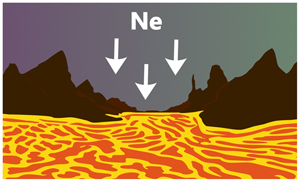
Figures and Tables
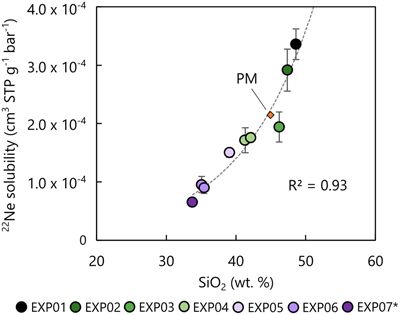 Figure 1 Experimental results (1400 °C, 1 bar of Ne) with best fit (Eq. 1) and expected solubility value for the primitive mantle (PM; Lyubetskaya and Korenaga, 2007). Error bars represent the standard deviation. *Result for the 72 % glass phase. The dashed line represents the model equation (1) discussed in the text. | 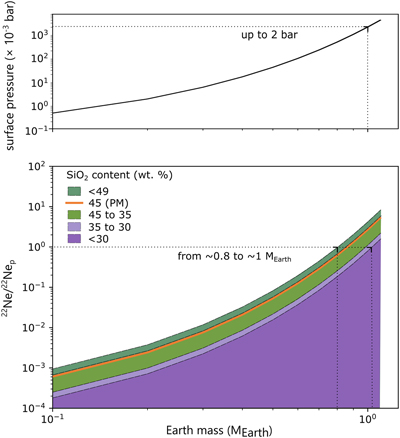 Figure 2 (a) The surface pressure estimation follows the Jaupart et al. (2017) accretion model for a 10 Myr degassing period for the nebula. (b) For a given surface pressure, the 22Ne content relative to the primitive estimation (22Nep) varies according to the solubility value applied; an embryo with over 0.8 MEarth is necessary to reach the primitive 22Ne content. PM = theoretical value obtained from Equation 1. | 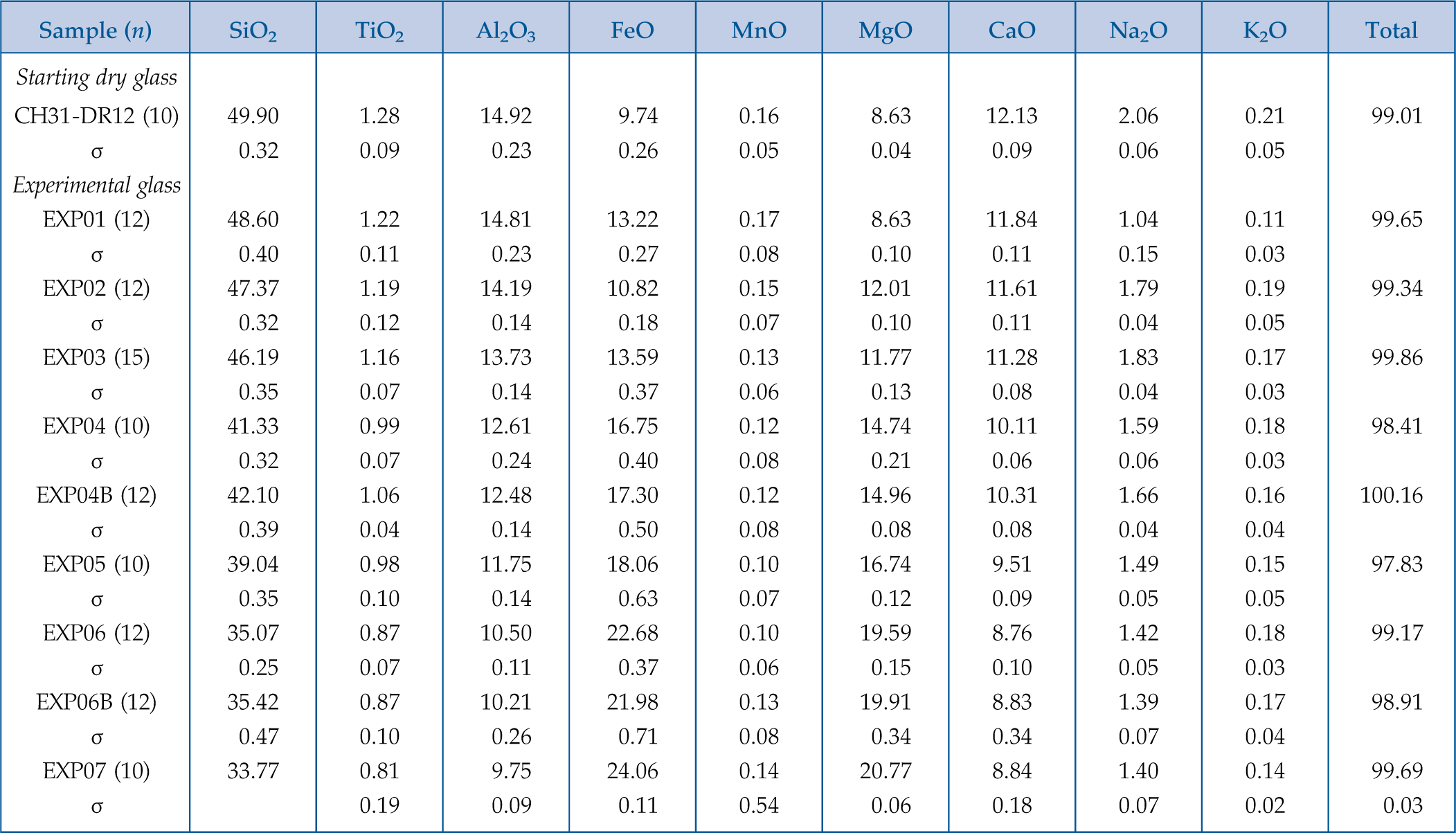 Table 1 Composition of the starting dry glass and experimental glasses (wt. %). “n” refers to the number of analyses per sample. | 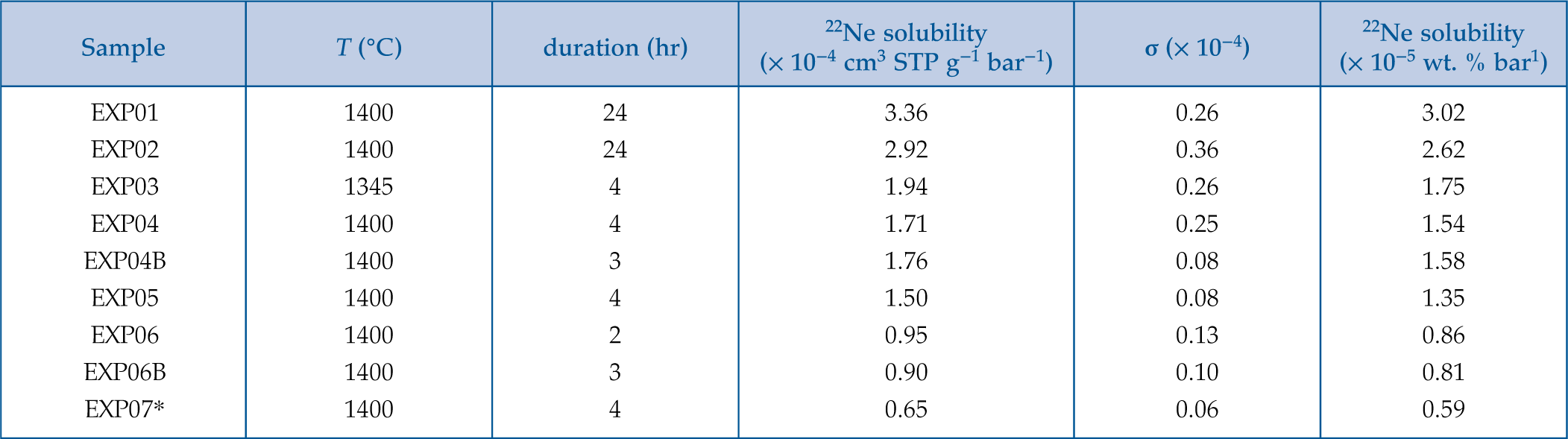 Table 2 22Ne solubility results obtained from 5 grains including the temperature and duration of each experiment performed at 1 bar. |
| Figure 1 | Figure 2 | Table 1 | Table 2 |
top
Introduction
Establishing the source of deep mantle Ne is key to understanding the formation of Earth and its primitive atmosphere. The 20Ne/22Ne of the deep mantle (up to 13.03 ± 0.04; Williams and Mukhopadhyay, 2019
Williams, C.D., Mukhopadhyay, S. (2019) Capture of nebular gases during Earth’s accretion is preserved in deep-mantle neon. Nature 565, 78–81. https://doi.org/10.1038/s41586-018-0771-1
) approaches that of solar wind (13.36 ± 0.10; Heber et al., 2012Heber, V.S., Baur, H., Bochsler, P., McKeegan, K.D., Neugebauer, M., Reisenfeld, D.B., Wieler, R., Wiens, R. C. (2012) Isotopic mass fractionation of solar wind: Evidence from fast and slow solar wind collected by the genesis mission. The Astrophysical Journal 759, 121. https://doi.org/10.1088/0004-637X/759/2/121
); if we consider isotopic fractionation to be limited, then this signature points to the presence of a primitive reservoir, as is the case for helium isotopes (e.g., Kurz et al., 1982Kurz, M.D., Jenkins, W.J., Hart, S.R. (1982) Helium isotopic systematics of oceanic islands and mantle heterogeneity. Nature 297, 43–47. https://doi.org/10.1038/297043a0
). The origin of this solar neon has been assigned to partial dissolution of a solar-like atmosphere (H2 and He-rich) from the accretion disk into the magma ocean (e.g., Mizuno et al., 1980Mizuno, H., Nakazawa, K., Hayashi, C. (1980) Dissolution of the primordial rare gases into the molten Earth’s material. Earth and Planetary Science Letters 50, 202–210. https://doi.org/10.1016/0012-821X(80)90131-4
; Yokochi and Marty, 2004Yokochi, R., Marty, B. (2004) A determination of the neon isotopic composition of the deep mantle. Earth and Planetary Science Letters 225, 77–88. https://doi.org/10.1016/j.epsl.2004.06.010
). However, Jaupart et al. (2017Jaupart, E., Charnoz, S., Moreira, M. (2017) Primordial atmosphere incorporation in planetary embryos and the origin of Neon in terrestrial planets. Icarus 293, 199–205. https://doi.org/10.1016/j.icarus.2017.04.022
) and Olson and Sharp (2019)Olson, P.L., Sharp, Z.D. (2019) Nebular atmosphere to magma ocean: A model for volatile capture during Earth accretion. Physics of the Earth and Planetary Interiors 294, 106294. https://doi.org/10.1016/j.pepi.2019.106294
demonstrated that this model only dissolves enough neon if the mass of the proto-Earth is adequate (>0.2–0.3 times the mass of the Earth—MEarth) to sustain dense atmospheres. Additionally, the gas from the accretion disk is only present, at most, in the first 10 Myr of planetary formation (e.g., Williams and Cieza, 2011Williams, J.P., Cieza, L.A. (2011) Protoplanetary Disks and Their Evolution. Annual Review of Astronomy and Astrophysics 49, 67–117. https://doi.org/10.1146/annurev-astro-081710-102548
), when the mass of the protoplanet is modelled to be below 0.2 MEarth in the distance from the sun where the Earth was formed (Walsh and Levison, 2016Walsh, K.J., Levison, H.F. (2016) Terrestrial planet formation from an annulus. The Astronomical Journal 152, 68. https://doi.org/10.3847/0004-6256/152/3/68
; Jaupart et al., 2017Jaupart, E., Charnoz, S., Moreira, M. (2017) Primordial atmosphere incorporation in planetary embryos and the origin of Neon in terrestrial planets. Icarus 293, 199–205. https://doi.org/10.1016/j.icarus.2017.04.022
). The captured atmosphere scenario is thus only possible if there was fast accretion, allowing a higher mass and hence higher atmospheric pressure and ingassing.In the Jaupart et al. (2017)
Jaupart, E., Charnoz, S., Moreira, M. (2017) Primordial atmosphere incorporation in planetary embryos and the origin of Neon in terrestrial planets. Icarus 293, 199–205. https://doi.org/10.1016/j.icarus.2017.04.022
model, they employed the solubility of neon in tholeiitic basalts to establish the amount of neon that could be trapped in the magma ocean from the simulated atmospheric conditions. Olson and Sharp (2018)Olson, P., Sharp, Z.D. (2018) Hydrogen and helium ingassing during terrestrial planet accretion. Earth and Planetary Science Letters 498, 418–426. https://doi.org/10.1016/j.epsl.2018.07.006
demonstrated that gas solubility is a critical parameter in establishing the volatile abundances in the magma ocean phase. In this paper, we present new neon solubility values for a range of silica (49 to 34 wt. %) and MgO (9 to 21 wt. %) contents, and update the Jaupart et al. (2017)Jaupart, E., Charnoz, S., Moreira, M. (2017) Primordial atmosphere incorporation in planetary embryos and the origin of Neon in terrestrial planets. Icarus 293, 199–205. https://doi.org/10.1016/j.icarus.2017.04.022
model by approaching the early Earth magma ocean composition, which we assume to resemble the theoretical pyrolite composition (∼45 wt. % SiO2 and ∼39 wt. % MgO; Lyubetskaya and Korenaga, 2007Lyubetskaya, T., Korenaga, J. (2007) Chemical composition of Earth’s primitive mantle and its variance: 1. Method and results. Journal of Geophysical Research: Solid Earth 112, 1–21. https://doi.org/10.1029/2005JB004223
).top
Material and Methods
Experiments were performed on a natural tholeiitic basalt glass mixed with various fractions of a MgO:Fe2O4 mixture (1:1.25) to approach ultramafic compositions. The powder was melted at 1400 °C for 3 hr in an open Pt crucible. The resulting dry glass used on the experiments was grinded (<200 μm) in an agate mortar under acetone. The starting dry glass shows homogeneous composition (Table 1). Each experimental run was done with 0.3 (EXP01 and EXP02) or 1 g of sample loaded in an open Pt crucible in a horizontal furnace permanently flushed with 1 bar of neon gas, and left for at least 3 hr under ∼1400 °C. The experiments were ended by removing the Pt crucible and dropping it in water; experiment duration and the composition of glasses are in Tables 1 and 2. During the experiments, the gas was introduced via tubes into a closed system ending in a water container in order to flush out the air and prevent atmospheric contamination. Our gas is composed of pure neon and our procedure follows that of Jambon et al. (1986)
Jambon, A., Weber, H., Braun, O. (1986) Solubility of He, Ne, Ar, Kr and Xe in a basalt melt in the range 1250-1600°C. Geochemical implications. Geochimica et Cosmochimica Acta 50, 401–408. https://doi.org/10.1016/0016-7037(86)90193-6
, who demonstrated that gas composition (i.e. whether pure Ne or mixed with other gases), pressure and experiment duration do not substantially affect the neon solubility in basaltic glasses, which follows Henry’s law under the experimental conditions investigated here. We conclude that the neon contents we report are representative of the solubility of the compositions of interest. Grain images to detect the presence or not of bubbles and crystals were obtained using an SEM-EDS under 15 kV accelerating voltage, 60 μm aperture, and at 10 mm working distance; images are included in the Supplementary Information. Chemical composition was obtained with a Cameca SX-Five electron microprobe under an accelerating voltage of 15 kV, a beam current of 10 nA, counting times of 10 seconds per element and a defocused beam diameter of 20 μm to minimise alkali migration. The calibration of major elements was performed using the following standards: albite (Si, Na), TiMnO3 (Mn, Ti), Al2O3 (Al), FeO (Fe), MgO (Mg), orthoclase (K), andradite (Ca) and apatite (P). PET analyser crystals were used for elements with lower energy emissions (K, Ti, P and Ca), while LiF analyser crystals were employed for higher energy emissions (Fe and Mn) (Di Carlo et al., 2006Di Carlo, I.D.A., Pichavant, M., Rotolo, S.G., Scaillet, B. (2006) Experimental crystallization of a high-K arc basalt: the golden pumice, Stromboli volcano (Italy). Journal of Petrology 47, 1317–1343. https://doi.org/10.1093/petrology/egl011
). Five grains of each resulting glass composition were heated, using a laser type Ytterbium-doped fibre (T > 1500 °C), analysed on a quadrupole mass spectrometer (QMS 700) and showed a small standard deviation (4 to 15 %; Table 2) with blanks contributing up to 1.6 % to the 22Ne abundance. All procedures were undertaken at the Institut des Sciences de la Terre d’Orléans (ISTO). Homogeneous chemical composition and neon content in different grains along with the absence of bubbles confirm that equilibrium was reached. The fact that the Ne solubility data of the most viscous liquid of our series (basalt) is similar to that of previous studies (see below) shows that the role of bubbles, which would be made of pure Ne and thus strongly increase Ne bulk content, is minor to non-existent.Table 1 Composition of the starting dry glass and experimental glasses (wt. %). “n” refers to the number of analyses per sample.
| Sample (n) | SiO2 | TiO2 | Al2O3 | FeO | MnO | MgO | CaO | Na2O | K2O | Total |
| Starting dry glass | ||||||||||
| CH31-DR12 (10) | 49.90 | 1.28 | 14.92 | 9.74 | 0.16 | 8.63 | 12.13 | 2.06 | 0.21 | 99.01 |
| σ | 0.32 | 0.09 | 0.23 | 0.26 | 0.05 | 0.04 | 0.09 | 0.06 | 0.05 | |
| Experimental glass | ||||||||||
| EXP01 (12) | 48.60 | 1.22 | 14.81 | 13.22 | 0.17 | 8.63 | 11.84 | 1.04 | 0.11 | 99.65 |
| σ | 0.40 | 0.11 | 0.23 | 0.27 | 0.08 | 0.10 | 0.11 | 0.15 | 0.03 | |
| EXP02 (12) | 47.37 | 1.19 | 14.19 | 10.82 | 0.15 | 12.01 | 11.61 | 1.79 | 0.19 | 99.34 |
| σ | 0.32 | 0.12 | 0.14 | 0.18 | 0.07 | 0.10 | 0.11 | 0.04 | 0.05 | |
| EXP03 (15) | 46.19 | 1.16 | 13.73 | 13.59 | 0.13 | 11.77 | 11.28 | 1.83 | 0.17 | 99.86 |
| σ | 0.35 | 0.07 | 0.14 | 0.37 | 0.06 | 0.13 | 0.08 | 0.04 | 0.03 | |
| EXP04 (10) | 41.33 | 0.99 | 12.61 | 16.75 | 0.12 | 14.74 | 10.11 | 1.59 | 0.18 | 98.41 |
| σ | 0.32 | 0.07 | 0.24 | 0.40 | 0.08 | 0.21 | 0.06 | 0.06 | 0.03 | |
| EXP04B (12) | 42.10 | 1.06 | 12.48 | 17.30 | 0.12 | 14.96 | 10.31 | 1.66 | 0.16 | 100.16 |
| σ | 0.39 | 0.04 | 0.14 | 0.50 | 0.08 | 0.08 | 0.08 | 0.04 | 0.04 | |
| EXP05 (10) | 39.04 | 0.98 | 11.75 | 18.06 | 0.10 | 16.74 | 9.51 | 1.49 | 0.15 | 97.83 |
| σ | 0.35 | 0.10 | 0.14 | 0.63 | 0.07 | 0.12 | 0.09 | 0.05 | 0.05 | |
| EXP06 (12) | 35.07 | 0.87 | 10.50 | 22.68 | 0.10 | 19.59 | 8.76 | 1.42 | 0.18 | 99.17 |
| σ | 0.25 | 0.07 | 0.11 | 0.37 | 0.06 | 0.15 | 0.10 | 0.05 | 0.03 | |
| EXP06B (12) | 35.42 | 0.87 | 10.21 | 21.98 | 0.13 | 19.91 | 8.83 | 1.39 | 0.17 | 98.91 |
| σ | 0.47 | 0.10 | 0.26 | 0.71 | 0.08 | 0.34 | 0.34 | 0.07 | 0.04 | |
| EXP07 (10) | 33.77 | 0.81 | 9.75 | 24.06 | 0.14 | 20.77 | 8.84 | 1.40 | 0.14 | 99.69 |
| σ | 0.19 | 0.09 | 0.11 | 0.54 | 0.06 | 0.18 | 0.07 | 0.02 | 0.03 |
Table 2 22Ne solubility results obtained from 5 grains including the temperature and duration of each experiment performed at 1 bar.
| Sample | T (°C) | duration (hr) | 22Ne solubility (× 10−4 cm3 STP g−1 bar−1) | σ (× 10−4) | 22Ne solubility (× 10−5 wt. % bar1) |
| EXP01 | 1400 | 24 | 3.36 | 0.26 | 3.02 |
| EXP02 | 1400 | 24 | 2.92 | 0.36 | 2.62 |
| EXP03 | 1345 | 4 | 1.94 | 0.26 | 1.75 |
| EXP04 | 1400 | 4 | 1.71 | 0.25 | 1.54 |
| EXP04B | 1400 | 3 | 1.76 | 0.08 | 1.58 |
| EXP05 | 1400 | 4 | 1.50 | 0.08 | 1.35 |
| EXP06 | 1400 | 2 | 0.95 | 0.13 | 0.86 |
| EXP06B | 1400 | 3 | 0.90 | 0.10 | 0.81 |
| EXP07* | 1400 | 4 | 0.65 | 0.06 | 0.59 |
top
Neon Solubility in Ultramafic Melts
As a noble gas, Ne is chemically inert and thus solubility is not controlled by chemical processes but by weak van der Waals interactions between the atoms and the silicate melt. The size of the atoms is the main parameter in this type of physical solubility (e.g., Doremus, 1966
Doremus, R.H. (1966) Physical Solubility of Gases in Fused Silica. Journal of the American Ceramic Society 49, 461–462. https://doi.org/10.1111/j.1151-2916.1966.tb13299.x
), or ionic porosity (e.g., Carroll and Stolper, 1993Carroll, M.R., Stolper, E.M. (1993) Noble gas solubilities in silicate melts and glasses: New experimental results for argon and the relationship between solubility and ionic porosity. Geochimica et Cosmochimica Acta 57, 5039–5051. https://doi.org/10.1016/0016-7037(93)90606-W
), with lighter noble gases displaying higher solubility than heavier ones (e.g., Jambon et al., 1986Jambon, A., Weber, H., Braun, O. (1986) Solubility of He, Ne, Ar, Kr and Xe in a basalt melt in the range 1250-1600°C. Geochemical implications. Geochimica et Cosmochimica Acta 50, 401–408. https://doi.org/10.1016/0016-7037(86)90193-6
). The quantity of noble gas dissolved in the melt is controlled by the partial pressure of said gas, following Henry’s law. Experimental studies demonstrated that neon solubility is higher in rhyolites than in basalts (e.g., Carroll et al., 1994Carroll, M.R., Draper, D.S., Brooker, R.A., Kelley, S. (1994) Noble Gas Solubilities in Melts and Crystals. In: Matsuda, JI. (Ed.) Noble Gas Geochemistry and Cosmochemistry, Terra Scientific, Tokyo, Japan, 325–341.
), possibly due to the available space between SiO2 tetrahedra links (Shackelford et al., 1972Shackelford, J.F., Studt, P.L., Fulrath, R.M. (1972) Solubility of Gases in Glass. II. He, Ne, and H2 in Fused Silica. Journal of Applied Physics 43, 1619–1626. https://doi.org/10.1063/1.1661371
). Our results are in agreement with this hypothesis, as 22Ne solubility decreases with SiO2 contents, from 3.4 × 10⁻⁴ cm3 STP g−1 bar−1 in a tholeiitic basalt (49 wt. % SiO2 and 9 wt. % MgO) to as low as 6.5 × 10⁻⁵ cm3 STP g−1 bar−1 in ultramafic rocks (34 wt. % SiO2 and 21 wt. % MgO) (Table 1 and Table 2, Fig. 1). The resulting glasses showed minimal compositional variation and presence of bubbles (<10 μm), with limited and localised quenched crystals (EXP06B, Fig. S-1). Only the experiment with lowest SiO2 content (34 wt. %) produced crystals in equilibrium (EXP07, Fig. S-2). The neon solubility of this experiment is an estimation from the glass phase based on a least square mass balance calculation (Albarède, 1996Albarède, F. (1996) Introduction to geochemical modeling. Cambridge University Press, 563pp. https://doi.org/10.1017/CBO9780511622960
) between the three phases produced during the experiment: glass (∼72 wt. %), olivine (∼16 wt. %) and spinel (∼12 wt. %) crystals. Our result for the tholeiitic basalt is compatible with the literature (∼2.5 to 3.5 × 10⁻⁴ cm3 STP g−1 bar−1 from 49 to 50 wt. %; Jambon et al., 1986Jambon, A., Weber, H., Braun, O. (1986) Solubility of He, Ne, Ar, Kr and Xe in a basalt melt in the range 1250-1600°C. Geochemical implications. Geochimica et Cosmochimica Acta 50, 401–408. https://doi.org/10.1016/0016-7037(86)90193-6
; Lux, 1987Lux, G. (1987) The behavior of noble gases in silicate liquids: Solution, diffusion, bubbles and surface effects, with applications to natural samples. Geochimica et Cosmochimica Acta 51, 1549–1560. https://doi.org/10.1016/0016-7037(87)90336-X
; Iacono-Marziano et al., 2010Iacono-Marziano, G., Paonita, A., Rizzo, A., Scaillet, B., Gaillard, F. (2010) Noble gas solubilities in silicate melts: New experimental results and a comprehensive model of the effects of liquid composition, temperature and pressure. Chemical Geology 279, 145–157. https://doi.org/10.1016/j.chemgeo.2010.10.017
), whereas the results from our experimental ultramafic compositions fall above the estimates of the Iacono-Marziano et al. (2010)Iacono-Marziano, G., Paonita, A., Rizzo, A., Scaillet, B., Gaillard, F. (2010) Noble gas solubilities in silicate melts: New experimental results and a comprehensive model of the effects of liquid composition, temperature and pressure. Chemical Geology 279, 145–157. https://doi.org/10.1016/j.chemgeo.2010.10.017
model, which yields values as low as 6 × 10⁻⁵ cm3 STP g−1 bar−1. This difference is likely due to the fact that, although SiO2 content is the main factor in the ionic porosity, the introduction of network modifiers cations, such as MgO, can further reduce the interstitial space and thus noble gas atoms are not accommodated (Shibata et al., 1998Shibata, T., Takahashi, E., Matsuda, J.-I. (1998) Solubility of neon, argon, krypton, and xenon in binary and ternary silicate systems: A new view on noble gas solubility. Geochimica et Cosmochimica Acta, 62, 1241–1253. https://doi.org/10.1016/S0016-7037(98)00046-5
). For simplification, the primitive mantle composition (PM) we refer to in our model is only based on the SiO2 content (45 wt. %). From the experimental data, we obtain the best fit for 22Ne solubility (s) based on the SiO2 content (R2 = 0.93):Eq. 1

Figure 1 Experimental results (1400 °C, 1 bar of Ne) with best fit (Eq. 1) and expected solubility value for the primitive mantle (PM; Lyubetskaya and Korenaga, 2007
Lyubetskaya, T., Korenaga, J. (2007) Chemical composition of Earth’s primitive mantle and its variance: 1. Method and results. Journal of Geophysical Research: Solid Earth 112, 1–21. https://doi.org/10.1029/2005JB004223
). Error bars represent the standard deviation. *Result for the 72 % glass phase. The dashed line represents the model equation (1) discussed in the text.top
Neon Concentration in the Magma Ocean
Rough estimates of the current 22Ne content in the upper mantle are ∼10−11 cm3 STP g−1 (Moreira and Kurz, 2013
Moreira, M.A., Kurz, M.D. (2013) Noble gases as tracers of mantle processes and magmatic degassing. In: Burnard, P. (Ed.) The Noble Gases as Geochemical Tracers, Springer Berlin, Heidelberg, 371–391. https://doi.org/10.1007/978-3-642-28836-4_12
) (∼10−8 ppm). Considering that over 99 % of the volatiles degassed from the mantle (e.g., Allègre et al., 1986Allègre, C. J., Staudacher, T., Sarda, P. (1986) Rare gas systematics: formation of the atmosphere, evolution and structure of the Earth’s mantle. Earth and Planetary Science Letters 81, 127–150. https://doi.org/10.1016/0012-821X(87)90151-8
), the primitive mantle composition would approach at least 10−9 cm3 STP g−1 for 22Ne (∼10−6 ppm). Starting with the Jaupart et al. (2017)Jaupart, E., Charnoz, S., Moreira, M. (2017) Primordial atmosphere incorporation in planetary embryos and the origin of Neon in terrestrial planets. Icarus 293, 199–205. https://doi.org/10.1016/j.icarus.2017.04.022
accretion model, we can establish the amount of neon that can be captured from the primitive atmosphere. In this model, the atmosphere symmetrically surrounds the embryo following the Bondi radius, i.e. the region around the embryo that is able to attract gas and dust particles. We modified this model by removing the luminosity, as it showed minimal influence, and applied an upper bound nebula photoevaporation range of 10 Myr, as some models show the nebula dissipating before 8 Myr (e.g., Ercolano and Pascucci, 2017Ercolano, B., Pascucci, I. (2017) The dispersal of planet-forming discs: Theory confronts observations. Royal Society Open Science 4, 170114. https://doi.org/10.1098/rsos.170114
), especially if we only consider the inner solar system and not the whole disk. With our new values of neon solubility, even lower concentrations are obtained for a melt with 30 to 49 wt. % SiO2. For the theoretical pyrolite composition of ∼45 wt. % SiO2 (Lyubetskaya and Korenaga, 2007Lyubetskaya, T., Korenaga, J. (2007) Chemical composition of Earth’s primitive mantle and its variance: 1. Method and results. Journal of Geophysical Research: Solid Earth 112, 1–21. https://doi.org/10.1029/2005JB004223
), 22Ne solubility would be close to 2 × 10⁻⁴ cm3 STP g−1 bar−1 based on EXP03 (Table 2) and Equation 1, yielding ∼10−11 cm3 STP g−1 of dissolved 22Ne for a 0.2 MEarth embryo with 2.0 × 10⁻³ bar atmosphere and ∼1.5 × 10⁻⁷ bar 22Ne partial pressure. Our ranges are lower than the ones from Jaupart et al. (2017)Jaupart, E., Charnoz, S., Moreira, M. (2017) Primordial atmosphere incorporation in planetary embryos and the origin of Neon in terrestrial planets. Icarus 293, 199–205. https://doi.org/10.1016/j.icarus.2017.04.022
, and thus even less compatible with the 22Ne content estimations for the primitive mantle. As seen in Figure 2b, only embryos with over 0.8 MEarth are capable of capturing enough neon in the magma ocean to reflect the primitive mantle composition.Figure 2 (a) The surface pressure estimation follows the Jaupart et al. (2017)
Jaupart, E., Charnoz, S., Moreira, M. (2017) Primordial atmosphere incorporation in planetary embryos and the origin of Neon in terrestrial planets. Icarus 293, 199–205. https://doi.org/10.1016/j.icarus.2017.04.022
accretion model for a 10 Myr degassing period for the nebula. (b) For a given surface pressure, the 22Ne content relative to the primitive estimation (22Nep) varies according to the solubility value applied; an embryo with over 0.8 MEarth is necessary to reach the primitive 22Ne content. PM = theoretical value obtained from Equation 1.Our model can be contested on the basis of whether or not Earth accretion took place in a faster pace, allowing for >0.2 MEarth to be formed still in the presence of the solar nebula. If accretion was slow (e.g., ∼30 Myr or more to achieve 90 % of the mass), the nebula gas could not be captured as the mass would be too low, as would the surface pressure. There is still debate whether Earth’s accretion took place in the first 10 Myr or if it extended to ∼30 Myr, or more. Hf-W isotopes yield different core formation ages depending on the model applied; however, according to certain authors (e.g., Halliday et al., 1996
Halliday, A., RehkZmper, M., Lee, D.-C., Yi, W. (1996) Early evolution of the Earth and Moon: new constraints from Hf-W isotope geochemistry. Earth and Planetary Science Letters 142, 75–89. https://doi.org/10.1016/0012-821X(96)00096-9
; Kleine and Walker, 2017Kleine, T., Walker, R.J. (2017) Tungsten Isotopes in Planets. Annual Review of Earth and Planetary Sciences 45, 389–417. https://doi.org/10.1146/annurev-earth-063016-020037
), the two-stage model (∼30 Myr; e.g., Kleine and Walker, 2017Kleine, T., Walker, R.J. (2017) Tungsten Isotopes in Planets. Annual Review of Earth and Planetary Sciences 45, 389–417. https://doi.org/10.1146/annurev-earth-063016-020037
) represents the earliest age of core formation. Nonetheless, it is possible that most of the core was formed in the early stages of accretion but extended beyond the age of Mars accretion, for instance, based on mantle 182W isotopes (Kleine and Walker, 2017Kleine, T., Walker, R.J. (2017) Tungsten Isotopes in Planets. Annual Review of Earth and Planetary Sciences 45, 389–417. https://doi.org/10.1146/annurev-earth-063016-020037
). Yin et al. (2002)Yin, Q., Jacobsen, S.B., Yamashita, K., Blichert-Toft, J., Télouk, P., Albarède, F. (2002) A short timescale for terrestrial planet formation from Hf-W chronometry of meteorites. Nature 418, 949–952. https://doi.org/10.1038/nature00995
proposed a model with exponential decrease in accretion and previous metal–silicate equilibrium with the magma ocean before segregation to the core; they obtained 63 % core formation by 11 Myr and 90 % by 29 Myr. Several growth models agree that Mars analogues are formed in a few Myr (e.g., Walsh and Levison, 2016Walsh, K.J., Levison, H.F. (2016) Terrestrial planet formation from an annulus. The Astronomical Journal 152, 68. https://doi.org/10.3847/0004-6256/152/3/68
); however, the question remains open for Earth-like bodies.In the Olson and Sharp (2019)
Olson, P.L., Sharp, Z.D. (2019) Nebular atmosphere to magma ocean: A model for volatile capture during Earth accretion. Physics of the Earth and Planetary Interiors 294, 106294. https://doi.org/10.1016/j.pepi.2019.106294
fast accretion model (up to 16 Myr), the surface pressure and temperature continually increase until 50 % of the accretion and then starts to drop. The magma volatiles content, however, stays relatively stable after this mark, when the solar nebula would be nearly fully dissipated (up to 10 Myr). Nonetheless, applying the Jaupart et al. (2017)Jaupart, E., Charnoz, S., Moreira, M. (2017) Primordial atmosphere incorporation in planetary embryos and the origin of Neon in terrestrial planets. Icarus 293, 199–205. https://doi.org/10.1016/j.icarus.2017.04.022
model for an embryo of 0.5 MEarth (under ∼5 × 10⁻² bar, Fig. 2a), it would still not reach the primitive mantle estimate, especially for the lower silica-rich compositions (Fig. 2b). Considering that our model yields an upper bound for neon concentration, as mantle equilibration is not assured, the atmosphere capture into the magma ocean scenario remains improbable. Furthermore, if the magma ocean was formed before core formation, its composition would be even more primitive and neon solubility even lower. One alternative model is that of solar wind implantation (Trieloff et al., 2000Trieloff, M., Kunz, J., Clague, D.A., Harrison, D., Allègre, C.J. (2000) The Nature of Pristine Noble Gases in Mantle Plumes. Science 288, 1036–1038. https://doi.org/10.1126/science.288.5468.1036
; Raquin and Moreira, 2009Raquin, A., Moreira, M. (2009) Atmospheric 38Ar/36Ar in the mantle: Implications for the nature of the terrestrial parent bodies. Earth and Planetary Science Letters 287, 551–558. https://doi.org/10.1016/j.epsl.2009.09.003
; Péron et al., 2017Péron, S., Moreira, M., Putlitz, B., Kurz, M.D. (2017) Solar wind implantation supplied light volatiles during the first stage of Earth accretion. Geochemical Perspectives Letters 3, 151–159. https://doi.org/10.7185/geochemlet.1718
), in which pre-planetary dust is irradiated by solar wind, enriching the embryos in H2, He, O, C and Ne.top
Conclusion
Neon solubility decreases in approximately one order of magnitude between 49 and 30 wt. % SiO2 (3.4 × 10⁻⁴ to 6.5 × 10⁻⁵ cm3 STP g−1 bar−1, respectively), supporting what has been previously shown in the literature for rhyolitic and basaltic composition experiments (e.g., Carroll et al., 1994
Carroll, M.R., Draper, D.S., Brooker, R.A., Kelley, S. (1994) Noble Gas Solubilities in Melts and Crystals. In: Matsuda, JI. (Ed.) Noble Gas Geochemistry and Cosmochemistry, Terra Scientific, Tokyo, Japan, 325–341.
). Our results allowed us to update the Jaupart et al. (2017)Jaupart, E., Charnoz, S., Moreira, M. (2017) Primordial atmosphere incorporation in planetary embryos and the origin of Neon in terrestrial planets. Icarus 293, 199–205. https://doi.org/10.1016/j.icarus.2017.04.022
accretion model and show that dissolution of a primitive atmosphere into the magma ocean cannot account for the theoretical primitive mantle neon contents, requiring a body close to 1 MEarth to accumulate enough neon. Thus, alternative models are needed to explain the high 20Ne/22Ne ratios found in deep mantle rocks.top
Acknowledgements
We thank R. Champallier, I. Di Carlo, and G. McGill for the technical support, and E. Núñez-Guerrero and R. Sauvalle for the scientific discussions and help with analyses. This research was funded by the ERC APATE project (DOI:
Editor: Helen Williams
top
References
Albarède, F. (1996) Introduction to geochemical modeling. Cambridge University Press, 563pp. https://doi.org/10.1017/CBO9780511622960
 Show in context
 The neon solubility of this experiment is an estimation from the glass phase based on a least square mass balance calculation (Albarède, 1996) between the three phases produced during the experiment: glass (∼72 wt. %), olivine (∼16 wt. %) and spinel (∼12 wt. %) crystals. Our result for the tholeiitic basalt is compatible with the literature (∼2.5 to 3.5 × 10⁻⁴ cm3 STP g−1 bar−1 from 49 to 50 wt. %; Jambon et al., 1986; Lux, 1987; Iacono-Marziano et al., 2010), whereas the results from our experimental ultramafic compositions fall above the estimates of the Iacono-Marziano et al. (2010) model, which yields values as low as 6 × 10⁻⁵ cm3 STP g−1 bar−1
View in article
Allègre, C. J., Staudacher, T., Sarda, P. (1986) Rare gas systematics: formation of the atmosphere, evolution and structure of the Earth’s mantle. Earth and Planetary Science Letters 81, 127–150. https://doi.org/10.1016/0012-821X(87)90151-8
Show in context Considering that over 99 % of the volatiles degassed from the mantle (e.g., Allègre et al., 1986), the primitive mantle composition would approach at least 10−9 cm3 STP g−1 for 22Ne (∼10−6 ppm). Starting with the Jaupart et al. (2017) accretion model, we can establish the amount of neon that can be captured from the primitive atmosphere.
View in article
Carroll, M.R., Draper, D.S., Brooker, R.A., Kelley, S. (1994) Noble Gas Solubilities in Melts and Crystals. In: Matsuda, JI. (Ed.) Noble Gas Geochemistry and Cosmochemistry, Terra Scientific, Tokyo, Japan, 325–341.
Show in context The quantity of noble gas dissolved in the melt is controlled by the partial pressure of said gas, following Henry’s law. Experimental studies demonstrated that neon solubility is higher in rhyolites than in basalts (e.g., Carroll et al., 1994), possibly due to the available space between SiO2 tetrahedra links (Shackelford et al., 1972).
View in article
Neon solubility decreases in approximately one order of magnitude between 49 and 30 wt. % SiO2 (3.4 × 10⁻⁴ to 6.5 × 10⁻⁵ cm3 STP g−1 bar−1, respectively), supporting what has been previously shown in the literature for rhyolitic and basaltic composition experiments (e.g., Carroll et al., 1994).
View in article
Carroll, M.R., Stolper, E.M. (1993) Noble gas solubilities in silicate melts and glasses: New experimental results for argon and the relationship between solubility and ionic porosity. Geochimica et Cosmochimica Acta 57, 5039–5051. https://doi.org/10.1016/0016-7037(93)90606-W
Show in context The size of the atoms is the main parameter in this type of physical solubility (e.g., Doremus, 1966), or ionic porosity (e.g., Carroll and Stolper, 1993), with lighter noble gases displaying higher solubility than heavier ones (e.g., Jambon et al., 1986).
View in article
Di Carlo, I.D.A., Pichavant, M., Rotolo, S.G., Scaillet, B. (2006) Experimental crystallization of a high-K arc basalt: the golden pumice, Stromboli volcano (Italy). Journal of Petrology 47, 1317–1343. https://doi.org/10.1093/petrology/egl011
Show in context PET analyser crystals were used for elements with lower energy emissions (K, Ti, P and Ca), while LiF analyser crystals were employed for higher energy emissions (Fe and Mn) (Di Carlo et al., 2006).
View in article
Doremus, R.H. (1966) Physical Solubility of Gases in Fused Silica. Journal of the American Ceramic Society 49, 461–462. https://doi.org/10.1111/j.1151-2916.1966.tb13299.x
Show in context The size of the atoms is the main parameter in this type of physical solubility (e.g., Doremus, 1966), or ionic porosity (e.g., Carroll and Stolper, 1993), with lighter noble gases displaying higher solubility than heavier ones (e.g., Jambon et al., 1986).
View in article
Ercolano, B., Pascucci, I. (2017) The dispersal of planet-forming discs: Theory confronts observations. Royal Society Open Science 4, 170114. https://doi.org/10.1098/rsos.170114
Show in context We modified this model by removing the luminosity, as it showed minimal influence, and applied an upper bound nebula photoevaporation range of 10 Myr, as some models show the nebula dissipating before 8 Myr (e.g., Ercolano and Pascucci, 2017), especially if we only consider the inner solar system and not the whole disk. With our new values of neon solubility, even lower concentrations are obtained for a melt with 30 to 49 wt. % SiO2
View in article
Halliday, A., RehkZmper, M., Lee, D.-C., Yi, W. (1996) Early evolution of the Earth and Moon: new constraints from Hf-W isotope geochemistry. Earth and Planetary Science Letters 142, 75–89. https://doi.org/10.1016/0012-821X(96)00096-9
Show in context Hf-W isotopes yield different core formation ages depending on the model applied; however, according to certain authors (e.g., Halliday et al., 1996; Kleine and Walker, 2017), the two-stage model (∼30 Myr; e.g., Kleine and Walker, 2017) represents the earliest age of core formation.
View in article
Heber, V.S., Baur, H., Bochsler, P., McKeegan, K.D., Neugebauer, M., Reisenfeld, D.B., Wieler, R., Wiens, R. C. (2012) Isotopic mass fractionation of solar wind: Evidence from fast and slow solar wind collected by the genesis mission. The Astrophysical Journal 759, 121. https://doi.org/10.1088/0004-637X/759/2/121
Show in context Establishing the source of deep mantle Ne is key to understanding the formation of Earth and its primitive atmosphere. The 20Ne/22Ne of the deep mantle (up to 13.03 ± 0.04; Williams and Mukhopadhyay, 2019) approaches that of solar wind (13.36 ± 0.10; Heber et al., 2012); if we consider isotopic fractionation to be limited, then this signature points to the presence of a primitive reservoir, as is the case for helium isotopes (e.g., Kurz et al., 1982).
View in article
Iacono-Marziano, G., Paonita, A., Rizzo, A., Scaillet, B., Gaillard, F. (2010) Noble gas solubilities in silicate melts: New experimental results and a comprehensive model of the effects of liquid composition, temperature and pressure. Chemical Geology 279, 145–157. https://doi.org/10.1016/j.chemgeo.2010.10.017
Show in context The neon solubility of this experiment is an estimation from the glass phase based on a least square mass balance calculation (Albarède, 1996) between the three phases produced during the experiment: glass (∼72 wt. %), olivine (∼16 wt. %) and spinel (∼12 wt. %) crystals. Our result for the tholeiitic basalt is compatible with the literature (∼2.5 to 3.5 × 10⁻⁴ cm3 STP g−1 bar−1 from 49 to 50 wt. %; Jambon et al., 1986; Lux, 1987; Iacono-Marziano et al., 2010), whereas the results from our experimental ultramafic compositions fall above the estimates of the Iacono-Marziano et al. (2010) model, which yields values as low as 6 × 10⁻⁵ cm3 STP g−1 bar−1
View in article
Jambon, A., Weber, H., Braun, O. (1986) Solubility of He, Ne, Ar, Kr and Xe in a basalt melt in the range 1250-1600°C. Geochemical implications. Geochimica et Cosmochimica Acta 50, 401–408. https://doi.org/10.1016/0016-7037(86)90193-6
Show in context Our gas is composed of pure neon and our procedure follows that of Jambon et al. (1986), who demonstrated that gas composition (i.e. whether pure Ne or mixed with other gases), pressure and experiment duration do not substantially affect the neon solubility in basaltic glasses, which follows Henry’s law under the experimental conditions investigated here.
View in article
The size of the atoms is the main parameter in this type of physical solubility (e.g., Doremus, 1966), or ionic porosity (e.g., Carroll and Stolper, 1993), with lighter noble gases displaying higher solubility than heavier ones (e.g., Jambon et al., 1986).
View in article
The neon solubility of this experiment is an estimation from the glass phase based on a least square mass balance calculation (Albarède, 1996) between the three phases produced during the experiment: glass (∼72 wt. %), olivine (∼16 wt. %) and spinel (∼12 wt. %) crystals. Our result for the tholeiitic basalt is compatible with the literature (∼2.5 to 3.5 × 10⁻⁴ cm3 STP g−1 bar−1 from 49 to 50 wt. %; Jambon et al., 1986; Lux, 1987; Iacono-Marziano et al., 2010), whereas the results from our experimental ultramafic compositions fall above the estimates of the Iacono-Marziano et al. (2010) model, which yields values as low as 6 × 10⁻⁵ cm3 STP g−1 bar−1
View in article
Jaupart, E., Charnoz, S., Moreira, M. (2017) Primordial atmosphere incorporation in planetary embryos and the origin of Neon in terrestrial planets. Icarus 293, 199–205. https://doi.org/10.1016/j.icarus.2017.04.022
Show in context The origin of this solar neon has been assigned to partial dissolution of a solar-like atmosphere (H2 and He-rich) from the accretion disk into the magma ocean (e.g., Mizuno et al., 1980; Yokochi and Marty, 2004). However, Jaupart et al. (2017) and Olson and Sharp (2019) demonstrated that this model only dissolves enough neon if the mass of the proto-Earth is adequate (>0.2–0.3 times the mass of the Earth—MEarth) to sustain dense atmospheres.
View in article
Additionally, the gas from the accretion disk is only present, at most, in the first 10 Myr of planetary formation (e.g., Williams and Cieza, 2011), when the mass of the protoplanet is modelled to be below 0.2 MEarth in the distance from the sun where the Earth was formed (Walsh and Levison, 2016; Jaupart et al., 2017).
View in article
In the Jaupart et al. (2017) model, they employed the solubility of neon in tholeiitic basalts to establish the amount of neon that could be trapped in the magma ocean from the simulated atmospheric conditions. Olson and Sharp (2018) demonstrated that gas solubility is a critical parameter in establishing the volatile abundances in the magma ocean phase. In this paper, we present new neon solubility values for a range of silica (49 to 34 wt. %) and MgO (9 to 21 wt. %) contents, and update the Jaupart et al. (2017) model by approaching the early Earth magma ocean composition, which we assume to resemble the theoretical pyrolite composition (∼45 wt. % SiO2 and ∼39 wt. % MgO; Lyubetskaya and Korenaga, 2007).
View in article
Considering that over 99 % of the volatiles degassed from the mantle (e.g., Allègre et al., 1986), the primitive mantle composition would approach at least 10−9 cm3 STP g−1 for 22Ne (∼10−6 ppm). Starting with the Jaupart et al. (2017) accretion model, we can establish the amount of neon that can be captured from the primitive atmosphere.
View in article
Our ranges are lower than the ones from Jaupart et al. (2017), and thus even less compatible with the 22Ne content estimations for the primitive mantle. As seen in Figure 2b, only embryos with over 0.8 MEarth are capable of capturing enough neon in the magma ocean to reflect the primitive mantle composition.
View in article
(a) The surface pressure estimation follows the Jaupart et al. (2017) accretion model for a 10 Myr degassing period for the nebula.
View in article
The magma volatiles content, however, stays relatively stable after this mark, when the solar nebula would be nearly fully dissipated (up to 10 Myr). Nonetheless, applying the Jaupart et al. (2017) model for an embryo of 0.5 MEarth (under ∼5 × 10⁻² bar, Fig. 2a), it would still not reach the primitive mantle estimate, especially for the lower silica-rich compositions (Fig. 2b).
View in article
Our results allowed us to update the Jaupart et al. (2017) accretion model and show that dissolution of a primitive atmosphere into the magma ocean cannot account for the theoretical primitive mantle neon contents, requiring a body close to 1 MEarth to accumulate enough neon.
View in article
Kleine, T., Walker, R.J. (2017) Tungsten Isotopes in Planets. Annual Review of Earth and Planetary Sciences 45, 389–417. https://doi.org/10.1146/annurev-earth-063016-020037
Show in context Hf-W isotopes yield different core formation ages depending on the model applied; however, according to certain authors (e.g., Halliday et al., 1996; Kleine and Walker, 2017), the two-stage model (∼30 Myr; e.g., Kleine and Walker, 2017) represents the earliest age of core formation.
View in article
Nonetheless, it is possible that most of the core was formed in the early stages of accretion but extended beyond the age of Mars accretion, for instance, based on mantle 182W isotopes (Kleine and Walker, 2017).
View in article
Kurz, M.D., Jenkins, W.J., Hart, S.R. (1982) Helium isotopic systematics of oceanic islands and mantle heterogeneity. Nature 297, 43–47. https://doi.org/10.1038/297043a0
Show in context Establishing the source of deep mantle Ne is key to understanding the formation of Earth and its primitive atmosphere. The 20Ne/22Ne of the deep mantle (up to 13.03 ± 0.04; Williams and Mukhopadhyay, 2019) approaches that of solar wind (13.36 ± 0.10; Heber et al., 2012); if we consider isotopic fractionation to be limited, then this signature points to the presence of a primitive reservoir, as is the case for helium isotopes (e.g., Kurz et al., 1982).
View in article
Lux, G. (1987) The behavior of noble gases in silicate liquids: Solution, diffusion, bubbles and surface effects, with applications to natural samples. Geochimica et Cosmochimica Acta 51, 1549–1560. https://doi.org/10.1016/0016-7037(87)90336-X
Show in context The neon solubility of this experiment is an estimation from the glass phase based on a least square mass balance calculation (Albarède, 1996) between the three phases produced during the experiment: glass (∼72 wt. %), olivine (∼16 wt. %) and spinel (∼12 wt. %) crystals. Our result for the tholeiitic basalt is compatible with the literature (∼2.5 to 3.5 × 10⁻⁴ cm3 STP g−1 bar−1 from 49 to 50 wt. %; Jambon et al., 1986; Lux, 1987; Iacono-Marziano et al., 2010), whereas the results from our experimental ultramafic compositions fall above the estimates of the Iacono-Marziano et al. (2010) model, which yields values as low as 6 × 10⁻⁵ cm3 STP g−1 bar−1
View in article
Lyubetskaya, T., Korenaga, J. (2007) Chemical composition of Earth’s primitive mantle and its variance: 1. Method and results. Journal of Geophysical Research: Solid Earth 112, 1–21. https://doi.org/10.1029/2005JB004223
Show in context In the Jaupart et al. (2017) model, they employed the solubility of neon in tholeiitic basalts to establish the amount of neon that could be trapped in the magma ocean from the simulated atmospheric conditions. Olson and Sharp (2018) demonstrated that gas solubility is a critical parameter in establishing the volatile abundances in the magma ocean phase. In this paper, we present new neon solubility values for a range of silica (49 to 34 wt. %) and MgO (9 to 21 wt. %) contents, and update the Jaupart et al. (2017) model by approaching the early Earth magma ocean composition, which we assume to resemble the theoretical pyrolite composition (∼45 wt. % SiO2 and ∼39 wt. % MgO; Lyubetskaya and Korenaga, 2007).
View in article
Experimental results (1400 °C, 1 bar of Ne) with best fit (Eq. 1) and expected solubility value for the primitive mantle (PM; Lyubetskaya and Korenaga, 2007).
View in article
For the theoretical pyrolite composition of ∼45 wt. % SiO2 (Lyubetskaya and Korenaga, 2007), 22Ne solubility would be close to 2 × 10⁻⁴ cm3 STP g−1 bar−1 based on EXP03 (Table 2) and Equation 1, yielding ∼10−11 cm3 STP g−1 of dissolved 22Ne for a 0.2 MEarth embryo with 2.0 × 10⁻³ bar atmosphere and ∼1.5 × 10⁻⁷ bar 22Ne partial pressure.
View in article
Mizuno, H., Nakazawa, K., Hayashi, C. (1980) Dissolution of the primordial rare gases into the molten Earth’s material. Earth and Planetary Science Letters 50, 202–210. https://doi.org/10.1016/0012-821X(80)90131-4
Show in context The origin of this solar neon has been assigned to partial dissolution of a solar-like atmosphere (H2 and He-rich) from the accretion disk into the magma ocean (e.g., Mizuno et al., 1980; Yokochi and Marty, 2004). However, Jaupart et al. (2017) and Olson and Sharp (2019) demonstrated that this model only dissolves enough neon if the mass of the proto-Earth is adequate (>0.2–0.3 times the mass of the Earth—MEarth) to sustain dense atmospheres.
View in article
Moreira, M.A., Kurz, M.D. (2013) Noble gases as tracers of mantle processes and magmatic degassing. In: Burnard, P. (Ed.) The Noble Gases as Geochemical Tracers, Springer Berlin, Heidelberg, 371–391. https://doi.org/10.1007/978-3-642-28836-4_12
Show in context Rough estimates of the current 22Ne content in the upper mantle are ∼10−11 cm3 STP g−1 (Moreira and Kurz, 2013) (∼10−8 ppm).
View in article
Olson, P.L., Sharp, Z.D. (2019) Nebular atmosphere to magma ocean: A model for volatile capture during Earth accretion. Physics of the Earth and Planetary Interiors 294, 106294. https://doi.org/10.1016/j.pepi.2019.106294
Show in context The origin of this solar neon has been assigned to partial dissolution of a solar-like atmosphere (H2 and He-rich) from the accretion disk into the magma ocean (e.g., Mizuno et al., 1980; Yokochi and Marty, 2004). However, Jaupart et al. (2017) and Olson and Sharp (2019) demonstrated that this model only dissolves enough neon if the mass of the proto-Earth is adequate (>0.2–0.3 times the mass of the Earth—MEarth) to sustain dense atmospheres.
View in article
In the Olson and Sharp (2019) fast accretion model (up to 16 Myr), the surface pressure and temperature continually increase until 50 % of the accretion and then starts to drop.
View in article
Olson, P., Sharp, Z.D. (2018) Hydrogen and helium ingassing during terrestrial planet accretion. Earth and Planetary Science Letters 498, 418–426. https://doi.org/10.1016/j.epsl.2018.07.006
Show in context In the Jaupart et al. (2017) model, they employed the solubility of neon in tholeiitic basalts to establish the amount of neon that could be trapped in the magma ocean from the simulated atmospheric conditions. Olson and Sharp (2018) demonstrated that gas solubility is a critical parameter in establishing the volatile abundances in the magma ocean phase. In this paper, we present new neon solubility values for a range of silica (49 to 34 wt. %) and MgO (9 to 21 wt. %) contents, and update the Jaupart et al. (2017) model by approaching the early Earth magma ocean composition, which we assume to resemble the theoretical pyrolite composition (∼45 wt. % SiO2 and ∼39 wt. % MgO; Lyubetskaya and Korenaga, 2007).
View in article
Péron, S., Moreira, M., Putlitz, B., Kurz, M.D. (2017) Solar wind implantation supplied light volatiles during the first stage of Earth accretion. Geochemical Perspectives Letters 3, 151–159. https://doi.org/10.7185/geochemlet.1718
Show in context One alternative model is that of solar wind implantation (Trieloff et al., 2000; Raquin and Moreira, 2009; Péron et al., 2017), in which pre-planetary dust is irradiated by solar wind, enriching the embryos in H2, He, O, C and Ne.
View in article
Raquin, A., Moreira, M. (2009) Atmospheric 38Ar/36Ar in the mantle: Implications for the nature of the terrestrial parent bodies. Earth and Planetary Science Letters 287, 551–558. https://doi.org/10.1016/j.epsl.2009.09.003
Show in context One alternative model is that of solar wind implantation (Trieloff et al., 2000; Raquin and Moreira, 2009; Péron et al., 2017), in which pre-planetary dust is irradiated by solar wind, enriching the embryos in H2, He, O, C and Ne.
View in article
Shackelford, J.F., Studt, P.L., Fulrath, R.M. (1972) Solubility of Gases in Glass. II. He, Ne, and H2 in Fused Silica. Journal of Applied Physics 43, 1619–1626. https://doi.org/10.1063/1.1661371
Show in context The quantity of noble gas dissolved in the melt is controlled by the partial pressure of said gas, following Henry’s law. Experimental studies demonstrated that neon solubility is higher in rhyolites than in basalts (e.g., Carroll et al., 1994), possibly due to the available space between SiO2 tetrahedra links (Shackelford et al., 1972).
View in article
Shibata, T., Takahashi, E., Matsuda, J.-I. (1998) Solubility of neon, argon, krypton, and xenon in binary and ternary silicate systems: A new view on noble gas solubility. Geochimica et Cosmochimica Acta, 62, 1241–1253. https://doi.org/10.1016/S0016-7037(98)00046-5
Show in context This difference is likely due to the fact that, although SiO2 content is the main factor in the ionic porosity, the introduction of network modifiers cations, such as MgO, can further reduce the interstitial space and thus noble gas atoms are not accommodated (Shibata et al., 1998).
View in article
Trieloff, M., Kunz, J., Clague, D.A., Harrison, D., Allègre, C.J. (2000) The Nature of Pristine Noble Gases in Mantle Plumes. Science 288, 1036–1038. https://doi.org/10.1126/science.288.5468.1036
Show in context One alternative model is that of solar wind implantation (Trieloff et al., 2000; Raquin and Moreira, 2009; Péron et al., 2017), in which pre-planetary dust is irradiated by solar wind, enriching the embryos in H2, He, O, C and Ne.
View in article
Walsh, K.J., Levison, H.F. (2016) Terrestrial planet formation from an annulus. The Astronomical Journal 152, 68. https://doi.org/10.3847/0004-6256/152/3/68
Show in context Additionally, the gas from the accretion disk is only present, at most, in the first 10 Myr of planetary formation (e.g., Williams and Cieza, 2011), when the mass of the protoplanet is modelled to be below 0.2 MEarth in the distance from the sun where the Earth was formed (Walsh and Levison, 2016; Jaupart et al., 2017).
View in article
Yin et al. (2002) proposed a model with exponential decrease in accretion and previous metal–silicate equilibrium with the magma ocean before segregation to the core; they obtained 63 % core formation by 11 Myr and 90 % by 29 Myr. Several growth models agree that Mars analogues are formed in a few Myr (e.g., Walsh and Levison, 2016); however, the question remains open for Earth-like bodies.
View in article
Williams, C.D., Mukhopadhyay, S. (2019) Capture of nebular gases during Earth’s accretion is preserved in deep-mantle neon. Nature 565, 78–81. https://doi.org/10.1038/s41586-018-0771-1
Show in context Establishing the source of deep mantle Ne is key to understanding the formation of Earth and its primitive atmosphere. The 20Ne/22Ne of the deep mantle (up to 13.03 ± 0.04; Williams and Mukhopadhyay, 2019) approaches that of solar wind (13.36 ± 0.10; Heber et al., 2012); if we consider isotopic fractionation to be limited, then this signature points to the presence of a primitive reservoir, as is the case for helium isotopes (e.g., Kurz et al., 1982).
View in article
Williams, J.P., Cieza, L.A. (2011) Protoplanetary Disks and Their Evolution. Annual Review of Astronomy and Astrophysics 49, 67–117. https://doi.org/10.1146/annurev-astro-081710-102548
Show in context Additionally, the gas from the accretion disk is only present, at most, in the first 10 Myr of planetary formation (e.g., Williams and Cieza, 2011), when the mass of the protoplanet is modelled to be below 0.2 MEarth in the distance from the sun where the Earth was formed (Walsh and Levison, 2016; Jaupart et al., 2017).
View in article
Yin, Q., Jacobsen, S.B., Yamashita, K., Blichert-Toft, J., Télouk, P., Albarède, F. (2002) A short timescale for terrestrial planet formation from Hf-W chronometry of meteorites. Nature 418, 949–952. https://doi.org/10.1038/nature00995
Show in context Yin et al. (2002) proposed a model with exponential decrease in accretion and previous metal–silicate equilibrium with the magma ocean before segregation to the core; they obtained 63 % core formation by 11 Myr and 90 % by 29 Myr. Several growth models agree that Mars analogues are formed in a few Myr (e.g., Walsh and Levison, 2016); however, the question remains open for Earth-like bodies.
View in article
Yokochi, R., Marty, B. (2004) A determination of the neon isotopic composition of the deep mantle. Earth and Planetary Science Letters 225, 77–88. https://doi.org/10.1016/j.epsl.2004.06.010
Show in context The origin of this solar neon has been assigned to partial dissolution of a solar-like atmosphere (H2 and He-rich) from the accretion disk into the magma ocean (e.g., Mizuno et al., 1980; Yokochi and Marty, 2004). However, Jaupart et al. (2017) and Olson and Sharp (2019) demonstrated that this model only dissolves enough neon if the mass of the proto-Earth is adequate (>0.2–0.3 times the mass of the Earth—MEarth) to sustain dense atmospheres.
View in article
top
Supplementary Information
The Supplementary Information includes:
- Figures S-1, S-2 and S-3
- Supplementary Information Reference
Download the Supplementary Information (PDF)
Figures
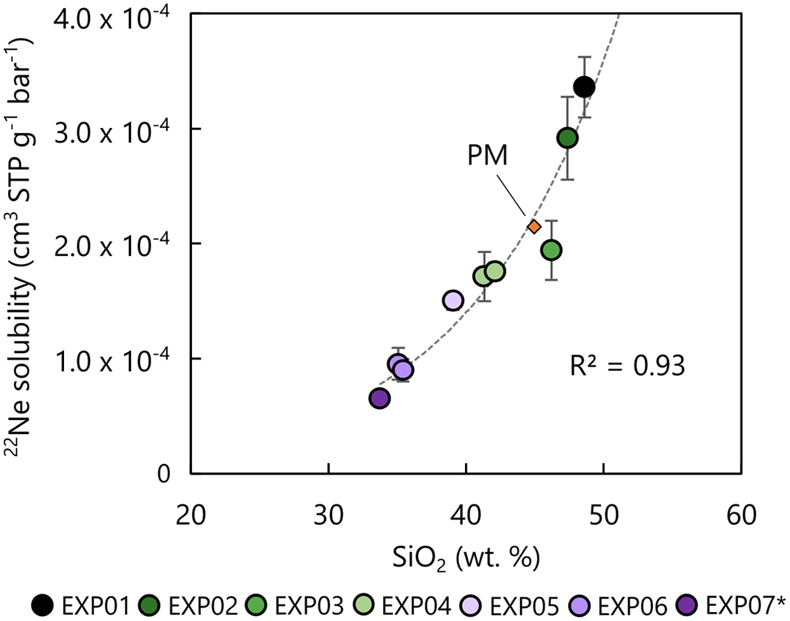
Figure 1 Experimental results (1400 °C, 1 bar of Ne) with best fit (Eq. 1) and expected solubility value for the primitive mantle (PM; Lyubetskaya and Korenaga, 2007
Lyubetskaya, T., Korenaga, J. (2007) Chemical composition of Earth’s primitive mantle and its variance: 1. Method and results. Journal of Geophysical Research: Solid Earth 112, 1–21. https://doi.org/10.1029/2005JB004223
). Error bars represent the standard deviation. *Result for the 72 % glass phase. The dashed line represents the model equation (1) discussed in the text.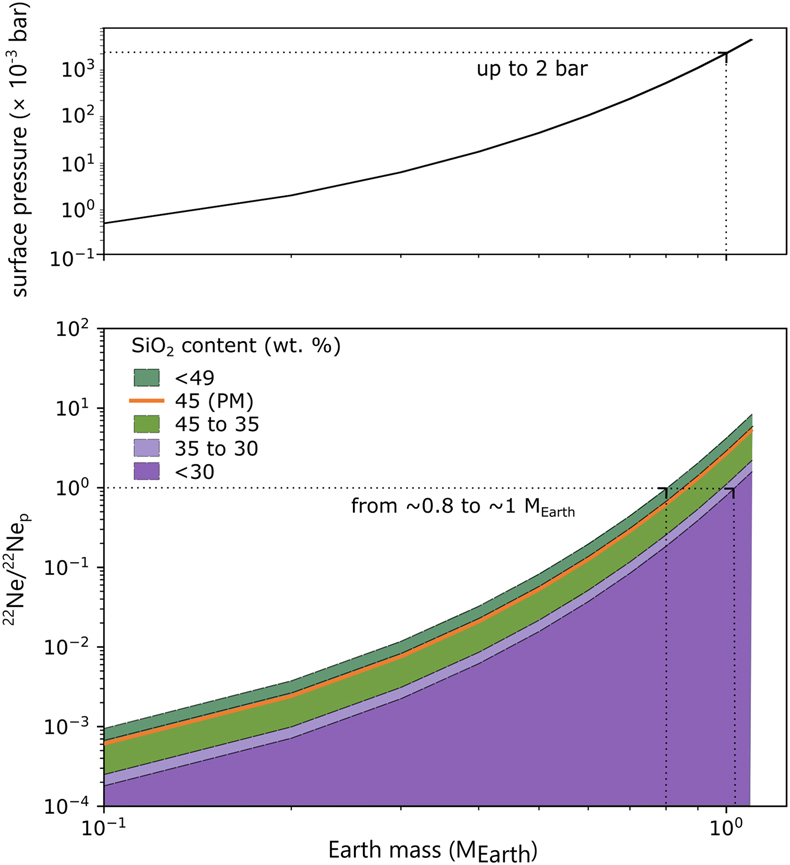
Figure 2 (a) The surface pressure estimation follows the Jaupart et al. (2017)
Jaupart, E., Charnoz, S., Moreira, M. (2017) Primordial atmosphere incorporation in planetary embryos and the origin of Neon in terrestrial planets. Icarus 293, 199–205. https://doi.org/10.1016/j.icarus.2017.04.022
accretion model for a 10 Myr degassing period for the nebula. (b) For a given surface pressure, the 22Ne content relative to the primitive estimation (22Nep) varies according to the solubility value applied; an embryo with over 0.8 MEarth is necessary to reach the primitive 22Ne content. PM = theoretical value obtained from Equation 1.