



Plagioclase as a magmatic nitrogen reservoir in reduced planetary crusts
Affiliations | Corresponding Author | Cite as | Funding information
Published by the European Association of Geochemistry
under Creative Commons License CC BY-NC-ND 4.0
Keywords: Nitrogen, plagioclase, planetary crust, Mars, the Moon


- Share this article


-
Article views:841Cumulative count of HTML views and PDF downloads.
- Download Citation
- Rights & Permissions

top
Abstract
Figures
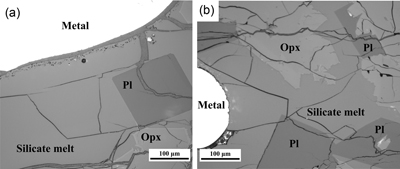 Figure 1 Photomicrographs of samples LMO-4 and LMO-H3 at 1 GPa and 1200 °C. Pl = plagioclase; Opx = orthopyroxene. | 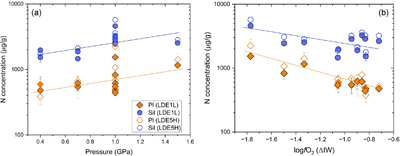 Figure 2 Nitrogen concentrations in plagioclase (Pl) and silicate melt (Sil) as a function of (a) pressure and (b) logfO2. Nitrogen concentrations were measured using two independent electron microprobes equipped with LDE1L and LDE5H diffracting crystals. Nitrogen concentrations increase with pressure and decrease with increasing oxygen fugacity, indicating a strong redox and pressure control on N dissolution. The influence of melt water content on N concentrations at 1 GPa is shown in Figure S-1. | 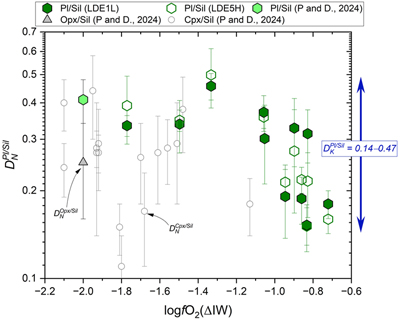 Figure 3 Plagioclase-silicate melt N partition coefficients (DNPl/Sil) as a function of logfO2. The DNPl/Sil were calculated using N concentrations measured independently with LDE1L and LDE5H diffracting crystals. Literature data for plagioclase (Pl), orthopyroxene (Opx), and clinopyroxene (Cpx) (Pal and Dasgupta, 2024) are shown for comparison. The range of DKP/Sil determined in this study is indicated for reference. | 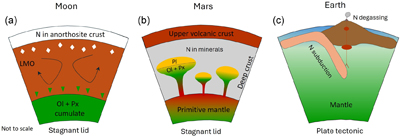 Figure 4 Comparative conceptual models illustrating N evolution on the Moon, Mars, and Earth as a function of early crustal differentiation and tectonic regime. (a) Lunar magma ocean (LMO) crystallisation leads to plagioclase flotation and formation of a thick anorthosite crust. (b) Early Martian mantle melting produces extensive plagioclase-rich intrusive complexes in the deep crust. Under reducing conditions (IW−1), N partitions into plagioclase and becomes sequestered in both lunar and Martian crusts. Stagnant lid prevents long term recycling, resulting in permanent crustal N storage in the Moon and Mars. (c) On more oxidised Earth (∼IW+4), active plate tectonics continuously recycle N between mantle, crust, and atmosphere through subduction and arc degassing, which buffers the atmospheric N reservoir over geological time. Ol = olivine; Px = pyroxene; Pl = plagioclase. |
| Figure 1 | Figure 2 | Figure 3 | Figure 4 |
top
Introduction
Plagioclase is a ubiquitous and volumetrically dominant mineral in planetary crusts (Karner et al., 2004
Karner, J., Papike, J.J., Shearer, C.K. (2004) Plagioclase from planetary basalts: Chemical signatures that reflect planetary volatile budgets, oxygen fugacity, and styles of igneous differentiation. American Mineralogist 89, 1101–1109. https://doi.org/10.2138/am-2004-0723
). It forms a major component of Earth’s andesitic continental crust and basaltic oceanic crust, constitutes up to ∼50 vol. % of the Martian basaltic crust (Bandfield et al., 2000Bandfield, J.L., Hamilton, V.E., Christensen, P.R. (2000) A Global View of Martian Surface Compositions from MGS-TES. Science 287, 1626–1630. https://doi.org/10.1126/science.287.5458.1626
; Papike et al., 2009Papike, J.J., Karner, J.M., Shearer, C.K., Burger, P.V. (2009) Silicate mineralogy of martian meteorites. Geochimica et Cosmochimica Acta 73, 7443–7485. https://doi.org/10.1016/j.gca.2009.09.008
), and dominates the lunar highland crust as calcium-rich anorthosite produced by flotation in the lunar magma ocean (MO) (Schmidt and Kraettli, 2022Schmidt, M.W., Kraettli, G. (2022) Experimental Crystallization of the Lunar Magma Ocean, Initial Selenotherm and Density Stratification, and Implications for Crust Formation, Overturn and the Bulk Silicate Moon Composition. Journal of Geophysical Research: Planets 127. https://doi.org/10.1029/2022je007187
). Despite its abundance, the role of plagioclase in planetary volatile storage remains incompletely understood.Although N is a minor crustal constituent, it plays a fundamental role in regulating atmospheric composition, surface-interior volatile cycling, and planetary habitability (Li, 2024
Li, Y. (2024) The origin and evolution of Earth’s nitrogen. National Science Review 11, nwae201. https://doi.org/10.1093/nsr/nwae201
; Stüeken et al., 2024Stüeken, E.E., Pellerin, A., Thomazo, C., Johnson, B.W., Duncanson, S., Schoepfer, S.D. (2024) Marine biogeochemical nitrogen cycling through Earth’s history. Nature Reviews Earth and Environment 5, 732–747. https://doi.org/10.1038/s43017-024-00591-5
). Earth’s continental crust contains ∼74 μg/g N (Halama et al., 2021Halama, R., Bebout, G.E., Bea, F. (2021) Nitrogen loss and isotopic fractionation during granulite-facies metamorphism in the lower crust (Ivrea Zone, NW Italy). Chemical Geology 584, 120475. https://doi.org/10.1016/j.chemgeo.2021.120475
), corresponding to ∼35 % of the present atmospheric N inventory (Li, 2024Li, Y. (2024) The origin and evolution of Earth’s nitrogen. National Science Review 11, nwae201. https://doi.org/10.1093/nsr/nwae201
). Both experimental and geochemical evidence indicate that plagioclase can incorporate N via NH4+ substitution within its crystal lattice, making it a significant N host phase in Earth’s crust (Barker, 1964Barker, D.S. (1964) Ammonium in alkali feldspars. American Mineralogist 49, 851–858.
; Boocock et al., 2023aBoocock, T.J., Stüeken, E.E., Bybee, G.M., König, R., Boyce, A.J., Prytulak, J., Buisman, I., Mikhail, S. (2023a) Equilibrium partitioning and isotopic fractionation of nitrogen between biotite, plagioclase, and K-feldspar during magmatic differentiation. Geochimica et Cosmochimica Acta 356, 116–128. https://doi.org/10.1016/j.gca.2023.07.010
). However, whether plagioclase in the lunar and Martian crust can store comparably significant amounts of N at reduced conditions remains largely unexplored.Nitrogen behaves as an incompatible element during upper mantle partial melting (Keppler et al., 2022
Keppler, H., Cialdella, L., Couffignal, F., Wiedenbeck, M. (2022) The solubility of N2 in silicate melts and nitrogen partitioning between upper mantle minerals and basalt. Contributions to Mineralogy and Petrology 177. https://doi.org/10.1007/s00410-022-01948-z
; Li, 2024Li, Y. (2024) The origin and evolution of Earth’s nitrogen. National Science Review 11, nwae201. https://doi.org/10.1093/nsr/nwae201
; Pal and Dasgupta, 2024Pal, A., Dasgupta, R. (2024) The fate of nitrogen during early silicate differentiation of rocky bodies constrained by experimental mineral-melt partitioning. Geochimica et Cosmochimica Acta 385, 45–60. https://doi.org/10.1016/j.gca.2024.08.026
) at redox conditions relevant to the Moon, Mars, and Earth (Wadhwa, 2001Wadhwa, M. (2001) Redox State of Mars’ Upper Mantle and Crust from Eu Anomalies in Shergottite Pyroxenes. Science 291, 1527–1530. https://doi.org/10.1126/science.1057594
; Righter et al., 2020Righter, K., Herd, C.D.K., Boujibar, A. (2020) Redox Processes in Early Earth Accretion and in Terrestrial Bodies. Elements 16, 161–166. https://doi.org/10.2138/gselements.16.3.161
). Consequently, crustal reservoirs formed by basaltic crystallisation or MO plagioclase flotation may become enriched in N relative to their mantle sources. Whether plagioclase can act as an effective crustal N reservoir depends on both its N storage capacity and the plagioclase-silicate melt N partition coefficients (DNPl/Sil). Here I experimentally determine DNPl/Sil at pressures of 0.4–1.5 GPa, temperatures of 1180–1250 °C, and oxygen fugacities below IW−0.5, corresponding to conditions of early reduced planetary crust formation. The results demonstrate that plagioclase can sequester substantial magmatic N, indicating that feldspathic crusts on reduced planetary bodies may represent major long lived N reservoirs.top
Results
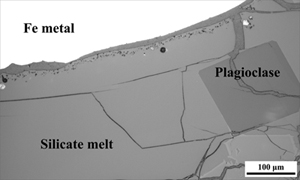
Experiments were performed in graphite lined Pt95Rh05 capsules using a piston cylinder apparatus. Basaltic starting compositions were prepared with variable FeOtot and water contents (Table S-1). Nitrogen was introduced as Fe3N, which decomposed during the experiments to metallic Fe and N2. Run products consist of plagioclase, pyroxene, silicate melt, Fe-rich metal, and N2-rich gas vesicle (Fig. 1, Table S-2).
Figure 1 Photomicrographs of samples LMO-4 and LMO-H3 at 1 GPa and 1200 °C. Pl = plagioclase; Opx = orthopyroxene.
Silicate melts contain 8.0–25.4 wt. % FeOtot, exceeding those of the starting silicates due to partial Fe oxidation, but consistent with the FeOtot-rich character of Martian and lunar basalts (Table S-3). Most plagioclase crystals are Ca-rich (An97–98) (Table S-4), comparable to the lunar highland anorthosites, whereas one experiment produced more Na-rich plagioclase (An56) within the compositional range of planetary basalts (Karner et al., 2004
Karner, J., Papike, J.J., Shearer, C.K. (2004) Plagioclase from planetary basalts: Chemical signatures that reflect planetary volatile budgets, oxygen fugacity, and styles of igneous differentiation. American Mineralogist 89, 1101–1109. https://doi.org/10.2138/am-2004-0723
). A nominally dry run contains ∼0.5 wt. % dissolved H2O in the melt, increasing to ∼1.5 wt. % in water-added experiments (Table S-2). Sample oxygen fugacity (logfO2) ranges from IW−0.7 to IW−1.8 (Table S-2), encompassing conditions relevant to early reduced planetary crust formation (Wadhwa, 2001Wadhwa, M. (2001) Redox State of Mars’ Upper Mantle and Crust from Eu Anomalies in Shergottite Pyroxenes. Science 291, 1527–1530. https://doi.org/10.1126/science.1057594
; Righter et al., 2020Righter, K., Herd, C.D.K., Boujibar, A. (2020) Redox Processes in Early Earth Accretion and in Terrestrial Bodies. Elements 16, 161–166. https://doi.org/10.2138/gselements.16.3.161
; Deng et al., 2025Deng, Z., Nikolajsen, K., Schiller, M., Pan, L., Wang, W., Bizzarro, M. (2025) Redox evolutions of planetary mantle reservoirs constrained by titanium isotopes. Communications Earth and Environment 6. https://doi.org/10.1038/s43247-025-02692-5
).Nitrogen concentrations were measured using two independent electron microprobes (JEOL JXA-8230 with LDE1L crystal; JEOL JXA-iHP200F with LDE5H crystal; see Methods in SI). Plagioclase contains 380–2200 μg/g N, whereas coexisting silicate melts contain 1500–5700 μg/g N (Table S-2). Both plagioclase and melt N concentrations increase with pressure and decrease with fO2 (Fig. 2), and show a secondary dependence on melt water content (Fig. S-1). The calculated DNPl/Sil range from 0.15 to 0.50, with an average of 0.29 ± 0.10. The DNPl/Sil appear to increase with decreasing fO2 (Fig. 3), demonstrating a redox control on N behaviour. In contrast, variations in plagioclase composition (An content), melt polymerisation (NBO/T), pressure-temperature conditions, and melt water content exert only minor influence on DNPl/Sil.
Figure 2 Nitrogen concentrations in plagioclase (Pl) and silicate melt (Sil) as a function of (a) pressure and (b) logfO2. Nitrogen concentrations were measured using two independent electron microprobes equipped with LDE1L and LDE5H diffracting crystals. Nitrogen concentrations increase with pressure and decrease with increasing oxygen fugacity, indicating a strong redox and pressure control on N dissolution. The influence of melt water content on N concentrations at 1 GPa is shown in Figure S-1.
Figure 3 Plagioclase-silicate melt N partition coefficients (DNPl/Sil) as a function of logfO2. The DNPl/Sil were calculated using N concentrations measured independently with LDE1L and LDE5H diffracting crystals. Literature data for plagioclase (Pl), orthopyroxene (Opx), and clinopyroxene (Cpx) (Pal and Dasgupta, 2024
Pal, A., Dasgupta, R. (2024) The fate of nitrogen during early silicate differentiation of rocky bodies constrained by experimental mineral-melt partitioning. Geochimica et Cosmochimica Acta 385, 45–60. https://doi.org/10.1016/j.gca.2024.08.026
) are shown for comparison. The range of DKP/Sil determined in this study is indicated for reference.The measured DNPl/Sil are comparable to the experimentally determined DKPl/Sil values (0.14–0.47; average 0.33 ± 0.10), suggesting that at reducing conditions N behaves similarly to a lithophile alkali element during crustal differentiation. The present results are consistent with previous determinations of DNPl/Sil = 0.41 at 1.5 GPa, 1350 °C, and IW−2 (Pal and Dasgupta, 2024
Pal, A., Dasgupta, R. (2024) The fate of nitrogen during early silicate differentiation of rocky bodies constrained by experimental mineral-melt partitioning. Geochimica et Cosmochimica Acta 385, 45–60. https://doi.org/10.1016/j.gca.2024.08.026
), and overlap with DN values of 0.15–0.40 measured for K-rich, feldspar-felsic melt systems at slab conditions (Jackson et al., 2021Jackson, C.R.M., Cottrell, E., Andrews, B. (2021) Warm and oxidizing slabs limit ingassing efficiency of nitrogen to the mantle. Earth and Planetary Science Letters 553. https://doi.org/10.1016/j.epsl.2020.116615
), although N was undetectable in Na-rich feldspar in that study. Partition coefficients for clinopyroxene and orthopyroxene (0.1–0.4) at IW−1 and IW−3 (Pal and Dasgupta, 2024Pal, A., Dasgupta, R. (2024) The fate of nitrogen during early silicate differentiation of rocky bodies constrained by experimental mineral-melt partitioning. Geochimica et Cosmochimica Acta 385, 45–60. https://doi.org/10.1016/j.gca.2024.08.026
) are also comparable to the present plagioclase data (Fig. 3).By contrast, at more oxidising conditions (logfO2 > IW), mineral-melt N partition coefficients decrease by more than two orders of magnitude, falling below 0.01 (Li, 2024
Li, Y. (2024) The origin and evolution of Earth’s nitrogen. National Science Review 11, nwae201. https://doi.org/10.1093/nsr/nwae201
; Pal and Dasgupta, 2024Pal, A., Dasgupta, R. (2024) The fate of nitrogen during early silicate differentiation of rocky bodies constrained by experimental mineral-melt partitioning. Geochimica et Cosmochimica Acta 385, 45–60. https://doi.org/10.1016/j.gca.2024.08.026
), including DNPl/Sil = 0.0009 at 2 GPa, 1250 °C, and ∼IW+6 (Keppler et al., 2022Keppler, H., Cialdella, L., Couffignal, F., Wiedenbeck, M. (2022) The solubility of N2 in silicate melts and nitrogen partitioning between upper mantle minerals and basalt. Contributions to Mineralogy and Petrology 177. https://doi.org/10.1007/s00410-022-01948-z
). This sharp redox dependent transition indicates that N shifts from lithophile behaviour at reducing conditions to strongly incompatible, volatile behaviour at oxidising conditions.top
Discussion
Nitrogen dissolution in silicate melt and plagioclase. Spectroscopic studies demonstrate that reduced basaltic melts (logfO2 ≤ IW) host N primarily as N–H species, N3−, and molecular N2, with the proportion of reduced species increasing as oxygen fugacity decreases (Dalou et al., 2019
Dalou, C., Hirschmann, M.M., Jacobsen, S.D., Le Losq, C. (2019) Raman spectroscopy study of C-O-H-N speciation in reduced basaltic glasses: Implications for reduced planetary mantles. Geochimica et Cosmochimica Acta 265, 32–47. https://doi.org/10.1016/j.gca.2019.08.029
; Li et al., 2023Li, Y., Wiedenbeck, M., Monteleone, B., Dasgupta, R., Costin, G., Gao, Z., Lu, W. (2023) Nitrogen and carbon fractionation in planetary magma oceans and origin of the superchondritic C/N ratio in the bulk silicate Earth. Earth and Planetary Science Letters 605. https://doi.org/10.1016/j.epsl.2023.118032
). These N species must also be present in the experimental melts of this study, as confirmed by FTIR analyses of both nominally anhydrous and water-added samples (Fig. S-2). The greater solubility of reduced N species relative to oxidised forms (Dasgupta et al., 2022Dasgupta, R., Falksen, E., Pal, A., Sun, C. (2022) The fate of nitrogen during parent body partial melting and accretion of the inner solar system bodies at reducing conditions. Geochimica et Cosmochimica Acta 336, 291–307. https://doi.org/10.1016/j.gca.2022.09.012
; Gao et al., 2022Gao, Z., Yang, Y.-N., Yang, S.-Y., Li, Y. (2022) Experimental determination of N2 solubility in silicate melts and implications for N2–Ar–CO2 fractionation in magmas. Geochimica et Cosmochimica Acta 326, 17–40. https://doi.org/10.1016/j.gca.2022.04.001
; Li et al., 2023Li, Y., Wiedenbeck, M., Monteleone, B., Dasgupta, R., Costin, G., Gao, Z., Lu, W. (2023) Nitrogen and carbon fractionation in planetary magma oceans and origin of the superchondritic C/N ratio in the bulk silicate Earth. Earth and Planetary Science Letters 605. https://doi.org/10.1016/j.epsl.2023.118032
) explains the observed increase in melt N concentrations with decreasing fO2 (Fig. 2) and increasing melt water content (Fig. S-1). Pressure further enhances N solubility by promoting both the physical dissolution of molecular N2 (Gao et al., 2022Gao, Z., Yang, Y.-N., Yang, S.-Y., Li, Y. (2022) Experimental determination of N2 solubility in silicate melts and implications for N2–Ar–CO2 fractionation in magmas. Geochimica et Cosmochimica Acta 326, 17–40. https://doi.org/10.1016/j.gca.2022.04.001
) and the chemical incorporation of reduced species such as N–H and N3− (Dasgupta et al., 2022Dasgupta, R., Falksen, E., Pal, A., Sun, C. (2022) The fate of nitrogen during parent body partial melting and accretion of the inner solar system bodies at reducing conditions. Geochimica et Cosmochimica Acta 336, 291–307. https://doi.org/10.1016/j.gca.2022.09.012
). Together, these effects account for the systematic increase in melt N concentration at higher pressures and lower fO2.In plagioclase, the dependence of N concentration on pressure and fO2 (Fig. 2) mirrors the enhanced abundance of reduced N species in coexisting melts. Nitrogen incorporation likely occurs via coupled substitution mechanisms such as NH4+ + Si4+ ↔ Ca2+ + Al3+, and potentially through direct substitution of N3− for O2−. The observed negative correlation between N and CaO in Ca-rich plagioclase (Fig. S-3a) supports partial substitution of NH4+ for Ca2+. However, elevated N concentrations in Na-rich plagioclase (Fig. S-3a) indicate that Ca content alone does not control N incorporation. Instead, the negative correlation between X(Si + Na + NH4+) and X(Ca + Al) (X = mole fraction of cations) across all compositions (Fig. S-3b) supports a broader coupled substitution mechanism.
Although substitution of N3− for O2− cannot be excluded, such a mechanism would not fundamentally alter the observed compositional correlations (Fig. S-3). Crucially, the stability of reduced N species at low fO2 conditions explains the elevated DNPl/Sil reported here. In contrast, at more oxidising conditions (logfO2 > IW), N exists predominantly as molecular N2, which is significantly less soluble in silicate minerals than in coexisting melts, leading to partition coefficients below 0.01 (Keppler et al., 2022
Keppler, H., Cialdella, L., Couffignal, F., Wiedenbeck, M. (2022) The solubility of N2 in silicate melts and nitrogen partitioning between upper mantle minerals and basalt. Contributions to Mineralogy and Petrology 177. https://doi.org/10.1007/s00410-022-01948-z
; Li, 2024Li, Y. (2024) The origin and evolution of Earth’s nitrogen. National Science Review 11, nwae201. https://doi.org/10.1093/nsr/nwae201
).Storage of magmatic N in reduced planetary crusts. The plagioclase-melt partition coefficients determined here, together with previously reported values for clinopyroxene and orthopyroxene (Fig. 3), indicate that at reducing conditions N behaves lithophilically during crustal differentiation, analogous to K due to the similar ionic radii of NH4+ and K+. Consequently, during basaltic crystallisation or magma ocean plagioclase flotation at logfO2 < IW−0.5, a substantial fraction of magmatic N may be transferred from melt into crystallising silicate minerals and retained within the forming crust.
1. The Moon. Lunar basalts and anorthosites contain indigenous N, up to 0.7–3.2 μg/g and 1.2–1.9 μg/g, respectively (Mathew and Marti, 2001
Mathew, K., Marti, K. (2001) Lunar nitrogen: indigenous signature and cosmic-ray production rate. Earth and Planetary Science Letters 184, 659–669. https://doi.org/10.1016/S0012-821X(00)00327-7
; Füri et al., 2015Füri, E., Barry, P.H., Taylor, L.A., Marty, B. (2015) Indigenous nitrogen in the Moon: Constraints from coupled nitrogen–noble gas analyses of mare basalts. Earth and Planetary Science Letters 431, 195–205. https://doi.org/10.1016/j.epsl.2015.09.022
), indicating the presence of indigenous mantle N. However, the absolute N inventories of the lunar mantle and crust remain poorly constrained. Carbon concentrations in olivine-hosted lunar basaltic melt inclusions range from 44 to 64 μg/g (Wetzel et al., 2015Wetzel, D.T., Hauri, E.H., Saal, A.E., Rutherford, M.J. (2015) Carbon content and degassing history of the lunar volcanic glasses. Nature Geoscience 8, 755–758. https://doi.org/10.1038/ngeo2511
), and lunar basalts display C/N ratios of 4–49, with an average of 17 ± 17 (1σ; n = 6) (Mortimer et al., 2015Mortimer, J., Verchovsky, A.B., Anand, M., Gilmour, I., Pillinger, C.T. (2015) Simultaneous analysis of abundance and isotopic composition of nitrogen, carbon, and noble gases in lunar basalts: Insights into interior and surface processes on the Moon. Icarus 255, 3–17. https://doi.org/10.1016/j.icarus.2014.10.006
). At lunar mantle redox conditions (∼IW−1), C and N exhibit comparable solubilities in basaltic melt (Li et al., 2023Li, Y., Wiedenbeck, M., Monteleone, B., Dasgupta, R., Costin, G., Gao, Z., Lu, W. (2023) Nitrogen and carbon fractionation in planetary magma oceans and origin of the superchondritic C/N ratio in the bulk silicate Earth. Earth and Planetary Science Letters 605. https://doi.org/10.1016/j.epsl.2023.118032
), implying limited C–N fractionation during degassing. Using C concentratio in lunar basaltic melt inclusions and C/N ratios in the degassed lunar basalts, un-degassed lunar basalts are estimated to contain 1–16 μg/g N with an average of ∼3 μg/g. For melt fractions of 5–10 % during basalt generation (Ding et al., 2018Ding, S., Hough, T., Dasgupta, R. (2018) New high pressure experiments on sulfide saturation of high-FeO∗ basalts with variable TiO2 contents – Implications for the sulfur inventory of the lunar interior. Geochimica et Cosmochimica Acta 222, 319–339. https://doi.org/10.1016/j.gca.2017.10.025
), this corresponds to a lunar mantle N abundance of ∼0.15–0.3 μg/g, comparable to Earth’s depleted upper mantle (Marty, 2012Marty, B. (2012) The origins and concentrations of water, carbon, nitrogen and noble gases on Earth. Earth and Planetary Science Letters 313-314, 56–66. https://doi.org/10.1016/j.epsl.2011.10.040
).If this N was incorporated into the lunar MO and concentrated in the residual melt during crystallisation, then after 80–90 % solidification the residual MO could contain ∼0.75–3 μg/g N. With DNPl/Sil = 0.3, flotation plagioclase crystallising from such a MO (Fig. 4a) would incorporate ∼0.23–0.9 μg/g N, approaching measured values in lunar anorthosites (1.2–1.9 μg/g) (Mathew and Marti, 2001
Mathew, K., Marti, K. (2001) Lunar nitrogen: indigenous signature and cosmic-ray production rate. Earth and Planetary Science Letters 184, 659–669. https://doi.org/10.1016/S0012-821X(00)00327-7
). Conversely, if the observed N contents in anorthosites reflect primary plagioclase compositions, the residual MO would contain 4–6 μg/g N.Figure 4 Comparative conceptual models illustrating N evolution on the Moon, Mars, and Earth as a function of early crustal differentiation and tectonic regime. (a) Lunar magma ocean (LMO) crystallisation leads to plagioclase flotation and formation of a thick anorthosite crust. (b) Early Martian mantle melting produces extensive plagioclase-rich intrusive complexes in the deep crust. Under reducing conditions (IW−1), N partitions into plagioclase and becomes sequestered in both lunar and Martian crusts. Stagnant lid prevents long term recycling, resulting in permanent crustal N storage in the Moon and Mars. (c) On more oxidised Earth (∼IW+4), active plate tectonics continuously recycle N between mantle, crust, and atmosphere through subduction and arc degassing, which buffers the atmospheric N reservoir over geological time. Ol = olivine; Px = pyroxene; Pl = plagioclase.
The absence of measurable indigenous N in some samples, such as anorthosite 15414 (Füri et al., 2015
Füri, E., Barry, P.H., Taylor, L.A., Marty, B. (2015) Indigenous nitrogen in the Moon: Constraints from coupled nitrogen–noble gas analyses of mare basalts. Earth and Planetary Science Letters 431, 195–205. https://doi.org/10.1016/j.epsl.2015.09.022
), indicates spatial heterogeneity in N distribution or localised degassing within the lunar MO. For example, if N was delivered during lunar MO crystallisation — similar to proposed late stage additions of H2O and Cl (Barnes et al., 2016Barnes, J.J., Tartèse, R., Anand, M., McCubbin, F.M., Neal, C.R., Franchi, I.A. (2016) Early degassing of lunar urKREEP by crust-breaching impact(s). Earth and Planetary Science Letters 447, 84–94. https://doi.org/10.1016/j.epsl.2016.04.036
) — then certain regions of the lunar MO could have been devoid of N. In addition, pyroxene crystallising during the late stage MO solidification would also take substantial N, while the ultimate residual melt (urKREEP) beneath the anorthosite crust would likely have become strongly enriched in N, analogous to K. Taken together, lunar MO crystallisation under reducing conditions could have established a feldspathic crust containing a substantial fraction of the Moon’s primordial N inventory.2. Mars. Martian crust may have formed shortly after the solidification of the reduced MO (Bouvier et al., 2018
Bouvier, L.C., Costa, M.M., Connelly, J.N., Jensen, N.K., Wielandt, D., Storey, M., Nemchin, A.A., Whitehouse, M.J., Snape, J.F., Bellucci, J.J., Moynier, F., Agranier, A., Gueguen, B., Schonbachler, M., Bizzarro, M. (2018) Evidence for extremely rapid magma ocean crystallization and crust formation on Mars. Nature 558, 586–589. https://doi.org/10.1038/s41586-018-0222-z
). Early MO crystallisation and subsequent mantle overturn (Elkins‐Tanton et al., 2005Elkins‐Tanton, L.T., Hess, P.C., Parmentier, E.M. (2005) Possible formation of ancient crust on Mars through magma ocean processes. Journal of Geophysical Research: Planets 110. https://doi.org/10.1029/2005je002480
) generated large melt volumes for the formation of Martian crust at reducing conditions (IW−0.8 to IW−1.6) (Deng et al., 2025Deng, Z., Nikolajsen, K., Schiller, M., Pan, L., Wang, W., Bizzarro, M. (2025) Redox evolutions of planetary mantle reservoirs constrained by titanium isotopes. Communications Earth and Environment 6. https://doi.org/10.1038/s43247-025-02692-5
), within the regime where N behaves lithophilically. Martian surface basaltic crust may contain 40–60 vol. % plagioclase (Bandfield et al., 2000Bandfield, J.L., Hamilton, V.E., Christensen, P.R. (2000) A Global View of Martian Surface Compositions from MGS-TES. Science 287, 1626–1630. https://doi.org/10.1126/science.287.5458.1626
; Papike et al., 2009Papike, J.J., Karner, J.M., Shearer, C.K., Burger, P.V. (2009) Silicate mineralogy of martian meteorites. Geochimica et Cosmochimica Acta 73, 7443–7485. https://doi.org/10.1016/j.gca.2009.09.008
), and evolved plagioclase-rich crustal components may be widespread at depth (Payré et al., 2022Payré, V., Salvatore, M.R., Edwards, C.S. (2022) An Evolved Early Crust Exposed on Mars Revealed Through Spectroscopy. Geophysical Research Letters 49. https://doi.org/10.1029/2022gl099639
). The newly documented plagioclase-rich lower crust (Phillips et al., 2025Phillips, M.S., Viviano, C.E., Rogers, A.D., Larson, L., Tornabene, L., Trowbridge, A., Moersch, J.E., McSween Jr, H.Y. (2025) Widespread ancient anorthosites in the lower crust of Mars. Communications Earth and Environment 6. https://doi.org/10.1038/s43247-025-03004-7
) implies that much of the melt for the formation of Martian crust may have crystallised as intrusive complexes rather than erupting efficiently (Fig. 4b). The intrusive-to-extrusive magma ratio may have been as high as ∼100 on Mars (Black and Manga, 2017Black, B., Manga, M. (2017) Why Mars may have a higher ratio of intrusive to extrusive magmatism than Earth. 48th Annual Lunar and Planetary Science Conference 1964, 1247.
), far exceeding that of Earth. At reducing conditions and slow cooling rates characteristics of intrusive systems, degassing of N would be limited. Crystallising plagioclase and pyroxene could therefore act as efficient sinks for lithophile N, transferring a significant portion of the primordial N inventory from melt into solid crust rather than releasing it to the atmosphere.The early Martian atmosphere at ∼4 Ga may have contained ∼110 mbar N2, corresponding to ∼4.3 × 10¹⁷ kg (Jakosky and Treiman, 2023
Jakosky, B.M., Treiman, A.H. (2023) Mars volatile inventory and outgassing history. Icarus 402. https://doi.org/10.1016/j.icarus.2023.115627
). As volcanic degassing after 4 Ga likely contributed <3 mbar N2 (Craddock and Greeley, 2009Craddock, R.A., Greeley, R. (2009) Minimum estimates of the amount and timing of gases released into the martian atmosphere from volcanic eruptions. Icarus 204, 512–526. https://doi.org/10.1016/j.icarus.2009.07.026
), much of this atmospheric N must have been established during early crust formation or accretion. If the ∼110 mbar of N2 originated from degassing of only the upper half of the Martian crust (Fig. 4b), then the lower crust could retain a comparable mass of N (∼4.3 × 10¹⁷ kg). Distributed over the crustal mass, this corresponds to ∼15 μg/g N — well below the N storage capacity of plagioclase determined experimentally here. Thus, the Martian deep crust may constitute a hidden N reservoir far exceeding the present day Martian atmospheric inventory (∼7 × 10¹⁴ kg).top
Divergent Planetary Nitrogen Architectures
The above results indicate that early reduced crustal differentiation on stagnant lid bodies such as the Moon and Mars can establish long lived N reservoirs within feldspathic crusts (Fig. 4a, b). At such conditions, N behaves as a lithophile element and becomes sequestered in crystallising minerals, limiting atmospheric exchange over geological timescales. In contrast, Earth’s more oxidised mantle conditions (∼IW+4) and active plate tectonics promote N volatility and continuous recycling between crust, mantle, and atmosphere (Fig. 4c). At these conditions, mineral-melt partition coefficients are extremely low, and magmatic N likely constitutes only a minor fraction (<10 %) of the total N stored in the continental crust (Boocock et al., 2023b
Boocock, T.J., Mikhail, S., Boyce, A.J., Prytulak, J., Savage, P.S., Stüeken, E.E. (2023b) A primary magmatic source of nitrogen to Earth’s crust. Nature Geoscience 16, 521–526. https://doi.org/10.1038/s41561-023-01194-3
). Redox state and tectonic regime therefore emerge as first order controls on planetary N architecture, governing whether N resides predominantly in the crust, mantle, or atmosphere, consistent with models based on N speciation in mantle fluids (Mikhail and Sverjensky, 2014Mikhail, S., Sverjensky, D.A. (2014) Nitrogen speciation in upper mantle fluids and the origin of Earth’s nitrogen-rich atmosphere. Nature Geoscience 7, 816–819. https://doi.org/10.1038/ngeo2271
). Future in situ analyses and returned samples from ancient, uplifted terrains will be critical for determining whether the lunar anorthosite crust and Martian lower crust indeed host substantial, long lived N reservoirs.top
Acknowledgements
I thank my master student Zhou-Fan Xia for experiments. Shui-Yuan Yang made tremendous efforts in improving electron microprobe analysis. Sami Mikhail, Celia Dalou, and an anonymous reviewer are thanked for constructive comments. Effective handling by Editor Francis McCubbin is also appreciated.
Editor: Francis McCubbin
top
References
Bandfield, J.L., Hamilton, V.E., Christensen, P.R. (2000) A Global View of Martian Surface Compositions from MGS-TES. Science 287, 1626–1630. https://doi.org/10.1126/science.287.5458.1626
 Show in context
 It forms a major component of Earth’s andesitic continental crust and basaltic oceanic crust, constitutes up to ∼50 vol. % of the Martian basaltic crust (Bandfield et al., 2000; Papike et al., 2009), and dominates the lunar highland crust as calcium-rich anorthosite produced by flotation in the lunar magma ocean (MO) (Schmidt and Kraettli, 2022).
View in article
Early MO crystallisation and subsequent mantle overturn (Elkins‐Tanton et al., 2005) generated large melt volumes for the formation of Martian crust at reducing conditions (IW−0.8 to IW−1.6) (Deng et al., 2025), within the regime where N behaves lithophilically. Martian surface basaltic crust may contain 40–60 vol. % plagioclase (Bandfield et al., 2000; Papike et al., 2009), and evolved plagioclase-rich crustal components may be widespread at depth (Payré et al., 2022).
View in article
Barker, D.S. (1964) Ammonium in alkali feldspars. American Mineralogist 49, 851–858.
Show in context Both experimental and geochemical evidence indicate that plagioclase can incorporate N via NH4+ substitution within its crystal lattice, making it a significant N host phase in Earth’s crust (Barker, 1964; Boocock et al., 2023a).
View in article
Barnes, J.J., Tartèse, R., Anand, M., McCubbin, F.M., Neal, C.R., Franchi, I.A. (2016) Early degassing of lunar urKREEP by crust-breaching impact(s). Earth and Planetary Science Letters 447, 84–94. https://doi.org/10.1016/j.epsl.2016.04.036
Show in context For example, if N was delivered during lunar MO crystallisation — similar to proposed late stage additions of H2O and Cl (Barnes et al., 2016) — then certain regions of the lunar MO could have been devoid of N.
View in article
Black, B., Manga, M. (2017) Why Mars may have a higher ratio of intrusive to extrusive magmatism than Earth. 48th Annual Lunar and Planetary Science Conference 1964, 1247.
Show in context The intrusive-to-extrusive magma ratio may have been as high as ∼100 on Mars (Black and Manga, 2017), far exceeding that of Earth. At reducing conditions and slow cooling rates characteristics of intrusive systems, degassing of N would be limited.
View in article
Boocock, T.J., Stüeken, E.E., Bybee, G.M., König, R., Boyce, A.J., Prytulak, J., Buisman, I., Mikhail, S. (2023a) Equilibrium partitioning and isotopic fractionation of nitrogen between biotite, plagioclase, and K-feldspar during magmatic differentiation. Geochimica et Cosmochimica Acta 356, 116–128. https://doi.org/10.1016/j.gca.2023.07.010
Show in context Both experimental and geochemical evidence indicate that plagioclase can incorporate N via NH4+ substitution within its crystal lattice, making it a significant N host phase in Earth’s crust (Barker, 1964; Boocock et al., 2023a).
View in article
Boocock, T.J., Mikhail, S., Boyce, A.J., Prytulak, J., Savage, P.S., Stüeken, E.E. (2023b) A primary magmatic source of nitrogen to Earth’s crust. Nature Geoscience 16, 521–526. https://doi.org/10.1038/s41561-023-01194-3
Show in context At these conditions, mineral-melt partition coefficients are extremely low, and magmatic N likely constitutes only a minor fraction (<10 %) of the total N stored in the continental crust (Boocock et al., 2023b).
View in article
Bouvier, L.C., Costa, M.M., Connelly, J.N., Jensen, N.K., Wielandt, D., Storey, M., Nemchin, A.A., Whitehouse, M.J., Snape, J.F., Bellucci, J.J., Moynier, F., Agranier, A., Gueguen, B., Schonbachler, M., Bizzarro, M. (2018) Evidence for extremely rapid magma ocean crystallization and crust formation on Mars. Nature 558, 586–589. https://doi.org/10.1038/s41586-018-0222-z
Show in context Martian crust may have formed shortly after the solidification of the reduced MO (Bouvier et al., 2018).
View in article
Craddock, R.A., Greeley, R. (2009) Minimum estimates of the amount and timing of gases released into the martian atmosphere from volcanic eruptions. Icarus 204, 512–526. https://doi.org/10.1016/j.icarus.2009.07.026
Show in context As volcanic degassing after 4 Ga likely contributed <3 mbar N2 (Craddock and Greeley, 2009), much of this atmospheric N must have been established during early crust formation or accretion.
View in article
Dalou, C., Hirschmann, M.M., Jacobsen, S.D., Le Losq, C. (2019) Raman spectroscopy study of C-O-H-N speciation in reduced basaltic glasses: Implications for reduced planetary mantles. Geochimica et Cosmochimica Acta 265, 32–47. https://doi.org/10.1016/j.gca.2019.08.029
Show in context Spectroscopic studies demonstrate that reduced basaltic melts (logfO2 ≤ IW) host N primarily as N–H species, N3−, and molecular N2, with the proportion of reduced species increasing as oxygen fugacity decreases (Dalou et al., 2019; Li et al., 2023).
View in article
Dasgupta, R., Falksen, E., Pal, A., Sun, C. (2022) The fate of nitrogen during parent body partial melting and accretion of the inner solar system bodies at reducing conditions. Geochimica et Cosmochimica Acta 336, 291–307. https://doi.org/10.1016/j.gca.2022.09.012
Show in context The greater solubility of reduced N species relative to oxidised forms (Dasgupta et al., 2022; Gao et al., 2022; Li et al., 2023) explains the observed increase in melt N concentrations with decreasing fO2 (Fig. 2) and increasing melt water content (Fig. S-1).
View in article
Pressure further enhances N solubility by promoting both the physical dissolution of molecular N2 (Gao et al., 2022) and the chemical incorporation of reduced species such as N–H and N3− (Dasgupta et al., 2022).
View in article
Deng, Z., Nikolajsen, K., Schiller, M., Pan, L., Wang, W., Bizzarro, M. (2025) Redox evolutions of planetary mantle reservoirs constrained by titanium isotopes. Communications Earth and Environment 6. https://doi.org/10.1038/s43247-025-02692-5
Show in context Sample oxygen fugacity (logfO2) ranges from IW−0.7 to IW−1.8 (Table S-2), encompassing conditions relevant to early reduced planetary crust formation (Wadhwa, 2001; Righter et al., 2020; Deng et al., 2025).
View in article
Early MO crystallisation and subsequent mantle overturn (Elkins‐Tanton et al., 2005) generated large melt volumes for the formation of Martian crust at reducing conditions (IW−0.8 to IW−1.6) (Deng et al., 2025), within the regime where N behaves lithophilically. Martian surface basaltic crust may contain 40–60 vol. % plagioclase (Bandfield et al., 2000; Papike et al., 2009), and evolved plagioclase-rich crustal components may be widespread at depth (Payré et al., 2022).
View in article
Ding, S., Hough, T., Dasgupta, R. (2018) New high pressure experiments on sulfide saturation of high-FeO∗ basalts with variable TiO2 contents – Implications for the sulfur inventory of the lunar interior. Geochimica et Cosmochimica Acta 222, 319–339. https://doi.org/10.1016/j.gca.2017.10.025
Show in context For melt fractions of 5–10 % during basalt generation (Ding et al., 2018), this corresponds to a lunar mantle N abundance of ∼0.15–0.3 μg/g, comparable to Earth’s depleted upper mantle (Marty, 2012).
View in article
Elkins‐Tanton, L.T., Hess, P.C., Parmentier, E.M. (2005) Possible formation of ancient crust on Mars through magma ocean processes. Journal of Geophysical Research: Planets 110. https://doi.org/10.1029/2005je002480
Show in context Early MO crystallisation and subsequent mantle overturn (Elkins‐Tanton et al., 2005) generated large melt volumes for the formation of Martian crust at reducing conditions (IW−0.8 to IW−1.6) (Deng et al., 2025), within the regime where N behaves lithophilically. Martian surface basaltic crust may contain 40–60 vol. % plagioclase (Bandfield et al., 2000; Papike et al., 2009), and evolved plagioclase-rich crustal components may be widespread at depth (Payré et al., 2022).
View in article
Füri, E., Barry, P.H., Taylor, L.A., Marty, B. (2015) Indigenous nitrogen in the Moon: Constraints from coupled nitrogen–noble gas analyses of mare basalts. Earth and Planetary Science Letters 431, 195–205. https://doi.org/10.1016/j.epsl.2015.09.022
Show in context Lunar basalts and anorthosites contain indigenous N, up to 0.7–3.2 μg/g and 1.2–1.9 μg/g, respectively (Mathew and Marti, 2001; Füri et al., 2015), indicating the presence of indigenous mantle N.
View in article
The absence of measurable indigenous N in some samples, such as anorthosite 15414 (Füri et al., 2015), indicates spatial heterogeneity in N distribution or localised degassing within the lunar MO.
View in article
Gao, Z., Yang, Y.-N., Yang, S.-Y., Li, Y. (2022) Experimental determination of N2 solubility in silicate melts and implications for N2–Ar–CO2 fractionation in magmas. Geochimica et Cosmochimica Acta 326, 17–40. https://doi.org/10.1016/j.gca.2022.04.001
Show in context The greater solubility of reduced N species relative to oxidised forms (Dasgupta et al., 2022; Gao et al., 2022; Li et al., 2023) explains the observed increase in melt N concentrations with decreasing fO2 (Fig. 2) and increasing melt water content (Fig. S-1).
View in article
Pressure further enhances N solubility by promoting both the physical dissolution of molecular N2 (Gao et al., 2022) and the chemical incorporation of reduced species such as N–H and N3− (Dasgupta et al., 2022).
View in article
Halama, R., Bebout, G.E., Bea, F. (2021) Nitrogen loss and isotopic fractionation during granulite-facies metamorphism in the lower crust (Ivrea Zone, NW Italy). Chemical Geology 584, 120475. https://doi.org/10.1016/j.chemgeo.2021.120475
Show in context Earth’s continental crust contains ∼74 μg/g N (Halama et al., 2021), corresponding to ∼35 % of the present atmospheric N inventory (Li, 2024).
View in article
Jackson, C.R.M., Cottrell, E., Andrews, B. (2021) Warm and oxidizing slabs limit ingassing efficiency of nitrogen to the mantle. Earth and Planetary Science Letters 553. https://doi.org/10.1016/j.epsl.2020.116615
Show in context The present results are consistent with previous determinations of DNPl/Sil = 0.41 at 1.5 GPa, 1350 °C, and IW−2 (Pal and Dasgupta, 2024), and overlap with DN values of 0.15–0.40 measured for K-rich, feldspar-felsic melt systems at slab conditions (Jackson et al., 2021), although N was undetectable in Na-rich feldspar in that study.
View in article
Jakosky, B.M., Treiman, A.H. (2023) Mars volatile inventory and outgassing history. Icarus 402. https://doi.org/10.1016/j.icarus.2023.115627
Show in context The early Martian atmosphere at ∼4 Ga may have contained ∼110 mbar N2, corresponding to ∼4.3 × 10¹⁷ kg (Jakosky and Treiman, 2023).
View in article
Karner, J., Papike, J.J., Shearer, C.K. (2004) Plagioclase from planetary basalts: Chemical signatures that reflect planetary volatile budgets, oxygen fugacity, and styles of igneous differentiation. American Mineralogist 89, 1101–1109. https://doi.org/10.2138/am-2004-0723
Show in context Plagioclase is a ubiquitous and volumetrically dominant mineral in planetary crusts (Karner et al., 2004).
View in article
Most plagioclase crystals are Ca-rich (An97–98) (Table S-4), comparable to the lunar highland anorthosites, whereas one experiment produced more Na-rich plagioclase (An56) within the compositional range of planetary basalts (Karner et al., 2004).
View in article
Keppler, H., Cialdella, L., Couffignal, F., Wiedenbeck, M. (2022) The solubility of N2 in silicate melts and nitrogen partitioning between upper mantle minerals and basalt. Contributions to Mineralogy and Petrology 177. https://doi.org/10.1007/s00410-022-01948-z
Show in context Nitrogen behaves as an incompatible element during upper mantle partial melting (Keppler et al., 2022; Li, 2024; Pal and Dasgupta, 2024) at redox conditions relevant to the Moon, Mars, and Earth (Wadhwa, 2001; Righter et al., 2020).
View in article
By contrast, at more oxidising conditions (logfO2 > IW), mineral-melt N partition coefficients decrease by more than two orders of magnitude, falling below 0.01 (Li, 2024; Pal and Dasgupta, 2024), including DNPl/Sil = 0.0009 at 2 GPa, 1250 °C, and ∼IW+6 (Keppler et al., 2022).
View in article
In contrast, at more oxidising conditions (logfO2 > IW), N exists predominantly as molecular N2, which is significantly less soluble in silicate minerals than in coexisting melts, leading to partition coefficients below 0.01 (Keppler et al., 2022; Li, 2024).
View in article
Li, Y. (2024) The origin and evolution of Earth’s nitrogen. National Science Review 11, nwae201. https://doi.org/10.1093/nsr/nwae201
Show in context Although N is a minor crustal constituent, it plays a fundamental role in regulating atmospheric composition, surface-interior volatile cycling, and planetary habitability (Li, 2024; Stüeken et al., 2024).
View in article
Earth’s continental crust contains ∼74 μg/g N (Halama et al., 2021), corresponding to ∼35 % of the present atmospheric N inventory (Li, 2024).
View in article
Nitrogen behaves as an incompatible element during upper mantle partial melting (Keppler et al., 2022; Li, 2024; Pal and Dasgupta, 2024) at redox conditions relevant to the Moon, Mars, and Earth (Wadhwa, 2001; Righter et al., 2020).
View in article
By contrast, at more oxidising conditions (logfO2 > IW), mineral-melt N partition coefficients decrease by more than two orders of magnitude, falling below 0.01 (Li, 2024; Pal and Dasgupta, 2024), including DNPl/Sil = 0.0009 at 2 GPa, 1250 °C, and ∼IW+6 (Keppler et al., 2022).
View in article
In contrast, at more oxidising conditions (logfO2 > IW), N exists predominantly as molecular N2, which is significantly less soluble in silicate minerals than in coexisting melts, leading to partition coefficients below 0.01 (Keppler et al., 2022; Li, 2024).
View in article
Li, Y., Wiedenbeck, M., Monteleone, B., Dasgupta, R., Costin, G., Gao, Z., Lu, W. (2023) Nitrogen and carbon fractionation in planetary magma oceans and origin of the superchondritic C/N ratio in the bulk silicate Earth. Earth and Planetary Science Letters 605. https://doi.org/10.1016/j.epsl.2023.118032
Show in context Spectroscopic studies demonstrate that reduced basaltic melts (logfO2 ≤ IW) host N primarily as N–H species, N3−, and molecular N2, with the proportion of reduced species increasing as oxygen fugacity decreases (Dalou et al., 2019; Li et al., 2023).
View in article
The greater solubility of reduced N species relative to oxidised forms (Dasgupta et al., 2022; Gao et al., 2022; Li et al., 2023) explains the observed increase in melt N concentrations with decreasing fO2 (Fig. 2) and increasing melt water content (Fig. S-1).
View in article
At lunar mantle redox conditions (∼IW−1), C and N exhibit comparable solubilities in basaltic melt (Li et al., 2023), implying limited C–N fractionation during degassing.
View in article
Marty, B. (2012) The origins and concentrations of water, carbon, nitrogen and noble gases on Earth. Earth and Planetary Science Letters 313-314, 56–66. https://doi.org/10.1016/j.epsl.2011.10.040
Show in context For melt fractions of 5–10 % during basalt generation (Ding et al., 2018), this corresponds to a lunar mantle N abundance of ∼0.15–0.3 μg/g, comparable to Earth’s depleted upper mantle (Marty, 2012).
View in article
Mathew, K., Marti, K. (2001) Lunar nitrogen: indigenous signature and cosmic-ray production rate. Earth and Planetary Science Letters 184, 659–669. https://doi.org/10.1016/S0012-821X(00)00327-7
Show in context Lunar basalts and anorthosites contain indigenous N, up to 0.7–3.2 μg/g and 1.2–1.9 μg/g, respectively (Mathew and Marti, 2001; Füri et al., 2015), indicating the presence of indigenous mantle N.
View in article
If this N was incorporated into the lunar MO and concentrated in the residual melt during crystallisation, then after 80–90 % solidification the residual MO could contain ∼0.75–3 μg/g N. With DNPl/Sil = 0.3, flotation plagioclase crystallising from such a MO (Fig. 4a) would incorporate ∼0.23–0.9 μg/g N, approaching measured values in lunar anorthosites (1.2–1.9 μg/g) (Mathew and Marti, 2001).
View in article
Mikhail, S., Sverjensky, D.A. (2014) Nitrogen speciation in upper mantle fluids and the origin of Earth’s nitrogen-rich atmosphere. Nature Geoscience 7, 816–819. https://doi.org/10.1038/ngeo2271
Show in context Redox state and tectonic regime therefore emerge as first order controls on planetary N architecture, governing whether N resides predominantly in the crust, mantle, or atmosphere, consistent with models based on N speciation in mantle fluids (Mikhail and Sverjensky, 2014).
View in article
Mortimer, J., Verchovsky, A.B., Anand, M., Gilmour, I., Pillinger, C.T. (2015) Simultaneous analysis of abundance and isotopic composition of nitrogen, carbon, and noble gases in lunar basalts: Insights into interior and surface processes on the Moon. Icarus 255, 3–17. https://doi.org/10.1016/j.icarus.2014.10.006
Show in context Carbon concentrations in olivine-hosted lunar basaltic melt inclusions range from 44 to 64 μg/g (Wetzel et al., 2015), and lunar basalts display C/N ratios of 4–49, with an average of 17 ± 17 (1σ; n = 6) (Mortimer et al., 2015).
View in article
Pal, A., Dasgupta, R. (2024) The fate of nitrogen during early silicate differentiation of rocky bodies constrained by experimental mineral-melt partitioning. Geochimica et Cosmochimica Acta 385, 45–60. https://doi.org/10.1016/j.gca.2024.08.026
Show in context Nitrogen behaves as an incompatible element during upper mantle partial melting (Keppler et al., 2022; Li, 2024; Pal and Dasgupta, 2024) at redox conditions relevant to the Moon, Mars, and Earth (Wadhwa, 2001; Righter et al., 2020).
View in article
The DNPl/Sil were calculated using N concentrations measured independently with LDE1L and LDE5H diffracting crystals. Literature data for plagioclase (Pl), orthopyroxene (Opx), and clinopyroxene (Cpx) (Pal and Dasgupta, 2024) are shown for comparison.
View in article
The present results are consistent with previous determinations of DNPl/Sil = 0.41 at 1.5 GPa, 1350 °C, and IW−2 (Pal and Dasgupta, 2024), and overlap with DN values of 0.15–0.40 measured for K-rich, feldspar-felsic melt systems at slab conditions (Jackson et al., 2021), although N was undetectable in Na-rich feldspar in that study.
View in article
Partition coefficients for clinopyroxene and orthopyroxene (0.1–0.4) at IW−1 and IW−3 (Pal and Dasgupta, 2024) are also comparable to the present plagioclase data (Fig. 3).
View in article
By contrast, at more oxidising conditions (logfO2 > IW), mineral-melt N partition coefficients decrease by more than two orders of magnitude, falling below 0.01 (Li, 2024; Pal and Dasgupta, 2024), including DNPl/Sil = 0.0009 at 2 GPa, 1250 °C, and ∼IW+6 (Keppler et al., 2022).
View in article
Papike, J.J., Karner, J.M., Shearer, C.K., Burger, P.V. (2009) Silicate mineralogy of martian meteorites. Geochimica et Cosmochimica Acta 73, 7443–7485. https://doi.org/10.1016/j.gca.2009.09.008
Show in context It forms a major component of Earth’s andesitic continental crust and basaltic oceanic crust, constitutes up to ∼50 vol. % of the Martian basaltic crust (Bandfield et al., 2000; Papike et al., 2009), and dominates the lunar highland crust as calcium-rich anorthosite produced by flotation in the lunar magma ocean (MO) (Schmidt and Kraettli, 2022).
View in article
Early MO crystallisation and subsequent mantle overturn (Elkins‐Tanton et al., 2005) generated large melt volumes for the formation of Martian crust at reducing conditions (IW−0.8 to IW−1.6) (Deng et al., 2025), within the regime where N behaves lithophilically. Martian surface basaltic crust may contain 40–60 vol. % plagioclase (Bandfield et al., 2000; Papike et al., 2009), and evolved plagioclase-rich crustal components may be widespread at depth (Payré et al., 2022).
View in article
Payré, V., Salvatore, M.R., Edwards, C.S. (2022) An Evolved Early Crust Exposed on Mars Revealed Through Spectroscopy. Geophysical Research Letters 49. https://doi.org/10.1029/2022gl099639
Show in context Early MO crystallisation and subsequent mantle overturn (Elkins‐Tanton et al., 2005) generated large melt volumes for the formation of Martian crust at reducing conditions (IW−0.8 to IW−1.6) (Deng et al., 2025), within the regime where N behaves lithophilically. Martian surface basaltic crust may contain 40–60 vol. % plagioclase (Bandfield et al., 2000; Papike et al., 2009), and evolved plagioclase-rich crustal components may be widespread at depth (Payré et al., 2022).
View in article
Phillips, M.S., Viviano, C.E., Rogers, A.D., Larson, L., Tornabene, L., Trowbridge, A., Moersch, J.E., McSween Jr, H.Y. (2025) Widespread ancient anorthosites in the lower crust of Mars. Communications Earth and Environment 6. https://doi.org/10.1038/s43247-025-03004-7
Show in context The newly documented plagioclase-rich lower crust (Phillips et al., 2025) implies that much of the melt for the formation of Martian crust may have crystallised as intrusive complexes rather than erupting efficiently (Fig. 4b).
View in article
Righter, K., Herd, C.D.K., Boujibar, A. (2020) Redox Processes in Early Earth Accretion and in Terrestrial Bodies. Elements 16, 161–166. https://doi.org/10.2138/gselements.16.3.161
Show in context Nitrogen behaves as an incompatible element during upper mantle partial melting (Keppler et al., 2022; Li, 2024; Pal and Dasgupta, 2024) at redox conditions relevant to the Moon, Mars, and Earth (Wadhwa, 2001; Righter et al., 2020).
View in article
Sample oxygen fugacity (logfO2) ranges from IW−0.7 to IW−1.8 (Table S-2), encompassing conditions relevant to early reduced planetary crust formation (Wadhwa, 2001; Righter et al., 2020; Deng et al., 2025).
View in article
Schmidt, M.W., Kraettli, G. (2022) Experimental Crystallization of the Lunar Magma Ocean, Initial Selenotherm and Density Stratification, and Implications for Crust Formation, Overturn and the Bulk Silicate Moon Composition. Journal of Geophysical Research: Planets 127. https://doi.org/10.1029/2022je007187
Show in context It forms a major component of Earth’s andesitic continental crust and basaltic oceanic crust, constitutes up to ∼50 vol. % of the Martian basaltic crust (Bandfield et al., 2000; Papike et al., 2009), and dominates the lunar highland crust as calcium-rich anorthosite produced by flotation in the lunar magma ocean (MO) (Schmidt and Kraettli, 2022).
View in article
Stüeken, E.E., Pellerin, A., Thomazo, C., Johnson, B.W., Duncanson, S., Schoepfer, S.D. (2024) Marine biogeochemical nitrogen cycling through Earth’s history. Nature Reviews Earth and Environment 5, 732–747. https://doi.org/10.1038/s43017-024-00591-5
Show in context Although N is a minor crustal constituent, it plays a fundamental role in regulating atmospheric composition, surface-interior volatile cycling, and planetary habitability (Li, 2024; Stüeken et al., 2024).
View in article
Wadhwa, M. (2001) Redox State of Mars’ Upper Mantle and Crust from Eu Anomalies in Shergottite Pyroxenes. Science 291, 1527–1530. https://doi.org/10.1126/science.1057594
Show in context Nitrogen behaves as an incompatible element during upper mantle partial melting (Keppler et al., 2022; Li, 2024; Pal and Dasgupta, 2024) at redox conditions relevant to the Moon, Mars, and Earth (Wadhwa, 2001; Righter et al., 2020).
View in article
Sample oxygen fugacity (logfO2) ranges from IW−0.7 to IW−1.8 (Table S-2), encompassing conditions relevant to early reduced planetary crust formation (Wadhwa, 2001; Righter et al., 2020; Deng et al., 2025).
View in article
Wetzel, D.T., Hauri, E.H., Saal, A.E., Rutherford, M.J. (2015) Carbon content and degassing history of the lunar volcanic glasses. Nature Geoscience 8, 755–758. https://doi.org/10.1038/ngeo2511
Show in context Carbon concentrations in olivine-hosted lunar basaltic melt inclusions range from 44 to 64 μg/g (Wetzel et al., 2015), and lunar basalts display C/N ratios of 4–49, with an average of 17 ± 17 (1σ; n = 6) (Mortimer et al., 2015).
View in article
top
Supplementary Information
The Supplementary Information includes:
- Starting materials
- Analyses
- Estimation of sample fO2
- Equilibrium partitioning
- Tables S-1 to S-4
- Figures S-1 to S-4
- Supplementary Information References
Download the Supplementary Information (PDF)
Download Table S-2 (xlsx)
Figures
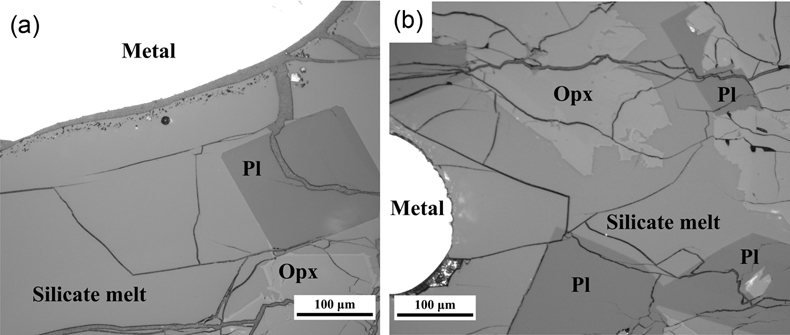
Figure 1 Photomicrographs of samples LMO-4 and LMO-H3 at 1 GPa and 1200 °C. Pl = plagioclase; Opx = orthopyroxene.
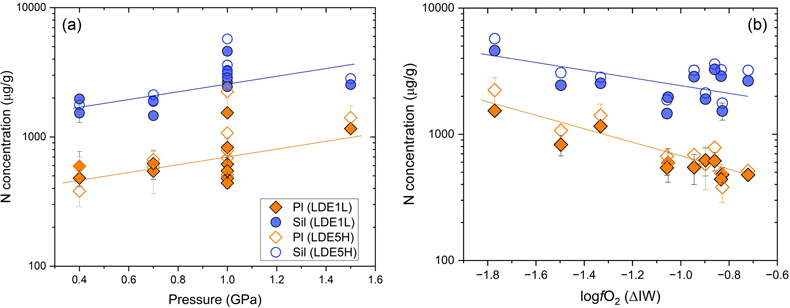
Figure 2 Nitrogen concentrations in plagioclase (Pl) and silicate melt (Sil) as a function of (a) pressure and (b) logfO2. Nitrogen concentrations were measured using two independent electron microprobes equipped with LDE1L and LDE5H diffracting crystals. Nitrogen concentrations increase with pressure and decrease with increasing oxygen fugacity, indicating a strong redox and pressure control on N dissolution. The influence of melt water content on N concentrations at 1 GPa is shown in Figure S-1.
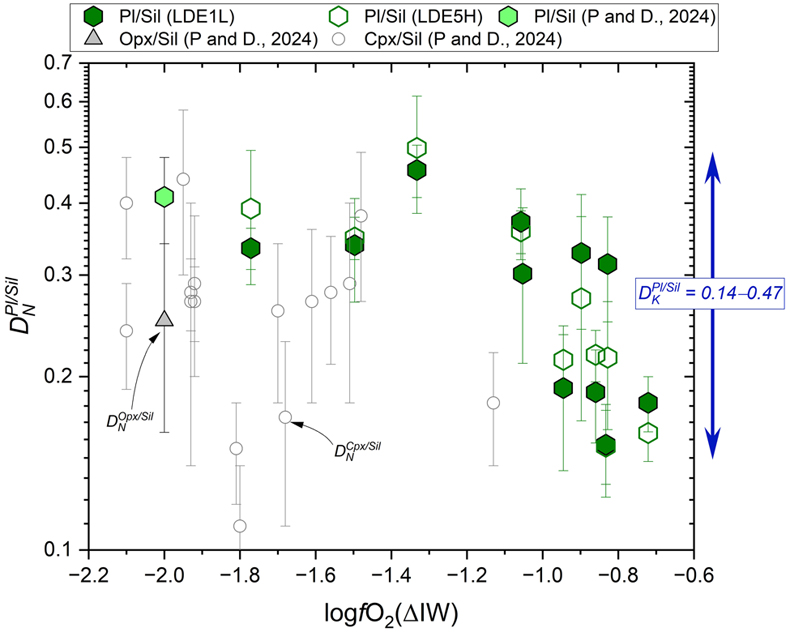
Figure 3 Plagioclase-silicate melt N partition coefficients (DNPl/Sil) as a function of logfO2. The DNPl/Sil were calculated using N concentrations measured independently with LDE1L and LDE5H diffracting crystals. Literature data for plagioclase (Pl), orthopyroxene (Opx), and clinopyroxene (Cpx) (Pal and Dasgupta, 2024
Pal, A., Dasgupta, R. (2024) The fate of nitrogen during early silicate differentiation of rocky bodies constrained by experimental mineral-melt partitioning. Geochimica et Cosmochimica Acta 385, 45–60. https://doi.org/10.1016/j.gca.2024.08.026
) are shown for comparison. The range of DKP/Sil determined in this study is indicated for reference.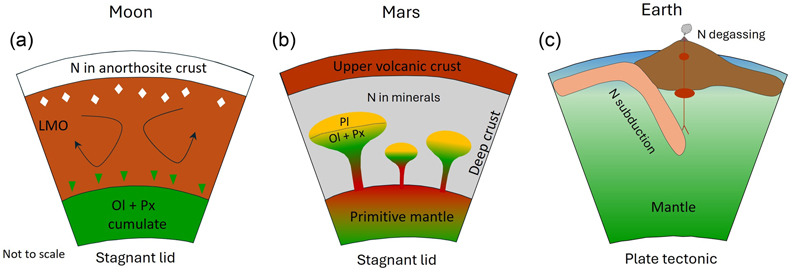
Figure 4 Comparative conceptual models illustrating N evolution on the Moon, Mars, and Earth as a function of early crustal differentiation and tectonic regime. (a) Lunar magma ocean (LMO) crystallisation leads to plagioclase flotation and formation of a thick anorthosite crust. (b) Early Martian mantle melting produces extensive plagioclase-rich intrusive complexes in the deep crust. Under reducing conditions (IW−1), N partitions into plagioclase and becomes sequestered in both lunar and Martian crusts. Stagnant lid prevents long term recycling, resulting in permanent crustal N storage in the Moon and Mars. (c) On more oxidised Earth (∼IW+4), active plate tectonics continuously recycle N between mantle, crust, and atmosphere through subduction and arc degassing, which buffers the atmospheric N reservoir over geological time. Ol = olivine; Px = pyroxene; Pl = plagioclase.