



Trace element partitioning in sedimentary pyrite controlled by nanoscale processes
Affiliations | Corresponding Author | Cite as | Funding information
Published by the European Association of Geochemistry
under Creative Commons License CC BY 4.0
Keywords: pyrite, trace elements, solid-solution partition, sediments


- Share this article


-
Article views:722Cumulative count of HTML views and PDF downloads.
- Download Citation
- Rights & Permissions

top
Abstract
Figures and Tables
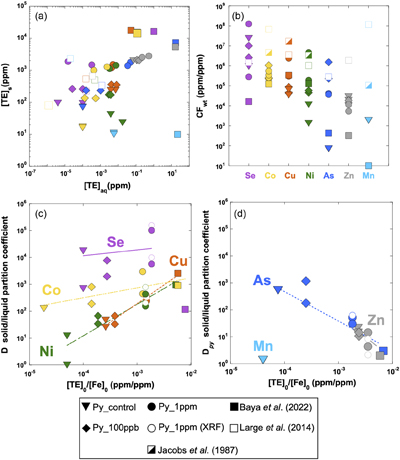 Figure 1 Final chemical data for the Py_control, Py_100ppb and Py_1 ppm experiments with varying [TE]0/[Fe]0 ratios. Two values corresponding to the fresh and aged pyrite batches are plotted for each ratio. Data are compared with those of Baya et al. (2022) and reported by Large et al. (2014). (a) Solid TE concentration ([TE]s in ppm wt.) as a function of TE aqueous concentration ([TE](aq) in mg L−1). (b) Concentration factor CF = [TE]s/[TE]aq, without the 10−4 factor of Large et al. (2014). (c) Solid-liquid distribution coefficient D as a function of the [TE]0/[Fe]0 ratio, for Se, Co, Ni and Cu, and (d) As, Zn and Mn. Note that the D value for Se from Baya et al. (2022), is underestimated because [Se](aq) was fixed to the detection limit value. Most Mn values are not reported because final [Mn]aq values were equal to the initial ones. | 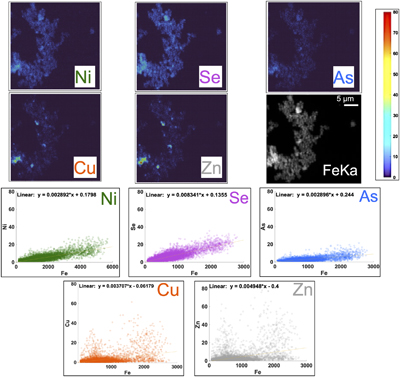 Figure 2 Nano-XRF elemental map and TE:Fe plots representing the intensity of the emission line at every pixel on a 33 × 29 μm area for Py_1ppm_1030hr sample. Linear regressions and the corresponding equations are displayed. Complementary data of the same sample are reported in Figure S-3 and Py_1ppm_141hr in Figure S-2. | 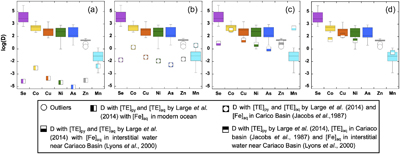 Figure 3 Box plots of experimental solid-solution distribution coefficient D (this study and Baya et al., 2022), compared to D values calculated from available natural settings data. Fences are the 25th and 75th percentiles, with the median in between. Bars represent the 10th and 90th percentiles. | 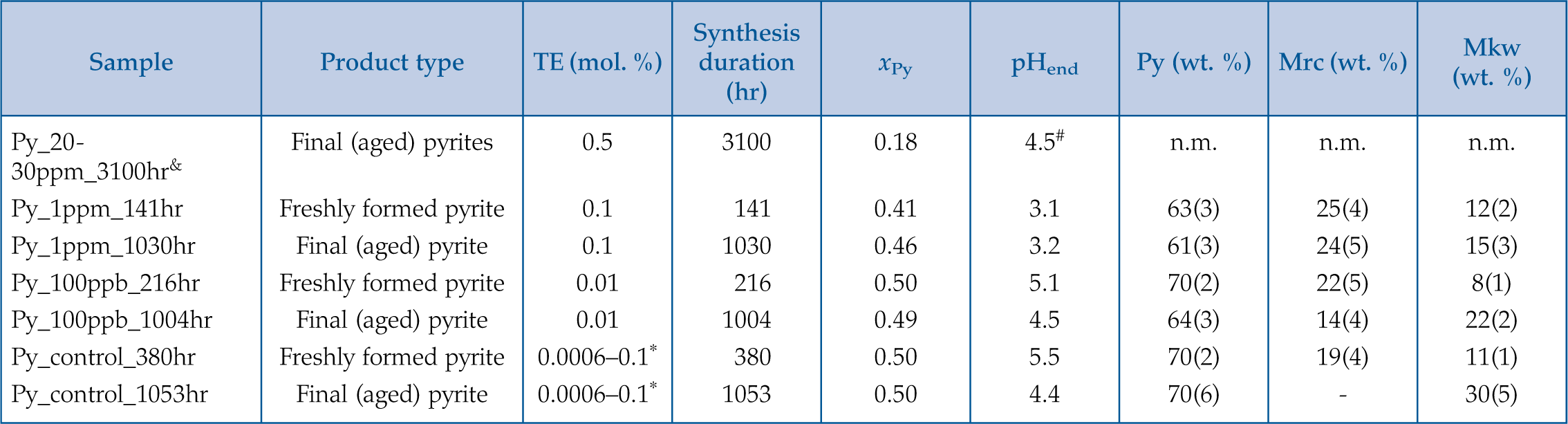 Table 1 Sample list with starting aqueous TE:Fe molar ratio, synthesis duration, final pH values, and xPy, the fraction of [Fe]0 precipitated (Eq. 1). Mineralogical composition was determined by XRD-Rietveld refinement (Table S-3). Values in parentheses are uncertainties on the last reported digit. |
| Figure 1 | Figure 2 | Figure 3 | Table 1 |
top
Introduction
Pyrite exhibits a strong affinity for various trace elements (TEs) (Huerta-Diaz and Morse 1992
Huerta-Diaz, M.A., Morse, J.W. (1992) Pyritization of trace metals in anoxic marine sediments. Geochimica et Cosmochimica Acta 56, 2681–2702. https://doi.org/10.1016/0016-7037(92)90353-K
; Large et al., 2014Large, R.R., Halpin, J.A., Danyushevsky, L.V., Maslennikov, V.V., Bull, S.W., Long, J.A., Gregory, D.D., Lounejeva, E., Lyons, T.W., Sack, P.J., McGoldrick, P.J., Calver, C.R. (2014) Trace element content of sedimentary pyrite as a new proxy for deep-time ocean–atmosphere evolution. Earth and Planetary Science Letters 389, 209–220. https://doi.org/10.1016/j.epsl.2013.12.020
; Gregory et al., 2015Gregory, D.D., Large, R.R., Halpin, J.A., Baturina, E.L., Lyons, T.W., Wu, S., Danyushevsky, L., Sack, P.J., Chappaz, A., Maslennikov, V.V., Bull, S.W. (2015) Trace Element Content of Sedimentary Pyrite in Black Shales. Economic Geology 110, 1389–1410. https://doi.org/10.2113/econgeo.110.6.1389
) and persists in (meta)sediments as one of the most thermodynamically stable iron-sulfur-bearing minerals (Rickard and Luther, 2007Rickard, D., Luther, G.W. (2007) Chemistry of Iron Sulfides. Chemical Reviews 107, 514–562. https://doi.org/10.1021/cr0503658
; Gregory et al., 2022bGregory, D.D., Lyons, T.W., Large, R.R., Stepanov, A.S. (2022b) Ground-truthing the pyrite trace element proxy in modern euxinic settings. American Mineralogist 107, 848–859. https://doi.org/10.2138/am-2022-8024
). Hence, the TE contents in pyrite are widely used to trace ancient ocean chemistry, offering insights into major geological and climatic events in Earth’s history (Tribovillard et al., 2006Tribovillard, N., Algeo, T.J., Lyons, T., Riboulleau, A. (2006) Trace metals as paleoredox and paleoproductivity proxies: An update. Chemical Geology 232, 12–32. https://doi.org/10.1016/j.chemgeo.2006.02.012
; Large et al., 2014Large, R.R., Halpin, J.A., Danyushevsky, L.V., Maslennikov, V.V., Bull, S.W., Long, J.A., Gregory, D.D., Lounejeva, E., Lyons, T.W., Sack, P.J., McGoldrick, P.J., Calver, C.R. (2014) Trace element content of sedimentary pyrite as a new proxy for deep-time ocean–atmosphere evolution. Earth and Planetary Science Letters 389, 209–220. https://doi.org/10.1016/j.epsl.2013.12.020
, 2017Large, R.R., Mukherjee, I., Gregory, D.D., Steadman, J.A., Maslennikov, V.V., Meffre, S. (2017) Ocean and Atmosphere Geochemical Proxies Derived from Trace Elements in Marine Pyrite: Implications for Ore Genesis in Sedimentary Basins. Economic Geology 112, 423–450. https://doi.org/10.2113/econgeo.112.2.423
; Gregory et al. 2015Gregory, D.D., Large, R.R., Halpin, J.A., Baturina, E.L., Lyons, T.W., Wu, S., Danyushevsky, L., Sack, P.J., Chappaz, A., Maslennikov, V.V., Bull, S.W. (2015) Trace Element Content of Sedimentary Pyrite in Black Shales. Economic Geology 110, 1389–1410. https://doi.org/10.2113/econgeo.110.6.1389
, 2022bGregory, D.D., Lyons, T.W., Large, R.R., Stepanov, A.S. (2022b) Ground-truthing the pyrite trace element proxy in modern euxinic settings. American Mineralogist 107, 848–859. https://doi.org/10.2138/am-2022-8024
; Song et al., 2026Song, Q., Wang, J., Algeo, T.J., Xu, L., Chen, C., Wang, Z., Cheng, C., Geng, K., Li, Q. (2026) Ni and Mo enrichment mechanisms in framboidal pyrite during methane-release events (Baiyun Sag, South China Sea). Frontiers in Marine Science 13, 1771442. https://doi.org/10.3389/fmars.2026.1771442
). Accurately determining TE pyrite-water partition coefficients at low temperature is thus a key requirement for providing reliable palaeoenvironmental reconstructions (Gregory et al., 2022aGregory, D.D., Kovarik, L., Taylor, S.D., Perea, D.E., Owens, J.D., Atienza, N., Lyons, T.W. (2022a) Nanoscale trace-element zoning in pyrite framboids and implications for paleoproxy applications. Geology 50, 736–740. https://doi.org/10.1130/G49890.1
). These partition properties reflect how TEs are incorporated during pyrite formation, including either substitution for Fe2+ and/or S−1 in the crystal structure (Morin et al., 2017Morin, G., Noël, V., Menguy, N., Brest, J., Baptiste, B., Tharaud, M., Ona-Nguema, G., Ikogou, M., Viollier, E., Juillot, F. (2017) Nickel accelerates pyrite nucleation at ambient temperature. Geochemical Perspectives Letters 5, 6–11. https://doi.org/10.7185/geochemlet.1738
; Le Pape et al., 2017Le Pape, P., Blanchard, M., Brest, J., Boulliard, J.-C., Ikogou, M., Stetten, L., Wang, S., Landrot, G., Morin, G. (2017) Arsenic Incorporation in Pyrite at Ambient Temperature at Both Tetrahedral S–I and Octahedral FeII Sites: Evidence from EXAFS–DFT Analysis. Environmental Science & Technology 51, 150–158. https://doi.org/10.1021/acs.est.6b03502
; Manceau et al., 2020Manceau, A., Merkulova, M., Mathon, O., Glatzel, P., Murdzek, M., Batanova, V., Simionovici, A., Steinmann, S.N., Paktunc, D. (2020) The Mode of Incorporation of As(-I) and Se(-I) in Natural Pyrite Revisited. ACS Earth and Space Chemistry 4, 379–390. https://doi.org/10.1021/acsearthspacechem.9b00301
), surface sorption (Le Pape et al., 2017Le Pape, P., Blanchard, M., Brest, J., Boulliard, J.-C., Ikogou, M., Stetten, L., Wang, S., Landrot, G., Morin, G. (2017) Arsenic Incorporation in Pyrite at Ambient Temperature at Both Tetrahedral S–I and Octahedral FeII Sites: Evidence from EXAFS–DFT Analysis. Environmental Science & Technology 51, 150–158. https://doi.org/10.1021/acs.est.6b03502
), segregation at grain boundaries or within inclusions (Pačevski et al., 2008Pačevski, A., Libowitzky, E., Živković, P., Dimitrijević, R., Cvetković, L. (2008) Copper-bearing pyrite from the Čoka Marin polymetallic deposit, Serbia: Mineral inclusions or true solid-solution? The Canadian Mineralogist 46, 249–261. https://doi.org/10.3749/canmin.46.1.249
; Deng et al., 2025Deng, Q., Le Pape, P., Aufort, J., Blanchard, M., Baptiste, B., Delbes, L., Baya, C., Juillot, F., Ona-Nguema, G., Menguy, N., Guigner, J.-M., Proux, O., Duquenoy, C., Guilbaud, R., Poitrasson, F., Morin, G. (2025) HERFD-XAS evidence for an octahedrally coordinated CoSn-polysulfide precursor as a probe for the mechanism of pyrite formation. Geochimica et Cosmochimica Acta 401, 104–121. https://doi.org/10.1016/j.gca.2025.06.003
).Baya et al. (2022)
Baya, C., Le Pape, P., Baptiste, B., Menguy, N., Delbes, L., Morand, M., Rouelle, M., Aubry, E., Ona-Nguema, G., Noël, V., Juillot, F., Morin, G. (2022) A methodological framework to study the behavior and kinetic influence of V, Mn, Co, Ni, Cu, Zn, As, Se and Mo during pyrite formation via the polysulfide pathway at ambient temperature. Chemical Geology 613, 121139. https://doi.org/10.1016/j.chemgeo.2022.121139
established a framework for determining the TE solid-solution partitioning in pyrite formed via the polysulfide pathway at ambient temperature. Based on this approach, improvements are needed to address environmentally relevant TE concentrations and TE competition (Gregory et al., 2022aGregory, D.D., Kovarik, L., Taylor, S.D., Perea, D.E., Owens, J.D., Atienza, N., Lyons, T.W. (2022a) Nanoscale trace-element zoning in pyrite framboids and implications for paleoproxy applications. Geology 50, 736–740. https://doi.org/10.1130/G49890.1
, 2022bGregory, D.D., Lyons, T.W., Large, R.R., Stepanov, A.S. (2022b) Ground-truthing the pyrite trace element proxy in modern euxinic settings. American Mineralogist 107, 848–859. https://doi.org/10.2138/am-2022-8024
). Here, to refine solid-solution transfer functions for TEs in sedimentary pyrite, we synthesised pyrite at room temperature via the polysulfide pathway using a trace element enriched solution at initial aqueous concentrations ranging from ∼10 to 1000 ppb. Our results provide new information on the TE affinity for pyrite and the key geochemical factors controlling their incorporation during early diagenesis.top
Materials and Methods
All pyrite samples were synthesised in N2 atmosphere in a Jacomex™ glove box (<5 ppm O2) using oxygen-free Milli-Q water. A ferric chloride solution (0.5 ≤ [TE] ≤ 50 ppm) was mixed with a sodium sulfide solution (0.1 ≤ [TE] ≤ 50 ppm) in equimolar proportions (Table S-1) and stirred at room temperature for at least one week (Morin et al., 2017
Morin, G., Noël, V., Menguy, N., Brest, J., Baptiste, B., Tharaud, M., Ona-Nguema, G., Ikogou, M., Viollier, E., Juillot, F. (2017) Nickel accelerates pyrite nucleation at ambient temperature. Geochemical Perspectives Letters 5, 6–11. https://doi.org/10.7185/geochemlet.1738
; Le Pape et al., 2017Le Pape, P., Blanchard, M., Brest, J., Boulliard, J.-C., Ikogou, M., Stetten, L., Wang, S., Landrot, G., Morin, G. (2017) Arsenic Incorporation in Pyrite at Ambient Temperature at Both Tetrahedral S–I and Octahedral FeII Sites: Evidence from EXAFS–DFT Analysis. Environmental Science & Technology 51, 150–158. https://doi.org/10.1021/acs.est.6b03502
; Baya et al., 2022Baya, C., Le Pape, P., Baptiste, B., Menguy, N., Delbes, L., Morand, M., Rouelle, M., Aubry, E., Ona-Nguema, G., Noël, V., Juillot, F., Morin, G. (2022) A methodological framework to study the behavior and kinetic influence of V, Mn, Co, Ni, Cu, Zn, As, Se and Mo during pyrite formation via the polysulfide pathway at ambient temperature. Chemical Geology 613, 121139. https://doi.org/10.1016/j.chemgeo.2022.121139
). In such equimolar proportions of Fe and S, the acidic pH range of our experiments (Tables 1, S-4) is thermodynamically favourable to pyrite formation, as shown by the Eh-pH diagram calculated assuming ∑S = ∑Fe in Rickard and Morse (2005)Rickard, D., Morse, J.W. (2005) Acid volatile sulfide (AVS). Marine Chemistry 97, 141–197. https://doi.org/10.1016/j.marchem.2005.08.004
. TE doping was achieved by adding an ICP multi-element standard solution (Cr, Mn, Co, Ni, Cu, Zn, As, Se, Sr, Mo, Cd, Ba) (Table S-2) in the ferric chloride solution, yielding initial TE:Fe of 0.01 and 0.1 mol. %. The control experiment only contained TE from the ferric chloride and sodium sulfide stock solutions. For each TE:Fe molar ratio, one batch was sampled after pyrite formation at 141–380 hr and another one after aging at 1004–1053 hr (Table 1). Syntheses and sample characterisation are detailed in the SI, including XRD Rietveld refinement results in Table S-3. Additionally, the samples by Baya et al. (2022)Baya, C., Le Pape, P., Baptiste, B., Menguy, N., Delbes, L., Morand, M., Rouelle, M., Aubry, E., Ona-Nguema, G., Noël, V., Juillot, F., Morin, G. (2022) A methodological framework to study the behavior and kinetic influence of V, Mn, Co, Ni, Cu, Zn, As, Se and Mo during pyrite formation via the polysulfide pathway at ambient temperature. Chemical Geology 613, 121139. https://doi.org/10.1016/j.chemgeo.2022.121139
with the highest TE contents were considered, yielding solid-solution partition data for single TE doping, in contrast to the present syntheses, conducted with a multi-element solution (Table 1, Table S-2).Table 1 Sample list with starting aqueous TE:Fe molar ratio, synthesis duration, final pH values, and xPy, the fraction of [Fe]0 precipitated (Eq. 1). Mineralogical composition was determined by XRD-Rietveld refinement (Table S-3). Values in parentheses are uncertainties on the last reported digit.
| Sample | Product type | TE (mol. %) | Synthesis duration (hr) | xPy | pHend | Py (wt. %) | Mrc (wt. %) | Mkw (wt. %) |
| Py_20-30ppm_3100hr& | Final (aged) pyrites | 0.5 | 3100 | 0.18 | 4.5# | n.m. | n.m. | n.m. |
| Py_1ppm_141hr | Freshly formed pyrite | 0.1 | 141 | 0.41 | 3.1 | 63(3) | 25(4) | 12(2) |
| Py_1ppm_1030hr | Final (aged) pyrite | 0.1 | 1030 | 0.46 | 3.2 | 61(3) | 24(5) | 15(3) |
| Py_100ppb_216hr | Freshly formed pyrite | 0.01 | 216 | 0.50 | 5.1 | 70(2) | 22(5) | 8(1) |
| Py_100ppb_1004hr | Final (aged) pyrite | 0.01 | 1004 | 0.49 | 4.5 | 64(3) | 14(4) | 22(2) |
| Py_control_380hr | Freshly formed pyrite | 0.0006–0.1* | 380 | 0.50 | 5.5 | 70(2) | 19(4) | 11(1) |
| Py_control_1053hr | Final (aged) pyrite | 0.0006–0.1* | 1053 | 0.50 | 4.4 | 70(6) | - | 30(5) |
*Values depend on the TE concentrations in the ferric and sulfide stock solutions (Table S-6a).
&Syntheses by Baya et al. (2022)Baya, C., Le Pape, P., Baptiste, B., Menguy, N., Delbes, L., Morand, M., Rouelle, M., Aubry, E., Ona-Nguema, G., Noël, V., Juillot, F., Morin, G. (2022) A methodological framework to study the behavior and kinetic influence of V, Mn, Co, Ni, Cu, Zn, As, Se and Mo during pyrite formation via the polysulfide pathway at ambient temperature. Chemical Geology 613, 121139. https://doi.org/10.1016/j.chemgeo.2022.121139.
#Average value calculated from Baya et al. (2022)Baya, C., Le Pape, P., Baptiste, B., Menguy, N., Delbes, L., Morand, M., Rouelle, M., Aubry, E., Ona-Nguema, G., Noël, V., Juillot, F., Morin, G. (2022) A methodological framework to study the behavior and kinetic influence of V, Mn, Co, Ni, Cu, Zn, As, Se and Mo during pyrite formation via the polysulfide pathway at ambient temperature. Chemical Geology 613, 121139. https://doi.org/10.1016/j.chemgeo.2022.121139.
Abbreviations: Py, pyrite; Mrc, marcasite; Mkw, mackinawite; n.m., not measured.
top
Low Temperature Pyrite Synthesis Relevant to Early Diagenetic Processes
In our synthesis experiments, the net pyritisation reaction can be written as:
Eq. 1

with xPy as the fraction of initial iron ([Fe]0) precipitated mostly as pyrite, 0 < xPy ≤ 0.5, typically in the 0.2–0.5 range (Table 1). When xPy < 0.5, elemental sulfur S(0) remains, and the concentration of dissolved Fe2+ exceeds ½[Fe]0 after pyrite formation. Thus, xPy was estimated by [Fe2+](aq) values in the supernatant at the end of the synthesis. Here, this ranges from 0.41 to 0.50 (Table 1), indicating a slight H2S deficit in some experiments, whereas in Baya et al. (2022)
Baya, C., Le Pape, P., Baptiste, B., Menguy, N., Delbes, L., Morand, M., Rouelle, M., Aubry, E., Ona-Nguema, G., Noël, V., Juillot, F., Morin, G. (2022) A methodological framework to study the behavior and kinetic influence of V, Mn, Co, Ni, Cu, Zn, As, Se and Mo during pyrite formation via the polysulfide pathway at ambient temperature. Chemical Geology 613, 121139. https://doi.org/10.1016/j.chemgeo.2022.121139
, xPy was ∼0.18. Our experiments may be compared with anoxic and Fe2+-containing (ferruginous) environments, but in which a large proportion of Fe precipitates as sulfides. Our study may thus be considered as relevant to authigenic pyrite formation in sediment porewater. This can occur when iron sulfides form in the sediment under ferruginous waters (e.g., Busigny et al., 2014Busigny, V., Planavsky, N.J., Jézéquel, D., Crowe, S., Louvat, P., Moureau, J., Viollier, E., Lyons, T.W. (2014) Iron isotopes in an Archean ocean analogue. Geochimica et Cosmochimica Acta 133, 443–462. https://doi.org/10.1016/j.gca.2014.03.004
), a setting that has been envisaged for Proterozoic oceans (2.5 to 0.541 Ga), where ferruginous conditions prevailed whilst sulfide production was restricted to productive continental margins (e.g., Poulton and Canfield, 2011Poulton, S.W., Canfield, D.E. (2011) Ferruginous Conditions: A Dominant Feature of the Ocean through Earth’s History. Elements 7, 107–112. https://doi.org/10.2113/gselements.7.2.107
). Additionally, our synthesis conditions could represent modern environments, such as the redoxcline of modern euxinic settings, where Fe2+ begins to accumulate just above the monimolimnion (e.g., Xiong et al., 2019Xiong, Y., Guilbaud, R., Peacock, C.L., Cox, R.P., Canfield, D.E., Krom, M.D., Poulton, S.W. (2019) Phosphorus cycling in Lake Cadagno, Switzerland: A low sulfate euxinic ocean analogue. Geochimica et Cosmochimica Acta 251, 116–135. https://doi.org/10.1016/j.gca.2019.02.011
), in mangrove sediments (Noël et al., 2015Noël, V., Morin, G., Juillot, F., Marchand, C., Brest, J., Bargar, J.R., Munoz, M., Marakovic, G., Ardo, S., Brown Jr, G.E. (2015) Ni cycling in mangrove sediments from New Caledonia. Geochimica et Cosmochimica Acta 169, 82–98. https://doi.org/10.1016/j.gca.2015.07.024
), alluvial aquifer sediments and floodplain soils subjected to water table fluctuations.top
Experimentally Determined Solid-Solution Partition Coefficients
In Figure 1a, the TE content in the solids [TE]s is plotted against the aqueous TE concentration [TE]aq in the synthesis medium after FeS conversion to pyrite at 141–380 hr (freshly precipitated) and 1004–1053 hr (aged) (Table S-6a,b). Except for particularly low values that are less accurate in the control experiment, Se and Co, [TE]aq values do not vary significantly between the two time steps, indicating that the reaction reached a steady state. This is consistent with Baya et al. (2022)
Baya, C., Le Pape, P., Baptiste, B., Menguy, N., Delbes, L., Morand, M., Rouelle, M., Aubry, E., Ona-Nguema, G., Noël, V., Juillot, F., Morin, G. (2022) A methodological framework to study the behavior and kinetic influence of V, Mn, Co, Ni, Cu, Zn, As, Se and Mo during pyrite formation via the polysulfide pathway at ambient temperature. Chemical Geology 613, 121139. https://doi.org/10.1016/j.chemgeo.2022.121139
, in which a plateau was reached in [TE]aq over time.Figure 1 Final chemical data for the Py_control, Py_100ppb and Py_1 ppm experiments with varying [TE]0/[Fe]0 ratios. Two values corresponding to the fresh and aged pyrite batches are plotted for each ratio. Data are compared with those of Baya et al. (2022)
Baya, C., Le Pape, P., Baptiste, B., Menguy, N., Delbes, L., Morand, M., Rouelle, M., Aubry, E., Ona-Nguema, G., Noël, V., Juillot, F., Morin, G. (2022) A methodological framework to study the behavior and kinetic influence of V, Mn, Co, Ni, Cu, Zn, As, Se and Mo during pyrite formation via the polysulfide pathway at ambient temperature. Chemical Geology 613, 121139. https://doi.org/10.1016/j.chemgeo.2022.121139
and reported by Large et al. (2014)Large, R.R., Halpin, J.A., Danyushevsky, L.V., Maslennikov, V.V., Bull, S.W., Long, J.A., Gregory, D.D., Lounejeva, E., Lyons, T.W., Sack, P.J., McGoldrick, P.J., Calver, C.R. (2014) Trace element content of sedimentary pyrite as a new proxy for deep-time ocean–atmosphere evolution. Earth and Planetary Science Letters 389, 209–220. https://doi.org/10.1016/j.epsl.2013.12.020
. (a) Solid TE concentration ([TE]s in ppm wt.) as a function of TE aqueous concentration ([TE](aq) in mg L−1). (b) Concentration factor CF = [TE]s/[TE]aq, without the 10−4 factor of Large et al. (2014)Large, R.R., Halpin, J.A., Danyushevsky, L.V., Maslennikov, V.V., Bull, S.W., Long, J.A., Gregory, D.D., Lounejeva, E., Lyons, T.W., Sack, P.J., McGoldrick, P.J., Calver, C.R. (2014) Trace element content of sedimentary pyrite as a new proxy for deep-time ocean–atmosphere evolution. Earth and Planetary Science Letters 389, 209–220. https://doi.org/10.1016/j.epsl.2013.12.020
. (c) Solid-liquid distribution coefficient D as a function of the [TE]0/[Fe]0 ratio, for Se, Co, Ni and Cu, and (d) As, Zn and Mn. Note that the D value for Se from Baya et al. (2022)Baya, C., Le Pape, P., Baptiste, B., Menguy, N., Delbes, L., Morand, M., Rouelle, M., Aubry, E., Ona-Nguema, G., Noël, V., Juillot, F., Morin, G. (2022) A methodological framework to study the behavior and kinetic influence of V, Mn, Co, Ni, Cu, Zn, As, Se and Mo during pyrite formation via the polysulfide pathway at ambient temperature. Chemical Geology 613, 121139. https://doi.org/10.1016/j.chemgeo.2022.121139
, is underestimated because [Se](aq) was fixed to the detection limit value. Most Mn values are not reported because final [Mn]aq values were equal to the initial ones.Figures 1a,b and S-4 show that our results are of particular interest for interpreting sedimentary pyrite compositions since both [TE]s and [TE]aq concentration values encompass the natural ranges reported for sedimentary pyrites and oceanic waters, respectively (Large et al., 2014
Large, R.R., Halpin, J.A., Danyushevsky, L.V., Maslennikov, V.V., Bull, S.W., Long, J.A., Gregory, D.D., Lounejeva, E., Lyons, T.W., Sack, P.J., McGoldrick, P.J., Calver, C.R. (2014) Trace element content of sedimentary pyrite as a new proxy for deep-time ocean–atmosphere evolution. Earth and Planetary Science Letters 389, 209–220. https://doi.org/10.1016/j.epsl.2013.12.020
, 2017Large, R.R., Mukherjee, I., Gregory, D.D., Steadman, J.A., Maslennikov, V.V., Meffre, S. (2017) Ocean and Atmosphere Geochemical Proxies Derived from Trace Elements in Marine Pyrite: Implications for Ore Genesis in Sedimentary Basins. Economic Geology 112, 423–450. https://doi.org/10.2113/econgeo.112.2.423
; Gregory et al., 2022bGregory, D.D., Lyons, T.W., Large, R.R., Stepanov, A.S. (2022b) Ground-truthing the pyrite trace element proxy in modern euxinic settings. American Mineralogist 107, 848–859. https://doi.org/10.2138/am-2022-8024
). The concentration factor, defined as CF = [TE]s/[TE]aq, of our experiments ranges around natural values (Large et al., 2014Large, R.R., Halpin, J.A., Danyushevsky, L.V., Maslennikov, V.V., Bull, S.W., Long, J.A., Gregory, D.D., Lounejeva, E., Lyons, T.W., Sack, P.J., McGoldrick, P.J., Calver, C.R. (2014) Trace element content of sedimentary pyrite as a new proxy for deep-time ocean–atmosphere evolution. Earth and Planetary Science Letters 389, 209–220. https://doi.org/10.1016/j.epsl.2013.12.020
). However, the highly scattered [TE]s vs. [TE]aq pattern may be explained by various incorporation modes of TE in pyrite, as discussed thereafter (Fig. 1c,d).Adapted from McIntire (1963)
McIntire, W.L. (1963) Trace element partition coefficients—a review of theory and applications to geology. Geochimica et Cosmochimica Acta 27, 1209–1264. https://doi.org/10.1016/0016-7037(63)90049-8
, the solid-solution partition coefficient D at equilibrium is defined as:Eq. 2

where
 and
and  are molar ratios in the solid and solution, respectively. At steady state in our experiments, D is referred to as the distribution coefficient with respect to the solid phase, FeS2 being the major solid component (84 ± 8 wt. %, 66 ± 5 wt. % pyrite on average) (Tables 1, S-3). Figure 1c,d displays D values calculated from mass balance for each studied TE as a function of the initial [TE]0/[Fe]0 ratio, in this study and Baya et al. (2022)
Baya, C., Le Pape, P., Baptiste, B., Menguy, N., Delbes, L., Morand, M., Rouelle, M., Aubry, E., Ona-Nguema, G., Noël, V., Juillot, F., Morin, G. (2022) A methodological framework to study the behavior and kinetic influence of V, Mn, Co, Ni, Cu, Zn, As, Se and Mo during pyrite formation via the polysulfide pathway at ambient temperature. Chemical Geology 613, 121139. https://doi.org/10.1016/j.chemgeo.2022.121139
. The D values derived from nano-XRF analysis of the solid for the Py_1ppm samples (Table S-7, Figs. S-2, S-3) are consistent with the ICP-MS-derived D values on a logarithmic scale (Fig. 1c,d, Table S-6). Nevertheless, the ICP-MS values are more reliable as geochemical data because they represent the entire sample, whereas nano-XRF maps cover only a limited area (Fig. 2). For every TE, D values span several orders of magnitude. Interestingly, two main groups of elements emerged based on their correlation with increasing [TE]0/[Fe]0: D increases for Ni and Cu, and, to a much lesser extent, for Se and Co (Fig. 1c), whereas it decreases for As and Zn (Fig. 1d).Figure 2 Nano-XRF elemental map and TE:Fe plots representing the intensity of the emission line at every pixel on a 33 × 29 μm area for Py_1ppm_1030hr sample. Linear regressions and the corresponding equations are displayed. Complementary data of the same sample are reported in Figure S-3 and Py_1ppm_141hr in Figure S-2.
For an ideal solid-solution model, a constant D value is expected. The variations observed with TE loading indicate that TE incorporation into the solid phase deviates from the ideal solid-solution model, especially for As, Zn, Ni, and Cu. This interpretation is supported by their spatial distribution in pyrite solid products, as discussed hereafter.
top
Influence of the Nanoscale TE Distribution on their Solid-Solution Partitioning
Elemental maps of pyrite aggregates obtained by nano-XRF analysis for the Py_1ppm_1030hr and Py_1ppm_141hr samples are shown in Figure 2 and Figures S-2, S-3, with relative abundance TE:Fe correlation plots. The Se/Fe correlation indicates a homogenous Se distribution at this scale of analysis, consistent with TEM-EDX nanoscale observations by Baya et al. (2022)
Baya, C., Le Pape, P., Baptiste, B., Menguy, N., Delbes, L., Morand, M., Rouelle, M., Aubry, E., Ona-Nguema, G., Noël, V., Juillot, F., Morin, G. (2022) A methodological framework to study the behavior and kinetic influence of V, Mn, Co, Ni, Cu, Zn, As, Se and Mo during pyrite formation via the polysulfide pathway at ambient temperature. Chemical Geology 613, 121139. https://doi.org/10.1016/j.chemgeo.2022.121139
. This suggests that our system may be close to an ideal solid solution over 0.0035–0.25 mol. % FeSe2 (Manceau et al., 2020Manceau, A., Merkulova, M., Mathon, O., Glatzel, P., Murdzek, M., Batanova, V., Simionovici, A., Steinmann, S.N., Paktunc, D. (2020) The Mode of Incorporation of As(-I) and Se(-I) in Natural Pyrite Revisited. ACS Earth and Space Chemistry 4, 379–390. https://doi.org/10.1021/acsearthspacechem.9b00301
), explaining the flat slope of D versus total Se/Fe (Fig. 1c; see also Section 7 in SI).The positive correlation of D with [Ni]0/[Fe]0 (Fig. 1c) reflects non-ideality in the Ni pyrite solid solution, with Ni2+ known to substitute for Fe2+ in similar synthetic pyrites (Morin et al., 2017
Morin, G., Noël, V., Menguy, N., Brest, J., Baptiste, B., Tharaud, M., Ona-Nguema, G., Ikogou, M., Viollier, E., Juillot, F. (2017) Nickel accelerates pyrite nucleation at ambient temperature. Geochemical Perspectives Letters 5, 6–11. https://doi.org/10.7185/geochemlet.1738
; Baya et al., 2022Baya, C., Le Pape, P., Baptiste, B., Menguy, N., Delbes, L., Morand, M., Rouelle, M., Aubry, E., Ona-Nguema, G., Noël, V., Juillot, F., Morin, G. (2022) A methodological framework to study the behavior and kinetic influence of V, Mn, Co, Ni, Cu, Zn, As, Se and Mo during pyrite formation via the polysulfide pathway at ambient temperature. Chemical Geology 613, 121139. https://doi.org/10.1016/j.chemgeo.2022.121139
). Indeed, Ni2+ accelerates pyrite nucleation by forming Ni-rich pyrite nuclei, leading to Ni enriched cores (∼100 nm) within sub-micron pyrite crystals, as observed by TEM-EDX (Morin et al., 2017Morin, G., Noël, V., Menguy, N., Brest, J., Baptiste, B., Tharaud, M., Ona-Nguema, G., Ikogou, M., Viollier, E., Juillot, F. (2017) Nickel accelerates pyrite nucleation at ambient temperature. Geochemical Perspectives Letters 5, 6–11. https://doi.org/10.7185/geochemlet.1738
; Baya et al., 2022Baya, C., Le Pape, P., Baptiste, B., Menguy, N., Delbes, L., Morand, M., Rouelle, M., Aubry, E., Ona-Nguema, G., Noël, V., Juillot, F., Morin, G. (2022) A methodological framework to study the behavior and kinetic influence of V, Mn, Co, Ni, Cu, Zn, As, Se and Mo during pyrite formation via the polysulfide pathway at ambient temperature. Chemical Geology 613, 121139. https://doi.org/10.1016/j.chemgeo.2022.121139
), and at higher temperature (160 °C) (Lin et al., 2022Lin, X., Xia, Y., Wei, G., Zhou, J., Liang, X., Xian, H., Zhu, J., He, H. (2022) Distinct effects of transition metal (cobalt, manganese and nickel) ion substitutions on the abiotic oxidation of pyrite: In view of hydroxyl radical production. Geochimica et Cosmochimica Acta 321, 170–183. https://doi.org/10.1016/j.gca.2022.01.026
). Such nanoscale inhomogeneity imparts a non-ideal character to the solid-solution, starting at Ni loadings as low as 0.5 mol. % NiS2 (Baya et al., 2022Baya, C., Le Pape, P., Baptiste, B., Menguy, N., Delbes, L., Morand, M., Rouelle, M., Aubry, E., Ona-Nguema, G., Noël, V., Juillot, F., Morin, G. (2022) A methodological framework to study the behavior and kinetic influence of V, Mn, Co, Ni, Cu, Zn, As, Se and Mo during pyrite formation via the polysulfide pathway at ambient temperature. Chemical Geology 613, 121139. https://doi.org/10.1016/j.chemgeo.2022.121139
), which might be smoothed out by the 150 nm probe size of nano-XRF analyses (Figs. 2, S-2 and S-3).Our nano-XRF maps show that Cu partly segregates in Cu-rich sulfide phases (Fig. 2), while Cu is also widely present with the pyrite grains. The positive D and total Cu:Fe trend (Fig. 1c), similar to that observed for Ni, suggests a non-ideal solution for Cu in pyrite (Schmid-Beurmann and Bente, 1995
Schmid-Beurmann, P., Bente, K. (1995) Stability properties of the CuS2-FeS2 solid solution series of pyrite type. Mineralogy and Petrology 53, 333–341. https://doi.org/10.1007/BF01160155
), with a fraction being likely exsolved initially in Cu-rich phases, possibly as Fe-rich covellite (Cu,Fe)S and chalcopyrite FeCuS2 (Cowper and Rickard, 1989Cowper, M., Rickard, D. (1989) Mechanism of chalcopyrite formation from iron monosulphides in aqueous solutions (< 100°C, pH 2–4.5). Chemical Geology 78, 325–341. https://doi.org/10.1016/0009-2541(89)90067-3
).It is noteworthy that Zn is correlated with Cu observed in nano-XRF maps (Figs. 2, S-2 and S-3), suggesting that they could be trapped in the same phases, such as Zn-bearing chalcopyrite and/or Cu-bearing sphalerite. This behaviour would align with the observation of segregated Zn-sulfide phases in sedimentary framboidal pyrites (Hu et al., 2018
Hu, S.-Y., Evans, K., Rempel, K., Guagliardo, P., Kilburn, M., Craw, D., Grice, K., Dick, J. (2018) Sequestration of Zn into mixed pyrite-zinc sulfide framboids: A key to Zn cycling in the ocean? Geochimica et Cosmochimica Acta 241, 95–107. https://doi.org/10.1016/j.gca.2018.08.039
). Moreover, Zn release into solution upon pyrite formation (Baya et al., 2022Baya, C., Le Pape, P., Baptiste, B., Menguy, N., Delbes, L., Morand, M., Rouelle, M., Aubry, E., Ona-Nguema, G., Noël, V., Juillot, F., Morin, G. (2022) A methodological framework to study the behavior and kinetic influence of V, Mn, Co, Ni, Cu, Zn, As, Se and Mo during pyrite formation via the polysulfide pathway at ambient temperature. Chemical Geology 613, 121139. https://doi.org/10.1016/j.chemgeo.2022.121139
) suggests a larger affinity of Zn for initially segregated precursor phases than for final pyrite, which may explain the negative slope in the D diagram (Fig. 1d).The negative slope of D observed for As (Fig. 1d) suggests that adsorbed As(III) and amorphous As2S3, could form at high As/Fe ratios and may have a lower affinity for As than arsenian pyrite forming at low As/Fe, in which As2+/3+ for Fe2+ and As−1 for S−1 substitution were observed in the same synthesis conditions (Le Pape et al., 2017
Le Pape, P., Blanchard, M., Brest, J., Boulliard, J.-C., Ikogou, M., Stetten, L., Wang, S., Landrot, G., Morin, G. (2017) Arsenic Incorporation in Pyrite at Ambient Temperature at Both Tetrahedral S–I and Octahedral FeII Sites: Evidence from EXAFS–DFT Analysis. Environmental Science & Technology 51, 150–158. https://doi.org/10.1021/acs.est.6b03502
).Co2+ has been shown to substitute only partially for Fe2+ in pyrite at ambient temperature in similar experiments, preferentially forming an amorphous CoSn phase due to its high affinity for polysulfides (Deng et al., 2025
Deng, Q., Le Pape, P., Aufort, J., Blanchard, M., Baptiste, B., Delbes, L., Baya, C., Juillot, F., Ona-Nguema, G., Menguy, N., Guigner, J.-M., Proux, O., Duquenoy, C., Guilbaud, R., Poitrasson, F., Morin, G. (2025) HERFD-XAS evidence for an octahedrally coordinated CoSn-polysulfide precursor as a probe for the mechanism of pyrite formation. Geochimica et Cosmochimica Acta 401, 104–121. https://doi.org/10.1016/j.gca.2025.06.003
). However, the proportions of these two Co species are not strongly affected by the initial Co:Fe ratio, which could explain the weak correlation slope of D in Figure 1c.Mn2+ does not appear to be incorporated in the solid phase in our short term experiments (Fig. 1) in line with the previous results by Baya et al. (2022)
Baya, C., Le Pape, P., Baptiste, B., Menguy, N., Delbes, L., Morand, M., Rouelle, M., Aubry, E., Ona-Nguema, G., Noël, V., Juillot, F., Morin, G. (2022) A methodological framework to study the behavior and kinetic influence of V, Mn, Co, Ni, Cu, Zn, As, Se and Mo during pyrite formation via the polysulfide pathway at ambient temperature. Chemical Geology 613, 121139. https://doi.org/10.1016/j.chemgeo.2022.121139
, whereas it has been observed in hydrothermal synthetic pyrites (Lin et al., 2022Lin, X., Xia, Y., Wei, G., Zhou, J., Liang, X., Xian, H., Zhu, J., He, H. (2022) Distinct effects of transition metal (cobalt, manganese and nickel) ion substitutions on the abiotic oxidation of pyrite: In view of hydroxyl radical production. Geochimica et Cosmochimica Acta 321, 170–183. https://doi.org/10.1016/j.gca.2022.01.026
) and in framboids (Atienza et al., 2023Atienza, N.M.M., Gregory, D.D., Taylor, S.D., Swing, M., Perea, D.E., Owens, J.D., Lyons, T.W. (2023) Refined views of ancient ocean chemistry: Tracking trace element incorporation in pyrite framboids using atom probe tomography. Geochimica et Cosmochimica Acta 357, 1–12. https://doi.org/10.1016/j.gca.2023.07.013
), raising questions about the physico-chemical factors favouring Mn incorporation.Overall, non-ideality for TE incorporation in pyrite suggests that these elements may occur as atomic scale clusters (e.g., Ni, Co, As) and can extend into exsolved phases at the nano- or microscale (e.g., Cu, Zn). Such deviations from ideal substitution likely explain the observed variations of D as a function of the TE loading (Fig. 1c,d).
top
Implications for the Chemical Signature of Sedimentary Pyrite
Our study reveals that the non-ideality of TE incorporation in pyrite results in a large scatter in the solid-solution distribution coefficients, D, as a function of the total TE concentration in the precipitation medium (Fig. 1c,d), which may question the reliability of sedimentary pyrite as a proxy for ancient water body composition. Despite this variation for D (Figs. 1c,d and 3) and CF (Fig. 1b) values for each TE, our data provide insights into the lower and upper limits of aqueous TE concentrations that can be reconstructed from pyrite composition.
Figure 3 Box plots of experimental solid-solution distribution coefficient D (this study and Baya et al., 2022
Baya, C., Le Pape, P., Baptiste, B., Menguy, N., Delbes, L., Morand, M., Rouelle, M., Aubry, E., Ona-Nguema, G., Noël, V., Juillot, F., Morin, G. (2022) A methodological framework to study the behavior and kinetic influence of V, Mn, Co, Ni, Cu, Zn, As, Se and Mo during pyrite formation via the polysulfide pathway at ambient temperature. Chemical Geology 613, 121139. https://doi.org/10.1016/j.chemgeo.2022.121139
), compared to D values calculated from available natural settings data. Fences are the 25th and 75th percentiles, with the median in between. Bars represent the 10th and 90th percentiles.Interestingly, our experimental CF values appear to range around those derived from a modern natural setting, e.g., the Cariaco Basin (Large et al., 2014
Large, R.R., Halpin, J.A., Danyushevsky, L.V., Maslennikov, V.V., Bull, S.W., Long, J.A., Gregory, D.D., Lounejeva, E., Lyons, T.W., Sack, P.J., McGoldrick, P.J., Calver, C.R. (2014) Trace element content of sedimentary pyrite as a new proxy for deep-time ocean–atmosphere evolution. Earth and Planetary Science Letters 389, 209–220. https://doi.org/10.1016/j.epsl.2013.12.020
) (Fig. 1b), especially for Se, Ni, Cu, and As. This observation is confirmed, except for Cu, when calculating CF values using [TE]aq in the water column of this euxinic basin (Jacobs et al., 1987Jacobs, L., Emerson, S., Huested, S.S. (1987) Trace metal geochemistry in the Cariaco Trench. Deep Sea Research Part A. Oceanographic Research Papers 34, 965–981. https://doi.org/10.1016/0198-0149(87)90048-3
) instead of mean oceanic values (Large et al., 2014Large, R.R., Halpin, J.A., Danyushevsky, L.V., Maslennikov, V.V., Bull, S.W., Long, J.A., Gregory, D.D., Lounejeva, E., Lyons, T.W., Sack, P.J., McGoldrick, P.J., Calver, C.R. (2014) Trace element content of sedimentary pyrite as a new proxy for deep-time ocean–atmosphere evolution. Earth and Planetary Science Letters 389, 209–220. https://doi.org/10.1016/j.epsl.2013.12.020
) (Fig. 1b). For Co, Zn and Mn, our average CF values are a few orders of magnitude lower than those reported for natural settings by Large et al. (2014)Large, R.R., Halpin, J.A., Danyushevsky, L.V., Maslennikov, V.V., Bull, S.W., Long, J.A., Gregory, D.D., Lounejeva, E., Lyons, T.W., Sack, P.J., McGoldrick, P.J., Calver, C.R. (2014) Trace element content of sedimentary pyrite as a new proxy for deep-time ocean–atmosphere evolution. Earth and Planetary Science Letters 389, 209–220. https://doi.org/10.1016/j.epsl.2013.12.020
. Trapping of these elements by minerals other than pyrite in natural sediments can explain that CF values are high when considering mean ocean water (Large et al., 2014Large, R.R., Halpin, J.A., Danyushevsky, L.V., Maslennikov, V.V., Bull, S.W., Long, J.A., Gregory, D.D., Lounejeva, E., Lyons, T.W., Sack, P.J., McGoldrick, P.J., Calver, C.R. (2014) Trace element content of sedimentary pyrite as a new proxy for deep-time ocean–atmosphere evolution. Earth and Planetary Science Letters 389, 209–220. https://doi.org/10.1016/j.epsl.2013.12.020
) and are lower when considering euxinic waters (Jacobs et al., 1987Jacobs, L., Emerson, S., Huested, S.S. (1987) Trace metal geochemistry in the Cariaco Trench. Deep Sea Research Part A. Oceanographic Research Papers 34, 965–981. https://doi.org/10.1016/0198-0149(87)90048-3
) and even lower in the pure iron-sulfide system of our experiments (Fig. 1b). Especially, Co can be scavenged by Fe(III) (oxyhydr)oxides and Mn(III)/(IV) oxides under ferruginous conditions, thereby decreasing its aqueous concentration without increasing its concentration in pyrite. This elevates CF values in natural settings compared to our pure sulfide system, supporting the use of the reverse Co trend in pyrite as a proxy for atmospheric oxygenation in Proterozoic oceans (Stockdale et al., 2010Stockdale, A., Davison, W., Zhang, H., Hamilton-Taylor, J. (2010) The Association of Cobalt with Iron and Manganese (Oxyhydr)oxides in Marine Sediment. Aquatic Geochemistry 16, 575–585. https://doi.org/10.1007/s10498-010-9092-1
; Large et al., 2017Large, R.R., Mukherjee, I., Gregory, D.D., Steadman, J.A., Maslennikov, V.V., Meffre, S. (2017) Ocean and Atmosphere Geochemical Proxies Derived from Trace Elements in Marine Pyrite: Implications for Ore Genesis in Sedimentary Basins. Economic Geology 112, 423–450. https://doi.org/10.2113/econgeo.112.2.423
).For Mn, one may infer that this element has a strong affinity for clay minerals and carbonates in sediments, which could help explain the major mismatch between our CF values and those of Large et al. (2014)
Large, R.R., Halpin, J.A., Danyushevsky, L.V., Maslennikov, V.V., Bull, S.W., Long, J.A., Gregory, D.D., Lounejeva, E., Lyons, T.W., Sack, P.J., McGoldrick, P.J., Calver, C.R. (2014) Trace element content of sedimentary pyrite as a new proxy for deep-time ocean–atmosphere evolution. Earth and Planetary Science Letters 389, 209–220. https://doi.org/10.1016/j.epsl.2013.12.020
. Such differences suggest that the proportion of non-sulfide Mn host minerals in sedimentary systems may complicate interpretations of the pyrite sedimentary record of this element. For Zn, the ultimate fate of early formed segregated phases, including ZnS, during pyritisation is likely to control the final hosting phases.Note that we used CF for comparison with natural settings, rather than D, which is normalised to [Fe]aq. Hence, reconstructing more rigorously the composition of the water column on the basis of pyrite TE contents would actually require using thermodynamically robust D instead of CF values. In this regard, D values calculated from data reported in Large et al. (2014)
Large, R.R., Halpin, J.A., Danyushevsky, L.V., Maslennikov, V.V., Bull, S.W., Long, J.A., Gregory, D.D., Lounejeva, E., Lyons, T.W., Sack, P.J., McGoldrick, P.J., Calver, C.R. (2014) Trace element content of sedimentary pyrite as a new proxy for deep-time ocean–atmosphere evolution. Earth and Planetary Science Letters 389, 209–220. https://doi.org/10.1016/j.epsl.2013.12.020
with [Fe]aq in modern ocean fall several orders of magnitude below our experimental ones (Fig. 3a), even when considering [Fe]aq (Fig. 3b) and [TE]aq (not shown) values reported by Jacobs et al. (1987)Jacobs, L., Emerson, S., Huested, S.S. (1987) Trace metal geochemistry in the Cariaco Trench. Deep Sea Research Part A. Oceanographic Research Papers 34, 965–981. https://doi.org/10.1016/0198-0149(87)90048-3
in the water column of this particular euxinic basin. This major discrepancy likely relies on the much higher [Fe]aq values in our experiments than in the modern, oxygenated ocean (Large et al., 2014Large, R.R., Halpin, J.A., Danyushevsky, L.V., Maslennikov, V.V., Bull, S.W., Long, J.A., Gregory, D.D., Lounejeva, E., Lyons, T.W., Sack, P.J., McGoldrick, P.J., Calver, C.R. (2014) Trace element content of sedimentary pyrite as a new proxy for deep-time ocean–atmosphere evolution. Earth and Planetary Science Letters 389, 209–220. https://doi.org/10.1016/j.epsl.2013.12.020
) or even in the euxinic Cariaco Basin water column (Jacobs et al., 1987Jacobs, L., Emerson, S., Huested, S.S. (1987) Trace metal geochemistry in the Cariaco Trench. Deep Sea Research Part A. Oceanographic Research Papers 34, 965–981. https://doi.org/10.1016/0198-0149(87)90048-3
). Accordingly, our D values more closely reproduce the TE solid-solution partition values for pyrite precipitating from Fe-rich sediment porewater (Fig. 3c,d). They could thus further help determine if Cariaco Basin pyrites precipitated from sediment porewater as already proposed (Lyons et al., 2000Lyons, T.W., Murray, R.W., Pearson, D.G. (2000) A comparative study of diagenetic pathways in sediments of the Caribbean Sea: highlights from pore-water results. In: Leckie, R.M., Sigurdsson, H., Acton, G.D., Draper, G. (Eds.) Proceedings of the Ocean Drilling Program: Scientific Results, 165, Oceanic Drilling Program, College Station, TX, 287–298. http://dx.doi.org/10.2973/odp.proc.sr.165.020.2000
; Chen and Campbell, 2021Chen, M., Campbell, I.H. (2021) Kinetic factors control trace element and isotope zoning in Archean pyrite corona nodules. Geochimica et Cosmochimica Acta 315, 230–250. https://doi.org/10.1016/j.gca.2021.09.018
; Gregory et al., 2022bGregory, D.D., Lyons, T.W., Large, R.R., Stepanov, A.S. (2022b) Ground-truthing the pyrite trace element proxy in modern euxinic settings. American Mineralogist 107, 848–859. https://doi.org/10.2138/am-2022-8024
), provided that [TE]aq values in porewater would be available. We also note that CF values in Large et al. (2014)Large, R.R., Halpin, J.A., Danyushevsky, L.V., Maslennikov, V.V., Bull, S.W., Long, J.A., Gregory, D.D., Lounejeva, E., Lyons, T.W., Sack, P.J., McGoldrick, P.J., Calver, C.R. (2014) Trace element content of sedimentary pyrite as a new proxy for deep-time ocean–atmosphere evolution. Earth and Planetary Science Letters 389, 209–220. https://doi.org/10.1016/j.epsl.2013.12.020
relate to the Cariaco Basin, which is a fully euxinic basin, with significantly lower [Fe]aq than supposed in the dominantly iron-rich ferruginous conditions of the Proterozoic (e.g., Planavsky et al., 2011Planavsky, N.J., McGoldrick, P., Scott, C.T., Li, C., Reinhard, C.T., Kelly, A.E., Chu, X., Bekker, A., Love, G.D., Lyons, T.W. (2011) Widespread iron-rich conditions in the mid-Proterozoic Ocean. Nature 477, 448–451. https://doi.org/10.1038/nature10327
; Sperling et al., 2015Sperling, E.A., Wolock, C.J., Morgan, A.S., Gill, B.C., Kunzmann, M., Halverson, G.P., Macdonald, F.A., Knoll, A.H., Johnston, D.T. (2015) Statistical analysis of iron geochemical data suggests limited late Proterozoic oxygenation. Nature 523, 451–454. https://doi.org/10.1038/nature14589
), for which our D value could possibly better apply.top
Acknowledgements
We acknowledge the support of Carole Causserand and Karen Alloncle at GET for AAS analyses; Thierry Allard for the nano-XRF measurement; Nicolas Menguy and Jean-Michel Guigner for TEM analyses at IMPMC; and Imène Esteve for SEM analyses at IMPMC. This work has been conducted in the framework of the PhD thesis of QD at ED 398 GRNE, Sorbonne University. It is part of the PYRISOFE project (ANR-22-CE49-0012), funded by the ANR (French National Research Agency).
Editor: Gavin Foster
top
References
Atienza, N.M.M., Gregory, D.D., Taylor, S.D., Swing, M., Perea, D.E., Owens, J.D., Lyons, T.W. (2023) Refined views of ancient ocean chemistry: Tracking trace element incorporation in pyrite framboids using atom probe tomography. Geochimica et Cosmochimica Acta 357, 1–12. https://doi.org/10.1016/j.gca.2023.07.013
 Show in context
 Mn2+ does not appear to be incorporated in the solid phase in our short term experiments (Fig. 1) in line with the previous results by Baya et al. (2022), whereas it has been observed in hydrothermal synthetic pyrites (Lin et al., 2022) and in framboids (Atienza et al., 2023), raising questions about the physico-chemical factors favouring Mn incorporation.
View in article
Baya, C., Le Pape, P., Baptiste, B., Menguy, N., Delbes, L., Morand, M., Rouelle, M., Aubry, E., Ona-Nguema, G., Noël, V., Juillot, F., Morin, G. (2022) A methodological framework to study the behavior and kinetic influence of V, Mn, Co, Ni, Cu, Zn, As, Se and Mo during pyrite formation via the polysulfide pathway at ambient temperature. Chemical Geology 613, 121139. https://doi.org/10.1016/j.chemgeo.2022.121139
Show in context Baya et al. (2022) established a framework for determining the TE solid-solution partitioning in pyrite formed via the polysulfide pathway at ambient temperature.
View in article
A ferric chloride solution (0.5 ≤ [TE] ≤ 50 ppm) was mixed with a sodium sulfide solution (0.1 ≤ [TE] ≤ 50 ppm) in equimolar proportions (Table S-1) and stirred at room temperature for at least one week (Morin et al., 2017; Le Pape et al., 2017; Baya et al., 2022).
View in article
Syntheses and sample characterisation are detailed in the SI, including XRD Rietveld refinement results in Table S-3. Additionally, the samples by Baya et al. (2022) with the highest TE contents were considered, yielding solid-solution partition data for single TE doping, in contrast to the present syntheses, conducted with a multi-element solution (Table 1, Table S-2).
View in article
Here, this ranges from 0.41 to 0.50 (Table 1), indicating a slight H2S deficit in some experiments, whereas in Baya et al. (2022), x Py was ∼0.18.
View in article
Data are compared with those of Baya et al. (2022) and reported by Large et al. (2014).
View in article
Note that the D value for Se from Baya et al. (2022), is underestimated because [Se](aq) was fixed to the detection limit value. Most Mn values are not reported because final [Mn]aq values were equal to the initial ones.
View in article
Figure 1c,d displays D values calculated from mass balance for each studied TE as a function of the initial [TE]0/[Fe]0 ratio, in this study and Baya et al. (2022).
View in article
The Se/Fe correlation indicates a homogenous Se distribution at this scale of analysis, consistent with TEM-EDX nanoscale observations by Baya et al. (2022).
View in article
The positive correlation of D with [Ni]0/[Fe]0 (Fig. 1c) reflects non-ideality in the Ni pyrite solid solution, with Ni2+ known to substitute for Fe2+ in similar synthetic pyrites (Morin et al., 2017; Baya et al., 2022).
View in article
Indeed, Ni2+ accelerates pyrite nucleation by forming Ni-rich pyrite nuclei, leading to Ni enriched cores (∼100 nm) within sub-micron pyrite crystals, as observed by TEM-EDX (Morin et al., 2017; Baya et al., 2022), and at higher temperature (160 °C) (Lin et al., 2022).
View in article
Such nanoscale inhomogeneity imparts a non-ideal character to the solid-solution, starting at Ni loadings as low as 0.5 mol. % NiS2 (Baya et al., 2022), which might be smoothed out by the 150 nm probe size of nano-XRF analyses (Figs. 2, S-2 and S-3).
View in article
Moreover, Zn release into solution upon pyrite formation (Baya et al., 2022) suggests a larger affinity of Zn for initially segregated precursor phases than for final pyrite, which may explain the negative slope in the D diagram (Fig. 1d).
View in article
Mn2+ does not appear to be incorporated in the solid phase in our short term experiments (Fig. 1) in line with the previous results by Baya et al. (2022), whereas it has been observed in hydrothermal synthetic pyrites (Lin et al., 2022) and in framboids (Atienza et al., 2023), raising questions about the physico-chemical factors favouring Mn incorporation.
View in article
Box plots of experimental solid-solution distribution coefficient D (this study and Baya et al., 2022), compared to D values calculated from available natural settings data.
View in article
Busigny, V., Planavsky, N.J., Jézéquel, D., Crowe, S., Louvat, P., Moureau, J., Viollier, E., Lyons, T.W. (2014) Iron isotopes in an Archean ocean analogue. Geochimica et Cosmochimica Acta 133, 443–462. https://doi.org/10.1016/j.gca.2014.03.004
Show in context This can occur when iron sulfides form in the sediment under ferruginous waters (e.g., Busigny et al., 2014), a setting that has been envisaged for Proterozoic oceans (2.5 to 0.541 Ga), where ferruginous conditions prevailed whilst sulfide production was restricted to productive continental margins (e.g., Poulton and Canfield, 2011).
View in article
Chen, M., Campbell, I.H. (2021) Kinetic factors control trace element and isotope zoning in Archean pyrite corona nodules. Geochimica et Cosmochimica Acta 315, 230–250. https://doi.org/10.1016/j.gca.2021.09.018
Show in context They could thus further help determine if Cariaco Basin pyrites precipitated from sediment porewater as already proposed (Lyons et al., 2000; Chen and Campbell, 2021; Gregory et al., 2022b), provided that [TE]aq values in porewater would be available.
View in article
Cowper, M., Rickard, D. (1989) Mechanism of chalcopyrite formation from iron monosulphides in aqueous solutions (< 100°C, pH 2–4.5). Chemical Geology 78, 325–341. https://doi.org/10.1016/0009-2541(89)90067-3
Show in context The positive D and total Cu:Fe trend (Fig. 1c), similar to that observed for Ni, suggests a non-ideal solution for Cu in pyrite (Schmid-Beurmann and Bente, 1995), with a fraction being likely exsolved initially in Cu-rich phases, possibly as Fe-rich covellite (Cu,Fe)S and chalcopyrite FeCuS2 (Cowper and Rickard, 1989).
View in article
Deng, Q., Le Pape, P., Aufort, J., Blanchard, M., Baptiste, B., Delbes, L., Baya, C., Juillot, F., Ona-Nguema, G., Menguy, N., Guigner, J.-M., Proux, O., Duquenoy, C., Guilbaud, R., Poitrasson, F., Morin, G. (2025) HERFD-XAS evidence for an octahedrally coordinated CoSn-polysulfide precursor as a probe for the mechanism of pyrite formation. Geochimica et Cosmochimica Acta 401, 104–121. https://doi.org/10.1016/j.gca.2025.06.003
Show in context These partition properties reflect how TEs are incorporated during pyrite formation, including either substitution for Fe2+ and/or S−1 in the crystal structure (Morin et al., 2017; Le Pape et al., 2017; Manceau et al., 2020), surface sorption (Le Pape et al., 2017), segregation at grain boundaries or within inclusions (Pačevski et al., 2008; Deng et al., 2025).
View in article
Co2+ has been shown to substitute only partially for Fe2+ in pyrite at ambient temperature in similar experiments, preferentially forming an amorphous CoS n phase due to its high affinity for polysulfides (Deng et al., 2025).
View in article
Gregory, D.D., Large, R.R., Halpin, J.A., Baturina, E.L., Lyons, T.W., Wu, S., Danyushevsky, L., Sack, P.J., Chappaz, A., Maslennikov, V.V., Bull, S.W. (2015) Trace Element Content of Sedimentary Pyrite in Black Shales. Economic Geology 110, 1389–1410. https://doi.org/10.2113/econgeo.110.6.1389
Show in context Pyrite exhibits a strong affinity for various trace elements (TEs) (Huerta-Diaz and Morse 1992; Large et al., 2014; Gregory et al., 2015) and persists in (meta)sediments as one of the most thermodynamically stable iron-sulfur-bearing minerals (Rickard and Luther, 2007; Gregory et al., 2022b).
View in article
Gregory, D.D., Kovarik, L., Taylor, S.D., Perea, D.E., Owens, J.D., Atienza, N., Lyons, T.W. (2022a) Nanoscale trace-element zoning in pyrite framboids and implications for paleoproxy applications. Geology 50, 736–740. https://doi.org/10.1130/G49890.1
Show in context Accurately determining TE pyrite-water partition coefficients at low temperature is thus a key requirement for providing reliable palaeoenvironmental reconstructions (Gregory et al., 2022a).
View in article
Based on this approach, improvements are needed to address environmentally relevant TE concentrations and TE competition (Gregory et al., 2022a, 2022b).
View in article
Gregory, D.D., Lyons, T.W., Large, R.R., Stepanov, A.S. (2022b) Ground-truthing the pyrite trace element proxy in modern euxinic settings. American Mineralogist 107, 848–859. https://doi.org/10.2138/am-2022-8024
Show in context Pyrite exhibits a strong affinity for various trace elements (TEs) (Huerta-Diaz and Morse 1992; Large et al., 2014; Gregory et al., 2015) and persists in (meta)sediments as one of the most thermodynamically stable iron-sulfur-bearing minerals (Rickard and Luther, 2007; Gregory et al., 2022b).
View in article
Hence, the TE contents in pyrite are widely used to trace ancient ocean chemistry, offering insights into major geological and climatic events in Earth’s history (Tribovillard et al., 2006; Large et al., 2014, 2017; Gregory et al. 2015, 2022b; Song et al., 2026).
View in article
Figures 1a,b and S-4 show that our results are of particular interest for interpreting sedimentary pyrite compositions since both [TE]s and [TE]aq concentration values encompass the natural ranges reported for sedimentary pyrites and oceanic waters, respectively (Large et al., 2014, 2017; Gregory et al., 2022b).
View in article
They could thus further help determine if Cariaco Basin pyrites precipitated from sediment porewater as already proposed (Lyons et al., 2000; Chen and Campbell, 2021; Gregory et al., 2022b), provided that [TE]aq values in porewater would be available.
View in article
Hu, S.-Y., Evans, K., Rempel, K., Guagliardo, P., Kilburn, M., Craw, D., Grice, K., Dick, J. (2018) Sequestration of Zn into mixed pyrite-zinc sulfide framboids: A key to Zn cycling in the ocean? Geochimica et Cosmochimica Acta 241, 95–107. https://doi.org/10.1016/j.gca.2018.08.039
Show in context This behaviour would align with the observation of segregated Zn-sulfide phases in sedimentary framboidal pyrites (Hu et al., 2018).
View in article
Huerta-Diaz, M.A., Morse, J.W. (1992) Pyritization of trace metals in anoxic marine sediments. Geochimica et Cosmochimica Acta 56, 2681–2702. https://doi.org/10.1016/0016-7037(92)90353-K
Show in context Pyrite exhibits a strong affinity for various trace elements (TEs) (Huerta-Diaz and Morse 1992; Large et al., 2014; Gregory et al., 2015) and persists in (meta)sediments as one of the most thermodynamically stable iron-sulfur-bearing minerals (Rickard and Luther, 2007; Gregory et al., 2022b).
View in article
Jacobs, L., Emerson, S., Huested, S.S. (1987) Trace metal geochemistry in the Cariaco Trench. Deep Sea Research Part A. Oceanographic Research Papers 34, 965–981. https://doi.org/10.1016/0198-0149(87)90048-3
Show in context This observation is confirmed, except for Cu, when calculating CF values using [TE]aq in the water column of this euxinic basin (Jacobs et al., 1987) instead of mean oceanic values (Large et al., 2014) (Fig. 1b).
View in article
Trapping of these elements by minerals other than pyrite in natural sediments can explain that CF values are high when considering mean ocean water (Large et al., 2014) and are lower when considering euxinic waters (Jacobs et al., 1987) and even lower in the pure iron-sulfide system of our experiments (Fig. 1b).
View in article
In this regard, D values calculated from data reported in Large et al. (2014) with [Fe]aq in modern ocean fall several orders of magnitude below our experimental ones (Fig. 3a), even when considering [Fe]aq (Fig. 3b) and [TE]aq (not shown) values reported by Jacobs et al. (1987) in the water column of this particular euxinic basin.
View in article
This major discrepancy likely relies on the much higher [Fe]aq values in our experiments than in the modern, oxygenated ocean (Large et al., 2014) or even in the euxinic Cariaco Basin water column (Jacobs et al., 1987).
View in article
Large, R.R., Halpin, J.A., Danyushevsky, L.V., Maslennikov, V.V., Bull, S.W., Long, J.A., Gregory, D.D., Lounejeva, E., Lyons, T.W., Sack, P.J., McGoldrick, P.J., Calver, C.R. (2014) Trace element content of sedimentary pyrite as a new proxy for deep-time ocean–atmosphere evolution. Earth and Planetary Science Letters 389, 209–220. https://doi.org/10.1016/j.epsl.2013.12.020
Show in context Pyrite exhibits a strong affinity for various trace elements (TEs) (Huerta-Diaz and Morse 1992; Large et al., 2014; Gregory et al., 2015) and persists in (meta)sediments as one of the most thermodynamically stable iron-sulfur-bearing minerals (Rickard and Luther, 2007; Gregory et al., 2022b).
View in article
Hence, the TE contents in pyrite are widely used to trace ancient ocean chemistry, offering insights into major geological and climatic events in Earth’s history (Tribovillard et al., 2006; Large et al., 2014, 2017; Gregory et al. 2015, 2022b; Song et al., 2026).
View in article
Data are compared with those of Baya et al. (2022) and reported by Large et al. (2014).
View in article
(b) Concentration factor CF = [TE]s/[TE]aq, without the 10−4 factor of Large et al. (2014).
View in article
Figures 1a,b and S-4 show that our results are of particular interest for interpreting sedimentary pyrite compositions since both [TE]s and [TE]aq concentration values encompass the natural ranges reported for sedimentary pyrites and oceanic waters, respectively (Large et al., 2014, 2017; Gregory et al., 2022b).
View in article
The concentration factor, defined as CF = [TE]s/[TE]aq, of our experiments ranges around natural values (Large et al., 2014).
View in article
Interestingly, our experimental CF values appear to range around those derived from a modern natural setting, e.g., the Cariaco Basin (Large et al., 2014) (Fig. 1b), especially for Se, Ni, Cu, and As.
View in article
This observation is confirmed, except for Cu, when calculating CF values using [TE]aq in the water column of this euxinic basin (Jacobs et al., 1987) instead of mean oceanic values (Large et al., 2014) (Fig. 1b).
View in article
For Co, Zn and Mn, our average CF values are a few orders of magnitude lower than those reported for natural settings by Large et al. (2014).
View in article
Trapping of these elements by minerals other than pyrite in natural sediments can explain that CF values are high when considering mean ocean water (Large et al., 2014) and are lower when considering euxinic waters (Jacobs et al., 1987) and even lower in the pure iron-sulfide system of our experiments (Fig. 1b).
View in article
For Mn, one may infer that this element has a strong affinity for clay minerals and carbonates in sediments, which could help explain the major mismatch between our CF values and those of Large et al. (2014).
View in article
In this regard, D values calculated from data reported in Large et al. (2014) with [Fe]aq in modern ocean fall several orders of magnitude below our experimental ones (Fig. 3a), even when considering [Fe]aq (Fig. 3b) and [TE]aq (not shown) values reported by Jacobs et al. (1987) in the water column of this particular euxinic basin.
View in article
This major discrepancy likely relies on the much higher [Fe]aq values in our experiments than in the modern, oxygenated ocean (Large et al., 2014) or even in the euxinic Cariaco Basin water column (Jacobs et al., 1987).
View in article
We also note that CF values in Large et al. (2014) relate to the Cariaco Basin, which is a fully euxinic basin, with significantly lower [Fe]aq than supposed in the dominantly iron-rich ferruginous conditions of the Proterozoic (e.g., Planavsky et al., 2011; Sperling et al., 2015), for which our D value could possibly better apply.
View in article
Large, R.R., Mukherjee, I., Gregory, D.D., Steadman, J.A., Maslennikov, V.V., Meffre, S. (2017) Ocean and Atmosphere Geochemical Proxies Derived from Trace Elements in Marine Pyrite: Implications for Ore Genesis in Sedimentary Basins. Economic Geology 112, 423–450. https://doi.org/10.2113/econgeo.112.2.423
Show in context Hence, the TE contents in pyrite are widely used to trace ancient ocean chemistry, offering insights into major geological and climatic events in Earth’s history (Tribovillard et al., 2006; Large et al., 2014, 2017; Gregory et al. 2015, 2022b; Song et al., 2026).
View in article
Figures 1a,b and S-4 show that our results are of particular interest for interpreting sedimentary pyrite compositions since both [TE]s and [TE]aq concentration values encompass the natural ranges reported for sedimentary pyrites and oceanic waters, respectively (Large et al., 2014, 2017; Gregory et al., 2022b).
View in article
This elevates CF values in natural settings compared to our pure sulfide system, supporting the use of the reverse Co trend in pyrite as a proxy for atmospheric oxygenation in Proterozoic oceans (Stockdale et al., 2010; Large et al., 2017).
View in article
Le Pape, P., Blanchard, M., Brest, J., Boulliard, J.-C., Ikogou, M., Stetten, L., Wang, S., Landrot, G., Morin, G. (2017) Arsenic Incorporation in Pyrite at Ambient Temperature at Both Tetrahedral S–I and Octahedral FeII Sites: Evidence from EXAFS–DFT Analysis. Environmental Science & Technology 51, 150–158. https://doi.org/10.1021/acs.est.6b03502
Show in context These partition properties reflect how TEs are incorporated during pyrite formation, including either substitution for Fe2+ and/or S−1 in the crystal structure (Morin et al., 2017; Le Pape et al., 2017; Manceau et al., 2020), surface sorption (Le Pape et al., 2017), segregation at grain boundaries or within inclusions (Pačevski et al., 2008; Deng et al., 2025).
View in article
A ferric chloride solution (0.5 ≤ [TE] ≤ 50 ppm) was mixed with a sodium sulfide solution (0.1 ≤ [TE] ≤ 50 ppm) in equimolar proportions (Table S-1) and stirred at room temperature for at least one week (Morin et al., 2017; Le Pape et al., 2017; Baya et al., 2022).
View in article
The negative slope of D observed for As (Fig. 1d) suggests that adsorbed As(III) and amorphous As2S3, could form at high As/Fe ratios and may have a lower affinity for As than arsenian pyrite forming at low As/Fe, in which As2+/3+ for Fe2+ and As−1 for S−1 substitution were observed in the same synthesis conditions (Le Pape et al., 2017).
View in article
Lin, X., Xia, Y., Wei, G., Zhou, J., Liang, X., Xian, H., Zhu, J., He, H. (2022) Distinct effects of transition metal (cobalt, manganese and nickel) ion substitutions on the abiotic oxidation of pyrite: In view of hydroxyl radical production. Geochimica et Cosmochimica Acta 321, 170–183. https://doi.org/10.1016/j.gca.2022.01.026
Show in context Indeed, Ni2+ accelerates pyrite nucleation by forming Ni-rich pyrite nuclei, leading to Ni enriched cores (∼100 nm) within sub-micron pyrite crystals, as observed by TEM-EDX (Morin et al., 2017; Baya et al., 2022), and at higher temperature (160 °C) (Lin et al., 2022).
View in article
Mn2+ does not appear to be incorporated in the solid phase in our short term experiments (Fig. 1) in line with the previous results by Baya et al. (2022), whereas it has been observed in hydrothermal synthetic pyrites (Lin et al., 2022) and in framboids (Atienza et al., 2023), raising questions about the physico-chemical factors favouring Mn incorporation.
View in article
Lyons, T.W., Murray, R.W., Pearson, D.G. (2000) A comparative study of diagenetic pathways in sediments of the Caribbean Sea: highlights from pore-water results. In: Leckie, R.M., Sigurdsson, H., Acton, G.D., Draper, G. (Eds.) Proceedings of the Ocean Drilling Program: Scientific Results, 165, Oceanic Drilling Program, College Station, TX, 287–298. https://dx.doi.org/10.2973/odp.proc.sr.165.020.2000
Show in context They could thus further help determine if Cariaco Basin pyrites precipitated from sediment porewater as already proposed (Lyons et al., 2000; Chen and Campbell, 2021; Gregory et al., 2022b), provided that [TE]aq values in porewater would be available.
View in article
Manceau, A., Merkulova, M., Mathon, O., Glatzel, P., Murdzek, M., Batanova, V., Simionovici, A., Steinmann, S.N., Paktunc, D. (2020) The Mode of Incorporation of As(-I) and Se(-I) in Natural Pyrite Revisited. ACS Earth and Space Chemistry 4, 379–390. https://doi.org/10.1021/acsearthspacechem.9b00301
Show in context These partition properties reflect how TEs are incorporated during pyrite formation, including either substitution for Fe2+ and/or S−1 in the crystal structure (Morin et al., 2017; Le Pape et al., 2017; Manceau et al., 2020), surface sorption (Le Pape et al., 2017), segregation at grain boundaries or within inclusions (Pačevski et al., 2008; Deng et al., 2025).
View in article
This suggests that our system may be close to an ideal solid solution over 0.0035–0.25 mol. % FeSe2 (Manceau et al., 2020), explaining the flat slope of D versus total Se/Fe (Fig. 1c; see also Section 7 in SI).
View in article
McIntire, W.L. (1963) Trace element partition coefficients—a review of theory and applications to geology. Geochimica et Cosmochimica Acta 27, 1209–1264. https://doi.org/10.1016/0016-7037(63)90049-8
Show in context Adapted from McIntire (1963), the solid-solution partition coefficient D at equilibrium is defined as:
Eq. 2
where and are molar ratios in the solid and solution, respectively. At steady state in our experiments, D is referred to as the distribution coefficient with respect to the solid phase, FeS2 being the major solid component (84 ± 8 wt. %, 66 ± 5 wt. % pyrite on average) (Tables 1, S-3).
View in article
Morin, G., Noël, V., Menguy, N., Brest, J., Baptiste, B., Tharaud, M., Ona-Nguema, G., Ikogou, M., Viollier, E., Juillot, F. (2017) Nickel accelerates pyrite nucleation at ambient temperature. Geochemical Perspectives Letters 5, 6–11. https://doi.org/10.7185/geochemlet.1738
Show in context These partition properties reflect how TEs are incorporated during pyrite formation, including either substitution for Fe2+ and/or S−1 in the crystal structure (Morin et al., 2017; Le Pape et al., 2017; Manceau et al., 2020), surface sorption (Le Pape et al., 2017), segregation at grain boundaries or within inclusions (Pačevski et al., 2008; Deng et al., 2025).
View in article
A ferric chloride solution (0.5 ≤ [TE] ≤ 50 ppm) was mixed with a sodium sulfide solution (0.1 ≤ [TE] ≤ 50 ppm) in equimolar proportions (Table S-1) and stirred at room temperature for at least one week (Morin et al., 2017; Le Pape et al., 2017; Baya et al., 2022).
View in article
The positive correlation of D with [Ni]0/[Fe]0 (Fig. 1c) reflects non-ideality in the Ni pyrite solid solution, with Ni2+ known to substitute for Fe2+ in similar synthetic pyrites (Morin et al., 2017; Baya et al., 2022).
View in article
Indeed, Ni2+ accelerates pyrite nucleation by forming Ni-rich pyrite nuclei, leading to Ni enriched cores (∼100 nm) within sub-micron pyrite crystals, as observed by TEM-EDX (Morin et al., 2017; Baya et al., 2022), and at higher temperature (160 °C) (Lin et al., 2022).
View in article
Noël, V., Morin, G., Juillot, F., Marchand, C., Brest, J., Bargar, J.R., Munoz, M., Marakovic, G., Ardo, S., Brown Jr, G.E. (2015) Ni cycling in mangrove sediments from New Caledonia. Geochimica et Cosmochimica Acta 169, 82–98. https://doi.org/10.1016/j.gca.2015.07.024
Show in context Additionally, our synthesis conditions could represent modern environments, such as the redoxcline of modern euxinic settings, where Fe2+ begins to accumulate just above the monimolimnion (e.g., Xiong et al., 2019), in mangrove sediments (Noël et al., 2015), alluvial aquifer sediments and floodplain soils subjected to water table fluctuations.
View in article
Pačevski, A., Libowitzky, E., Živković, P., Dimitrijević, R., Cvetković, L. (2008) Copper-bearing pyrite from the Čoka Marin polymetallic deposit, Serbia: Mineral inclusions or true solid-solution? The Canadian Mineralogist 46, 249–261. https://doi.org/10.3749/canmin.46.1.249
Show in context These partition properties reflect how TEs are incorporated during pyrite formation, including either substitution for Fe2+ and/or S−1 in the crystal structure (Morin et al., 2017; Le Pape et al., 2017; Manceau et al., 2020), surface sorption (Le Pape et al., 2017), segregation at grain boundaries or within inclusions (Pačevski et al., 2008; Deng et al., 2025).
View in article
Planavsky, N.J., McGoldrick, P., Scott, C.T., Li, C., Reinhard, C.T., Kelly, A.E., Chu, X., Bekker, A., Love, G.D., Lyons, T.W. (2011) Widespread iron-rich conditions in the mid-Proterozoic Ocean. Nature 477, 448–451. https://doi.org/10.1038/nature10327
Show in context We also note that CF values in Large et al. (2014) relate to the Cariaco Basin, which is a fully euxinic basin, with significantly lower [Fe]aq than supposed in the dominantly iron-rich ferruginous conditions of the Proterozoic (e.g., Planavsky et al., 2011; Sperling et al., 2015), for which our D value could possibly better apply.
View in article
Poulton, S.W., Canfield, D.E. (2011) Ferruginous Conditions: A Dominant Feature of the Ocean through Earth’s History. Elements 7, 107–112. https://doi.org/10.2113/gselements.7.2.107
Show in context This can occur when iron sulfides form in the sediment under ferruginous waters (e.g., Busigny et al., 2014), a setting that has been envisaged for Proterozoic oceans (2.5 to 0.541 Ga), where ferruginous conditions prevailed whilst sulfide production was restricted to productive continental margins (e.g., Poulton and Canfield, 2011).
View in article
Rickard, D., Morse, J.W. (2005) Acid volatile sulfide (AVS). Marine Chemistry 97, 141–197. https://doi.org/10.1016/j.marchem.2005.08.004
Show in context In such equimolar proportions of Fe and S, the acidic pH range of our experiments (Tables 1, S-4) is thermodynamically favourable to pyrite formation, as shown by the Eh-pH diagram calculated assuming ∑S = ∑Fe in Rickard and Morse (2005).
View in article
Rickard, D., Luther, G.W. (2007) Chemistry of Iron Sulfides. Chemical Reviews 107, 514–562. https://doi.org/10.1021/cr0503658
Show in context Pyrite exhibits a strong affinity for various trace elements (TEs) (Huerta-Diaz and Morse 1992; Large et al., 2014; Gregory et al., 2015) and persists in (meta)sediments as one of the most thermodynamically stable iron-sulfur-bearing minerals (Rickard and Luther, 2007; Gregory et al., 2022b).
View in article
Schmid-Beurmann, P., Bente, K. (1995) Stability properties of the CuS2-FeS2 solid solution series of pyrite type. Mineralogy and Petrology 53, 333–341. https://doi.org/10.1007/BF01160155
Show in context The positive D and total Cu:Fe trend (Fig. 1c), similar to that observed for Ni, suggests a non-ideal solution for Cu in pyrite (Schmid-Beurmann and Bente, 1995), with a fraction being likely exsolved initially in Cu-rich phases, possibly as Fe-rich covellite (Cu,Fe)S and chalcopyrite FeCuS2 (Cowper and Rickard, 1989).
View in article
Song, Q., Wang, J., Algeo, T.J., Xu, L., Chen, C., Wang, Z., Cheng, C., Geng, K., Li, Q. (2026) Ni and Mo enrichment mechanisms in framboidal pyrite during methane-release events (Baiyun Sag, South China Sea). Frontiers in Marine Science 13, 1771442. https://doi.org/10.3389/fmars.2026.1771442
Show in context Hence, the TE contents in pyrite are widely used to trace ancient ocean chemistry, offering insights into major geological and climatic events in Earth’s history (Tribovillard et al., 2006; Large et al., 2014, 2017; Gregory et al. 2015, 2022b; Song et al., 2026).
View in article
Sperling, E.A., Wolock, C.J., Morgan, A.S., Gill, B.C., Kunzmann, M., Halverson, G.P., Macdonald, F.A., Knoll, A.H., Johnston, D.T. (2015) Statistical analysis of iron geochemical data suggests limited late Proterozoic oxygenation. Nature 523, 451–454. https://doi.org/10.1038/nature14589
Show in context We also note that CF values in Large et al. (2014) relate to the Cariaco Basin, which is a fully euxinic basin, with significantly lower [Fe]aq than supposed in the dominantly iron-rich ferruginous conditions of the Proterozoic (e.g., Planavsky et al., 2011; Sperling et al., 2015), for which our D value could possibly better apply.
View in article
Stockdale, A., Davison, W., Zhang, H., Hamilton-Taylor, J. (2010) The Association of Cobalt with Iron and Manganese (Oxyhydr)oxides in Marine Sediment. Aquatic Geochemistry 16, 575–585. https://doi.org/10.1007/s10498-010-9092-1
Show in context This elevates CF values in natural settings compared to our pure sulfide system, supporting the use of the reverse Co trend in pyrite as a proxy for atmospheric oxygenation in Proterozoic oceans (Stockdale et al., 2010; Large et al., 2017).
View in article
Tribovillard, N., Algeo, T.J., Lyons, T., Riboulleau, A. (2006) Trace metals as paleoredox and paleoproductivity proxies: An update. Chemical Geology 232, 12–32. https://doi.org/10.1016/j.chemgeo.2006.02.012
Show in context Hence, the TE contents in pyrite are widely used to trace ancient ocean chemistry, offering insights into major geological and climatic events in Earth’s history (Tribovillard et al., 2006; Large et al., 2014, 2017; Gregory et al. 2015, 2022b; Song et al., 2026).
View in article
Xiong, Y., Guilbaud, R., Peacock, C.L., Cox, R.P., Canfield, D.E., Krom, M.D., Poulton, S.W. (2019) Phosphorus cycling in Lake Cadagno, Switzerland: A low sulfate euxinic ocean analogue. Geochimica et Cosmochimica Acta 251, 116–135. https://doi.org/10.1016/j.gca.2019.02.011
Show in context Additionally, our synthesis conditions could represent modern environments, such as the redoxcline of modern euxinic settings, where Fe2+ begins to accumulate just above the monimolimnion (e.g., Xiong et al., 2019), in mangrove sediments (Noël et al., 2015), alluvial aquifer sediments and floodplain soils subjected to water table fluctuations.
View in article
top
Supplementary Information
The Supplementary Information includes:
- 1. Synthesis Procedure of Pyrite with Trace Elements
- 2. Pyrite Synthesis Reaction Sequences
- 3. Mineralogical Composition of Pyrite Products
- 4. Chemical Analysis of Supernatant Liquid of Syntheses ICP-MS
- 5. Nano-X-Ray Fluorescence Data Collection and Analysis
- 6. Scanning Transmission Electron Microscopy (TEM)
- 7. Additional Literature Insights on TE-pyrite solid-solutions
- Tables S-1 to S-7
- Figures S-1 to S-4
- Supplementary Information References
Download the Supplementary Information (PDF)
Download Table S-6 (xlsx)
Figures
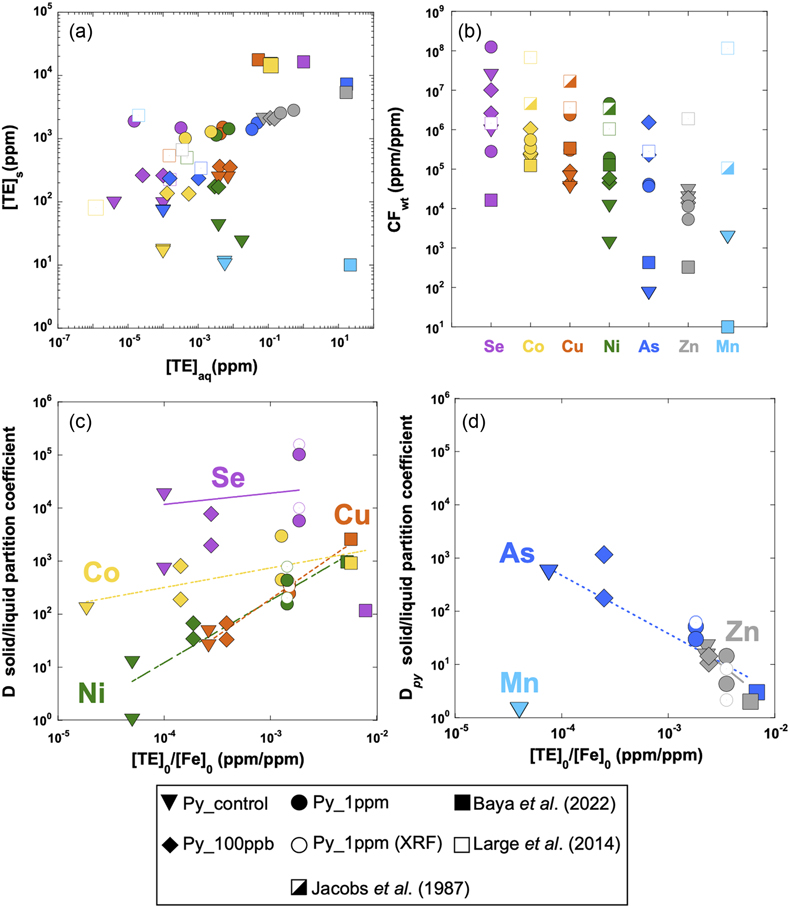
Figure 1 Final chemical data for the Py_control, Py_100ppb and Py_1 ppm experiments with varying [TE]0/[Fe]0 ratios. Two values corresponding to the fresh and aged pyrite batches are plotted for each ratio. Data are compared with those of Baya et al. (2022)
Baya, C., Le Pape, P., Baptiste, B., Menguy, N., Delbes, L., Morand, M., Rouelle, M., Aubry, E., Ona-Nguema, G., Noël, V., Juillot, F., Morin, G. (2022) A methodological framework to study the behavior and kinetic influence of V, Mn, Co, Ni, Cu, Zn, As, Se and Mo during pyrite formation via the polysulfide pathway at ambient temperature. Chemical Geology 613, 121139. https://doi.org/10.1016/j.chemgeo.2022.121139
and reported by Large et al. (2014)Large, R.R., Halpin, J.A., Danyushevsky, L.V., Maslennikov, V.V., Bull, S.W., Long, J.A., Gregory, D.D., Lounejeva, E., Lyons, T.W., Sack, P.J., McGoldrick, P.J., Calver, C.R. (2014) Trace element content of sedimentary pyrite as a new proxy for deep-time ocean–atmosphere evolution. Earth and Planetary Science Letters 389, 209–220. https://doi.org/10.1016/j.epsl.2013.12.020
. (a) Solid TE concentration ([TE]s in ppm wt.) as a function of TE aqueous concentration ([TE](aq) in mg L−1). (b) Concentration factor CF = [TE]s/[TE]aq, without the 10−4 factor of Large et al. (2014)Large, R.R., Halpin, J.A., Danyushevsky, L.V., Maslennikov, V.V., Bull, S.W., Long, J.A., Gregory, D.D., Lounejeva, E., Lyons, T.W., Sack, P.J., McGoldrick, P.J., Calver, C.R. (2014) Trace element content of sedimentary pyrite as a new proxy for deep-time ocean–atmosphere evolution. Earth and Planetary Science Letters 389, 209–220. https://doi.org/10.1016/j.epsl.2013.12.020
. (c) Solid-liquid distribution coefficient D as a function of the [TE]0/[Fe]0 ratio, for Se, Co, Ni and Cu, and (d) As, Zn and Mn. Note that the D value for Se from Baya et al. (2022)Baya, C., Le Pape, P., Baptiste, B., Menguy, N., Delbes, L., Morand, M., Rouelle, M., Aubry, E., Ona-Nguema, G., Noël, V., Juillot, F., Morin, G. (2022) A methodological framework to study the behavior and kinetic influence of V, Mn, Co, Ni, Cu, Zn, As, Se and Mo during pyrite formation via the polysulfide pathway at ambient temperature. Chemical Geology 613, 121139. https://doi.org/10.1016/j.chemgeo.2022.121139
, is underestimated because [Se](aq) was fixed to the detection limit value. Most Mn values are not reported because final [Mn]aq values were equal to the initial ones.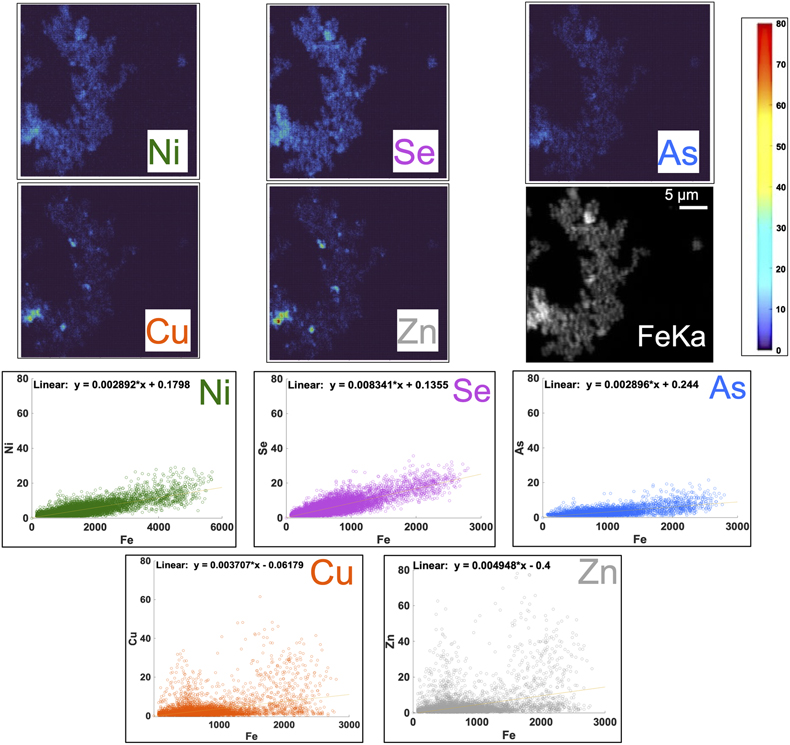
Figure 2 Nano-XRF elemental map and TE:Fe plots representing the intensity of the emission line at every pixel on a 33 × 29 μm area for Py_1ppm_1030hr sample. Linear regressions and the corresponding equations are displayed. Complementary data of the same sample are reported in Figure S-3 and Py_1ppm_141hr in Figure S-2.
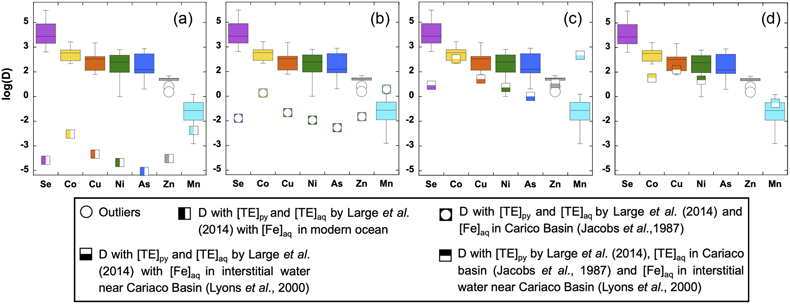
Figure 3 Box plots of experimental solid-solution distribution coefficient D (this study and Baya et al., 2022
Baya, C., Le Pape, P., Baptiste, B., Menguy, N., Delbes, L., Morand, M., Rouelle, M., Aubry, E., Ona-Nguema, G., Noël, V., Juillot, F., Morin, G. (2022) A methodological framework to study the behavior and kinetic influence of V, Mn, Co, Ni, Cu, Zn, As, Se and Mo during pyrite formation via the polysulfide pathway at ambient temperature. Chemical Geology 613, 121139. https://doi.org/10.1016/j.chemgeo.2022.121139
), compared to D values calculated from available natural settings data. Fences are the 25th and 75th percentiles, with the median in between. Bars represent the 10th and 90th percentiles.