



Pyrite Re-Os dating confirms synchronous magmatism and hydrothermalism in Troodos ophiolite
Affiliations | Corresponding Author | Cite as | Funding information
Published by the European Association of Geochemistry
under Creative Commons License CC BY 4.0
Keywords: sulfide deposit, Re-Os geochronology, pyrite, Troodos ophiolite, subduction initiation


- Share this article


-
Article views:410Cumulative count of HTML views and PDF downloads.
- Download Citation
- Rights & Permissions

top
Abstract
Figures
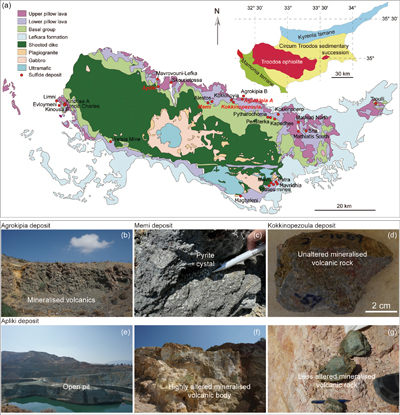 Figure 1 (a) Geological map of the Troodos ophiolite (modified after Geological Survey Department, Cyprus, 2016) showing distribution of sulfide deposits. The studied sulfide deposits are highlighted in bold red italic text. Field exposures of sulfide deposits including (b) mineralised volcanics in Agrokipia, (c) pyrite ores in Memi, (d) unaltered mineralised volcanic rock in Kokkinopezoula, (e) open pit and (f, g) alteration of volcanic rocks in Apliki. | 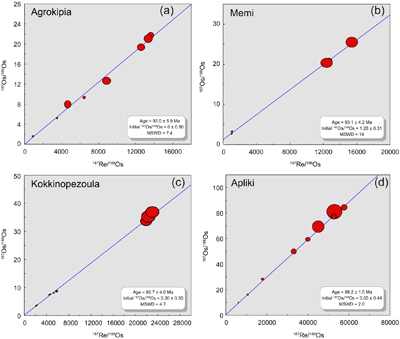 Figure 2 187Re/188Os versus 187Os/188Os isochron diagrams for pyrite from four sulfide deposits in the Troodos ophiolite. | 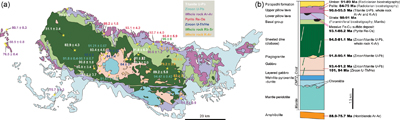 Figure 3 Compilation of age data reported for the Troodos ophiolite and their distribution in (a) geological map, and (b) schematic vertical profile. Data sources are available in Table S-2. |
| Figure 1 | Figure 2 | Figure 3 |
top
Introduction
The Troodos ophiolite in Cyprus is one of the best preserved ophiolites in the world and was established as the global standard for ophiolite definition at the 1972 Penrose Conference on Ophiolites. Clarifying the spatiotemporal formation framework of the Troodos ophiolite is crucial for a comprehensive understanding of other ophiolites worldwide and the formation and evolution of ancient oceanic lithosphere (Dilek and Furnes, 2009
Dilek, Y., Furnes, H. (2009) Structure and geochemistry of Tethyan ophiolites and their petrogenesis in subduction rollback systems. Lithos 113, 1–20. https://doi.org/10.1016/j.lithos.2009.04.022
). Prior to the 21st century, dating work on the Troodos ophiolite utilised mainly K-Ar (e.g., 75–85 Ma; Desmet et al., 1978Desmet, A., Lapierre, H., Rocci, G., Gagny, Cl., Parrot, J.-F., Delaloye, M. (1978) Constitution and significance of the Troodos sheeted complex. Nature 273, 527–530. https://doi.org/10.1038/273527a0
; Delaloye and Desmet, 1979Delaloye, M., Desmet, A. (1979) Nouvelles données radiométriques sur les pillow-lavas du Troodos (Chypre). “New radiometric data on the Troodos pillow lavas (Cyprus).” Comptes Rendus de l’Académie des Sciences (D) 288, 461–464.
; Delaloye et al., 1980Delaloye, M., Desmet, A., Desmons, J., Gagny, Cl., Rocci, G. (1980) Geochronological interpretation of the Troodos sheeted dike complex. Ofioliti 5, 27–34.
; Staudigel et al., 1986Staudigel, H., Gillis, K., Duncan, R. (1986) K/Ar and Rb/Sr ages of celadonites from the Troodos ophiolite, Cyprus. Geology 14, 72–75. https://doi.org/10.1130/0091-7613(1986)14<72:AASAOC>2.0.CO;2
), Rb-Sr (74–95 Ma; Staudigel et al., 1986Staudigel, H., Gillis, K., Duncan, R. (1986) K/Ar and Rb/Sr ages of celadonites from the Troodos ophiolite, Cyprus. Geology 14, 72–75. https://doi.org/10.1130/0091-7613(1986)14<72:AASAOC>2.0.CO;2
; Kawahata and Scott, 1990Kawahata, H., Scott, S.D. (1990) Strontium isotopes and water-rock interaction of the Agrokipia ‘B’ stockwork deposit in the Troodos ophiolite, Cyprus: a fossil subseafloor ore body. Geochemical Journal 24, 349–356. https://doi.org/10.2343/geochemj.24.349
), and biostratigraphy (75–98 Ma; Mantis, 1971Mantis, M. (1971) Paleontological evidence defining the age of the Troodos pillow lava series. Cypriakos Logos 3, 202–208.
; Desmet, 1977Desmet, A. (1977) Contribution à l'étude de la croûte océanique mésozoïque de Méditerranée orientale: les pillow-lavas du Troodos (Chypre). “Contribution to the study of the Mesozoic oceanic crust of the Eastern Mediterranean: the Troodos pillow lavas (Cyprus)”. Doctoral dissertation, Université de Nancy.
; Blome and Irwin, 1985Blome, C.D., Irwin, W.P. (1985) Equivalent radiolarian ages from ophiolitic terranes of Cyprus and Oman. Geology 13, 401–404. https://doi.org/10.1130/0091-7613(1985)13<401:ERAFOT>2.0.CO;2
) methods, generating large uncertainty. Subsequently, multiple conflicting models based on different ages have been proposed to explain the formation setting and tectonic evolution of the Troodos ophiolite (Moores et al., 1984Moores, E.M., Robinson, P.T., Malpas, J., Xenophonotos, C. (1984) Model for the origin of the Troodos massif, Cyprus, and other mideast ophiolites. Geology 12, 500–503. https://doi.org/10.1130/0091-7613(1984)12<500:MFTOOT>2.0.CO;2
; Pearce and Robinson, 2010Pearce, J.A., Robinson, P.T. (2010) The Troodos ophiolitic complex probably formed in a subduction initiation, slab edge setting. Gondwana Research 18, 60–81. https://doi.org/10.1016/j.gr.2009.12.003
; Robertson et al., 2024Robertson, A.H.F., Parlak, O., Taslı, K. (2024) Testing alternative tectonic models for the Permian-Pleistocene tectonic development of the Kyrenia Range, N Cyprus: Implications for E Mediterranean Tethyan palaeogeography. Gondwana Research 132, 343–379. https://doi.org/10.1016/j.gr.2024.05.003
).With technical development of Ar-Ar and U-Pb geochronology, it is now well established that plagiogranites in the Troodos ophiolite have consistent zircon/titanite U-Pb dates of 90.1–91.8 Ma (Mukasa and Ludden, 1987
Mukasa, S.B., Ludden, J.N. (1987) Uranium-lead isotopic ages of plagiogranites from the Troodos ophiolite, Cyprus, and their tectonic significance. Geology 15, 825–828. https://doi.org/10.1130/0091-7613(1987)15<825:UIAOPF>2.0.CO;2
; Konstantinou et al., 2007Konstantinou, A., Wirth, K., Vervoort, J. (2007) U-Pb isotopic dating of Troodos plagiogranite, Cyprus by LA-ICP-MS. Geological Society of America Annual Meeting, Denver, 28–31 October 2007, Session 143, Paper 16.
; Chen et al., 2020Chen, Y., Niu, Y., Shen, F., Gao, Y., Wang, X. (2020) New U-Pb zircon age and petrogenesis of the plagiogranite, Troodos ophiolite, Cyprus. Lithos 362–363, 105472. https://doi.org/10.1016/j.lithos.2020.105472
; Su et al., 2025Su, B.-X., Wang, J., Pan, Q.-Q., Xiao, Y., Cui, M.-M. (2025) Impact-induced ‘young’ zircon in old rocks from Troodos ophiolite, Cyprus. Journal of the Geological Society 182, jgs2024-192. https://doi.org/10.1144/jgs2024-192
), with an outlier of 83 Ma from zircon U-Th/He dating (Morag et al., 2016Morag, N., Haviv, I., Katzir, Y. (2016) From ocean depths to mountain tops: Uplift of the Troodos ophiolite (Cyprus) constrained by low-temperature thermochronology and geomorphic analysis. Tectonics 35, 622–637. https://doi.org/10.1002/2015TC004069
), and that gabbros have zircon/titanite U-Pb dates of 91.2–93.4 Ma (Su et al., 2025Su, B.-X., Wang, J., Pan, Q.-Q., Xiao, Y., Cui, M.-M. (2025) Impact-induced ‘young’ zircon in old rocks from Troodos ophiolite, Cyprus. Journal of the Geological Society 182, jgs2024-192. https://doi.org/10.1144/jgs2024-192
) with two zircon U-Th/He dates of 94 and 101 Ma (Morag et al., 2016Morag, N., Haviv, I., Katzir, Y. (2016) From ocean depths to mountain tops: Uplift of the Troodos ophiolite (Cyprus) constrained by low-temperature thermochronology and geomorphic analysis. Tectonics 35, 622–637. https://doi.org/10.1002/2015TC004069
). Large age variations are observed on diabases (zircon/titanite U-Pb 81.0–94.5 Ma; Su et al., 2025Su, B.-X., Wang, J., Pan, Q.-Q., Xiao, Y., Cui, M.-M. (2025) Impact-induced ‘young’ zircon in old rocks from Troodos ophiolite, Cyprus. Journal of the Geological Society 182, jgs2024-192. https://doi.org/10.1144/jgs2024-192
) and particularly pillow lavas (whole rock Ar-Ar 55.5 and 90.6 Ma; Osozawa et al., 2012Osozawa, S., Shinjo, R., Lo, C.-H., Jahn, B.-m., Hoang, N., Sasaki, M., Ishikawa, K., Kano, H., Hoshi, H., Xenophontos, C., Wakabayashi, J. (2012) Geochemistry and geochronology of the Troodos ophiolite: An SSZ ophiolite generated by subduction initiation and an extended episode of ridge subduction? Lithosphere 4, 497–510. https://doi.org/10.1130/L205.1
; titanite U-Pb 83 Ma; Su et al., 2025Su, B.-X., Wang, J., Pan, Q.-Q., Xiao, Y., Cui, M.-M. (2025) Impact-induced ‘young’ zircon in old rocks from Troodos ophiolite, Cyprus. Journal of the Geological Society 182, jgs2024-192. https://doi.org/10.1144/jgs2024-192
). As a consequence, the early magmatic activity, represented by the gabbros and plagiogranites at the base of the crustal sequence in the Troodos ophiolite, has a relatively consistent age, whereas the termination time of the magmatic activity has not yet been constrained. This data set indicates that the magmatism forming the crustal sequence of the Troodos ophiolite may have lasted tens of million years, which challenges the hypothesis of rapid formation (several Myr) of this subduction-initiated ophiolite as well as others worldwide (Whattam and Stern, 2011Whattam, S.A., Stern, R.J. (2011) The ‘subduction initiation rule’: a key for linking ophiolites, intra-oceanic forearcs, and subduction initiation. Contributions to Mineralogy and Petrology 162, 1031–1045. https://doi.org/10.1007/s00410-011-0638-z
). Precise dating of the pillow lavas that represent the final stages of magmatism is particularly important for constraining the time interval of ophiolite formation.The pillow lavas in the Troodos ophiolite feature boninitic or arc tholeiitic compositions and variable degrees of alteration, resulting in a lack of suitable mineral targets for dating. Notably, many sulfide deposits are hosted within pillow lava series (Constantinou and Govett, 1973
Constantinou, G., Govett, G.J.S. (1973) Geology, geochemistry, and genesis of Cyprus sulfide deposits. Economic Geology 68, 843–858. https://doi.org/10.2113/gsecongeo.68.6.843
) and represent fossil seafloor hydrothermal systems formed during ophiolite crustal construction (Adamides, 2010Adamides, N.G. (2010) Mafic-dominated volcanogenic sulphide deposits in the Troodos ophiolite, Cyprus Part 2 – A review of genetic models and guides for exploration. Applied Earth Science 119, 193–204. https://doi.org/10.1179/1743275811Y.0000000011
; Kawahata and Scott, 1990Kawahata, H., Scott, S.D. (1990) Strontium isotopes and water-rock interaction of the Agrokipia ‘B’ stockwork deposit in the Troodos ophiolite, Cyprus: a fossil subseafloor ore body. Geochemical Journal 24, 349–356. https://doi.org/10.2343/geochemj.24.349
). The sulfide minerals in these deposits are well preserved, free of alteration, which makes them good potential targets for Re-Os isochron dating. In this study, we separated pyrite in volcanic rocks and sulfide ores from four sulfide deposits and measured their Re and Os isotope compositions, which we use to determine their formation ages (see analytical methods in Supplementary Information). These age data, together with those in the literature, are used to further constrain the geochronological framework of the Troodos magmatism.top
Sulfide Deposits in the Troodos Ophiolite
The Troodos ophiolite preserves a nearly complete section of Cretaceous oceanic crust (ultramafics, gabbros, sheeted dikes, and pillow lavas) (Geological Survey Department, Cyprus, 2016
Geological Survey Department, Cyprus (2016) Geological map of Cyprus, 1:250,000.
). The sulfide deposits are an integral part of the volcanic section and are classic Cyprus-type volcanogenic massive sulfide (VMS) deposits (Constantinou and Govett, 1973Constantinou, G., Govett, G.J.S. (1973) Geology, geochemistry, and genesis of Cyprus sulfide deposits. Economic Geology 68, 843–858. https://doi.org/10.2113/gsecongeo.68.6.843
). They occur at various stratigraphic levels but are most common near the top of the Lower Pillow Lavas or at the Lower-Upper Pillow Lava contact (Adamides, 2010Adamides, N.G. (2010) Mafic-dominated volcanogenic sulphide deposits in the Troodos ophiolite, Cyprus Part 2 – A review of genetic models and guides for exploration. Applied Earth Science 119, 193–204. https://doi.org/10.1179/1743275811Y.0000000011
) (Fig. 1a). Approximately 20–30 significant deposits are known; most lie within a ∼40 km × 20 km belt on the northern slope. They are absent or very rare on the southern flank (Fig. 1a). Their host rocks are basaltic pillow lavas, sheet flows, breccias, and hyaloclastites of island arc tholeiite to boninitic affinity (Constantinou and Govett, 1973Constantinou, G., Govett, G.J.S. (1973) Geology, geochemistry, and genesis of Cyprus sulfide deposits. Economic Geology 68, 843–858. https://doi.org/10.2113/gsecongeo.68.6.843
; Adamides, 2010Adamides, N.G. (2010) Mafic-dominated volcanogenic sulphide deposits in the Troodos ophiolite, Cyprus Part 2 – A review of genetic models and guides for exploration. Applied Earth Science 119, 193–204. https://doi.org/10.1179/1743275811Y.0000000011
).Figure 1 (a) Geological map of the Troodos ophiolite (modified after Geological Survey Department, Cyprus, 2016
Geological Survey Department, Cyprus (2016) Geological map of Cyprus, 1:250,000.
) showing distribution of sulfide deposits. The studied sulfide deposits are highlighted in bold red italic text. Field exposures of sulfide deposits including (b) mineralised volcanics in Agrokipia, (c) pyrite ores in Memi, (d) unaltered mineralised volcanic rock in Kokkinopezoula, (e) open pit and (f, g) alteration of volcanic rocks in Apliki.Ore bodies are typically underlain by hydrothermally altered lavas/stockwork zones and overlain by the Ochre Group (Fe-rich sediment), Upper Pillow Lava and/or Umber (Mn-rich sediment) (Constantinou and Govett, 1973
Constantinou, G., Govett, G.J.S. (1973) Geology, geochemistry, and genesis of Cyprus sulfide deposits. Economic Geology 68, 843–858. https://doi.org/10.2113/gsecongeo.68.6.843
). Concentrically zoned alteration pipes record fluid pathways (Richards et al., 1989Richards, H.G., Cann, J.R., Jensenius, J. (1989) Mineralogical zonation and metasomatism of the alteration pipes of Cyprus sulfide deposits. Economic Geology 84, 91–115. https://doi.org/10.2113/gsecongeo.84.1.91
). From outer to inner zones, the facies transition from smectite-rich to chlorite-albite in the outer zones, to chlorite-illite/rectorite with intense leaching in the inner mineralised zones (Richards et al., 1989Richards, H.G., Cann, J.R., Jensenius, J. (1989) Mineralogical zonation and metasomatism of the alteration pipes of Cyprus sulfide deposits. Economic Geology 84, 91–115. https://doi.org/10.2113/gsecongeo.84.1.91
). At the root zone, epidosites in sheeted dikes represent the deep seated sites of metal leaching (Gillis and Robinson, 1990Gillis, K.M., Robinson, P.T. (1990) Patterns and processes of alteration in the lavas and dykes of the Troodos Ophiolite, Cyprus. Journal of Geophysical Research: Solid Earth 95, 21523–21548. https://doi.org/10.1029/JB095iB13p21523
). The dominant minerals of the ore bodies are pyrite and chalcopyrite, with minor sphalerite (Martin et al., 2018Martin, A.J., McDonald, I., MacLeod, C.J., Prichard, H.M., McFall, K. (2018) Extreme enrichment of selenium in the Apliki Cyprus-type VMS deposit, Troodos, Cyprus. Mineralogical Magazine 82, 697–724. https://doi.org/10.1180/mgm.2018.81
). They are thought to have formed synchronously with the ophiolite itself during the Late Cretaceous, but chronological evidence is lacking.Most sulfide deposits in Troodos ophiolite were exploited periodically between 1950–1980 and have been mined out to date. Four deposits including Agrokipia, Memi, Kokkinopezoula, and Apliki were chosen for Re-Os isochron dating in this study, and sulfide ores and sulfide-rich volcanic rocks were collected. The Agrokipia deposit is located within the Lower Pillow Lavas which in certain locations are overlain by Upper Pillow Lavas (Fig. 1b). The Memi deposit is characterised by chloritised lavas with a gossan cap, and many pyrite ores are available (Fig. 1c). The Kokkinopezoula deposit preserves unaltered mineralised volcanic rocks and ores (Fig. 1d). The Apliki deposit is controlled by a north-south fault zone, with highly to less altered mineralised volcanic rocks and rarity of ores left in the open pit (Fig. 1e-g). Despite variable alteration of the host rocks, pyrite separates are pristine, and show no evidence of post-depositional disturbance of their Re-Os isotope compositions.
top
Results
Pyrites from Agrokipia, Memi, and Kokkinopezoula deposits show comparable Re (<10 ng/g), common Os (<0.013 ng/g) and 187Os (<0.01 ng/g) concentrations, which are significantly lower than those from Apliki deposit (Re 40–480 ng/g; common Os 0.007–0.868 ng/g; 187Os 0.038–0.485 ng/g) (Table S-1). Their isotope ratios are highly variable but generally overlapped, with 187Re/188Os (868–23045 in the former three vs. 2682–57763 in Apliki) and 187Os/188Os (1.61–36.94 vs. 4.3–84.62) (Table S-1). These data yield ischron dates of 93.0 ± 5.9 Ma (2σ) for Agrokipia, 93.1 ± 4.2 Ma for Memi, 92.7 ± 4.0 Ma for Kokkinopezoula, and 88.2 ± 1.5 Ma for Apliki (Fig. 2).
Figure 2 187Re/188Os versus 187Os/188Os isochron diagrams for pyrite from four sulfide deposits in the Troodos ophiolite.
top
Discussion
Evaluation of data quality. Pioneering work established the Re-Os technique for pyrite, demonstrating that it can directly date sulfide mineralisation (Stein et al., 2000
Stein, H.J., Morgan, J.W., Scherstén, A. (2000) Re-Os Dating of Low-Level Highly Radiogenic (LLHR) Sulfides: The Harnäs Gold Deposit, Southwest Sweden, Records Continental-Scale Tectonic Events. Economic Geology 95, 1657–1671. https://doi.org/10.2113/gsecongeo.95.8.1657
). This technique has been applied successfully to various deposits, providing precise ages for ore formation that complement indirect methods such as U-Pb zircon dating of host rocks (Li et al., 2025Li, Y., Glorie, S., Selby, D. (2025) Re–Os geochronology for sulfides and organic-rich sediments. National Science Review 12, nwaf300. https://doi.org/10.1093/nsr/nwaf300
). The method assumes that (1) all samples are cogenetic and formed from a homogeneous fluid, (2) the Re-Os system remains closed after crystallisation (no gain/loss of Re or Os), and (3) sufficient spread exists in 187Re/188Os ratios for a statistically robust regression (Reisberg and Meisel, 2002Reisberg, L., Meisel, T. (2002) The Re-Os Isotopic System: A Review of Analytical Techniques. Geostandards Newsletter 26, 249–267. https://doi.org/10.1111/j.1751-908X.2002.tb00633.x
; Li et al., 2025Li, Y., Glorie, S., Selby, D. (2025) Re–Os geochronology for sulfides and organic-rich sediments. National Science Review 12, nwaf300. https://doi.org/10.1093/nsr/nwaf300
).In Troodos sulfide deposits, pyrite is the dominant sulfide mineral across all zones (massive ore, pyrite-quartz, and stockwork). The well preserved, low grade metamorphic character of the ophiolite, combined with syngenetic formation during axial hydrothermal activity and limited post-formation disturbance in many deposits (Constantinou and Govett, 1973
Constantinou, G., Govett, G.J.S. (1973) Geology, geochemistry, and genesis of Cyprus sulfide deposits. Economic Geology 68, 843–858. https://doi.org/10.2113/gsecongeo.68.6.843
; Richards et al., 1989Richards, H.G., Cann, J.R., Jensenius, J. (1989) Mineralogical zonation and metasomatism of the alteration pipes of Cyprus sulfide deposits. Economic Geology 84, 91–115. https://doi.org/10.2113/gsecongeo.84.1.91
), satisfies the key requirements for reliable Re-Os isochron dating: cogenetic samples, closed system behaviour after crystallisation, and sufficient spread in parent/daughter ratios. Because pyrite in these deposits typically contains measurable common Os (0.0015–0.0864 ng/g, with one value of 0.8678 ng/g; Table S-1), multiple co-genetic pyrite separates from individual deposits can be analysed to construct a 187Re/188Os vs. 187Os/188Os isochron. Rigorous blank control (Re 3.0 ± 0.7 pg/g; Os 0.51 ± 0.13 pg/g; 187Os/188Os 2.719 ± 0.022; Supplementary Information) further enhances precision, achieving uncertainties of a few percent. As a consequence, the Re-Os dates from pyrite represent formation ages of these sulfide deposits. The data reliability is supported by consistent ages of 95 ± 8 Ma (whole rock Rb-Sr; Kawahata and Scott, 1990Kawahata, H., Scott, S.D. (1990) Strontium isotopes and water-rock interaction of the Agrokipia ‘B’ stockwork deposit in the Troodos ophiolite, Cyprus: a fossil subseafloor ore body. Geochemical Journal 24, 349–356. https://doi.org/10.2343/geochemj.24.349
) and 93.0 ± 5.9 Ma (pyrite Re-Os; this study) for the Agrokipia deposit, and by slightly younger radiolarian biostratigraphy ages of 89–91 Ma of Umberiferous strata overlying the ophiolite (Blome and Irwin, 1985Blome, C.D., Irwin, W.P. (1985) Equivalent radiolarian ages from ophiolitic terranes of Cyprus and Oman. Geology 13, 401–404. https://doi.org/10.1130/0091-7613(1985)13<401:ERAFOT>2.0.CO;2
). The significant variability of initial 187Os/188Os ratios between the deposits (Fig. 2) is likely related to the sources of the hydrothermal fluids from which the pyrites formed, which has been revealed from studies of host rocks and deposits (Kawahata and Scott, 1990Kawahata, H., Scott, S.D. (1990) Strontium isotopes and water-rock interaction of the Agrokipia ‘B’ stockwork deposit in the Troodos ophiolite, Cyprus: a fossil subseafloor ore body. Geochemical Journal 24, 349–356. https://doi.org/10.2343/geochemj.24.349
; Adamides, 2010Adamides, N.G. (2010) Mafic-dominated volcanogenic sulphide deposits in the Troodos ophiolite, Cyprus Part 2 – A review of genetic models and guides for exploration. Applied Earth Science 119, 193–204. https://doi.org/10.1179/1743275811Y.0000000011
; Fonseca et al., 2017Fonseca, R.O.C., Kirchenbaur, M., Ballhaus, C., Münker, C., Zirner, A., Gerdes, A., Heuser, A., Botcharnikov, R., Lenting, C. (2017) Fingerprinting fluid sources in Troodos ophiolite complex orbicular glasses using high spatial resolution isotope and trace element geochemistry. Geochimica et Cosmochimica Acta 200, 145–166. https://doi.org/10.1016/j.gca.2016.12.012
).Reconstruction of the geochronological framework for the Troodos ophiolite. The complete Troodos ophiolite sequence is believed to preserve the entire hydrothermal system from root zone to seafloor discharge (Gillis and Robinson, 1990
Gillis, K.M., Robinson, P.T. (1990) Patterns and processes of alteration in the lavas and dykes of the Troodos Ophiolite, Cyprus. Journal of Geophysical Research: Solid Earth 95, 21523–21548. https://doi.org/10.1029/JB095iB13p21523
; Fonseca et al., 2017Fonseca, R.O.C., Kirchenbaur, M., Ballhaus, C., Münker, C., Zirner, A., Gerdes, A., Heuser, A., Botcharnikov, R., Lenting, C. (2017) Fingerprinting fluid sources in Troodos ophiolite complex orbicular glasses using high spatial resolution isotope and trace element geochemistry. Geochimica et Cosmochimica Acta 200, 145–166. https://doi.org/10.1016/j.gca.2016.12.012
). The sulfide deposits record the full history of axial high temperature mineralisation, sub-seafloor stockwork formation, preservation during crustal construction, and subsequent off axis low temperature alteration, providing a uniquely accessible “fossil” oceanic hydrothermal system (Richards et al., 1989Richards, H.G., Cann, J.R., Jensenius, J. (1989) Mineralogical zonation and metasomatism of the alteration pipes of Cyprus sulfide deposits. Economic Geology 84, 91–115. https://doi.org/10.2113/gsecongeo.84.1.91
; Martin et al., 2018Martin, A.J., McDonald, I., MacLeod, C.J., Prichard, H.M., McFall, K. (2018) Extreme enrichment of selenium in the Apliki Cyprus-type VMS deposit, Troodos, Cyprus. Mineralogical Magazine 82, 697–724. https://doi.org/10.1180/mgm.2018.81
). Consequently, the Re-Os isochron dates of these deposits can be integrated with recent high precision age data (Table S-2) to reconstruct the geochronological framework for the formation of the Troodos ophiolite.1. Crustal accretion and high temperature mineralisation (∼93–90 Ma). Zircon and titanite U-Pb dates from the plutonic section define the main construction phase of the Troodos ophiolite. Gabbro crystallisation is recorded at 93.4 ± 4.6 Ma, 91.6 ± 0.3 Ma, and 91.2 ± 0.7 Ma (Su et al., 2025
Su, B.-X., Wang, J., Pan, Q.-Q., Xiao, Y., Cui, M.-M. (2025) Impact-induced ‘young’ zircon in old rocks from Troodos ophiolite, Cyprus. Journal of the Geological Society 182, jgs2024-192. https://doi.org/10.1144/jgs2024-192
), while plagiogranites yield a tight cluster of 91.8 ± 0.4 Ma to 90.1 ± 0.7 Ma (Chen et al., 2020Chen, Y., Niu, Y., Shen, F., Gao, Y., Wang, X. (2020) New U-Pb zircon age and petrogenesis of the plagiogranite, Troodos ophiolite, Cyprus. Lithos 362–363, 105472. https://doi.org/10.1016/j.lithos.2020.105472
; Mukasa and Ludden, 1987Mukasa, S.B., Ludden, J.N. (1987) Uranium-lead isotopic ages of plagiogranites from the Troodos ophiolite, Cyprus, and their tectonic significance. Geology 15, 825–828. https://doi.org/10.1130/0091-7613(1987)15<825:UIAOPF>2.0.CO;2
; Konstantinou et al., 2007Konstantinou, A., Wirth, K., Vervoort, J. (2007) U-Pb isotopic dating of Troodos plagiogranite, Cyprus by LA-ICP-MS. Geological Society of America Annual Meeting, Denver, 28–31 October 2007, Session 143, Paper 16.
; Su et al., 2025Su, B.-X., Wang, J., Pan, Q.-Q., Xiao, Y., Cui, M.-M. (2025) Impact-induced ‘young’ zircon in old rocks from Troodos ophiolite, Cyprus. Journal of the Geological Society 182, jgs2024-192. https://doi.org/10.1144/jgs2024-192
). Four diabase samples in the sheeted dike complex give zircon/titanite U-Pb dates of 94.5 ± 0.4 Ma to 89.2 ± 5.8 Ma (Su et al., 2025Su, B.-X., Wang, J., Pan, Q.-Q., Xiao, Y., Cui, M.-M. (2025) Impact-induced ‘young’ zircon in old rocks from Troodos ophiolite, Cyprus. Journal of the Geological Society 182, jgs2024-192. https://doi.org/10.1144/jgs2024-192
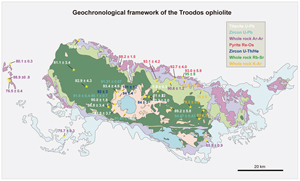
), with the older end overlapping the ages of the gabbro-plagiogranite suite. These ages are spatially distributed across the central and southern Troodos Massif (Fig. 3a), confirming synchronous plutonism and dike injection.Figure 3 Compilation of age data reported for the Troodos ophiolite and their distribution in (a) geological map, and (b) schematic vertical profile. Data sources are available in Table S-2.
The Re-Os isochron dates on pyrite from the three sulfide deposits (Fig. 2) overlap within uncertainty with the plutonic U-Pb dates and with a Rb-Sr whole rock date of 95 ± 8 Ma (Kawahata and Scott, 1990
Kawahata, H., Scott, S.D. (1990) Strontium isotopes and water-rock interaction of the Agrokipia ‘B’ stockwork deposit in the Troodos ophiolite, Cyprus: a fossil subseafloor ore body. Geochemical Journal 24, 349–356. https://doi.org/10.2343/geochemj.24.349
) for host rock at Agrokipia. They are stratigraphically consistent with foraminiferal biostratigraphy (98–91 Ma) in strata between Upper and Lower Pillow Lavas (Mantis, 1971Mantis, M. (1971) Paleontological evidence defining the age of the Troodos pillow lava series. Cypriakos Logos 3, 202–208.
) and radiolarian biostratigraphy (91–89 Ma) in umberiferous sediments of the Perapedhi Formation (Parapedhi unit) (Blome and Irwin, 1985Blome, C.D., Irwin, W.P. (1985) Equivalent radiolarian ages from ophiolitic terranes of Cyprus and Oman. Geology 13, 401–404. https://doi.org/10.1130/0091-7613(1985)13<401:ERAFOT>2.0.CO;2
). Whole rock Ar-Ar dating of arc tholeiite (90.6 ± 1.2 Ma; Osozawa et al., 2012Osozawa, S., Shinjo, R., Lo, C.-H., Jahn, B.-m., Hoang, N., Sasaki, M., Ishikawa, K., Kano, H., Hoshi, H., Xenophontos, C., Wakabayashi, J. (2012) Geochemistry and geochronology of the Troodos ophiolite: An SSZ ophiolite generated by subduction initiation and an extended episode of ridge subduction? Lithosphere 4, 497–510. https://doi.org/10.1130/L205.1
) further brackets volcanism. The stratigraphic column (Fig. 3b) places sulfide mineralisation precisely within the pillow lava sequence, contemporaneous with axial hydrothermal circulation.2. Post-accretion low temperature overprint and cooling (∼88–74 Ma). Rb-Sr dates on celadonite record off axis alteration from 86.1 ± 0.4 Ma (celadonite-zeolite vein; Staudigel et al., 1986
Staudigel, H., Gillis, K., Duncan, R. (1986) K/Ar and Rb/Sr ages of celadonites from the Troodos ophiolite, Cyprus. Geology 14, 72–75. https://doi.org/10.1130/0091-7613(1986)14<72:AASAOC>2.0.CO;2
) to 76 ± 4 and 74 ± 5 Ma (whole rock; Laureijs et al., 2021Laureijs, C.T., Coogan, L.A., Spence, J. (2021) Regionally variable timing and duration of celadonite formation in the Troodos lavas (Cyprus) from Rb-Sr age distributions. Chemical Geology 560, 119995. https://doi.org/10.1016/j.chemgeo.2020.119995
). Hornblende Ar-Ar dates from amphibolite soles (88.9 ± 0.8 to 75.7 ± 0.3 Ma; Chan et al., 2007Chan, G.H.-N., Malpas, J., Xenophontos, C., Lo, C.-H. (2007) Timing of subduction zone metamorphism during the formation and emplacement of Troodos and Baer-Bassit ophiolites: insights from 40Ar-39Ar geochronology. Geological Magazine 144, 797–810. https://doi.org/10.1017/S0016756807003792
) reflect cooling or obduction related metamorphism. Whole rock K-Ar dates on pillow lavas, sheeted dikes, and andesites (84.7–75 Ma; Desmet et al., 1978Desmet, A., Lapierre, H., Rocci, G., Gagny, Cl., Parrot, J.-F., Delaloye, M. (1978) Constitution and significance of the Troodos sheeted complex. Nature 273, 527–530. https://doi.org/10.1038/273527a0
; Delaloye and Desmet, 1979Delaloye, M., Desmet, A. (1979) Nouvelles données radiométriques sur les pillow-lavas du Troodos (Chypre). “New radiometric data on the Troodos pillow lavas (Cyprus).” Comptes Rendus de l’Académie des Sciences (D) 288, 461–464.
; Delaloye et al., 1980Delaloye, M., Desmet, A., Desmons, J., Gagny, Cl., Rocci, G. (1980) Geochronological interpretation of the Troodos sheeted dike complex. Ofioliti 5, 27–34.
; Staudigel et al., 1986Staudigel, H., Gillis, K., Duncan, R. (1986) K/Ar and Rb/Sr ages of celadonites from the Troodos ophiolite, Cyprus. Geology 14, 72–75. https://doi.org/10.1130/0091-7613(1986)14<72:AASAOC>2.0.CO;2
) are interpreted as Ar loss or partial resetting during alteration. U-Th/He zircon dates (92–83 Ma; Morag et al., 2016Morag, N., Haviv, I., Katzir, Y. (2016) From ocean depths to mountain tops: Uplift of the Troodos ophiolite (Cyprus) constrained by low-temperature thermochronology and geomorphic analysis. Tectonics 35, 622–637. https://doi.org/10.1002/2015TC004069
) track low temperature cooling shortly after formation.3. Later magmatic events. Five diabase samples yield 87.8 ± 3.7 Ma to 81.1 ± 3.4 Ma (titanite U-Pb; Su et al., 2025
Su, B.-X., Wang, J., Pan, Q.-Q., Xiao, Y., Cui, M.-M. (2025) Impact-induced ‘young’ zircon in old rocks from Troodos ophiolite, Cyprus. Journal of the Geological Society 182, jgs2024-192. https://doi.org/10.1144/jgs2024-192
), suggesting long term magmatism since 94.5 Ma to form sheeted dikes. A depleted boninite sample yields a whole rock Ar-Ar date of 55.5 ± 0.9 Ma (Osozawa et al., 2012Osozawa, S., Shinjo, R., Lo, C.-H., Jahn, B.-m., Hoang, N., Sasaki, M., Ishikawa, K., Kano, H., Hoshi, H., Xenophontos, C., Wakabayashi, J. (2012) Geochemistry and geochronology of the Troodos ophiolite: An SSZ ophiolite generated by subduction initiation and an extended episode of ridge subduction? Lithosphere 4, 497–510. https://doi.org/10.1130/L205.1
), indicating minor post-ophiolite magmatism. Radiolarian ages in pelites interlayered with Upper Pillow Lavas (84–75 Ma; Desmet, 1977Desmet, A. (1977) Contribution à l'étude de la croûte océanique mésozoïque de Méditerranée orientale: les pillow-lavas du Troodos (Chypre). “Contribution to the study of the Mesozoic oceanic crust of the Eastern Mediterranean: the Troodos pillow lavas (Cyprus)”. Doctoral dissertation, Université de Nancy.
) suggest continued or renewed sedimentary/volcanic activity. The younger Re-Os date (88.2 ± 1.5 Ma) and prominently higher Re and Os concentrations in pyrite from the Apliki deposit relative to the other three deposits (Table S-1) likely reflect compositional changes of magmas with time.4. Spatial and stratigraphic coherence. Figure 3a shows the ∼93–90 Ma cluster is widespread across the ophiolite, with younger magmatic ages in western part. The younger alteration ages are more peripheral or associated with fault zones. The idealised crustal column (Fig. 3b) integrates all data, demonstrating that high temperature sulfide mineralisation, volcanism, and plutonism were essentially synchronous during fast-to-intermediate spreading (Gillis and Robinson, 1990
Gillis, K.M., Robinson, P.T. (1990) Patterns and processes of alteration in the lavas and dykes of the Troodos Ophiolite, Cyprus. Journal of Geophysical Research: Solid Earth 95, 21523–21548. https://doi.org/10.1029/JB095iB13p21523
).top
Conclusion and Implications
This study reports the first Re-Os isochron dates for pyrite from Cyprus-type VMS deposits in the Troodos ophiolite, yielding formation ages of ∼93 Ma for Agrokipia, Memi, and Kokkinopezoula deposits, and a younger ∼88 Ma for Apliki, although they overlap within uncertainty. Integrated with U-Pb, Ar-Ar, and Rb-Sr geochronological data, these ages allow us to reconstruct a comprehensive temporal framework for the formation and evolution of this classic ophiolite. The close temporal coincidence of plutonism, volcanism, and seafloor hydrothermal activity at ∼93–90 Ma demonstrates that the main crustal construction phase of the Troodos ophiolite occurred during a short lived (∼3 Myr), rapid spreading event.
Following the main phase of crustal accretion, the ophiolite experienced a prolonged thermal evolution lasting until ∼74 Ma. Ages from amphibolite soles, celadonite, and low temperature thermochronology record progressive cooling and the onset of obduction related metamorphism. The ∼15 Myr interval between initial crustal accretion and final cooling/obduction implies that the Troodos lithosphere remained in a regime with persistent hydrothermal circulation long after magmatism had ceased. This extended thermal history provides a valuable template for understanding the complete “life cycle” of young oceanic lithosphere in supra-subduction zone environments.
In addition, the Re-Os pyrite isochron dates highlight the utility of VMS deposits as precise chronometers for fossil seafloor hydrothermal systems. The ∼93 Ma ages confirm that sulfide mineralisation was synchronous with axial volcanism and high temperature hydrothermal circulation, while the slightly younger ∼88 Ma age at Apliki is consistent with evidence for later magmatism in the western part of the ophiolite. These findings demonstrate the potential of Re-Os geochronology on pyrite to resolve short duration magmatic-hydrothermal events in ancient oceanic crust.
top
Acknowledgements
We thank editor Romain Tartèse and reviewer Laurie Reisberg for their constructive comments, which significantly improved the quality of the paper. This study is funded by National Natural Science Foundation of China (42350001) and special fund of Deep Earth Probe and Mineral Resources Exploration-National Science and Technology Major Project of China (2025ZD1006104).
Editor: Romain Tartèse
top
References
Adamides, N.G. (2010) Mafic-dominated volcanogenic sulphide deposits in the Troodos ophiolite, Cyprus Part 2 – A review of genetic models and guides for exploration. Applied Earth Science 119, 193–204. https://doi.org/10.1179/1743275811Y.0000000011
 Show in context
 They occur at various stratigraphic levels but are most common near the top of the Lower Pillow Lavas or at the Lower-Upper Pillow Lava contact (Adamides, 2010) (Fig. 1a).
View in article
They are absent or very rare on the southern flank (Fig. 1a). Their host rocks are basaltic pillow lavas, sheet flows, breccias, and hyaloclastites of island arc tholeiite to boninitic affinity (Constantinou and Govett, 1973; Adamides, 2010).
View in article
Notably, many sulfide deposits are hosted within pillow lava series (Constantinou and Govett, 1973) and represent fossil seafloor hydrothermal systems formed during ophiolite crustal construction (Adamides, 2010; Kawahata and Scott, 1990).
View in article
The significant variability of initial 187Os/188Os ratios between the deposits (Fig. 2) is likely related to the sources of the hydrothermal fluids from which the pyrites formed, which has been revealed from studies of host rocks and deposits (Kawahata and Scott, 1990; Adamides, 2010; Fonseca et al., 2017).
View in article
Blome, C.D., Irwin, W.P. (1985) Equivalent radiolarian ages from ophiolitic terranes of Cyprus and Oman. Geology 13, 401–404. https://doi.org/10.1130/0091-7613(1985)13<401:ERAFOT>2.0.CO;2
Show in context Prior to the 21st century, dating work on the Troodos ophiolite utilised mainly K-Ar (e.g., 75–85 Ma; Desmet et al., 1978; Delaloye and Desmet, 1979; Delaloye et al., 1980; Staudigel et al., 1986), Rb-Sr (74–95 Ma; Staudigel et al., 1986; Kawahata and Scott, 1990), and biostratigraphy (75–98 Ma; Mantis, 1971; Desmet, 1977; Blome and Irwin, 1985) methods, generating large uncertainty.
View in article
The data reliability is supported by consistent ages of 95 ± 8 Ma (whole rock Rb-Sr; Kawahata and Scott, 1990) and 93.0 ± 5.9 Ma (pyrite Re-Os; this study) for the Agrokipia deposit, and by slightly younger radiolarian biostratigraphy ages of 89–91 Ma of Umberiferous strata overlying the ophiolite (Blome and Irwin, 1985).
View in article
They are stratigraphically consistent with foraminiferal biostratigraphy (98–91 Ma) in strata between Upper and Lower Pillow Lavas (Mantis, 1971) and radiolarian biostratigraphy (91–89 Ma) in umberiferous sediments of the Perapedhi Formation (Parapedhi unit) (Blome and Irwin, 1985).
View in article
Chan, G.H.-N., Malpas, J., Xenophontos, C., Lo, C.-H. (2007) Timing of subduction zone metamorphism during the formation and emplacement of Troodos and Baer-Bassit ophiolites: insights from 40Ar-39Ar geochronology. Geological Magazine 144, 797–810. https://doi.org/10.1017/S0016756807003792
Show in context Hornblende Ar-Ar dates from amphibolite soles (88.9 ± 0.8 to 75.7 ± 0.3 Ma; Chan et al., 2007) reflect cooling or obduction related metamorphism.
View in article
Chen, Y., Niu, Y., Shen, F., Gao, Y., Wang, X. (2020) New U-Pb zircon age and petrogenesis of the plagiogranite, Troodos ophiolite, Cyprus. Lithos 362–363, 105472. https://doi.org/10.1016/j.lithos.2020.105472
Show in context With technical development of Ar-Ar and U-Pb geochronology, it is now well established that plagiogranites in the Troodos ophiolite have consistent zircon/titanite U-Pb dates of 90.1–91.8 Ma (Mukasa and Ludden, 1987; Konstantinou et al., 2007; Chen et al., 2020; Su et al., 2025), with an outlier of 83 Ma from zircon U-Th/He dating (Morag et al., 2016), and that gabbros have zircon/titanite U-Pb dates of 91.2–93.4 Ma (Su et al., 2025) with two zircon U-Th/He dates of 94 and 101 Ma (Morag et al., 2016).
View in article
Zircon and titanite U-Pb dates from the plutonic section define the main construction phase of the Troodos ophiolite. Gabbro crystallisation is recorded at 93.4 ± 4.6 Ma, 91.6 ± 0.3 Ma, and 91.2 ± 0.7 Ma (Su et al., 2025), while plagiogranites yield a tight cluster of 91.8 ± 0.4 Ma to 90.1 ± 0.7 Ma (Chen et al., 2020; Mukasa and Ludden, 1987; Konstantinou et al., 2007; Su et al., 2025).
View in article
Constantinou, G., Govett, G.J.S. (1973) Geology, geochemistry, and genesis of Cyprus sulfide deposits. Economic Geology 68, 843–858. https://doi.org/10.2113/gsecongeo.68.6.843
Show in context The sulfide deposits are an integral part of the volcanic section and are classic Cyprus-type volcanogenic massive sulfide (VMS) deposits (Constantinou and Govett, 1973).
View in article
Ore bodies are typically underlain by hydrothermally altered lavas/stockwork zones and overlain by the Ochre Group (Fe-rich sediment), Upper Pillow Lava and/or Umber (Mn-rich sediment) (Constantinou and Govett, 1973).
View in article
They are absent or very rare on the southern flank (Fig. 1a). Their host rocks are basaltic pillow lavas, sheet flows, breccias, and hyaloclastites of island arc tholeiite to boninitic affinity (Constantinou and Govett, 1973; Adamides, 2010).
View in article
Notably, many sulfide deposits are hosted within pillow lava series (Constantinou and Govett, 1973) and represent fossil seafloor hydrothermal systems formed during ophiolite crustal construction (Adamides, 2010; Kawahata and Scott, 1990).
View in article
The well preserved, low grade metamorphic character of the ophiolite, combined with syngenetic formation during axial hydrothermal activity and limited post-formation disturbance in many deposits (Constantinou and Govett, 1973; Richards et al., 1989), satisfies the key requirements for reliable Re-Os isochron dating: cogenetic samples, closed system behaviour after crystallisation, and sufficient spread in parent/daughter ratios.
View in article
Delaloye, M., Desmet, A. (1979) Nouvelles données radiométriques sur les pillow-lavas du Troodos (Chypre). “New radiometric data on the Troodos pillow lavas (Cyprus).” Comptes Rendus de l’Académie des Sciences (D) 288, 461–464.
Show in context Prior to the 21st century, dating work on the Troodos ophiolite utilised mainly K-Ar (e.g., 75–85 Ma; Desmet et al., 1978; Delaloye and Desmet, 1979; Delaloye et al., 1980; Staudigel et al., 1986), Rb-Sr (74–95 Ma; Staudigel et al., 1986; Kawahata and Scott, 1990), and biostratigraphy (75–98 Ma; Mantis, 1971; Desmet, 1977; Blome and Irwin, 1985) methods, generating large uncertainty.
View in article
Whole rock K-Ar dates on pillow lavas, sheeted dikes, and andesites (84.7–75 Ma; Desmet et al., 1978; Delaloye and Desmet, 1979; Delaloye et al., 1980; Staudigel et al., 1986) are interpreted as Ar loss or partial resetting during alteration.
View in article
Delaloye, M., Desmet, A., Desmons, J., Gagny, Cl., Rocci, G. (1980) Geochronological interpretation of the Troodos sheeted dike complex. Ofioliti 5, 27–34.
Show in context Prior to the 21st century, dating work on the Troodos ophiolite utilised mainly K-Ar (e.g., 75–85 Ma; Desmet et al., 1978; Delaloye and Desmet, 1979; Delaloye et al., 1980; Staudigel et al., 1986), Rb-Sr (74–95 Ma; Staudigel et al., 1986; Kawahata and Scott, 1990), and biostratigraphy (75–98 Ma; Mantis, 1971; Desmet, 1977; Blome and Irwin, 1985) methods, generating large uncertainty.
View in article
Whole rock K-Ar dates on pillow lavas, sheeted dikes, and andesites (84.7–75 Ma; Desmet et al., 1978; Delaloye and Desmet, 1979; Delaloye et al., 1980; Staudigel et al., 1986) are interpreted as Ar loss or partial resetting during alteration.
View in article
Desmet, A. (1977) Contribution à l'étude de la croûte océanique mésozoïque de Méditerranée orientale: les pillow-lavas du Troodos (Chypre). “Contribution to the study of the Mesozoic oceanic crust of the Eastern Mediterranean: the Troodos pillow lavas (Cyprus)”. Doctoral dissertation, Université de Nancy.
Show in context Prior to the 21st century, dating work on the Troodos ophiolite utilised mainly K-Ar (e.g., 75–85 Ma; Desmet et al., 1978; Delaloye and Desmet, 1979; Delaloye et al., 1980; Staudigel et al., 1986), Rb-Sr (74–95 Ma; Staudigel et al., 1986; Kawahata and Scott, 1990), and biostratigraphy (75–98 Ma; Mantis, 1971; Desmet, 1977; Blome and Irwin, 1985) methods, generating large uncertainty.
View in article
Radiolarian ages in pelites interlayered with Upper Pillow Lavas (84–75 Ma; Desmet, 1977) suggest continued or renewed sedimentary/volcanic activity.
View in article
Desmet, A., Lapierre, H., Rocci, G., Gagny, Cl., Parrot, J.-F., Delaloye, M. (1978) Constitution and significance of the Troodos sheeted complex. Nature 273, 527–530. https://doi.org/10.1038/273527a0
Show in context Prior to the 21st century, dating work on the Troodos ophiolite utilised mainly K-Ar (e.g., 75–85 Ma; Desmet et al., 1978; Delaloye and Desmet, 1979; Delaloye et al., 1980; Staudigel et al., 1986), Rb-Sr (74–95 Ma; Staudigel et al., 1986; Kawahata and Scott, 1990), and biostratigraphy (75–98 Ma; Mantis, 1971; Desmet, 1977; Blome and Irwin, 1985) methods, generating large uncertainty.
View in article
Whole rock K-Ar dates on pillow lavas, sheeted dikes, and andesites (84.7–75 Ma; Desmet et al., 1978; Delaloye and Desmet, 1979; Delaloye et al., 1980; Staudigel et al., 1986) are interpreted as Ar loss or partial resetting during alteration.
View in article
Dilek, Y., Furnes, H. (2009) Structure and geochemistry of Tethyan ophiolites and their petrogenesis in subduction rollback systems. Lithos 113, 1–20. https://doi.org/10.1016/j.lithos.2009.04.022
Show in context Clarifying the spatiotemporal formation framework of the Troodos ophiolite is crucial for a comprehensive understanding of other ophiolites worldwide and the formation and evolution of ancient oceanic lithosphere (Dilek and Furnes, 2009).
View in article
Fonseca, R.O.C., Kirchenbaur, M., Ballhaus, C., Münker, C., Zirner, A., Gerdes, A., Heuser, A., Botcharnikov, R., Lenting, C. (2017) Fingerprinting fluid sources in Troodos ophiolite complex orbicular glasses using high spatial resolution isotope and trace element geochemistry. Geochimica et Cosmochimica Acta 200, 145–166. https://doi.org/10.1016/j.gca.2016.12.012
Show in context The significant variability of initial 187Os/188Os ratios between the deposits (Fig. 2) is likely related to the sources of the hydrothermal fluids from which the pyrites formed, which has been revealed from studies of host rocks and deposits (Kawahata and Scott, 1990; Adamides, 2010; Fonseca et al., 2017).
View in article
The complete Troodos ophiolite sequence is believed to preserve the entire hydrothermal system from root zone to seafloor discharge (Gillis and Robinson, 1990; Fonseca et al., 2017).
View in article
Geological Survey Department, Cyprus (2016) Geological map of Cyprus, 1:250,000.
Show in context The Troodos ophiolite preserves a nearly complete section of Cretaceous oceanic crust (ultramafics, gabbros, sheeted dikes, and pillow lavas) (Geological Survey Department, Cyprus, 2016).
View in article
(a) Geological map of the Troodos ophiolite (modified after Geological Survey Department, Cyprus, 2016) showing distribution of sulfide deposits.
View in article
Gillis, K.M., Robinson, P.T. (1990) Patterns and processes of alteration in the lavas and dykes of the Troodos Ophiolite, Cyprus. Journal of Geophysical Research: Solid Earth 95, 21523–21548. https://doi.org/10.1029/JB095iB13p21523
Show in context At the root zone, epidosites in sheeted dikes represent the deep seated sites of metal leaching (Gillis and Robinson, 1990).
View in article
The complete Troodos ophiolite sequence is believed to preserve the entire hydrothermal system from root zone to seafloor discharge (Gillis and Robinson, 1990; Fonseca et al., 2017).
View in article
The idealised crustal column (Fig. 3b) integrates all data, demonstrating that high temperature sulfide mineralisation, volcanism, and plutonism were essentially synchronous during fast-to-intermediate spreading (Gillis and Robinson, 1990).
View in article
Kawahata, H., Scott, S.D. (1990) Strontium isotopes and water-rock interaction of the Agrokipia ‘B’ stockwork deposit in the Troodos ophiolite, Cyprus: a fossil subseafloor ore body. Geochemical Journal 24, 349–356. https://doi.org/10.2343/geochemj.24.349
Show in context Prior to the 21st century, dating work on the Troodos ophiolite utilised mainly K-Ar (e.g., 75–85 Ma; Desmet et al., 1978; Delaloye and Desmet, 1979; Delaloye et al., 1980; Staudigel et al., 1986), Rb-Sr (74–95 Ma; Staudigel et al., 1986; Kawahata and Scott, 1990), and biostratigraphy (75–98 Ma; Mantis, 1971; Desmet, 1977; Blome and Irwin, 1985) methods, generating large uncertainty.
View in article
Notably, many sulfide deposits are hosted within pillow lava series (Constantinou and Govett, 1973) and represent fossil seafloor hydrothermal systems formed during ophiolite crustal construction (Adamides, 2010; Kawahata and Scott, 1990).
View in article
The data reliability is supported by consistent ages of 95 ± 8 Ma (whole rock Rb-Sr; Kawahata and Scott, 1990) and 93.0 ± 5.9 Ma (pyrite Re-Os; this study) for the Agrokipia deposit, and by slightly younger radiolarian biostratigraphy ages of 89–91 Ma of Umberiferous strata overlying the ophiolite (Blome and Irwin, 1985).
View in article
The significant variability of initial 187Os/188Os ratios between the deposits (Fig. 2) is likely related to the sources of the hydrothermal fluids from which the pyrites formed, which has been revealed from studies of host rocks and deposits (Kawahata and Scott, 1990; Adamides, 2010; Fonseca et al., 2017).
View in article
The Re-Os isochron dates on pyrite from the three sulfide deposits (Fig. 2) overlap within uncertainty with the plutonic U-Pb dates and with a Rb-Sr whole rock date of 95 ± 8 Ma (Kawahata and Scott, 1990) for host rock at Agrokipia.
View in article
Konstantinou, A., Wirth, K., Vervoort, J. (2007) U-Pb isotopic dating of Troodos plagiogranite, Cyprus by LA-ICP-MS. Geological Society of America Annual Meeting, Denver, 28–31 October 2007, Session 143, Paper 16.
Show in context With technical development of Ar-Ar and U-Pb geochronology, it is now well established that plagiogranites in the Troodos ophiolite have consistent zircon/titanite U-Pb dates of 90.1–91.8 Ma (Mukasa and Ludden, 1987; Konstantinou et al., 2007; Chen et al., 2020; Su et al., 2025), with an outlier of 83 Ma from zircon U-Th/He dating (Morag et al., 2016), and that gabbros have zircon/titanite U-Pb dates of 91.2–93.4 Ma (Su et al., 2025) with two zircon U-Th/He dates of 94 and 101 Ma (Morag et al., 2016).
View in article
Zircon and titanite U-Pb dates from the plutonic section define the main construction phase of the Troodos ophiolite. Gabbro crystallisation is recorded at 93.4 ± 4.6 Ma, 91.6 ± 0.3 Ma, and 91.2 ± 0.7 Ma (Su et al., 2025), while plagiogranites yield a tight cluster of 91.8 ± 0.4 Ma to 90.1 ± 0.7 Ma (Chen et al., 2020; Mukasa and Ludden, 1987; Konstantinou et al., 2007; Su et al., 2025).
View in article
Laureijs, C.T., Coogan, L.A., Spence, J. (2021) Regionally variable timing and duration of celadonite formation in the Troodos lavas (Cyprus) from Rb-Sr age distributions. Chemical Geology 560, 119995. https://doi.org/10.1016/j.chemgeo.2020.119995
Show in context Rb-Sr dates on celadonite record off axis alteration from 86.1 ± 0.4 Ma (celadonite-zeolite vein; Staudigel et al., 1986) to 76 ± 4 and 74 ± 5 Ma (whole rock; Laureijs et al., 2021).
View in article
Li, Y., Glorie, S., Selby, D. (2025) Re–Os geochronology for sulfides and organic-rich sediments. National Science Review 12, nwaf300. https://doi.org/10.1093/nsr/nwaf300
Show in context This technique has been applied successfully to various deposits, providing precise ages for ore formation that complement indirect methods such as U-Pb zircon dating of host rocks (Li et al., 2025).
View in article
The method assumes that (1) all samples are cogenetic and formed from a homogeneous fluid, (2) the Re-Os system remains closed after crystallisation (no gain/loss of Re or Os), and (3) sufficient spread exists in 187Re/188Os ratios for a statistically robust regression (Reisberg and Meisel, 2002; Li et al., 2025).
View in article
Mantis, M. (1971) Paleontological evidence defining the age of the Troodos pillow lava series. Cypriakos Logos 3, 202–208.
Show in context Prior to the 21st century, dating work on the Troodos ophiolite utilised mainly K-Ar (e.g., 75–85 Ma; Desmet et al., 1978; Delaloye and Desmet, 1979; Delaloye et al., 1980; Staudigel et al., 1986), Rb-Sr (74–95 Ma; Staudigel et al., 1986; Kawahata and Scott, 1990), and biostratigraphy (75–98 Ma; Mantis, 1971; Desmet, 1977; Blome and Irwin, 1985) methods, generating large uncertainty.
View in article
They are stratigraphically consistent with foraminiferal biostratigraphy (98–91 Ma) in strata between Upper and Lower Pillow Lavas (Mantis, 1971) and radiolarian biostratigraphy (91–89 Ma) in umberiferous sediments of the Perapedhi Formation (Parapedhi unit) (Blome and Irwin, 1985).
View in article
Martin, A.J., McDonald, I., MacLeod, C.J., Prichard, H.M., McFall, K. (2018) Extreme enrichment of selenium in the Apliki Cyprus-type VMS deposit, Troodos, Cyprus. Mineralogical Magazine 82, 697–724. https://doi.org/10.1180/mgm.2018.81
Show in context The dominant minerals of the ore bodies are pyrite and chalcopyrite, with minor sphalerite (Martin et al., 2018).
View in article
The sulfide deposits record the full history of axial high temperature mineralisation, sub-seafloor stockwork formation, preservation during crustal construction, and subsequent off axis low temperature alteration, providing a uniquely accessible “fossil” oceanic hydrothermal system (Richards et al., 1989; Martin et al., 2018).
View in article
Moores, E.M., Robinson, P.T., Malpas, J., Xenophonotos, C. (1984) Model for the origin of the Troodos massif, Cyprus, and other mideast ophiolites. Geology 12, 500–503. https://doi.org/10.1130/0091-7613(1984)12<500:MFTOOT>2.0.CO;2
Show in context Subsequently, multiple conflicting models based on different ages have been proposed to explain the formation setting and tectonic evolution of the Troodos ophiolite (Moores et al., 1984; Pearce and Robinson, 2010; Robertson et al., 2024).
View in article
Morag, N., Haviv, I., Katzir, Y. (2016) From ocean depths to mountain tops: Uplift of the Troodos ophiolite (Cyprus) constrained by low-temperature thermochronology and geomorphic analysis. Tectonics 35, 622–637. https://doi.org/10.1002/2015TC004069
Show in context With technical development of Ar-Ar and U-Pb geochronology, it is now well established that plagiogranites in the Troodos ophiolite have consistent zircon/titanite U-Pb dates of 90.1–91.8 Ma (Mukasa and Ludden, 1987; Konstantinou et al., 2007; Chen et al., 2020; Su et al., 2025), with an outlier of 83 Ma from zircon U-Th/He dating (Morag et al., 2016), and that gabbros have zircon/titanite U-Pb dates of 91.2–93.4 Ma (Su et al., 2025) with two zircon U-Th/He dates of 94 and 101 Ma (Morag et al., 2016).
View in article
With technical development of Ar-Ar and U-Pb geochronology, it is now well established that plagiogranites in the Troodos ophiolite have consistent zircon/titanite U-Pb dates of 90.1–91.8 Ma (Mukasa and Ludden, 1987; Konstantinou et al., 2007; Chen et al., 2020; Su et al., 2025), with an outlier of 83 Ma from zircon U-Th/He dating (Morag et al., 2016), and that gabbros have zircon/titanite U-Pb dates of 91.2–93.4 Ma (Su et al., 2025) with two zircon U-Th/He dates of 94 and 101 Ma (Morag et al., 2016).
View in article
U-Th/He zircon dates (92–83 Ma; Morag et al., 2016) track low temperature cooling shortly after formation.
View in article
Mukasa, S.B., Ludden, J.N. (1987) Uranium-lead isotopic ages of plagiogranites from the Troodos ophiolite, Cyprus, and their tectonic significance. Geology 15, 825–828. https://doi.org/10.1130/0091-7613(1987)15<825:UIAOPF>2.0.CO;2
Show in context With technical development of Ar-Ar and U-Pb geochronology, it is now well established that plagiogranites in the Troodos ophiolite have consistent zircon/titanite U-Pb dates of 90.1–91.8 Ma (Mukasa and Ludden, 1987; Konstantinou et al., 2007; Chen et al., 2020; Su et al., 2025), with an outlier of 83 Ma from zircon U-Th/He dating (Morag et al., 2016), and that gabbros have zircon/titanite U-Pb dates of 91.2–93.4 Ma (Su et al., 2025) with two zircon U-Th/He dates of 94 and 101 Ma (Morag et al., 2016).
View in article
Zircon and titanite U-Pb dates from the plutonic section define the main construction phase of the Troodos ophiolite. Gabbro crystallisation is recorded at 93.4 ± 4.6 Ma, 91.6 ± 0.3 Ma, and 91.2 ± 0.7 Ma (Su et al., 2025), while plagiogranites yield a tight cluster of 91.8 ± 0.4 Ma to 90.1 ± 0.7 Ma (Chen et al., 2020; Mukasa and Ludden, 1987; Konstantinou et al., 2007; Su et al., 2025).
View in article
Osozawa, S., Shinjo, R., Lo, C.-H., Jahn, B.-m., Hoang, N., Sasaki, M., Ishikawa, K., Kano, H., Hoshi, H., Xenophontos, C., Wakabayashi, J. (2012) Geochemistry and geochronology of the Troodos ophiolite: An SSZ ophiolite generated by subduction initiation and an extended episode of ridge subduction? Lithosphere 4, 497–510. https://doi.org/10.1130/L205.1
Show in context Large age variations are observed on diabases (zircon/titanite U-Pb 81.0–94.5 Ma; Su et al., 2025) and particularly pillow lavas (whole rock Ar-Ar 55.5 and 90.6 Ma; Osozawa et al., 2012; titanite U-Pb 83 Ma; Su et al., 2025).
View in article
They are stratigraphically consistent with foraminiferal biostratigraphy (98–91 Ma) in strata between Upper and Lower Pillow Lavas (Mantis, 1971) and radiolarian biostratigraphy (91–89 Ma) in umberiferous sediments of the Perapedhi Formation (Parapedhi unit) (Blome and Irwin, 1985).
View in article
A depleted boninite sample yields a whole rock Ar-Ar date of 55.5 ± 0.9 Ma (Osozawa et al., 2012), indicating minor post-ophiolite magmatism.
View in article
Pearce, J.A., Robinson, P.T. (2010) The Troodos ophiolitic complex probably formed in a subduction initiation, slab edge setting. Gondwana Research 18, 60–81. https://doi.org/10.1016/j.gr.2009.12.003
Show in context Subsequently, multiple conflicting models based on different ages have been proposed to explain the formation setting and tectonic evolution of the Troodos ophiolite (Moores et al., 1984; Pearce and Robinson, 2010; Robertson et al., 2024).
View in article
Reisberg, L., Meisel, T. (2002) The Re-Os Isotopic System: A Review of Analytical Techniques. Geostandards Newsletter 26, 249–267. https://doi.org/10.1111/j.1751-908X.2002.tb00633.x
Show in context The method assumes that (1) all samples are cogenetic and formed from a homogeneous fluid, (2) the Re-Os system remains closed after crystallisation (no gain/loss of Re or Os), and (3) sufficient spread exists in 187Re/188Os ratios for a statistically robust regression (Reisberg and Meisel, 2002; Li et al., 2025).
View in article
Richards, H.G., Cann, J.R., Jensenius, J. (1989) Mineralogical zonation and metasomatism of the alteration pipes of Cyprus sulfide deposits. Economic Geology 84, 91–115. https://doi.org/10.2113/gsecongeo.84.1.91
Show in context Concentrically zoned alteration pipes record fluid pathways (Richards et al., 1989).
View in article
From outer to inner zones, the facies transition from smectite-rich to chlorite-albite in the outer zones, to chlorite-illite/rectorite with intense leaching in the inner mineralised zones (Richards et al., 1989).
View in article
The well preserved, low grade metamorphic character of the ophiolite, combined with syngenetic formation during axial hydrothermal activity and limited post-formation disturbance in many deposits (Constantinou and Govett, 1973; Richards et al., 1989), satisfies the key requirements for reliable Re-Os isochron dating: cogenetic samples, closed system behaviour after crystallisation, and sufficient spread in parent/daughter ratios.
View in article
The sulfide deposits record the full history of axial high temperature mineralisation, sub-seafloor stockwork formation, preservation during crustal construction, and subsequent off axis low temperature alteration, providing a uniquely accessible “fossil” oceanic hydrothermal system (Richards et al., 1989; Martin et al., 2018).
View in article
Robertson, A.H.F., Parlak, O., Taslı, K. (2024) Testing alternative tectonic models for the Permian-Pleistocene tectonic development of the Kyrenia Range, N Cyprus: Implications for E Mediterranean Tethyan palaeogeography. Gondwana Research 132, 343–379. https://doi.org/10.1016/j.gr.2024.05.003
Show in context Subsequently, multiple conflicting models based on different ages have been proposed to explain the formation setting and tectonic evolution of the Troodos ophiolite (Moores et al., 1984; Pearce and Robinson, 2010; Robertson et al., 2024).
View in article
Staudigel, H., Gillis, K., Duncan, R. (1986) K/Ar and Rb/Sr ages of celadonites from the Troodos ophiolite, Cyprus. Geology 14, 72–75. https://doi.org/10.1130/0091-7613(1986)14<72:AASAOC>2.0.CO;2
Show in context Prior to the 21st century, dating work on the Troodos ophiolite utilised mainly K-Ar (e.g., 75–85 Ma; Desmet et al., 1978; Delaloye and Desmet, 1979; Delaloye et al., 1980; Staudigel et al., 1986), Rb-Sr (74–95 Ma; Staudigel et al., 1986; Kawahata and Scott, 1990), and biostratigraphy (75–98 Ma; Mantis, 1971; Desmet, 1977; Blome and Irwin, 1985) methods, generating large uncertainty.
View in article
Rb-Sr dates on celadonite record off axis alteration from 86.1 ± 0.4 Ma (celadonite-zeolite vein; Staudigel et al., 1986) to 76 ± 4 and 74 ± 5 Ma (whole rock; Laureijs et al., 2021).
View in article.
Whole rock K-Ar dates on pillow lavas, sheeted dikes, and andesites (84.7–75 Ma; Desmet et al., 1978; Delaloye and Desmet, 1979; Delaloye et al., 1980; Staudigel et al., 1986) are interpreted as Ar loss or partial resetting during alteration.
View in article
Stein, H.J., Morgan, J.W., Scherstén, A. (2000) Re-Os Dating of Low-Level Highly Radiogenic (LLHR) Sulfides: The Harnäs Gold Deposit, Southwest Sweden, Records Continental-Scale Tectonic Events. Economic Geology 95, 1657–1671. https://doi.org/10.2113/gsecongeo.95.8.1657
Show in context Pioneering work established the Re-Os technique for pyrite, demonstrating that it can directly date sulfide mineralisation (Stein et al., 2000).
View in article
Su, B.-X., Wang, J., Pan, Q.-Q., Xiao, Y., Cui, M.-M. (2025) Impact-induced ‘young’ zircon in old rocks from Troodos ophiolite, Cyprus. Journal of the Geological Society 182, jgs2024-192. https://doi.org/10.1144/jgs2024-192
Show in context With technical development of Ar-Ar and U-Pb geochronology, it is now well established that plagiogranites in the Troodos ophiolite have consistent zircon/titanite U-Pb dates of 90.1–91.8 Ma (Mukasa and Ludden, 1987; Konstantinou et al., 2007; Chen et al., 2020; Su et al., 2025), with an outlier of 83 Ma from zircon U-Th/He dating (Morag et al., 2016), and that gabbros have zircon/titanite U-Pb dates of 91.2–93.4 Ma (Su et al., 2025) with two zircon U-Th/He dates of 94 and 101 Ma (Morag et al., 2016).
View in article
Large age variations are observed on diabases (zircon/titanite U-Pb 81.0–94.5 Ma; Su et al., 2025) and particularly pillow lavas (whole rock Ar-Ar 55.5 and 90.6 Ma; Osozawa et al., 2012; titanite U-Pb 83 Ma; Su et al., 2025).
View in article
Zircon and titanite U-Pb dates from the plutonic section define the main construction phase of the Troodos ophiolite. Gabbro crystallisation is recorded at 93.4 ± 4.6 Ma, 91.6 ± 0.3 Ma, and 91.2 ± 0.7 Ma (Su et al., 2025), while plagiogranites yield a tight cluster of 91.8 ± 0.4 Ma to 90.1 ± 0.7 Ma (Chen et al., 2020; Mukasa and Ludden, 1987; Konstantinou et al., 2007; Su et al., 2025).
View in article
Four diabase samples in the sheeted dike complex give zircon/titanite U-Pb dates of 94.5 ± 0.4 Ma to 89.2 ± 5.8 Ma (Su et al., 2025), with the older end overlapping the ages of the gabbro-plagiogranite suite.
View in article
Five diabase samples yield 87.8 ± 3.7 Ma to 81.1 ± 3.4 Ma (titanite U-Pb; Su et al., 2025), suggesting long term magmatism since 94.5 Ma to form sheeted dikes.
View in article
Whattam, S.A., Stern, R.J. (2011) The ‘subduction initiation rule’: a key for linking ophiolites, intra-oceanic forearcs, and subduction initiation. Contributions to Mineralogy and Petrology 162, 1031–1045. https://doi.org/10.1007/s00410-011-0638-z
Show in context This data set indicates that the magmatism forming the crustal sequence of the Troodos ophiolite may have lasted tens of million years, which challenges the hypothesis of rapid formation (several Myr) of this subduction-initiated ophiolite as well as others worldwide (Whattam and Stern, 2011).
View in article
top
Supplementary Information
The Supplementary Information includes:
- Analytical Procedure of Re-Os Isochron Dating
- Tables S-1 and S-2
- Supplementary Information References
Download the Supplementary Information (PDF)
Figures
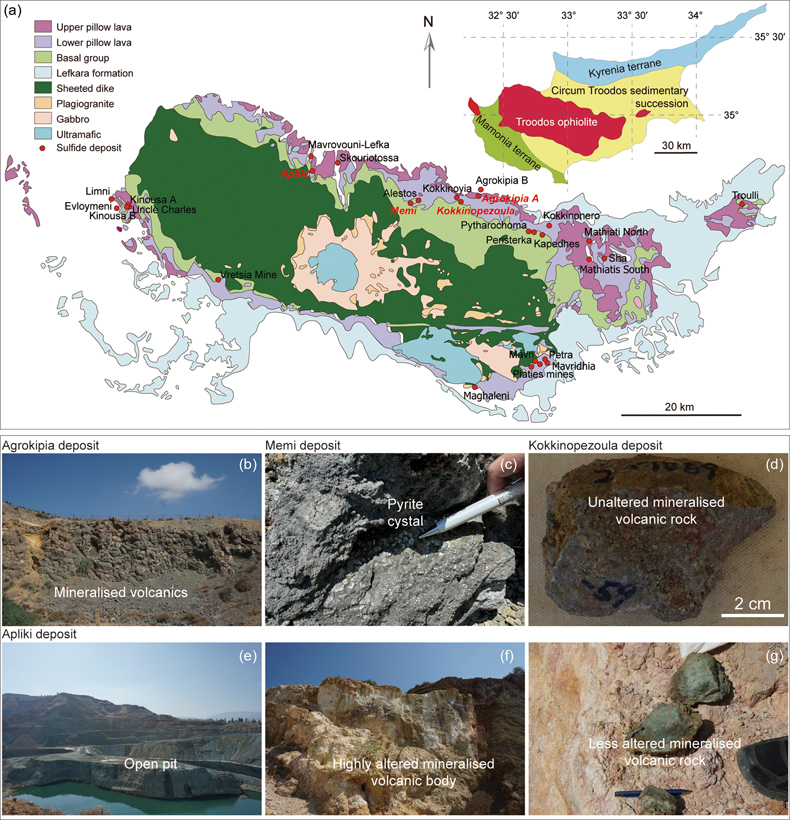
Figure 1 (a) Geological map of the Troodos ophiolite (modified after Geological Survey Department, Cyprus, 2016
Geological Survey Department, Cyprus (2016) Geological map of Cyprus, 1:250,000.
) showing distribution of sulfide deposits. The studied sulfide deposits are highlighted in bold red italic text. Field exposures of sulfide deposits including (b) mineralised volcanics in Agrokipia, (c) pyrite ores in Memi, (d) unaltered mineralised volcanic rock in Kokkinopezoula, (e) open pit and (f, g) alteration of volcanic rocks in Apliki.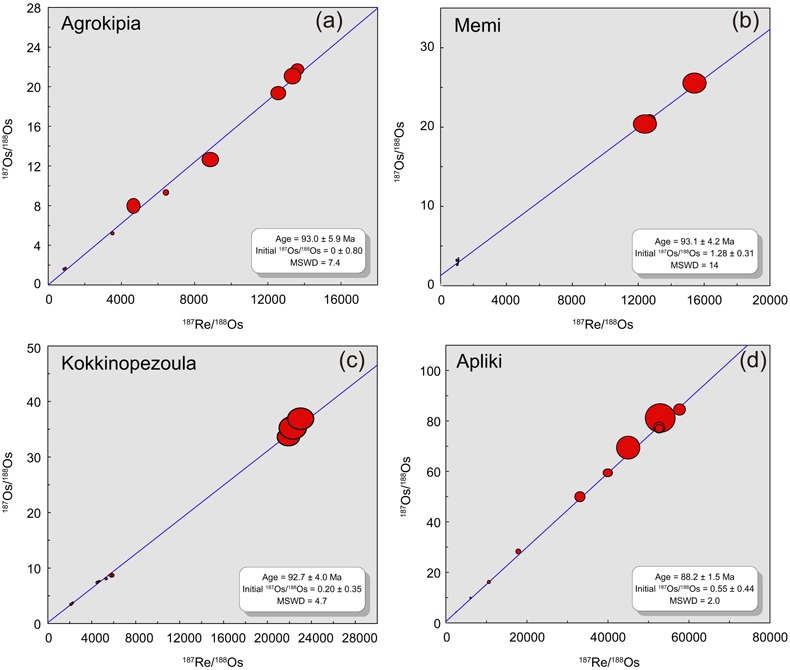
Figure 2 187Re/188Os versus 187Os/188Os isochron diagrams for pyrite from four sulfide deposits in the Troodos ophiolite.
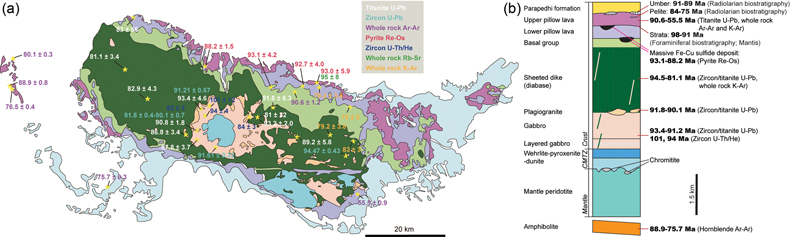
Figure 3 Compilation of age data reported for the Troodos ophiolite and their distribution in (a) geological map, and (b) schematic vertical profile. Data sources are available in Table S-2.